London’s colourful neighbourhoods represent the changing social geography of the capital. The term “colourful neighbourhood” describes districts recognised for vibrant street life, distinctive architecture, cultural institutions, markets, festivals, and diverse communities. These areas developed through historical processes including medieval expansion, industrialisation, immigration, colonial connections, and post-war reconstruction.
- How Did Notting Hill Become One of London’s Most Colourful Neighbourhoods?
- Why Is Camden Famous for Alternative Culture and Historic Markets?
- How Did Brixton Develop Into a Centre of Cultural Diversity?
- Why Is Shoreditch Considered London’s Creative Neighbourhood?
- How Did Chinatown Become a Symbol of London’s Global Heritage?
- What Is the Long-Term Historical Importance of London’s Colourful Neighbourhoods?
London became a global city through continuous movement of people and ideas. The Roman settlement of Londinium, established around AD 47–50, created the foundation for urban growth along the River Thames. Medieval markets, royal institutions, and river trade expanded London’s economic influence.
The city’s neighbourhood character changed significantly after the Industrial Revolution during the 18th and 19th centuries. Population growth transformed former rural villages into densely built urban districts. Transport improvements, including railway expansion from the 1830s onwards, connected outer districts with central London.
The Victorian period produced many of the architectural features visible today. Terraced housing, public squares, churches, theatres, and commercial streets created neighbourhood structures that still define areas such as Notting Hill and Kensington.
Migration became one of the strongest forces shaping London’s cultural identity. Communities from the Caribbean, South Asia, Africa, Europe, and East Asia established businesses, religious centres, restaurants, and cultural organisations. These communities preserved traditions while influencing London’s wider identity.
Government heritage bodies, including Historic England, recognise many London districts as conservation areas because of their architectural and cultural importance. These protections preserve historic streetscapes while allowing communities to continue evolving.
The colourful neighbourhoods of London therefore represent more than attractive visitor locations. They provide evidence of urban transformation, social history, and the relationship between place and identity.
How Did Notting Hill Become One of London’s Most Colourful Neighbourhoods?
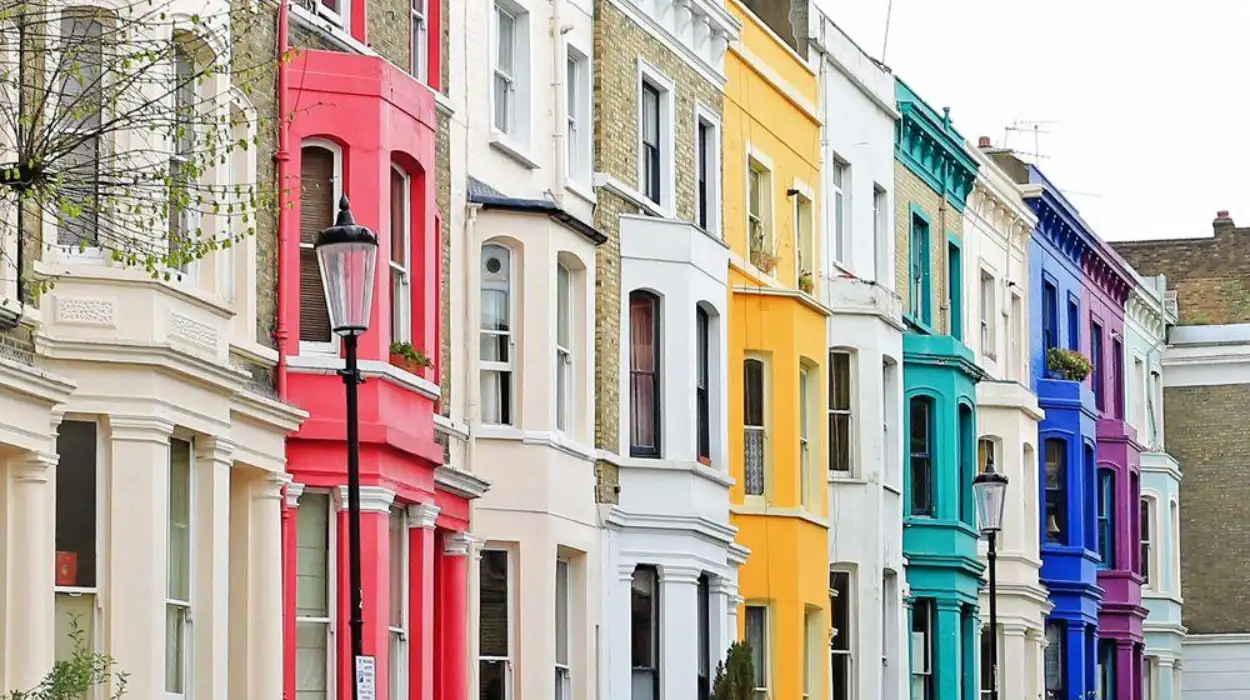
Notting Hill became a cultural landmark through Victorian development, Caribbean migration, artistic movements, and community festivals. The area transformed from a 19th-century residential district into a globally recognised neighbourhood known for Portobello Road Market, colourful houses, and the Notting Hill Carnival.
Notting Hill is located in the Royal Borough of Kensington and Chelsea in west London. Its history began as a rural area outside central London before rapid urban development during the 19th century.
The construction of Ladbroke Grove and surrounding streets in the 1820s and 1830s transformed farmland into an upper-middle-class residential district. The Ladbroke Estate introduced elegant stucco-fronted terraces, garden squares, and planned streets influenced by Georgian architectural principles.
The arrival of the railway strengthened population growth. Westbourne Park Station opened in 1866, improving access between Notting Hill and central London. The area developed as a residential suburb connected to London’s expanding economy.
Social conditions changed during the 20th century. Large houses were divided into smaller properties, and the neighbourhood experienced economic decline after the Second World War. Housing shortages increased pressure on working-class communities.
Caribbean migration reshaped Notting Hill after 1948, following the arrival of the Empire Windrush generation. The Windrush generation refers to Caribbean migrants who travelled to Britain between 1948 and 1971, contributing significantly to post-war reconstruction and British society.
Community tensions during the 1950s resulted in the Notting Hill race riots in 1958. These events became an important moment in British social history and highlighted issues surrounding racism, housing inequality, and integration.
The Notting Hill Carnival developed from this historical background. First organised in 1966 by community activists including Rhaune Laslett, the event celebrated Caribbean culture through music, dance, and street performance. It became one of Europe’s largest street festivals.
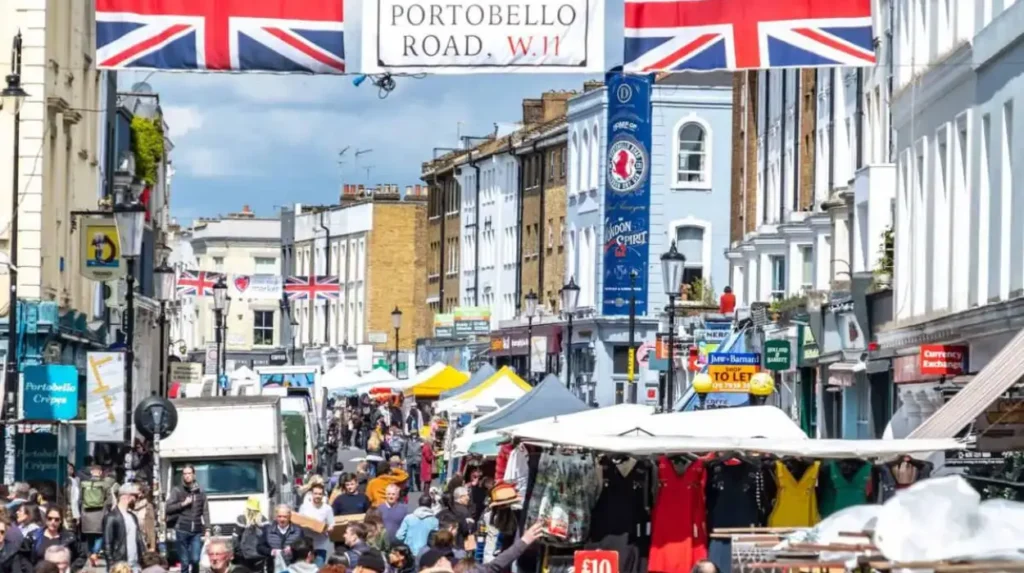
Portobello Road remains a major cultural attraction. Established as a market street during the 19th century, it became internationally known for antiques, vintage goods, food stalls, and independent businesses.
Today, Notting Hill combines Victorian architecture, Caribbean heritage, creative industries, and tourism. The area demonstrates how migration and community organisation influence urban identity.
To experience this historic district in person today, consult our comprehensive [History of London’s Royal Parks and Their Transformation Into Public Green Spaces] for itineraries and visiting parameters.
Why Is Camden Famous for Alternative Culture and Historic Markets?
Camden became one of London’s most distinctive cultural neighbourhoods through industrial canals, railway development, music venues, and independent markets. The area evolved from a 19th-century transport district into a global centre for alternative culture, creative industries, and urban tourism.
Camden is located north of central London within the London Borough of Camden. Its development was closely linked to transport infrastructure and industrial expansion.
The area changed dramatically after the opening of the Regent’s Canal in 1820. Designed by engineer James Morgan, the canal connected the Grand Junction Canal with the River Thames and supported industrial transport.
Camden’s canal network encouraged warehouses, factories, and storage facilities. The Regent’s Canal became an important route for moving coal, timber, and agricultural products into London.
Railway expansion during the 19th century further transformed Camden. Camden Road Station opened in 1867, while nearby railway infrastructure supported industrial activity and employment.
The decline of traditional industries during the 20th century left many warehouses underused. Artists, musicians, and independent businesses occupied affordable spaces, creating a new cultural identity.
Camden Market developed from this transformation. Established in 1973 as a craft market, it expanded into a collection of markets including Camden Lock Market, Stables Market, and Buck Street Market.
The neighbourhood became associated with influential music scenes. Venues such as the Electric Ballroom, established in the 1930s, hosted major performers and contributed to London’s live music heritage.
Camden’s colourful identity comes from its combination of historic industrial architecture, street art, fashion, food culture, and performance spaces. The area demonstrates how former industrial districts adapt to modern creative economies.
Historic buildings and canal structures remain important reminders of Camden’s industrial past. Heritage conservation programmes protect sections of the canal environment while supporting public access.
How Did Brixton Develop Into a Centre of Cultural Diversity?
Brixton developed into a culturally significant London neighbourhood through Victorian urban growth, Caribbean migration, music movements, and community activism. The district became internationally recognised for Brixton Market, African and Caribbean businesses, and its role in Britain’s multicultural history.
Brixton is located in south London within the London Borough of Lambeth. Its transformation reflects wider patterns of London expansion and migration.
Before the 19th century, Brixton was largely rural farmland. The construction of Vauxhall Bridge Road and improved transport links encouraged residential development.
The arrival of railways accelerated growth. Brixton railway station opened in 1862, connecting the area with central London and encouraging suburban expansion.
Victorian Brixton developed with terraced housing, shopping streets, and public institutions. Electric Avenue, opened in the 1880s, became one of the first streets in London lit by electric lighting.
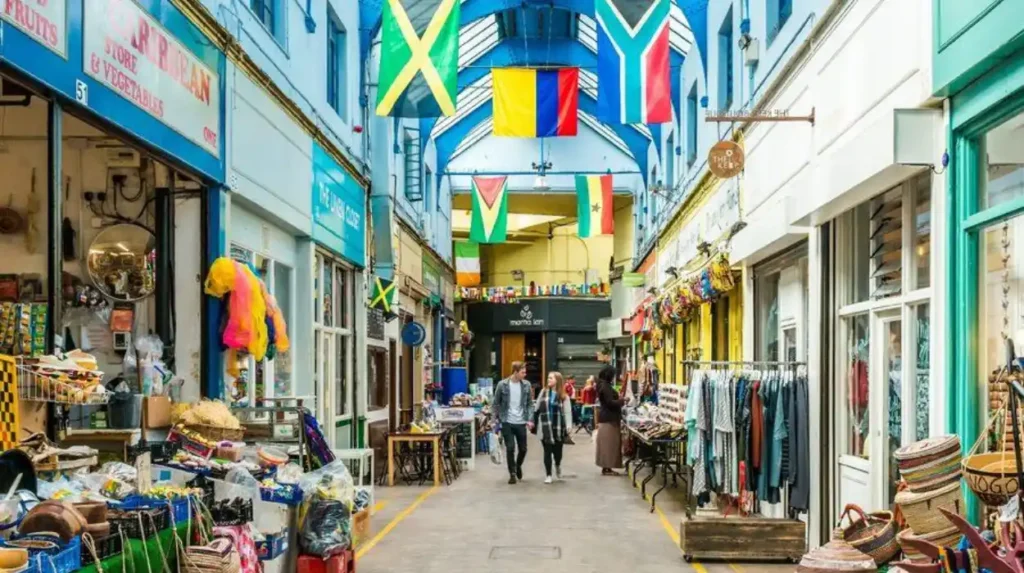
Brixton Market began trading in the late 19th century and remains one of London’s historic commercial centres. The market became particularly associated with Caribbean, African, and Latin American food businesses.
Post-war migration transformed Brixton’s social landscape. Caribbean communities settled in the area after the Second World War, particularly following the arrival of the Windrush generation.
The neighbourhood became a centre for Black British cultural development. Music genres including reggae, dub, and later electronic styles gained influence through local venues and artists.
Brixton also experienced political tensions during the late 20th century. The Brixton uprising of 1981 followed long-standing concerns about policing, unemployment, and social inequality.
Community organisations responded through cultural initiatives, local businesses, and political engagement. The area became an important example of grassroots urban regeneration.
Modern Brixton retains historic landmarks including Brixton Market, Electric Avenue, and the Grade II listed Brixton Windmill, built in 1816. These sites connect contemporary culture with earlier agricultural and industrial history.
Why Is Shoreditch Considered London’s Creative Neighbourhood?
Shoreditch became a creative neighbourhood through industrial production, immigration, artistic redevelopment, and technology industries. The east London district changed from a Victorian manufacturing area into a major centre for street art, independent businesses, design studios, and digital companies.
Shoreditch is located in the London Borough of Hackney, immediately north of the City of London. Its history reflects changing patterns of urban industry.
During the Victorian period, Shoreditch developed as a manufacturing district. Furniture production, printing, and textile industries dominated the local economy.
The area’s proximity to the City of London created employment opportunities but also produced dense working-class housing. Many Victorian buildings remain visible in the streets around Shoreditch High Street.
Economic decline affected Shoreditch during the 20th century as traditional industries moved away. Empty warehouses later attracted artists seeking affordable workspaces.
The creative transformation accelerated during the 1990s. Galleries, studios, fashion businesses, and nightlife venues established a new cultural economy.
Street art became a defining feature of Shoreditch. Murals and public artworks transformed building walls into cultural spaces. Artists from Britain and internationally contributed to the neighbourhood’s visual identity.
The arrival of technology companies during the 21st century connected Shoreditch with London’s digital economy. The area became associated with the Old Street technology cluster, often called “Silicon Roundabout.”
Shoreditch demonstrates how industrial heritage buildings can support new economic activities. Former warehouses now contain restaurants, offices, galleries, and creative businesses.
The neighbourhood’s history remains visible through preserved industrial architecture alongside modern developments.
How Did Chinatown Become a Symbol of London’s Global Heritage?
London’s Chinatown developed through Chinese migration, international trade connections, restaurant culture, and community institutions. Located in Soho, the district became a recognised cultural area through Chinese businesses, decorative architecture, festivals, and long-standing links with global communities.
London’s Chinatown is located around Gerrard Street in Soho, Westminster. Its development reflects Britain’s relationship with global migration and commerce.
Chinese communities first established significant connections with London during the 19th century through maritime trade. Early Chinese settlements developed around Limehouse in east London.
The Soho Chinatown emerged after the Second World War. Chinese restaurants and businesses moved into the area during the 1950s and 1960s.
Gerrard Street became the centre of the district. Chinese businesses, restaurants, supermarkets, and cultural organisations created a strong community presence.
The area’s distinctive gateways and decorations were introduced during the late 20th century. These features became symbols of cultural identity and visitor recognition.
Chinese New Year celebrations transformed Chinatown into a major cultural destination. The annual event attracts visitors and highlights traditions including performances, food, and community activities.
Chinatown represents London’s wider history as an international city. Its development demonstrates how migrant communities establish cultural spaces within changing urban environments.
What Is the Long-Term Historical Importance of London’s Colourful Neighbourhoods?
London’s colourful neighbourhoods preserve evidence of migration, architecture, industry, and cultural change. Their historical importance comes from protecting community memories while demonstrating how urban districts adapt through economic transformation, heritage conservation, and multicultural development.
London’s colourful neighbourhoods provide valuable historical records of urban change. Their streets, buildings, markets, and institutions preserve evidence from different periods of the capital’s development.
Historic preservation plays an important role in maintaining these identities. Conservation areas protect architectural features while allowing communities to continue living and working within historic environments.
Museums, archives, and heritage organisations document these neighbourhood histories. Records from local councils, Historic England, and cultural institutions support research into population movement, architecture, and social change.
These areas also provide important resources for genealogical research. Street directories, census records, business archives, and parish documents help researchers trace London families and communities.
The future relevance of these neighbourhoods depends on balancing preservation with modern urban needs. Regeneration projects continue to reshape London while historic districts retain connections to their past.
London’s colourful neighbourhoods remain important because they show how cities develop through human movement, cultural exchange, and collective memory. Their histories continue to influence London’s identity as a global city.
What are London’s most colourful neighbourhoods?
London’s most colourful neighbourhoods include Notting Hill, Camden, Brixton, Shoreditch, and Chinatown. These areas are known for their distinctive architecture, cultural traditions, historic markets, street art, festivals, and diverse communities shaped by centuries of migration and urban development.