
London’s Royal Parks form one of the world’s most significant collections of historic urban green spaces. Covering more than 5,000 acres (approximately 2,023 hectares), these parks evolved from exclusive royal hunting grounds into publicly accessible landscapes that define modern London. Their development reflects changes in monarchy, politics, urban planning, conservation, and public recreation across nearly 1,000 years of English history.
- What are London’s Royal Parks?
- How did royal hunting grounds become London’s public parks?
- Why were London’s Royal Parks created in the first place?
- Which monarchs shaped London’s Royal Parks?
- How did landscape architecture transform the Royal Parks?
- How did London’s growing population change the purpose of the Royal Parks?
- What historic landmarks survive inside the Royal Parks?
- How are London’s Royal Parks protected today?
- Why do London’s Royal Parks remain historically important?
- How has the legacy of the Royal Parks influenced modern cities?
Today, London’s eight Royal Parks preserve historic monuments, ancient woodland, ceremonial routes, lakes, gardens, and internationally important wildlife habitats while welcoming millions of visitors every year. Their transformation demonstrates how royal land gradually became a public resource without losing its historic identity.
What are London’s Royal Parks?
London’s Royal Parks are historic parks originally owned by the English and later British Crown for hunting, recreation, and ceremonial purposes before gradually becoming publicly accessible landscapes managed for conservation, heritage, recreation, biodiversity, and national ceremonial events.
The Royal Parks consist of Hyde Park, Kensington Gardens, St James’s Park, Green Park, Regent’s Park, Richmond Park, Greenwich Park, and Bushy Park. Each possesses its own historical development while sharing royal origins.
Unlike municipal parks established by local authorities during the nineteenth century, Royal Parks originated as royal estates. Their management shifted gradually from exclusive royal control towards public administration.
The Royal Parks remain Crown land. They are managed by The Royal Parks charity under arrangements with the UK Government. Their historic buildings, archaeological remains, veteran trees, lakes, avenues, and monuments remain protected under heritage legislation.
Their significance extends beyond recreation. They contain scheduled monuments, Grade I listed landscapes, internationally protected habitats, historic royal residences, military memorials, and ceremonial routes used during state occasions.
How did royal hunting grounds become London’s public parks?
London’s Royal Parks developed from medieval hunting forests into landscaped estates before successive monarchs and governments progressively opened them to wider public access between the seventeenth and nineteenth centuries through political reform, urban expansion, and changing attitudes towards public recreation.
Medieval royal hunting estates
Following the Norman Conquest in 1066, William I expanded the royal forest system throughout England. Royal forests were legal territories reserved for hunting rather than simply wooded landscapes.
Large areas surrounding London became protected hunting grounds where deer, boar, and other game animals were preserved for royal sport.
Bushy Park, Richmond Park, and Greenwich Park all developed within this broader tradition of royal hunting.
Tudor expansion
The Tudor monarchs dramatically enlarged royal estates.
King Henry VIII acquired Hyde Park in 1536 after dissolving Westminster Abbey during the English Reformation. The land became an enclosed hunting park reserved for the king and his court.
Bushy Park expanded alongside Hampton Court Palace.
Richmond Park was enclosed by King Charles I in 1637 using a brick wall extending approximately 13 kilometres (8 miles), creating one of England’s largest enclosed royal deer parks.
Thousands of red and fallow deer continued inhabiting these landscapes.
Opening to the public
Public access expanded gradually rather than through a single decision.
King James I allowed limited access to Hyde Park in the early seventeenth century.
King Charles II redesigned St James’s Park after his restoration in 1660 and encouraged wider public enjoyment, making it one of Europe’s earliest urban pleasure parks.
By the Georgian period, promenading, carriage driving, military reviews, and public celebrations increasingly took place inside formerly restricted royal landscapes.
Why were London’s Royal Parks created in the first place?
London’s Royal Parks existed primarily for hunting, royal leisure, military exercises, food production, ceremonial display, and demonstrating royal authority before gradually assuming recreational, ecological, educational, and civic functions as London’s population expanded.
Royal hunting represented political authority throughout medieval Europe.
Maintaining large enclosed landscapes demonstrated wealth, military power, and exclusive rights over valuable land.
Many parks also supplied timber, grazing land, hay production, fish ponds, and agricultural resources supporting nearby royal residences.
Royal households required extensive open landscapes for horses, hunting dogs, transport, and ceremonial processions.
As London expanded dramatically during the seventeenth and eighteenth centuries, these parks acquired additional civic importance.
Open landscapes improved air quality, provided space for exercise, reduced overcrowding, and created prestigious surroundings for expanding residential districts.
Urban planners increasingly recognised green space as essential infrastructure rather than unused royal land.
Which monarchs shaped London’s Royal Parks?
Several monarchs fundamentally reshaped London’s Royal Parks through land acquisition, landscape design, architectural projects, hunting regulations, and public access policies, leaving visible features that survive throughout modern London.
Henry VIII
Henry VIII transformed former church lands into royal estates following the Dissolution of the Monasteries.
His acquisition of Hyde Park established one of London’s most famous royal parks.
James I
James I opened sections of Hyde Park to selected members of the public while improving roads and park infrastructure.
Charles I
Charles I enclosed Richmond Park with its famous brick boundary wall.
The enclosure protected deer populations while defining today’s historic landscape.
Charles II
Charles II introduced French landscape influences following his exile.
St James’s Park gained ornamental canals, tree-lined walks, formal planting, and public promenades inspired by continental design.
Queen Caroline
Queen Caroline, wife of George II, reshaped Hyde Park during the 1730s.
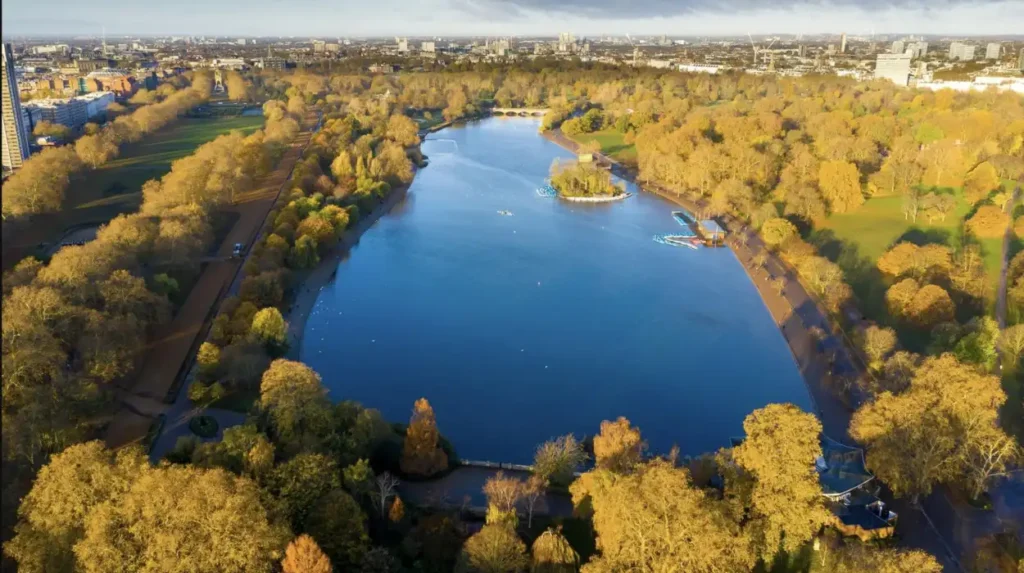
Her most enduring achievement was creating the Serpentine, one of Britain’s earliest artificially landscaped lakes.
George IV
George IV supported architect John Nash’s ambitious redesign of Regent’s Park during the early nineteenth century.
Nash integrated villas, terraces, gardens, and ceremonial roads into a unified urban landscape.
How did landscape architecture transform the Royal Parks?
Landscape architecture replaced formal hunting grounds with carefully designed lakes, avenues, gardens, open meadows, woodland, and scenic views that reflected changing artistic styles from Renaissance geometry to English naturalistic landscape design.
Early Tudor parks emphasised practical hunting.
Seventeenth-century designers increasingly adopted formal French influences characterised by straight avenues, geometric planting, and ornamental water.
The eighteenth century witnessed the rise of the English Landscape Movement.
Designers preferred curved lakes, naturalistic woodland, sweeping grassland, and carefully framed vistas that appeared informal despite careful planning.
John Nash introduced sophisticated urban planning principles into Regent’s Park.
His design integrated elegant terraces with expansive parkland, creating one of Britain’s earliest examples of planned landscape urbanism.
Later Victorian improvements added flower gardens, drinking fountains, public toilets, memorials, bridges, cafés, and improved pathways without removing historic landscape character.
How did London’s growing population change the purpose of the Royal Parks?
Rapid urban growth transformed London’s Royal Parks from exclusive aristocratic landscapes into essential public green spaces that supported recreation, public health, civic identity, organised sport, education, and environmental protection for millions of residents.
London experienced extraordinary population growth after the Industrial Revolution.
The city’s population increased from approximately one million people around 1800 to more than six million by 1900.
Dense housing increased demand for open space.
Medical reformers associated parks with improved physical health, cleaner air, and reduced disease.
Victorian governments promoted outdoor exercise, walking, boating, horse riding, organised sports, and children’s recreation.
Political demonstrations also became common.
Hyde Park’s Speakers’ Corner evolved into an internationally recognised location for free public speech and political debate.
Military ceremonies, royal celebrations, jubilees, and national commemorations further reinforced the parks’ civic importance.
To experience these historic landscapes in person today, consult our comprehensive [London’s Most Colourful Neighbourhoods Every Visitor Should Explore for Local Character and Culture] for itineraries and visiting parameters.
What historic landmarks survive inside the Royal Parks?
London’s Royal Parks preserve numerous historic structures including royal residences, ceremonial avenues, memorials, bridges, lakes, observatories, statues, gates, archaeological remains, and historic landscape features representing multiple centuries of British history.
Hyde Park contains Wellington Arch, the Serpentine Bridge, Speakers’ Corner, and numerous memorials.
Kensington Gardens contains Kensington Palace, the Albert Memorial, the Italian Gardens, and the Peter Pan Statue.
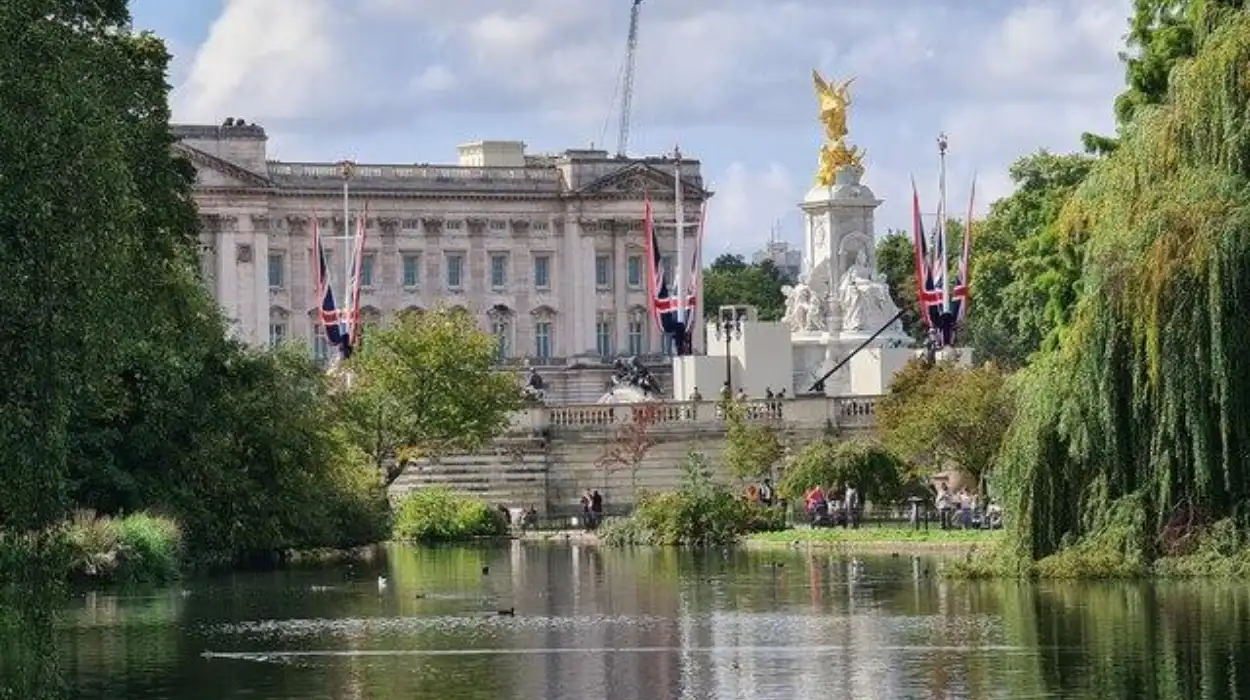
St James’s Park preserves historic ceremonial views connecting Buckingham Palace, Horse Guards Parade, and Whitehall.
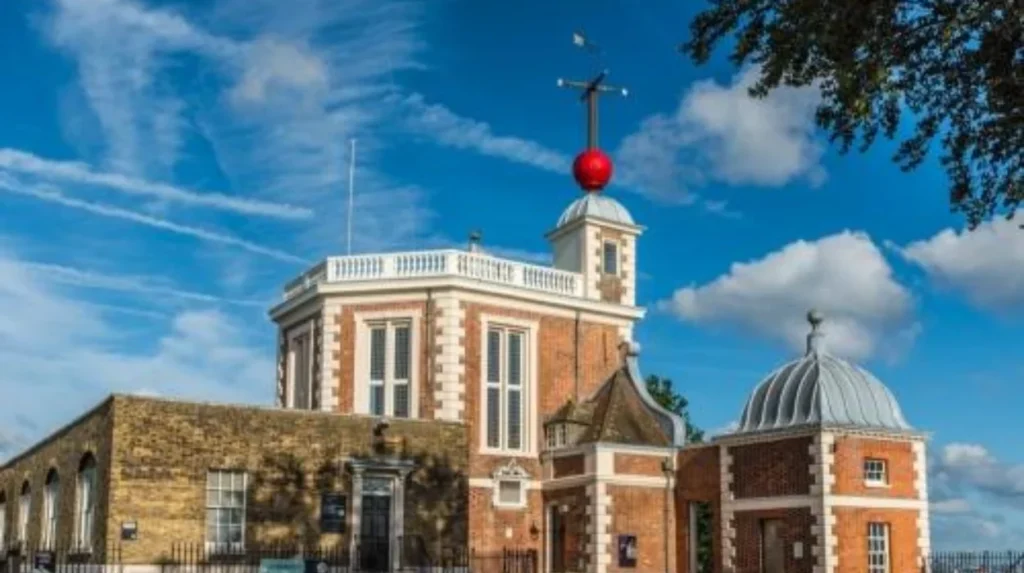
Greenwich Park contains the Royal Observatory, established in 1675 by Charles II to improve maritime navigation.
The Prime Meridian established international longitude measurement from Greenwich.
Richmond Park preserves one of Britain’s largest surviving medieval enclosed deer landscapes.
Its ancient oak trees support nationally significant biodiversity.
Bushy Park contains the Diana Fountain commissioned during the seventeenth century.
Regent’s Park preserves John Nash’s original planning framework alongside London Zoo, established in 1828 by the Zoological Society of London.
How are London’s Royal Parks protected today?
London’s Royal Parks receive legal protection through heritage legislation, environmental regulations, planning controls, conservation policies, archaeological management, biodiversity programmes, and charitable stewardship designed to preserve their historic and ecological significance for future generations.
Numerous areas within the parks hold Grade I registered landscape status.
Historic buildings receive listed building protection.
Ancient monuments receive separate archaeological protection.
Richmond Park forms a National Nature Reserve and Site of Special Scientific Interest because of its veteran trees, fungi, invertebrates, birds, and deer populations.
Greenwich Park forms part of the Maritime Greenwich UNESCO World Heritage Site.
Tree management programmes preserve thousands of mature specimens.
Habitat restoration improves wetlands, grasslands, woodlands, ponds, and pollinator habitats.
Climate resilience strategies now address drought, flooding, invasive species, and changing biodiversity patterns.
Historic restoration projects carefully balance conservation with modern accessibility standards.
Why do London’s Royal Parks remain historically important?
London’s Royal Parks remain historically important because they preserve nearly one thousand years of political, architectural, environmental, scientific, and cultural history while continuing to serve millions of visitors through recreation, education, conservation, and national ceremonial functions.
These landscapes document changing relationships between monarchy and society.
Former symbols of exclusive royal privilege became publicly shared national spaces.
Their historic layouts preserve evidence from successive historical periods rather than representing a single era.
Archaeologists continue studying buried landscape features, historic pathways, former palace structures, and environmental evidence preserved beneath park soils.
Researchers use pollen records, tree-ring analysis, historical maps, estate documents, and excavation evidence to reconstruct landscape evolution across centuries.
The parks also illustrate changing ideas about conservation.
Earlier management prioritised hunting.
Victorian management prioritised recreation.
Modern stewardship balances biodiversity, climate resilience, archaeology, visitor access, heritage preservation, and ecological restoration simultaneously.
Their influence extends internationally.
Urban planners worldwide reference London’s Royal Parks when designing integrated green infrastructure, historic landscape conservation programmes, and public open-space systems.
Millions of annual visitors also contribute significantly to London’s tourism economy while experiencing living historic landscapes rather than museum collections.
How has the legacy of the Royal Parks influenced modern cities?
The historical evolution of London’s Royal Parks established internationally recognised models for integrating heritage conservation, environmental protection, public recreation, urban planning, and ceremonial landscapes that continue influencing park design throughout the world.
Cities across Europe, North America, Australia, and Asia adopted similar approaches during the nineteenth and twentieth centuries.
Large public parks increasingly combined historic preservation with accessible recreation.
Landscape architects incorporated lakes, woodland, meadows, ceremonial avenues, and formal gardens into urban planning.
Environmental scientists now recognise urban parks as essential infrastructure supporting biodiversity, carbon storage, flood management, temperature regulation, and mental wellbeing.
London’s Royal Parks demonstrate that historic landscapes remain functional public assets without sacrificing archaeological integrity or architectural authenticity.
Their continued evolution illustrates the value of adaptive conservation.
Instead of freezing landscapes at one historical moment, managers preserve historic character while responding to contemporary environmental challenges.
This approach ensures that future generations inherit landscapes reflecting both historical continuity and responsible modern stewardship.
The transformation from medieval hunting grounds into globally recognised public green spaces represents one of the most significant landscape developments in British history. It reflects centuries of constitutional change, artistic innovation, environmental management, and public access reform. Today, London’s Royal Parks remain living historical landscapes where royal heritage, ecological conservation, scientific research, recreation, and national identity continue to coexist within the heart of one of the world’s largest cities.
What are London’s Royal Parks?
London’s Royal Parks are eight historic parks that were originally created for the British monarchy. Today, they are publicly accessible green spaces managed for recreation, conservation, heritage, and national ceremonial events.