London offers one of the world’s richest collections of indoor cultural, historical, scientific, and architectural attractions. Rain has shaped daily life in the British capital for centuries, encouraging the development of museums, galleries, libraries, theatres, markets, churches, and public institutions that remain among the city’s greatest attractions today. These venues preserve more than 2,000 years of history while providing year-round experiences regardless of weather conditions.
- Why is London one of the world’s best cities for rainy day indoor attractions?
- How did London’s museums become internationally significant?
- Which museums preserve London’s own history?
- Why are London’s art galleries historically important?
- How did London’s theatres become part of British heritage?
- What makes London’s historic libraries valuable cultural attractions?
- Why do London’s historic churches attract visitors throughout the year?
- How did London’s covered markets evolve into cultural destinations?
- Why are London’s scientific institutions historically significant?
- How do London’s transport and engineering museums explain urban development?
- How does London preserve historic buildings for future generations?
- Why do London’s indoor attractions remain relevant throughout every season?
From Roman archaeology beneath modern streets to Victorian engineering, royal collections, scientific discoveries, wartime history, and contemporary art, London’s indoor attractions form an interconnected heritage network that reflects the city’s continuous development from a Roman settlement into a global capital.
Why is London one of the world’s best cities for rainy day indoor attractions?
London combines over two millennia of preserved history with hundreds of museums, galleries, theatres, historic buildings, libraries, and cultural institutions. Rain encouraged investment in permanent indoor public spaces, creating an exceptional concentration of educational and recreational attractions accessible throughout every season.
London receives approximately 600 millimetres of rainfall annually across about 110–120 rainy days. Unlike tropical storms, British rainfall is usually light or moderate, allowing the city to remain active throughout the year. Rather than limiting tourism, this climate influenced London’s architectural and cultural development.
Beginning during the Georgian period and expanding dramatically throughout the Victorian era, public institutions increasingly moved into purpose-built buildings designed to educate, entertain, and preserve national heritage. Museums, reading rooms, exhibition halls, covered markets, railway stations, and libraries reflected Britain’s growing industrial and imperial influence.
Today Greater London contains more than 190 museums, alongside hundreds of galleries, historic churches, archives, theatres, and cultural venues. Many receive millions of visitors annually while preserving internationally significant collections.
These institutions remain central to London’s identity because they protect historical artefacts, encourage public education, support academic research, and conserve architectural heritage.
To experience these historic landmarks in person today, consult our comprehensive [History of London’s Nighttime Illumination From Gas Lamps to Modern City Lights] for itineraries and visiting parameters.
How did London’s museums become internationally significant?
London’s museums developed through royal collections, scientific exploration, archaeological discoveries, imperial expansion, philanthropy, and public education reforms between the eighteenth and twentieth centuries. Their collections now document global civilisation while preserving Britain’s own archaeological, artistic, and scientific heritage.
Royal collecting traditions
Early museum collections emerged from royal cabinets of curiosities assembled during the Tudor and Stuart periods. Monarchs collected manuscripts, sculptures, paintings, coins, fossils, and scientific instruments from Britain and continental Europe.
These collections expanded substantially following overseas exploration and archaeological expeditions during the eighteenth century.
The creation of public museums
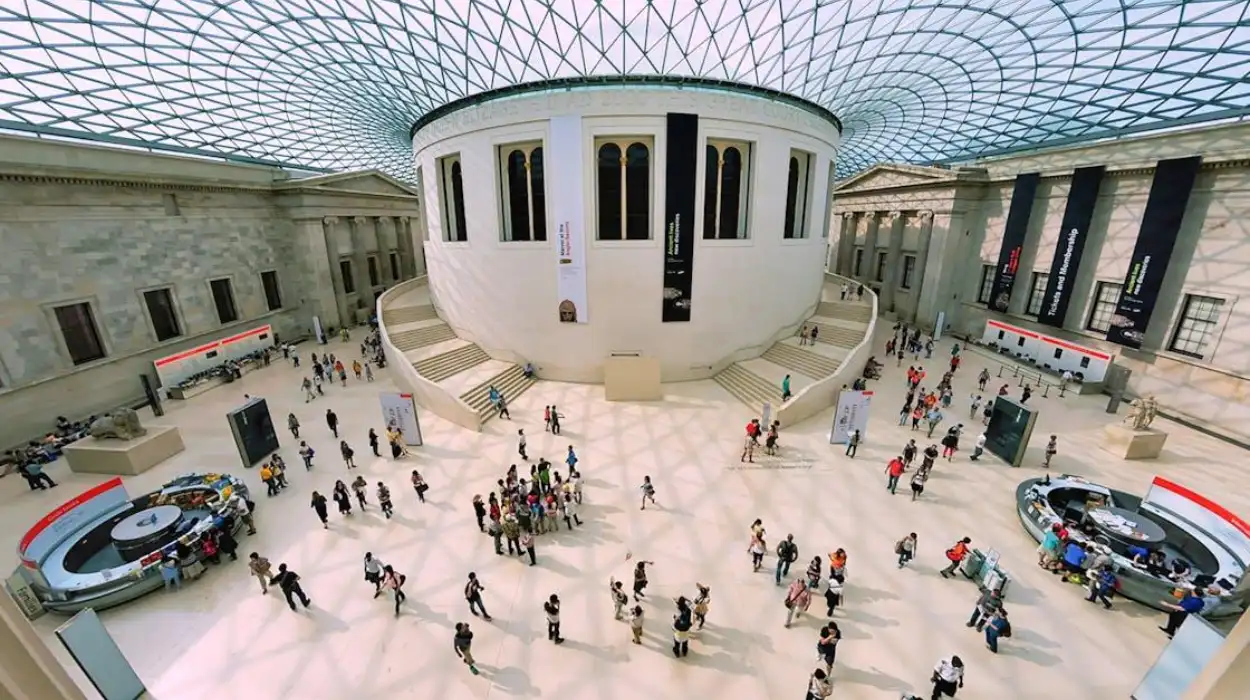
The British Museum opened in 1759 after Parliament purchased the collection of physician Sir Hans Sloane. It became the world’s first national public museum open to all visitors without admission charges.
Its holdings expanded through archaeological excavations, donations, diplomatic transfers, scientific expeditions, and acquisitions from across Europe, Asia, Africa, Oceania, and the Americas.
Important collections include:
- Egyptian antiquities
- Greek sculpture
- Roman artefacts
- Anglo-Saxon treasures
- Medieval manuscripts
- Islamic art
- Asian ceramics
These collections support international archaeological research and historical scholarship.
Victorian expansion
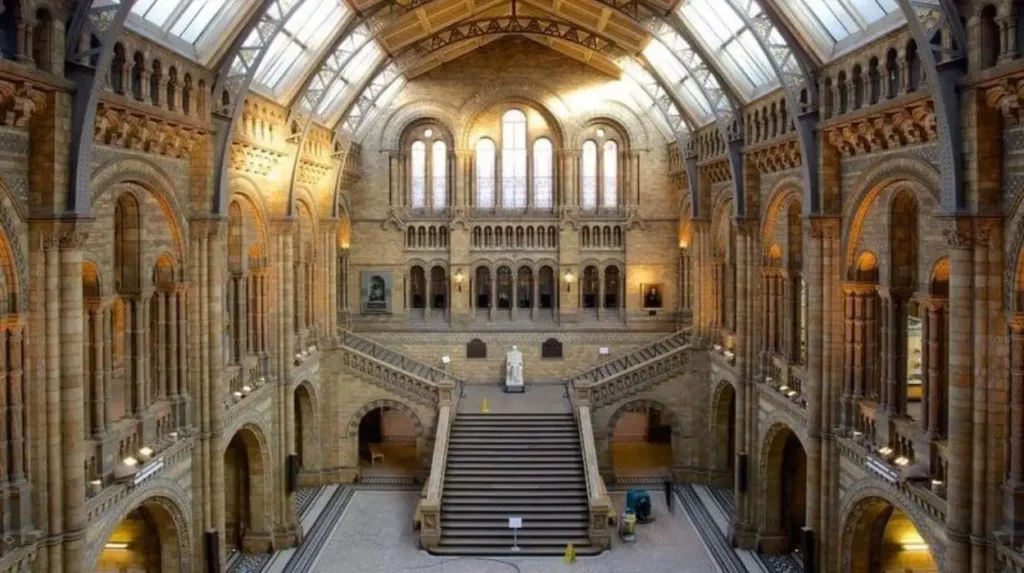
During the nineteenth century, Britain’s industrial wealth financed specialised museums including institutions dedicated to natural history, science, decorative arts, transport, military history, and medicine.
Purpose-built museum architecture reflected civic pride while improving preservation standards through advanced lighting, ventilation, and exhibition design.
Which museums preserve London’s own history?
Several museums focus specifically on London’s political, archaeological, social, and architectural history. Their collections explain Roman Londinium, medieval commerce, Tudor government, industrial expansion, wartime resilience, and modern urban transformation through original artefacts, documents, and archaeological discoveries.
Roman London
Archaeological excavations continually reveal remains of Roman Londinium, established around AD 47 following the Roman conquest of Britain.
Excavated discoveries include:
- defensive walls
- temples
- mosaics
- coins
- pottery
- military equipment
- writing tablets
- commercial buildings
These artefacts demonstrate London’s importance as Britain’s principal Roman trading centre.
Medieval development
Medieval London expanded beyond Roman walls through growing trade, guild organisations, churches, monasteries, and markets.
Surviving documents explain taxation, governance, commerce, religious life, and urban planning.
Excavated foundations beneath modern buildings continue revealing medieval streets, houses, workshops, and waterfront structures.
Victorian London
Industrialisation transformed London into the world’s largest city during the nineteenth century.
Historical collections document:
- railway construction
- sanitation reforms
- electricity
- public transport
- housing expansion
- policing
- healthcare
- education
These developments shaped the modern metropolis.
Why are London’s art galleries historically important?
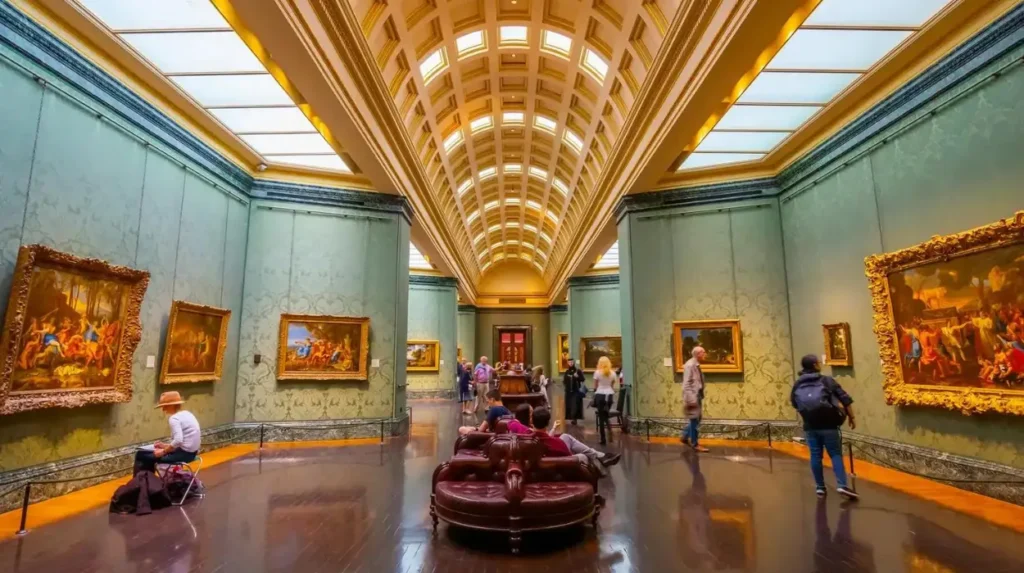
London’s galleries preserve artistic traditions spanning more than seven centuries. Their collections document religious painting, Renaissance innovation, portraiture, landscape art, Impressionism, modernism, and contemporary artistic movements while supporting education, conservation, and international scholarship.
The growth of London’s galleries reflected Britain’s increasing cultural influence from the eighteenth century onward.
National collections preserve works by artists including Leonardo da Vinci, Raphael, Rembrandt, J. M. W. Turner, Thomas Gainsborough, John Constable, Claude Monet, Vincent van Gogh, Pablo Picasso, and Francis Bacon.
Conservation laboratories employ scientific imaging, pigment analysis, climate monitoring, and restoration techniques that extend the lifespan of historically significant artworks.
Research departments publish catalogues, conservation reports, and academic studies that contribute to international art history.
Public exhibitions encourage lifelong learning while preserving cultural memory.
How did London’s theatres become part of British heritage?
London’s theatre tradition developed from medieval religious drama into one of the world’s leading performing arts centres. Historic playhouses, literary traditions, and continuous theatrical innovation established the capital as an international centre for drama, music, and performance.
London’s theatrical history extends over six centuries.
Medieval mystery plays evolved into professional acting companies during the Elizabethan period.
William Shakespeare transformed English theatre through performances in purpose-built playhouses including the Globe Theatre.
The Restoration period introduced indoor theatres using movable scenery, improved acoustics, and candle lighting.
Victorian London expanded entertainment districts with opera houses, music halls, and grand theatres.
Today’s West End preserves this historical tradition while presenting classical drama, musicals, opera, ballet, and contemporary productions.
Historic theatres remain protected through conservation programmes preserving architecture, interiors, stage machinery, and decorative artwork.
What makes London’s historic libraries valuable cultural attractions?
London’s historic libraries preserve manuscripts, maps, newspapers, legal records, scientific publications, and literary works spanning over one thousand years. Their collections support international scholarship while protecting documentary evidence of British political, social, scientific, and cultural history.
Libraries preserve historical knowledge beyond museum collections.
Important holdings include:
- medieval illuminated manuscripts
- Magna Carta copies
- early printed books
- Shakespeare folios
- parliamentary records
- historical newspapers
- scientific journals
- exploration diaries
Climate-controlled storage protects fragile materials against humidity, pollution, insects, and light exposure.
Digitisation programmes increasingly provide public access while reducing physical handling of original documents.
Academic researchers, genealogists, historians, and students use these collections daily.
Why do London’s historic churches attract visitors throughout the year?
London’s churches preserve religious history, medieval architecture, royal ceremonies, memorials, funerary monuments, stained glass, sculpture, and musical traditions. Their interiors remain accessible during every season while demonstrating architectural development across nearly one thousand years.
Christian worship has shaped London’s landscape since the Anglo-Saxon period.
Norman architecture introduced massive stone churches after 1066.
Later Gothic styles featured pointed arches, rib vaulting, stained glass, and elaborate stone carving.
Following the Great Fire of London in 1666, architect Sir Christopher Wren redesigned numerous churches using classical architectural principles.
Church interiors contain royal tombs, military memorials, artistic monuments, historic organs, and commemorative inscriptions documenting Britain’s political and religious history.
Many continue functioning as active places of worship while welcoming millions of visitors annually.
How did London’s covered markets evolve into cultural destinations?
Covered markets protected traders and shoppers from Britain’s changing weather while supporting food distribution, commerce, craftsmanship, and community life. Many historic market buildings now combine traditional retail with architecture, heritage conservation, dining, and cultural tourism.
Markets have operated continuously in London since Roman times.
Victorian engineering introduced iron-framed market halls with glass roofs providing natural light while sheltering visitors from rain.
Historic covered markets sold:
- meat
- fish
- vegetables
- flowers
- antiques
- books
- textiles
- handcrafted goods
Modern restoration projects preserve original architectural features while adapting interiors for contemporary businesses.
These markets illustrate London’s commercial history alongside changing consumer culture.
Why are London’s scientific institutions historically significant?
Scientific institutions preserve discoveries that transformed medicine, engineering, astronomy, physics, chemistry, biology, and technology. Their collections demonstrate Britain’s contributions to global scientific advancement while encouraging public understanding through exhibitions, laboratories, and educational programmes.
The Scientific Revolution accelerated Britain’s investment in research during the seventeenth century.
Collections document innovations including:
- steam power
- electricity
- aviation
- telecommunications
- computing
- medical instruments
- industrial machinery
Historic laboratories preserve original equipment associated with pioneering researchers.
Interactive exhibitions explain scientific principles while demonstrating technological development from the Industrial Revolution to the digital age.
Educational outreach programmes serve schools, universities, and international researchers.
How do London’s transport and engineering museums explain urban development?
Transport collections reveal how roads, bridges, railways, underground networks, buses, and aviation transformed London’s growth. Engineering achievements connected expanding suburbs, improved commerce, and supported the capital’s emergence as one of the world’s largest metropolitan regions.
Roman roads established London’s earliest transport framework.
The nineteenth century introduced railway terminals that reshaped urban geography.
The London Underground, opening in 1863 as the Metropolitan Railway, became the world’s first underground railway.
Engineering collections preserve:
- locomotives
- Underground carriages
- signalling equipment
- ticketing systems
- engineering drawings
- bridge models
- construction machinery
These exhibits explain technological innovation alongside urban planning.
How does London preserve historic buildings for future generations?
Historic preservation combines legal protection, scientific conservation, archaeological research, and architectural restoration. National legislation and heritage organisations safeguard thousands of buildings while balancing public access with long-term structural conservation and historical authenticity.
Britain introduced systematic heritage protection during the twentieth century.
Listed building legislation protects structures possessing architectural or historical significance.
Conservation specialists examine:
- masonry
- timber
- roofing
- decorative plaster
- stained glass
- ironwork
- historic paint layers
Modern restoration techniques emphasise minimal intervention while preserving original materials whenever possible.
Archaeological monitoring accompanies many construction projects because new discoveries frequently emerge beneath London’s streets.
These preservation strategies ensure future generations continue accessing authentic historical environments.
Why do London’s indoor attractions remain relevant throughout every season?
London’s indoor attractions connect archaeology, architecture, literature, science, religion, engineering, and art within preserved historic environments. They provide year-round educational experiences while protecting internationally significant collections that explain Britain’s continuous historical development from Roman settlement to global capital.
Rain has never interrupted London’s cultural evolution.
Instead, centuries of investment created institutions capable of preserving collective memory regardless of weather conditions.
Museums safeguard archaeological discoveries.
Libraries protect documentary heritage.
Churches preserve religious traditions.
Markets conserve commercial history.
Theatres maintain performing arts.
Scientific collections explain technological innovation.
Historic buildings demonstrate architectural continuity.
Together these institutions form one of the world’s most comprehensive urban heritage landscapes.
Their educational value extends beyond tourism by supporting academic research, cultural preservation, school learning, archaeological investigation, genealogy, architectural conservation, and public understanding of Britain’s past.
As London continues evolving through new development and archaeological discovery, these indoor attractions remain essential repositories of historical evidence. Every preserved object, manuscript, building, engineering achievement, and artistic masterpiece contributes to a broader understanding of how one city influenced politics, commerce, science, culture, and global history across nearly two thousand years.
For visitors, educators, historians, students, and researchers alike, London’s rainy day attractions represent far more than shelter from the weather. They offer direct access to the documentary, artistic, architectural, and archaeological record of one of the world’s most influential cities, ensuring that every season provides an opportunity to explore Britain’s enduring heritage.
What are the best rainy day attractions in London?
London’s best rainy day attractions include world-famous museums, historic galleries, libraries, theatres, covered markets, and heritage buildings such as the British Museum, Natural History Museum, Science Museum, National Gallery, and Somerset House.