
Key Points
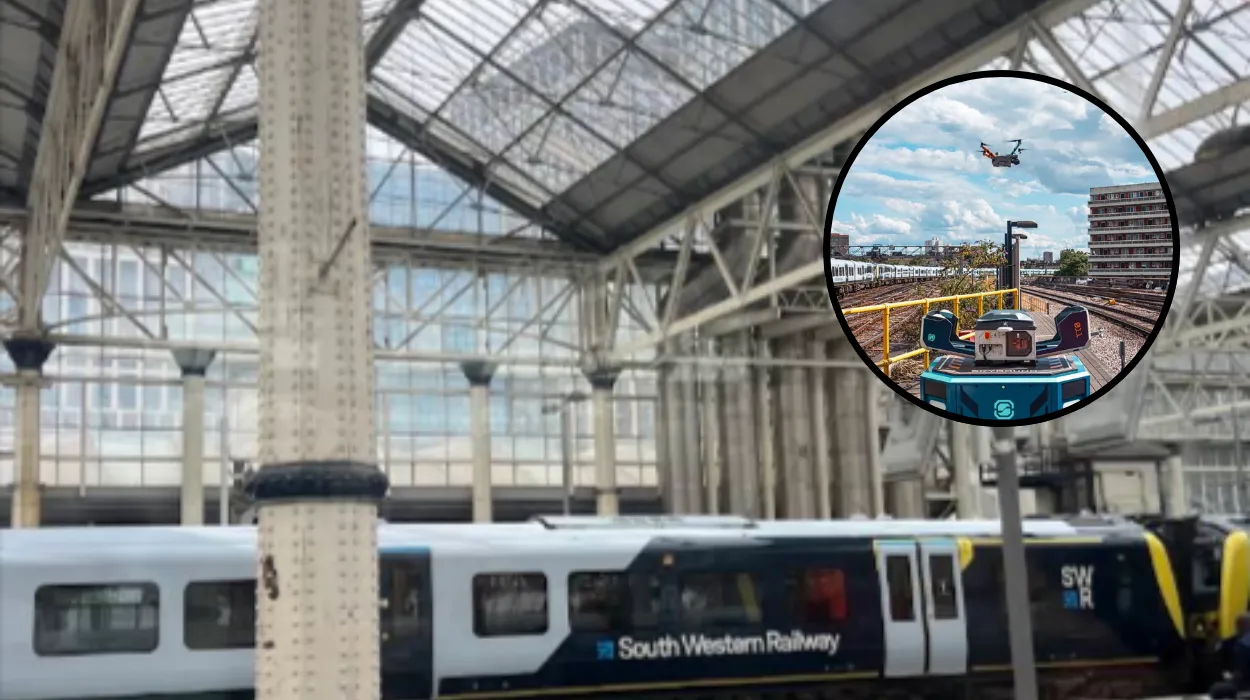
- Automated Drones Deployed: South Western Railway (SWR) and Network Rail Wessex (NR Wessex) have launched automated drone technology to monitor tracks, deter trespassers, and fix infrastructure faults.
- Remote Control Operation: The drones are operated remotely by Southampton-based firm SkyBound from a high-tech control centre in Woolston, located nearly 80 miles away from London Waterloo.
- Major Cause of Delays: Data shows that trespass incidents and fatalities accounted for almost 14% of cancellations and caused more than 200,000 minutes of delays between April 2025 and June 2026.
- High Voltage Danger: SWR and NR Wessex networks are powered by an ‘always on’ electric third rail carrying 750 volts of direct current, creating severe risks of fatal or life-changing injuries during trespass incidents.
- Live Intelligence Capabilities: Equipped with high-resolution and thermal imaging cameras, the drones stream live footage to operations centres in Basingstoke to speed up emergency and engineering responses.
- Future Rollout Plans: The Waterloo deployment is the first of a planned chain, with further drones scheduled for deployment at Clapham Junction, New Malden, and Walton-on-Thames.
- Key Stakeholder Support: Leadership from both the rail network and government have endorsed the initiative as a crucial step toward improving punctuality and modernising operations ahead of Great British Railways.
London (The Londoner News) August 1, 2026 – Railway commuters traversing Britain’s largest transport hub have caught sight of an innovative aerial guardian overhead, as transport authorities roll out automated drone technology designed to curb severe congestion and enhance safety across key commuter arteries.
- Key Points
- How Are Automated Drones Transforming Rail Safety at London Waterloo?
- What Makes Railway Trespassing Such a Critical Issue?
- How Does the Remote Drone Technology Operate in Practice?
- What Are the Perspectives of Railway Leaders and Government Officials?
- Where Will the Drone Network Expand Next?
How Are Automated Drones Transforming Rail Safety at London Waterloo?
As reported in official media releases published by South Western Railway, South Western Railway (SWR) and Network Rail Wessex (NR Wessex) confirmed that cutting-edge automated drones are now actively operating at London Waterloo. According to the joint announcement, the aerial technology is deployed to deter and tackle trespass, rapidly identify infrastructure faults, and significantly reduce journey disruption on one of the country’s most heavily congested rail corridors.
Detailing the operational mechanics, the Daily Echo reported that the automated drone is managed remotely by Southampton-based company SkyBound from a high-tech control facility situated in Woolston, roughly 80 miles away from the capital station. When an incident is flagged, trained operators launch the vehicle from a dedicated trackside station to gather immediate live intelligence for railway control teams, security personnel, and engineering units prior to their physical arrival on the ground.
What Makes Railway Trespassing Such a Critical Issue?
Addressing the gravity of track incursions, SWR and NR Wessex emphasized that unauthorized access is both illegal and exceptionally dangerous. As highlighted in background briefings released by South Western Railway, trains across the SWR and NR Wessex networks rely on an “always on” electric third rail carrying 750 volts of direct current, which poses an immediate threat of severe, life-changing injuries or death.
Whenever a trespass is reported, network operators are legally required to switch off power lines completely, halting all train movements until the situation is officially resolved and current can be safely restored. Given that the majority of South Western’s 1,600 daily services either begin or terminate at London Waterloo, even minor incidents ripple outward to strand thousands of passengers and drain millions of pounds from taxpayers.
Statistical data compiled between April 2025 and June 2026 revealed that trespass incidents and related fatalities accounted for nearly 14 per cent of all service cancellations, triggering over 200,000 minutes of cumulative delays. Authorities pointed to severe historical precedents, such as a major trespass event near New Malden in August 2024, which crippled operations for roughly nine days and incurred a financial cost of approximately £1.2 million for taxpayers.
How Does the Remote Drone Technology Operate in Practice?
Elaborating on the technological capabilities, reports noted that the deployment features advanced high-resolution and thermal imaging cameras. These instruments give network controllers enhanced visibility during unauthorized track incursions, equipment failures, or complex emergency scenarios.
Live video feeds are streamed directly to the network’s central operations hub located in Basingstoke. Commenting on the logistical advantages, the Daily Echo quoted SkyBound founder and CEO Gemma Alcock regarding the operational integration. As stated by Gemma Alcock of SkyBound:
“London Waterloo is exactly the kind of complex environment where automated drone operations can make a practical difference. From our control centre in Woolston, SkyBound is helping turn drone capability into a reliable operational service for critical infrastructure.”
This live streaming capability allows emergency services and railway engineers to formulate rapid responses, minimize the necessity for ground inspection teams to walk the tracks, and drastically shorten the intervals during which electrical power must be shut down.
Explore More South London News
MOT Wins Best Club in London 2026
Locals Rally to Save Park Tavern in Southfields 2026
What Are the Perspectives of Railway Leaders and Government Officials?
Senior transport figures have lauded the introduction of aerial surveillance as a vital component in modernizing the network. Tom Desmond, Operations Director for South Western Railway and Network Rail Wessex, underlined the broad repercussions of track disruptions on passenger schedules. As reported by South Western Railway, Tom Desmond stated that:
“Trespass is one of the leading causes of disruption on our network, delaying our customers’ journeys and costing taxpayers. Every minute of delay at London Waterloo also has a significant impact on our wider network.”
Tom Desmond further added that:
“By providing rapid, live intelligence from the air, this drone helps us respond more quickly to incidents, enhance safety and keep trains moving along one of the country’s more important railway lines. It’s an exciting use of innovative technology between South Western Railway, Network Rail Wessex and our partners at SkyBound and part of our plan to give customers more reliable journeys.”
The initiative has likewise received strong backing from central government stakeholders. Rail Minister Lord Hendy emphasized the role of technological innovation within publicly managed transport infrastructure. As published by South Western Railway, Lord Hendy stated that:
“Publicly owned operators like South Western Railway are utilising the latest tech to prevent disruption. Trespassing on the tracks is dangerous — it put lives at risk and costs taxpayers money. Under Great British Railways we’re bringing track and train together to tackle this persistent issue and keep journeys running smoothly.”
Where Will the Drone Network Expand Next?
Transport planners have confirmed that the introduction of the drone at London Waterloo represents merely the initial phase of a broader regional rollout. Network operators outlined intentions to establish a comprehensive chain of SkyBound automated drones across critical arteries of the SWR and NR Wessex network. Subsequent deployment sites slated for future integration include Clapham Junction, New Malden, and Walton-on-Thames, forming an interconnected aerial safety shield aimed at protecting the busiest segments of Britain’s rail infrastructure.