Key Points
- Financial Deficit: The East London Foundation Trust (ELFT) has outlined a plan to cut approximately £24.97m to £25m from its budget to resolve a major hole in its finances, driven by NHS England’s directive for all 205 trusts to balance their books.
- Job Losses: ELFT plans to cut 330 jobs out of its 6,000-strong workforce—roughly 5% of its total staff—through redundancies and post removals.
- Service Redesign: At least 10 core services are targeted for a “redesign,” including child and adolescent mental health care (CAMHS), talking therapies, addiction support, crisis care, and community initiatives supporting poor and ethnic minority populations.
- Ward Closure: Fothergill ward—a 20-bed intermediate care ward at the trust’s East Ham care centre—has already ceased taking new referrals and is set to close down on 21 September.
- Union Backlash: Trade union Unite has sharply criticized the move and is preparing to ballot members for potential strike action. Unite claims the job loss of its lead official, Mark Dunne, was a “sham redundancy” reflecting an uncaring employer.
- Political Concern: Apsana Begum, the Labour MP for Poplar and Limehouse, has written to ELFT’s chief executive, Lorraine Sunduza, demanding answers over whether risk assessments were conducted regarding public health, safety, and health equalities.
- Transparency Questions: The trust’s finance committee report submitted to its board meeting on 23 July omitted any mention of the £25m savings target or upcoming cuts, raising concerns over transparency.
- Wider Sector Criticism: Campaigns like Keep Our NHS Public have slammed the cuts, pointing out a stark contradiction between local NHS starvation and billions funneled into private health firms.
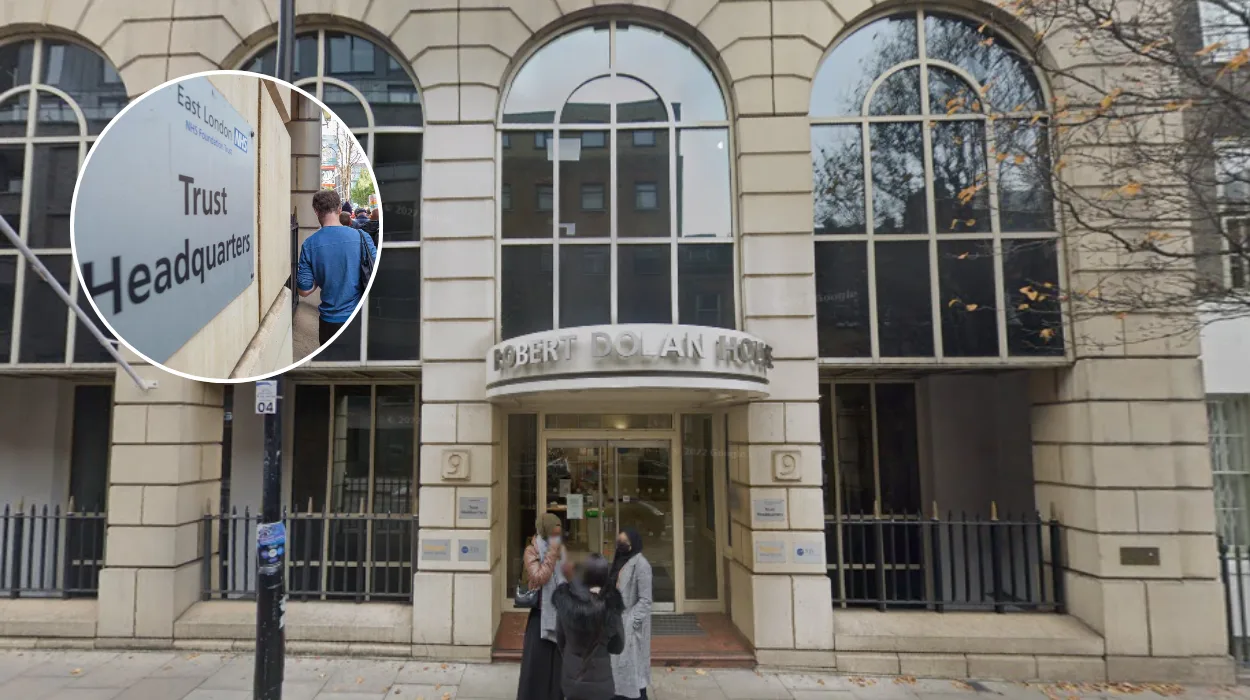
London (The Londoner News) August 3, 2026 – An NHS mental health trust serving communities in east London and Bedfordshire has triggered fierce public and political backlash after revealing comprehensive plans to slash roughly £25m from its operating budget, cutting hundreds of frontline jobs and scaling back critical services.
Why Is the East London Foundation Trust Implementing These Cuts?
As reported by Denis Campbell, health policy editor of The Guardian, the East London Foundation Trust (ELFT) is moving forward with a target of £24.97m in savings because NHS England has mandated that all 205 of the country’s trusts must balance their operational books. ELFT delivers essential mental health care across the east London boroughs of Hackney, Tower Hamlets, and Newham, alongside Luton and Bedford in Bedfordshire.
According to ELFT documents and reporting highlighted by The Guardian, the trust intends to shed about 330 roles from its 6,000-strong workforce—equating to 5% of its total personnel—utilising a mix of mandatory redundancies and the permanent removal of vacant posts. The sweeping savings package involves the controversial “redesign” of at least 10 frontline healthcare services. These include child and adolescent mental health services (CAMHS), psychological talking therapies, addiction recovery services, acute crisis intervention for adults, and specialist community outreach programmes tailored for ethnic minority groups and low-income populations.
Furthermore, immediate action is already underway on the ground. Fothergill ward, which operates as a 20-bed intermediate care facility at the East Ham care centre, has stopped accepting new admissions and is scheduled for permanent closure on 21 September.
Explore More East London News
Tower Hamlets Leads Affordable Housing Legal Fight in London 2026
East London Hosepipe Ban After Flash Drought 2026
What Are Healthcare Unions and Campaigners Saying About the Move?
The announcement has sent shockwaves through the healthcare sector, with major labor unions and campaign groups condemning the strategy as unviable and dangerous. As reported by Denis Campbell of The Guardian, Richard Munn, the national officer for health at the trade union Unite, issued a scathing critique of the restructuring.
Richard Munn of Unite stated that:
“To see cuts to any mental health service is unfathomable and unacceptable. Cutting mental health services will lead to exponentially greater costs to the public purse and lead to lives being destroyed.”
Munn further warned that the scale of the reduction will directly imperil vulnerable patients. As reported by The Guardian, Munn stated that:
“Such extensive cuts to services and staff will inevitably lead to people with acute mental health problems, who need care urgently, facing longer waiting times. The consequence of this will in some cases be tragic, life-changing and irreversible.”
In response to the operational cuts and internal labor disputes, Unite confirmed it is actively preparing to ballot its members at ELFT over potential industrial and strike action. The union’s anger has been further intensified by the departure of its lead trust official, Mark Dunne. According to The Guardian, Richard Munn denounced Dunne’s dismissal as a “sham redundancy” that demonstrated the “cold, uncaring nature of this employer.”
Simultaneously, independent healthcare monitoring groups have stepped forward to criticize the broader systemic policies forcing these reductions. Dr Tony O’Sullivan, co-chair of the campaign group Keep Our NHS Public, highlighted what he described as an alarming paradox within national health spending.
As reported by The Guardian, Dr Tony O’Sullivan stated that:
“Given that many patients with mental health needs already face long delays before getting NHS care, cutting services as dramatically as ELFT proposes will inevitably mean that some of those in dire need of its help will inevitably go private to get the treatment they need.”
O’Sullivan added:
“The screaming contradiction we see is that while NHS funding for its own trusts is so limited that ELFT has to make £25m of cuts, the Department of Health and NHS England are happy to hand £2.5bn to private firms to expand their capacity to treat NHS patients.”
How Are Local Politicians Responding to the Crisis?
The financial crisis has caught the attention of local parliamentarians who fear deep impacts on healthcare equity and public safety. Apsana Begum, the Labour MP for Poplar and Limehouse, has taken direct action by writing an official letter to ELFT’s chief executive, Lorraine Sunduza, demanding full accountability.
In her correspondence covered by The Guardian, Apsana Begum questioned whether leadership had fulfilled its statutory duty by undertaking a comprehensive risk assessment of the proposed changes. Begum asked if the trust evaluated the likely impact on “public health, public safety and health equalities.”
Expressing her disbelief at the sweeping nature of the proposal, Apsana Begum stated that:
“I simply cannot envisage that cuts of that scale could be implemented without creating a substantial variation in how services are accessed by patients.”
Begum also registered deep concern over a lack of proper democratic and community channels, noting that few of the strategic redesigns had been put forward for formal public consultation “despite the wide-ranging savings apparently intended” and the severe job losses involved.
Were the Cuts Hidden From Public and Board Scrutiny?
Questions regarding corporate governance and transparency have compounded the outrage. According to investigative details highlighted by The Guardian, the official report submitted by the trust’s finance committee to its most recent board meeting on 23 July made no mention whatsoever of the £25m savings target or the sweeping service reductions—despite internal documents showing the cuts had been under active preparation for several weeks. This omission has fueled intense criticism from staff and public advocates who claim management has attempted to push through major downsizing away from public oversight.
What Is the Trust’s Official Defense?
In response to the mounting pressure, allegations of a lack of transparency, and concerns over patient safety, spokespersons for the East London Foundation Trust have defended their trajectory while outlining the procedural steps ahead.
Defending the overall fiscal approach, an ELFT spokesperson stated:
“Like all NHS providers we have a responsibility to live within our means so that we can continue to provide high-quality care to the communities we service, now and in the future.”
Addressing criticisms that no formal impact assessments had been published alongside the initial planning notes, the trust argued that such evaluations were premature at this stage. ELFT clarified that it had not yet executed a formal risk assessment because “these are indicative savings proposals at an early stage,” even though administrative records confirmed that the targeted list of service reductions was structurally accurate as of 7 May.
Offering assurance to patients, families, and local stakeholders, the trust spokesperson concluded with a firm institutional commitment, emphasizing that no individual service cuts or restructuring components “will move to implementation without passing through quality impact assessment.”
As the autumn approaches and union ballots loom, the unfolding situation at ELFT serves as a tense focal point for the wider debate over funding, austerity, and the operational limits of mental healthcare provision across the United Kingdom.