

Key Points
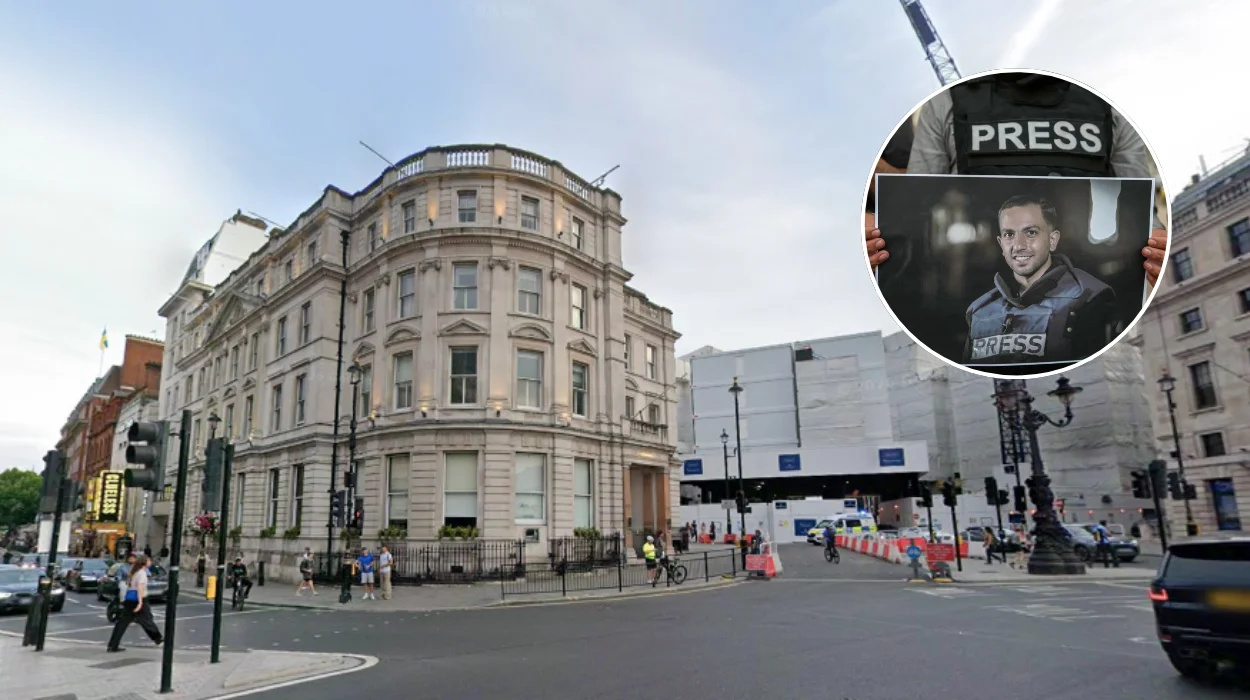
- There has been a memorial event entitled “Bearing Witness: Tribute Panel for Anas al-Sharif & Gaza’s Murdered Journalists” to remember the one year anniversary of his death in London.
- Anas al-Sharif, 28-year-old correspondent for Al Jazeera Arabic, died on 10 August 2025 when he was attacked by the Israelis along with other five media personnel near al-Shifa Hospital in Gaza.
- Speakers of this event, such as Ahmed Al-Naouq, Mariam Al-Sayeh, Malak Tantesh, and Abubaker Abed called the attacks on the journalists as systematic and mass assassination.
- According to Palestinian Journalists’ Syndicate, up until now 264 journalists have been killed, 572 were injured, and 38 have been arrested since October 2023, and 150 sites of the media infrastructure were demolished.
- This event condemned the complicity and silence of the international media, and considered the attack on the journalists as a purposeful move to cover up the reality of the war in Gaza.
- The last message of Anas al-Sharif was recalled in this event where he said that people of the world should not allow chains and borders to silence the truth about Gaza.
London (The Londoner News) August 15, 2026 – Journalists, activists, and observers gathered in London on Friday to commemorate the life and work of Palestinian reporter Anas al-Sharif, using the occasion to denounce what they characterised as a systematic attempt by Israel to erase Palestinian voices from the record of the ongoing war in Gaza. One year after his death, the panel—organised by Youth Movement Palestine—brought together colleagues who had worked in the territory to confront the lethal reality of reporting under fire and to challenge the broader silence of global media institutions regarding the deliberate targeting of the press.
- Key Points
- Who was Anas al-Sharif and why was his work significant?
- How did the killing of Anas al-Sharif and his colleagues happen?
- What are the dangers faced by journalists reporting from Gaza?
- Why do activists claim the killing of journalists is ‘systematic’?
- Is the international media complicit in the silencing of Gaza?
- What was the final message of Anas al-Sharif?
Who was Anas al-Sharif and why was his work significant?
Anas al-Sharif, a 28-year-old Al Jazeera Arabic correspondent, became a critical bridge of information between the besieged northern Gaza Strip and the outside world. As reported by Agnese Boffano of The New Arab, al-Sharif’s reporting from areas subjected to intense bombardment, displacement, and starvation made him one of Gaza’s most recognisable witnesses.
Malak Tantesh, a Guardian reporter who worked in Gaza, shared her personal encounter with the late journalist. As noted by Boffano in her reporting for The New Arab, Tantesh recalled:
“I met Anas just once, just a few days before he was killed. I was reporting about the situation at Al-Shifa Hospital in northern Gaza. His smile was shining the place and everyone was happy to see him, especially the patients, who saw him as the messenger who would deliver their suffering to the outside world.”
Furthermore, Abubaker Abed, a Palestinian journalist who later evacuated to Dublin, described the deceased reporter as “a giant of a man.” In his statement to The New Arab, Abed emphasised the professional impact of his colleague, noting: “His work as very extensive, very thorough, very professional, indispensable, and instrumental in shedding light on the genocide in Gaza, particularly on the vast destruction and catastrophic famine levels in the northern parts of the Strip.” Abed added,
“He is the best in our lifetime.”
How did the killing of Anas al-Sharif and his colleagues happen?
The panel, held at Palestine House, addressed the circumstances of the strike that claimed al-Sharif’s life. On 10 August 2025, an Israeli strike hit a tent used by journalists near al-Shifa Hospital. The attack resulted in the death of al-Sharif and five other Palestinian journalists: Al Jazeera correspondent Mohammed Qreiqeh, and camera operators Ibrahim Zaher, Mohammed Noufal, and Moamen Aliwa, as well as freelance photojournalist Mohammed al-Khaldi.
As detailed by Agnese Boffano for The New Arab, while Israel acknowledged targeting al-Sharif, it alleged he was linked to Hamas—a claim explicitly rejected by Al Jazeera. The Committee to Protect Journalists (CPJ) has also stated that these allegations against him were unsubstantiated and has joined calls for accountability. During the London tribute, speakers unanimously rejected the official Israeli framing, describing the incident not as collateral damage in war, but as a “mass assassination.”
What are the dangers faced by journalists reporting from Gaza?
The discussion delved into the unprecedented conditions facing media workers in Gaza, who are forced to navigate the same existential threats—hunger, displacement, and death—as the populations they are documenting.
“Our work as journalists was extremely difficult and exhausting,” Malak Tantesh explained to The New Arab. “We were experiencing fear, hunger and displacement, just like everyone else in Gaza. At the same time, we continued reporting and risking our lives to tell the truth and share our suffering and our voices with the outside world.”
Tantesh further highlighted the psychological toll of this reality:
“I clearly remember how scared I was of being targeted while working. I was afraid that my family would not be able to recognise me, or that they would not even be able to find my body.”
Abubaker Abed, who left Gaza following repeated threats, suggested that the expectations placed upon the remaining journalists were akin to “the work of a superhuman.” As reported by The New Arab, Abed noted the difficulty of simply existing—waiting in long queues for basic hygiene facilities or navigating communications blackouts—while attempting to maintain a professional standard of reporting.
Why do activists claim the killing of journalists is ‘systematic’?
A recurring theme of the tribute was the argument that the high casualty rate among the press in Gaza is not a series of unfortunate errors, but a calculated strategy.
“It’s a tactic,” Abed told The New Arab. “It’s not some sort of aberrational activity. It is a tactic, and it is something that Israel deliberately did because [journalists] expose the unbelievable magnitude of what they have perpetrated in Gaza.”
The panel highlighted that the targeting has evolved over time, shifting from digital threats and attempts to discredit reporters to the physical elimination of established voices. According to the Palestinian Journalists’ Syndicate, cited by Boffano, 264 journalists have been killed, 572 injured, and 38 detained since October 2023, alongside the destruction of 150 media institutions.
Explore more Local London News:
Trent Park Nazi Spy Museum Opens in Enfield 2026
Two New Wetherspoon Pubs Opening in Central London 2026
Is the international media complicit in the silencing of Gaza?
Speakers expressed significant frustration with mainstream media outlets, accusing them of failing to adequately cover the crisis and of sanitising the reality on the ground.
Mariam Al-Sayeh, a journalist and media researcher at Al Jazeera, argued that the failings of the mainstream press went beyond simple under-reporting. As reported by The New Arab, Al-Sayeh stated:
“Mainstream media still cannot accept what happened. Every day, the media chooses to ignore what is happening in Palestine.”
She criticised coverage that focuses on “spectacular moments” of violence while ignoring the day-to-day “unliveable” conditions, such as heatwaves and deprivation.
Ahmed Al-Naouq, of Palestine Deep Dive, echoed this sentiment, urging media institutions to shift their focus away from what audiences want toward what they need.
“We should not actually care what the audience wants, but what the audience needs,”
Al-Naouq stated, as reported by The New Arab.
“And the people need to see what’s going on in Gaza.”
Abubaker Abed was even more pointed in his assessment of institutional silence, telling The New Arab:
“What we are seeing is something that has been enabled by Western media outlets, by Arab media outlets, and by Western and Arab regimes. They have enabled all this. They stayed silent. Not all they stayed silent, but they funded the genocide.”
What was the final message of Anas al-Sharif?
The tribute concluded with the reading of a letter written by al-Sharif—a practice many journalists in Gaza have adopted given the constant threat of death.
“If these words reach you, know that Israel has succeeded in killing me and silencing my voice,”
the letter read.
“I have lived through pain in all its details. Tasted suffering and loss many times. Yet I never once hesitated to convey the truth as it is, without distortion or falsification.”
As reported by The New Arab, the journalist’s final plea to his colleagues and the world was:
“I urge you not to let the chains silence you, nor borders restrain you. Be bridges toward the liberation of the land and its people, until the sun of dignity and freedom rises over our stolen homeland.”
“Do not forget Gaza,” he concluded,
“and do not forget me in your sincere prayers for forgiveness and acceptance.”