Key Points
- End of Drought in London Area: London and its neighboring regions in the South East, including Wisley, located in Surrey, have seen an extremely dry period in which some places have recorded no rain falling for 58 days.
- Respite to the Drying Up Areas: The presence of rain has brought much-needed relief to London’s parks and other green spots, which have been struggling with extreme summer temperatures and the risk of forest fires.
- Change in the Weather Pattern: As per Met Office and weather reports, there is a change in the weather pattern with forecasts suggesting six days of rain over late August.
- Continuous Rainfall: After the almost two-month long dry period, London experienced some rainfall for two consecutive days and this was the start of the cooling down period for the city.
- Climate Background: The climate experts refer to this weather phenomenon as part of “climate whiplash,” in which regions experience extremes of temperature and rain.
London (The Londoner News) August 20, 2026 – After enduring a punishing 58-day period without significant precipitation, Londoners have finally witnessed the return of notable rainfall. The parched capital, which has battled repeated heatwaves, wildfires, and severe drought conditions throughout the summer, recorded rain on two consecutive days this week, signalling a potential shift in the region’s weather trajectory.
Why is this rainfall significant for London?
The arrival of rain comes as a vital relief to a city that has been gripped by one of the driest summers in recent history. As reported by the Evening Standard, parts of London had experienced up to 42 consecutive days without measurable rain by early August, with some specific locations, such as the village of Wisley in Surrey, recording a staggering 58 days without a single drop of rain.
The dry spell has had tangible consequences. According to The Guardian, writing on August 20, 2026, the summer has been described as potentially the “hottest, driest and deadliest in English history,” with nearly three-quarters of England and all of Wales suffering under drought conditions. Reservoirs have been reported as parched, and hosepipe bans were implemented across much of the country to conserve dwindling water supplies.
What caused the 58-day dry spell?
The prolonged lack of rain is attributed to a series of intense heatwaves that have dominated the United Kingdom throughout the summer of 2026. MyLondon reports that London recently navigated its fifth heatwave of the season, with temperatures in Kew Gardens reaching as high as 38.1°C in mid-August.
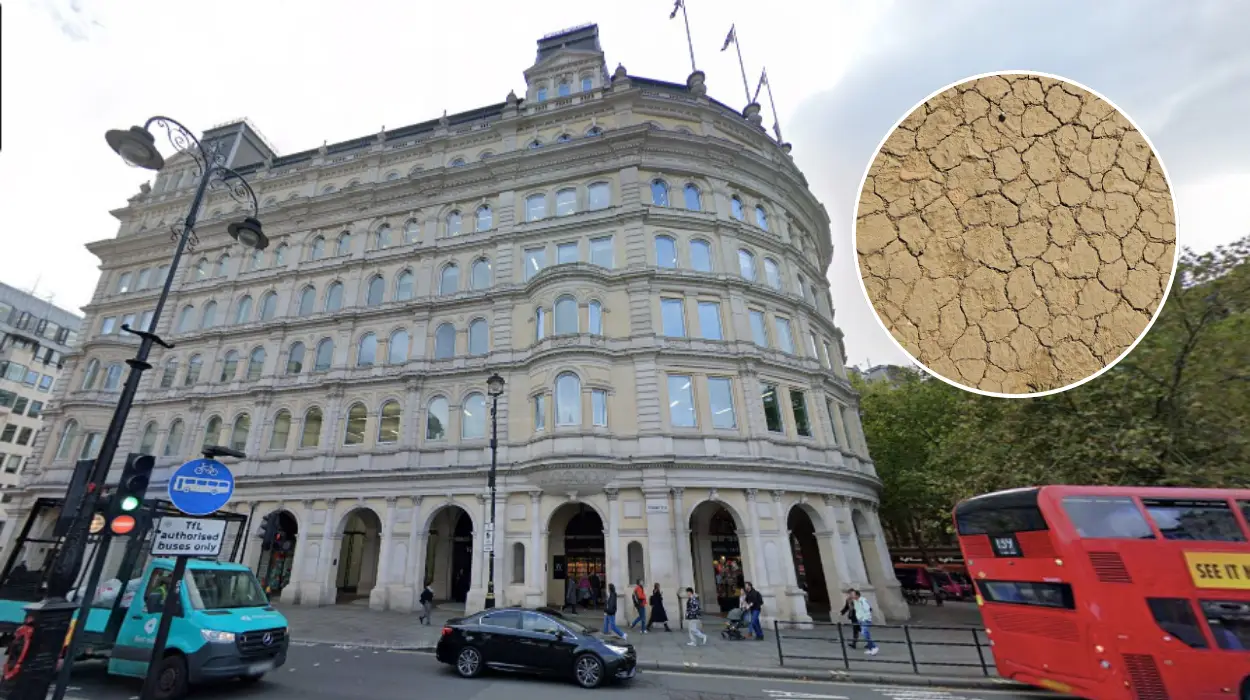
The combination of record-breaking temperatures and an absence of rainfall created a “dust bowl” environment in many green spaces, including Hampstead Heath, where grass turned a brittle yellow-brown. The intensity of this summer was further contextualised by Hayley Fowler, a professor at Newcastle University, who, as quoted by Aditya Chakrabortty of The Guardian, noted that the UK is entering an era of “climate whiplash”—a phenomenon where the environment rapidly swings from extreme, arid heat to sudden, intense rainfall.
Explore more Local London News:
Central London House Prices Fall 25% in Westminster, London 2026
Human Bones Found at Hounslow Park in London, 2026
What does the weather forecast say for the remainder of August?
The return of rainfall is not expected to be a fleeting event. According to MyLondon, meteorologists have forecast six days of rain before the end of August, providing long-awaited “succour to its dried-out parks and green spaces”.
The pattern of rainfall began to emerge earlier in the week. As documented by The Times of India, the forecast for Wednesday, August 19, indicated a 50% chance of rain alongside sunny intervals. This was followed by reports of light showers and winds on Thursday, August 20, which helped pull temperatures down to a more comfortable 21°C.
Looking ahead, the forecast remains unsettled, which is a departure from the persistent high pressure that defined the previous two months. MyLondon notes that while Friday, August 21, may see only light, patchy rain, heavier, more substantial showers are anticipated for Saturday, August 22, with further intense downpours predicted for the following Tuesday and Wednesday.
How are experts viewing these weather trends?
The transition from a 58-day drought to a period of consistent rainfall has sparked broader discussions regarding the UK’s climate future. Professor Hayley Fowler, in her comments to The Guardian, warned that this “climate whiplash” is a sign of things to come.
“Britain is world-renowned for its soft steady drizzle, but over the next couple of decades, our summers will turn arid while winters are more likely to bring a regular deluge of rain, breaking our riverbanks and flooding our homes,”
Prof. Fowler stated. The sentiment shared by environmental analysts suggests that while the current rain is welcome for reservoirs and agriculture, it also highlights the infrastructure challenges posed by the UK’s changing weather patterns.
For the residents of London, the current weather represents a dual reality: relief from the heat and the immediate risks of wildfire, contrasted with the necessity to adapt to more volatile and extreme meteorological cycles in the coming years. As the capital enters this cooler, wetter period, the focus shifts from managing heat-related health alerts to monitoring the impact of increased precipitation on the city’s urban drainage and water management systems.