Key Points
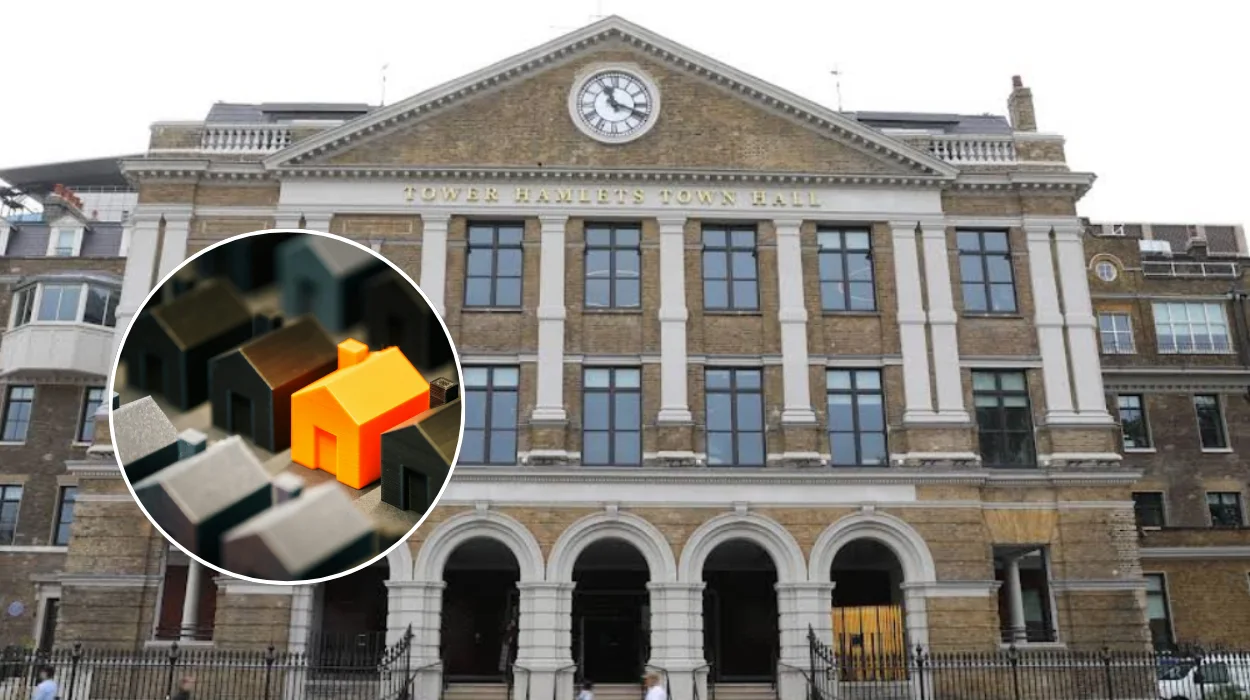
- Five new residential developments by four leading architecture firms have been presented in the form of planning applications to Tower Hamlets Council.
- These planning applications are an important component of the Mayor’s Accelerated Housing Programme that is launched by the Tower Hamlets Council and is meant to provide over 3,000 new houses in the borough.
- In total, five new planning applications include 203 new residential units on underutilized council lands.
- The distribution of the total number of 203 homes consists of 90 social rent homes, 56 affordable homes, and 57 open market homes.
- It should be noted that this submission is the ‘batch one’ of planning applications after three previous submissions via the housing programme.
- A significant precedent was set this year when Matthew Lloyd Architects became the first firm to submit plans on behalf of the Tower Hamlets Council, including a 44-unit development at Bethnal Green.
- Among five current developments, Levitt Bernstein is the first to present formal proposals for two different sites.
London (The Londoner News) August 28, 2026 – Tower Hamlets is advancing its ambitious municipal housing agenda with a fresh influx of architectural proposals aimed at tackling acute local housing pressures. As reported by architects’ publications covering the initiative, the London Borough of Tower Hamlets has formally received planning applications for five residential schemes drafted by a consortium of leading architectural practices, namely Levitt Bernstein, PRP, Pollard Thomas Edwards (PTE), and HTA Design.
The projects are a core component of the council-led Mayor’s Accelerated Housing Programme, a broad municipal strategy engineered to deliver upwards of 3,000 new homes across the entirety of the east London borough. By targeting underused and neglected council-owned plots, the local authority seeks to transform dormant municipal spaces into vibrant residential communities.
What is the scope of the new housing batch?
The five newly submitted schemes crafted by the collaborative practices will collectively yield 203 homes. According to data released regarding the filings, the housing mix has been heavily weighted toward addressing affordability. The breakdown incorporates 90 social rent homes, 56 intermediate affordable homes, and 57 open market homes, ensuring a mixed-tenure approach designed to support various segments of the local housing register.
As noted by architectural journalists following the rollout, this latest wave represents the official ‘batch one’ submissions. This follows three preliminary applications that were lodged earlier through the wider housing programme framework. Notably, Matthew Lloyd Architects blazed the trail earlier this year by becoming the inaugural practice to submit formal plans on behalf of Tower Hamlets Council, doing so with a 44-home residential project situated in Bethnal Green.
Which practices are leading the latest wave?
Within this current wave of planning applications, Levitt Bernstein has emerged with a prominent footprint, having submitted detailed proposals for two separate sites across the borough. The remaining schemes in the batch have been distributed among PRP, Pollard Thomas Edwards (PTE), and HTA Design, showcasing a diverse range of design methodologies tailored to tight urban contexts.
Industry observers have highlighted that these practices were selected for their extensive experience in delivering high-density, high-quality public housing across the capital. Their involvement is viewed by local housing advocates as a crucial step in ensuring that council-led developments meet rigorous contemporary standards for sustainability, spatial efficiency, and architectural integration.
Explore more East London News:
Tesla Smashes Into East London Home, Driver Unscathed 2026
Hackney 23-Storey Co-Living Tower Plans 2026
How does this fit into the wider Mayor’s Accelerated Housing Programme?
The Mayor’s Accelerated Housing Programme was conceived to bypass traditional bureaucratic bottlenecks by aggressively identifying, unlocking, and developing small-to-medium council-owned sites. Municipal leaders have repeatedly emphasised that relying on large-scale masterplans alone is insufficient to meet east London’s deep-seated housing crisis. Consequently, unlocking smaller, fragmented parcels of land—such as redundant car parks, disused garages, and infill plots—has become a central pillar of the council’s strategy.
As detailed in reports by building design correspondents, the inclusion of 90 social rent properties within this 203-home batch underscores the administration’s commitment to prioritizing households trapped on long waiting lists. Social rent remains one of the most critical requirements for Tower Hamlets, where market rents have surged out of reach for a significant portion of the working-class population.
What are the next steps for the planning applications?
With the planning applications now formally lodged with Tower Hamlets Council, the proposals will enter the standard statutory consultation phase. Local residents, community groups, and statutory consultees will have the opportunity to review the designs and submit representations.
Local government analysts expect the planning committee to review the submissions over the coming months. If approved, construction timelines for batch one of the Mayor’s Accelerated Housing Programme will begin to take shape, bringing the borough one step closer to its milestone target of over 3,000 new homes. Architectural commentators will be closely monitoring how these five schemes navigate the planning process, serving as a vital bellwether for future waves of council-led development across east London.