Key Points
- Cross-Party Political Rebuttal: A coalition of British Members of Parliament and political leaders have urged Home Secretary Shabana Mahmood to resist pressure from a group of 50 members of the House of Lords demanding that American rapper Macklemore be banned from entering the United Kingdom.
- Lords’ Campaign to Revoke Travel Clearance: Organised by Lord Walney, former chair of Labour Friends of Israel, a cross-party alliance of 50 peers wrote to the Home Secretary requesting the revocation of Macklemore’s Electronic Travel Authorisation (ETA) ahead of his scheduled charity performance at London’s Wembley Arena.
- Controversy Over Beneficiaries: The peers asserted that Macklemore’s presence would not be “conducive to the public good” due to his financial support for groups such as the Palestinian Youth Movement (PYM), accusing the organisation of “glorifying terrorism”—a charge the PYM vehemently denies.
- Free Speech Defended by MPs: Prominent politicians, including Green Party Deputy Leader Mothin Ali and independent MPs Zarah Sultana, Adnan Hussain, Ayoub Khan, and Shockat Adam, publicly defended the artist, characterizing the effort to exclude him as an authoritarian assault on free expression and humanitarian activism.
- Charity Concert at Wembley: The artist’s “Free Palestine” tour, which kicked off with sold-out shows in Dublin and Paris, raises funds for humanitarian and medical aid relief through Medical Aid for Palestinians (MAP), UNRWA USA, the Palestine Children’s Relief Fund (PCRF), and PYM.
- Broader Free Speech Context: The dispute follows recent UK civil liberties controversies, including the withdrawal of bestselling author Sally Rooney’s books from the British market and the UK government’s prior entry bans on American commentators Hasan Piker and Cenk Uygur.
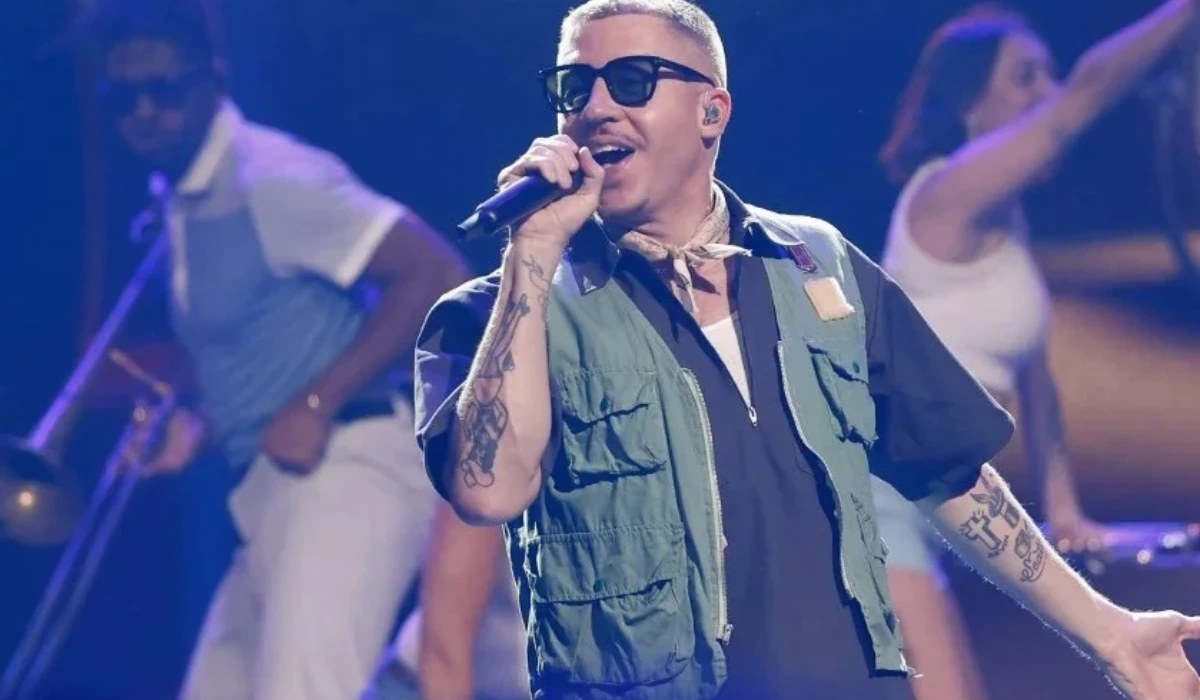
LONDON (The Londoner News) October 27, 2026 – British politicians from across the political spectrum have called on the United Kingdom government to reject demands from a group of 50 unelected members of the House of Lords to ban American rapper Macklemore from entering the country. The Grammy Award-winning artist, whose real name is Benjamin Hammond Haggerty, is scheduled to perform a charity concert at London’s Wembley Arena on Thursday to raise funds for humanitarian aid in Palestine. In statements delivered to media outlets, Members of Parliament and party leaders denounced the proposed entry ban as an authoritarian overreach and an attempt to stifle political art and free speech. The row erupts as the Home Office faces mounting pressure over civil liberties and the treatment of international artists speaking out on global conflicts.
- Key Points
- What Did British Politicians Say in Defense of Macklemore’s Right to Perform?
- Why Are Members of the House of Lords Demanding a Ban on Macklemore?
- What Led to Macklemore’s “Free Palestine” Tour and His Recent Public Actions?
- Background of the Particular Development
- How This Development Can Affect the Performing Arts Industry and Home Office Policy
What Did British Politicians Say in Defense of Macklemore’s Right to Perform?
As reported by journalist Rayhan Uddin of Middle East Eye, several prominent British political figures directly challenged the move by members of the House of Lords to prevent Macklemore from performing in the UK.
As reported by Rayhan Uddin of Middle East Eye, Mothin Ali, the deputy leader of the Green Party, warned against suppressing artistic expression, stating: “As a country we value freedom of speech as one of our highest held freedoms. The campaign to stop a musician from playing in the UK is worryingly authoritarian, especially on the back of Sally Rooney having to withdraw her books from the UK”. Ali added that “Macklemore has taken a principled stance in speaking out against the atrocities committed in Palestine. He should be celebrated not demonised”.
As reported by Rayhan Uddin of Middle East Eye, Independent MP Zarah Sultana expressed her backing for the American artist, stating: “Full solidarity with Macklemore, who has consistently used his platform to speak up for Palestine and oppose Israel’s brutal genocide”. Sultana criticized the signatories of the letter, adding: “While fifty unelected peers demand this ban, millions of people across Britain stand in solidarity with Macklemore and the Palestinian people. This is a disgraceful attack on freedom of expression, which sends a chilling message to every artist who dares to speak out: stay silent or face the consequences. Macklemore should be welcomed to Britain and free to perform. The home secretary must reject these demands and make clear that solidarity with Palestine is no grounds for exclusion”.
As reported by Rayhan Uddin of Middle East Eye, Independent MP Adnan Hussain emphasized the historic relationship between culture and politics, stating: “I firmly oppose calls to ban Macklemore from entering the UK. An artist’s right to freedom of expression, to create, perform and showcase their art must be defended, not suppressed simply because their message makes those in power uncomfortable. Art has always been political, and particularly in moments of profound human suffering, it has a vital role to play”. Hussain further remarked that Macklemore’s “support for Palestine and his willingness to confront the reality of what is happening in Gaza deserve recognition, not punishment. The proceeds from his concert supporting organisations providing vital humanitarian and medical assistance to Palestinians make this all the more meaningful”.
As reported by Rayhan Uddin of Middle East Eye, Labour MP Kim Johnson took aim at the House of Lords, stating: “This provides yet more evidence of whose interests some peers serve. An unelected House of Lords and the suppression of free speech is a dangerous combination. To claim Macklemore’s presence here to perform at a charity gig is ‘not conducive to the public good’ is an outrageous attempt to shut down and silence legitimate criticism of Israel“.
As reported by Rayhan Uddin of Middle East Eye, Independent MP Ayoub Khan urged the government to focus on other financial flows, stating: “I stand firmly with Macklemore. These attempts to shut down a charity event – raising funds for victims of a genocide – expose the lengths some will go to silence activism and distract from the expulsion, oppression and murder of the Palestinian people”. Khan added: “If these peers are genuinely concerned about unethical fundraising that glorifies terrorism, let’s channel our efforts where they’re actually needed. British charities are funnelling millions into illegal Israeli settlements as we speak: I don’t see any of the 50 Peers raising concerns about that. The genocide, apartheid, and mass displacement of an entire people are far more offensive than Macklemore’s Free Palestine tour could ever be”.
As reported by Rayhan Uddin of Middle East Eye, Independent MP Shockat Adam called on executive authorities to allow the concert to proceed, stating: “Unelected Lords should spend less time pontificating about an American musician playing a sold-out charity concert at Wembley in support of the plight of victims of genocide, and more time holding Israel to account for breaking international humanitarian law. The home secretary must not stand in the way of music uniting the world nor the millions raised in donations to the cause of freeing Palestine”.
Why Are Members of the House of Lords Demanding a Ban on Macklemore?
As reported by Rivkah Brown of Novara Media, the campaign targeting Macklemore was coordinated over the weekend by Lord Walney, an ex-chair of Labour Friends of Israel and former government adviser on political violence. A letter signed by 50 members of the House of Lords was formally submitted to Home Secretary Shabana Mahmood, petitioning her to revoke Macklemore’s Electronic Travel Authorisation (ETA).
The peers asserted that allowing the musician to perform in London would not be “conducive to the public good”. Their argument centers on Macklemore’s commitment to allocate proceeds from his “Free Palestine” tour to several advocacy and humanitarian relief groups, including the Palestinian Youth Movement (PYM).
The signatories—which include prominent political figures such as former Conservative Party chair Eric Pickles, former DUP leader Arlene Foster, former attorney general Lord Goldsmith, Lord Brady of Altrincham, and Lord Roberts of Belgravia—claimed that the PYM holds positions that “glorify terrorism” and engage in political coercion. The letter referenced PYM statements regarding occupied territories and highlighted past campaigning during 2025 targeting Labour politicians.
The Palestinian Youth Movement has strenuously denied all allegations of glorifying terrorism, maintaining that its activities represent lawful human rights advocacy and legitimate grassroots protest against military occupation.
What Led to Macklemore’s “Free Palestine” Tour and His Recent Public Actions?
Macklemore’s international tour follows months of active advocacy regarding the Middle East conflict. The American rapper generated global headlines after releasing his protest track “Hind’s Hall,” named in memory of Hind Rajab, a six-year-old Palestinian girl killed in Gaza. The song explicitly critiques Western foreign policy and military actions in Gaza.
During a concert performance, Macklemore delivered a viral speech addressing his audience, declaring “Free Palestine” while speaking directly to his Jewish fans: “Criticism of Israel, criticism of apartheid, being against genocide, is in no way a criticism of you”.
Shortly after these public statements, British pop singer Ed Sheeran dropped Macklemore as an opening support act on his United States tour. In response, Macklemore organized the independent “Free Palestine” tour, promising to direct proceeds to humanitarian organizations including Medical Aid for Palestinians (MAP), UNRWA USA, the Palestine Children’s Relief Fund (PCRF), and the Palestinian Youth Movement (PYM). The tour dates in Dublin, Paris, and London sold out within hours of ticket release.
What Is the Wider Civil Liberties Context Surrounding Free Speech in the UK?
The effort to exclude Macklemore coincides with heightened public debates in Britain concerning freedom of expression, protest rights, and political commentary.
Earlier this year, the British government faced sharp international criticism after denying entry visas to American political commentators Hasan Piker and Cenk Uygur over their public commentary regarding Middle Eastern geopolitics. Furthermore, civil liberties groups highlighted the case of Irish author Sally Rooney, whose books were withdrawn from the UK market after she declared that royalty proceeds would support Palestine Action.
The UK government proscribed Palestine Action in July 2025, making public support for the direct-action group a criminal offense carrying potential prison sentences of up to 14 years. Critics contend that the expanding use of border restrictions and proscription powers creates a chilling effect across the arts, publishing, and public discourse.
Background of the Particular Development
Under United Kingdom immigration law, the Home Secretary possesses discretionary power to refuse entry or revoke travel authorizations—including the newly implemented Electronic Travel Authorisation (ETA) scheme—if an individual’s presence is deemed “not conducive to the public good.” Historically, these exclusion powers were reserved for individuals convicted of serious criminal offences, human rights abuses, or those directly inciting violence and hate speech.
Over recent years, the application of exclusion orders has expanded to encompass broader political and ideological grounds, sparking debate between national security advocates and civil liberties organizations. The House of Lords, as the un-elected upper chamber of the UK Parliament, contains members who frequently engage in legislative oversight and public policy campaigning. The letter organized by Lord Walney represents a coordinated attempt by pro-Israel parliamentary groups to utilize immigration compliance mechanisms to curb fundraising for organizations associated with Palestinian activism.
How This Development Can Affect the Performing Arts Industry and Home Office Policy
The high-profile dispute surrounding Macklemore’s London concert is expected to yield several significant consequences for international artists, event organizers, and British immigration policy:
- International Touring Artists and Cultural Performers: Foreign musicians, authors, and public figures engaging in political commentary or charitable fundraising for controversial causes may face increased administrative scrutiny when applying to enter the UK. Touring artists may be required to conduct legal reviews of beneficiary charities to avoid potential entry bans or venue cancellations resulting from parliamentary lobbying.
- The Home Office and Executive Decision-Makers: Home Secretary Shabana Mahmood faces a delicate administrative choice. Acceding to the peers’ request risks provoking legal challenges under the Human Rights Act 1998 regarding freedom of expression, while also igniting public backlash from civil liberties advocates. Conversely, rejecting the letter could draw political criticism from opposition lawmakers and pro-Israel lobbying groups.
- UK Arts Venues and Event Organizers: Promoters and venues hosting international talent will likely face heightened security planning and insurance requirements when staging political or charity events. Continued political disputes over international entry permissions could prompt some global acts to bypass UK tour stops in favour of other European destinations.