Key Points
- Council Denial of Social Media Claims: Rotherham Metropolitan Borough Council has formally stated it has no knowledge of any plans or submitted planning applications to turn derelict homes on the Little London estate in Maltby into Houses in Multiple Occupation (HMOs) for migrants.
- Official Statement on Speculation: Ian Spicer, Rotherham Council’s Executive Director of Adults, Housing and Public Health, confirmed that no proposals or associated planning applications are currently under consideration, urging residents to rely on verified council information.
- Approved Redevelopment Scheme: Outline planning permission was granted in September 2025 to developer Rivergrove Ltd to demolish two blocks of derelict housing and construct 15 new two-storey homes across Churchill Avenue, Greenland Avenue, Morrison Avenue, and Greenland Avenue South.
- Financial Contributions and Developer Holdings: Developer Rivergrove Ltd owns 64 of the estate’s 138 properties and has agreed to provide financial contributions totaling £76,200 for off-site affordable housing, £56,055 for secondary school places at Maltby Academy, and £7,500 for sustainable transport initiatives.
- Community Concerns and Demolition Status: Residents have long campaigned against anti-social behaviour, vermin, and fly-tipping linked to the derelict sites; however, 20 formal objections were submitted against the redevelopment. Council officials confirmed that detailed planning matters must be approved before demolition can commence.
London (The Londoner News) October 29, 2026 – Rotherham Metropolitan Borough Council has publicly dismissed unverified claims circulating on social media alleging that empty properties on Maltby’s Little London estate are set to be converted into shared accommodation for migrants. Council officials confirmed that no planning applications or proposals for Houses in Multiple Occupation (HMOs) exist for the site. Instead, the local authority pointed to an approved regeneration scheme by developer Rivergrove Ltd, which granted outline permission to demolish derelict housing blocks and construct 15 new two-storey family homes alongside public open space.
- Key Points
- How did Rotherham Council respond to social media rumours regarding migrant housing in Maltby?
- What are the approved planning details for the Little London estate regeneration?
- Why have residents campaigned over the Little London estate, and what concerns remain?
- Background of the particular development
- How this development can affect Maltby residents, local property owners, and community relations
How did Rotherham Council respond to social media rumours regarding migrant housing in Maltby?
Rotherham Metropolitan Borough Council has taken formal action to dispel rumours spreading across social media platforms regarding the future of the Little London estate in Maltby. The claims, which circulated in online community posts, alleged that secret meetings had taken place to convert vacant and derelict houses into Houses in Multiple Occupation (HMOs) designated specifically for asylum seekers and migrants.
Addressing the online reports, council officials confirmed that the posts provided no supporting documentation, official records, or verifiable meeting details.
As reported by local media coverage detailing the local authority’s statement, Ian Spicer, Executive Director of Adults, Housing and Public Health at Rotherham Council, issued a clear denial of the claims. As reported by local news outlets, Ian Spicer stated: “We are aware of claims circulating on social media about properties on the Little London estate in Maltby being converted into Houses of Multiple Occupancy (HMOs).”
Outlining the council’s formal regulatory position, Spicer clarified that no such schemes are being processed by municipal planners. As reported by local media outlets, Ian Spicer stated: “At present, the council is unaware of any such proposals, and there are no associated planning applications under consideration at this time. We would encourage people to rely on verified information rather than speculation on social media.”
What are the approved planning details for the Little London estate regeneration?
The official planning history of the Little London estate centers on a formal regeneration proposal rather than HMO conversions. In September 2025, outline planning permission was officially granted to private developer Rivergrove Ltd, which holds ownership of 64 out of the 138 residential properties that make up the estate.
The approved redevelopment scheme encompasses the following key elements:
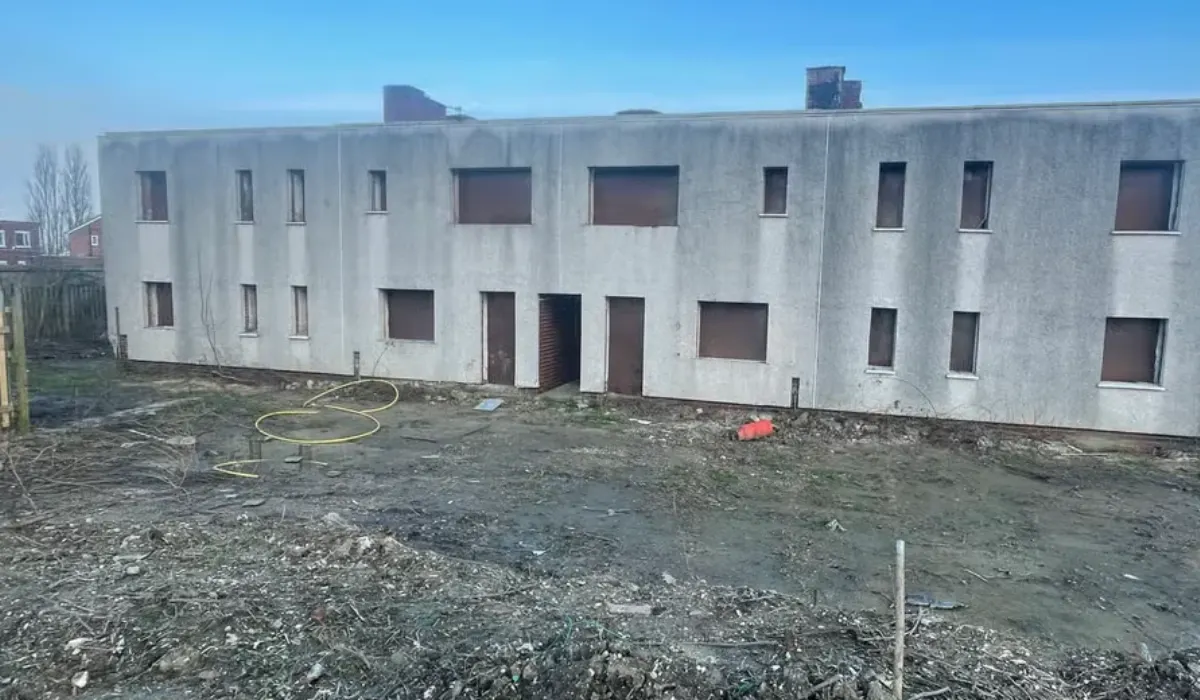
- Demolition Target: The removal of two notorious blocks of unoccupied housing, referred to by local residents as “the derelicts.”
- New Residential Units: Construction of 15 new two-storey houses erected across multiple plots, including Churchill Avenue, Greenland Avenue, Morrison Avenue, and Greenland Avenue South.
- Public Amenity Space: Designation of a fourth parcel of land within the footprint as dedicated public open space.
- Section 106 Financial Contributions: The developer is obligated to pay £76,200 towards off-site affordable housing provision, £56,055 to fund secondary school places at nearby Maltby Academy, and £7,500 toward local sustainable transport improvements.
Planning officers evaluating the application concluded that the development would clear blighted, unsafe structures and deliver modern housing units complete with private gardens and off-street parking. However, in November 2025, council planning officials noted that full reserved matters and further technical planning details must receive formal municipal approval before site clearance and demolition machinery can begin operations on site.
Why have residents campaigned over the Little London estate, and what concerns remain?
For several years, residents living on the Little London estate have actively campaigned for local authority intervention regarding the decaying condition of vacant properties. Community members frequently raised formal complaints with municipal officers regarding severe damp, vermin infestations, illegal fly-tipping, and ongoing anti-social behaviour tied to the abandoned structures.
Despite long-standing calls for physical improvements, the outline planning application submitted by Rivergrove Ltd attracted 20 formal objections from community stakeholders, including Maltby Town Council and the local grass-roots campaign group Big Power for Little London.
While many neighbors welcomed the prospect of physical regeneration, objectors raised distinct concerns:
- Existing Housing Standards: Objections highlighted that ongoing maintenance issues across non-demolished properties needed addressing alongside new construction.
- Loss of Community Amenities: Concerns were raised regarding whether land allocations were prioritizing private housing over dedicated community facilities.
- Long-Term Effectiveness: Opponents questioned whether a 15-home layout would prove sufficient to deliver lasting structural regeneration across the broader 138-property estate.
Despite these objections, council planners ruled that removing the derelict blocks remains a vital step toward improving public safety and overall housing quality in Maltby.
Background of the particular development
The Little London estate in Maltby, a former mining community within the Metropolitan Borough of Rotherham, has faced long-term socio-economic and housing challenges following the decline of local coal mining industries. Over recent decades, fragmented property ownership—split between private landlords, owner-occupiers, and corporate entities like Rivergrove Ltd—complicated unified regeneration efforts.
The accumulation of vacant housing blocks, dubbed “the derelicts,” led to severe environmental degradation, prompting community activism through groups such as Big Power for Little London. The approval of outline planning permission in late 2025 marked a major regulatory turning point after years of standstill. However, against a national backdrop of heightened public sensitivity around housing allocations and national asylum accommodation contracts, social media channels in South Yorkshire have frequently become vectors for unverified local property rumors, prompting formal council interventions to maintain public order and clarify statutory planning facts.
How this development can affect Maltby residents, local property owners, and community relations
The resolution of the recent social media speculation and the eventual execution of the approved Rivergrove Ltd redevelopment will impact the Maltby community across several areas:
- For Local Residents and Homeowners on the Little London Estate: The eventual demolition of the derelict housing blocks will alleviate long-standing public safety hazards, reducing incidents of fly-tipping, vermin infestations, and anti-social behavior. Once construction of the 15 new family homes is completed, surrounding property values and visual neighborhood amenities are expected to improve.
- For Local Community Relations and Digital Information Sharing: The swift official rebuttal from Rotherham Council highlights the ongoing risk posed by unverified social media claims. Community groups and residents will likely exercise greater caution regarding online rumours, relying more heavily on official council planning portals to monitor physical developments on the estate.
- For Local Schools and Infrastructure Services: The financial contributions secured under the planning agreement—specifically £56,055 earmarked for Maltby Academy and additional funds for sustainable transport—will assist local public services in absorbing new residents, ensuring that the residential expansion does not overburden existing school capacity or local road networks.