South Kensington is one of London’s most important cultural districts. Its concentration of museums, educational institutions, concert halls and research organisations emerged from a deliberate Victorian programme linking industrial education, public culture, architecture and scientific advancement.
- Why did South Kensington become the centre of Victorian cultural development?
- How did the Great Exhibition of 1851 create South Kensington’s museum district?
- Who were the key Victorian figures behind South Kensington’s transformation?
- How did the Victoria and Albert Museum establish the district’s design and education mission?
- How did the Natural History Museum transform South Kensington’s scientific identity?
- Why was the Science Museum important to Victorian innovation?
- How did Victorian architecture make South Kensington a unified museum district?
- How did South Kensington’s Victorian museum programme change public education?
- How has South Kensington preserved its Victorian museum legacy?
- What is South Kensington’s long-term historical significance?
- Frequently Asked Question
The district’s transformation began with the Great Exhibition of 1851. Prince Albert, Henry Cole and the Royal Commission for the Exhibition of 1851 redirected the exhibition’s financial surplus into a permanent educational estate south of Hyde Park. The resulting development became known as “Albertopolis”.
The area eventually gained the Victoria and Albert Museum, Natural History Museum, Science Museum, Royal Albert Hall, Imperial College London, Royal College of Music and Royal College of Art. The concentration was not accidental. It followed a coordinated nineteenth-century strategy that treated museums as educational institutions and architecture as part of public instruction.
South Kensington therefore represents a major Victorian experiment in connecting museums with science, manufacturing, design and education. Its surviving buildings preserve that programme while its collections continue the intellectual purposes established during the nineteenth century.
Why did South Kensington become the centre of Victorian cultural development?
South Kensington became a cultural centre because the 1851 Great Exhibition generated £186,000 in profit, which funded land purchases and institutions devoted to science, art, technology and education across a planned estate.
Before the 1850s, South Kensington was not London’s principal museum district. The area formed part of Brompton, west of central London, and contained open land, gardens, houses and estates. Its later importance resulted from a specific sequence of Victorian decisions.
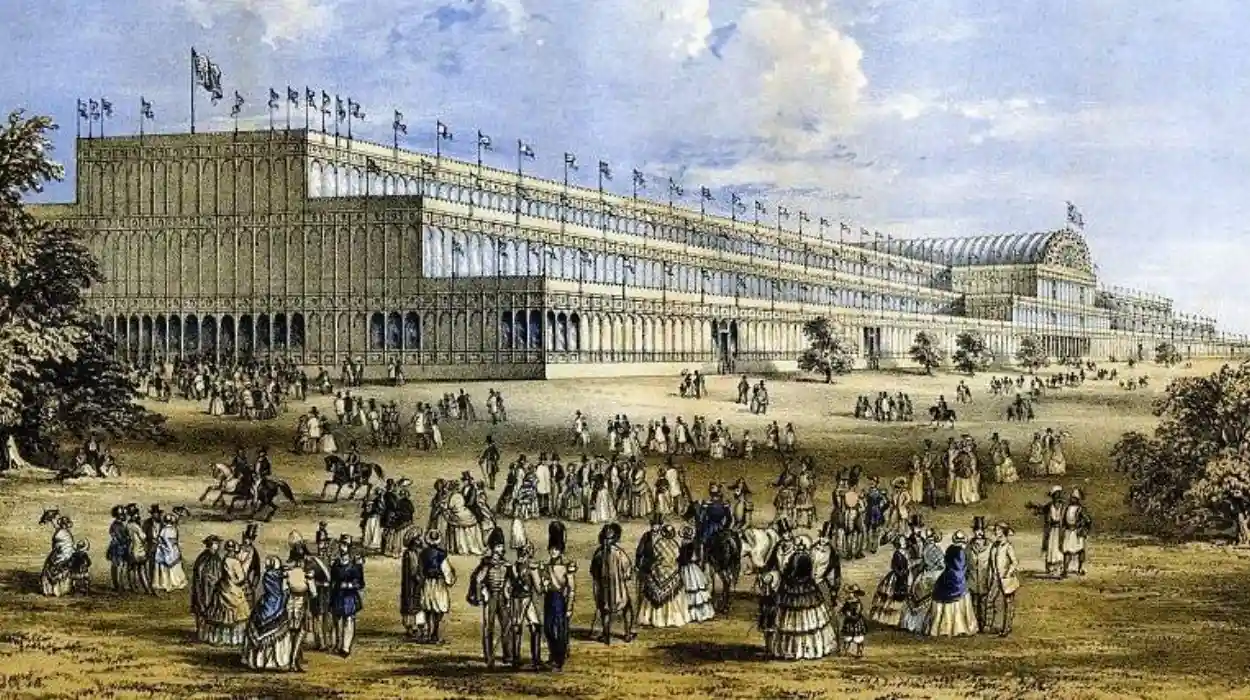
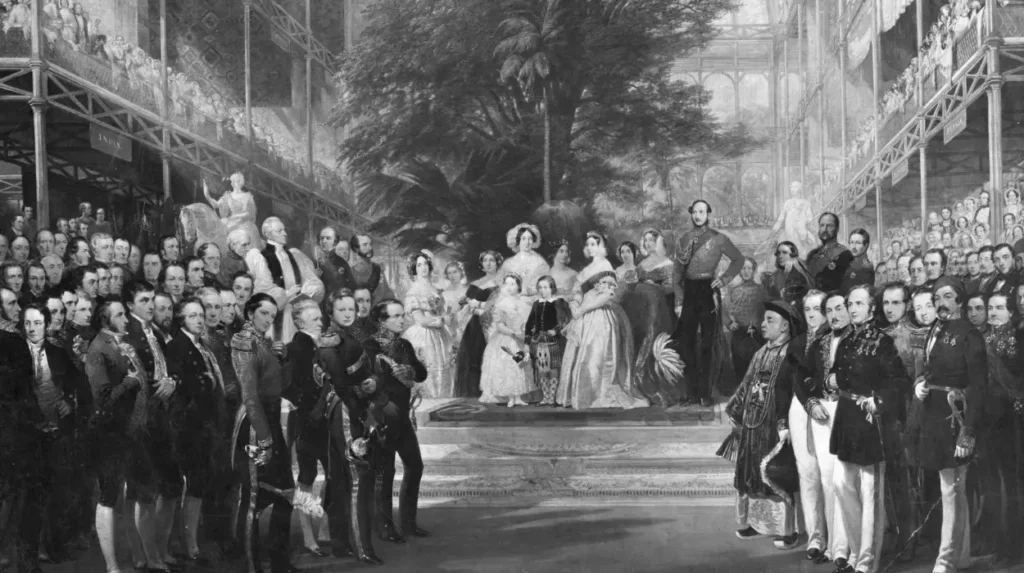
The Great Exhibition of the Works of Industry of All Nations opened in Hyde Park on 1 May 1851. The exhibition presented industrial products, machinery, decorative arts, raw materials and manufactured objects from Britain, its empire and international exhibitors.
Prince Albert, Queen Victoria’s husband, served as a central figure in the exhibition’s organisation. Henry Cole, a civil servant and administrator, also played an important role in developing the exhibition and its educational objectives.
The exhibition attracted more than six million visitors during its five-and-a-half-month run. The Royal Commission for the Exhibition of 1851 recorded a surplus of £186,000. The financial result provided the capital for a permanent cultural and educational programme.
Prince Albert proposed using the surplus to establish educational institutions connected with the exhibition’s principal themes. In August 1851, he proposed purchasing about 30 acres in South Kensington for this purpose.
The Royal Commission began purchasing land in December 1851. A supplemental charter granted in January 1852 allowed the Commission to hold land permanently and continue developing the estate.
The development established a direct connection between industrial exhibition and permanent education. Objects displayed temporarily in Hyde Park became the foundation for museums. Exhibition profits became land and buildings. Industrial education became a permanent institutional purpose.
The resulting estate became known as Albertopolis, a name associated with Prince Albert and the Victorian cultural programme. The Royal Commission still owns much of the historic estate and describes it as a centre of scientific, cultural and educational excellence.
How did the Great Exhibition of 1851 create South Kensington’s museum district?
The Great Exhibition created South Kensington’s museum district by demonstrating public demand for industrial knowledge, generating a large financial surplus and establishing collections that later formed the foundations of permanent museums.
The Great Exhibition represented a major change in nineteenth-century public culture. It assembled manufactured objects and technologies within a single building and presented industrial progress as an educational subject.
The exhibition building, known as the Crystal Palace, was constructed in Hyde Park using iron and glass. Joseph Paxton designed the structure, which provided a vast temporary exhibition space.
More than 13,900 British and international exhibitors participated. The Royal Collection Trust records more than six million visitors during the exhibition’s five-month period.
The exhibition also created a practical problem. Its collections and educational value required a permanent institutional home after the Crystal Palace closed on 15 October 1851.
A selection of exhibition objects was purchased for £5,000 from a Treasury grant. These objects became the nucleus of the Museum of Manufactures, the first institutional predecessor of the Victoria and Albert Museum.
The Science Museum also traces its institutional origins to the Great Exhibition. The Science Museum records that its history began with the exhibition and the subsequent creation of the South Kensington Museum.
The exhibition therefore produced three important forms of capital. It created financial capital through its surplus, intellectual capital through its collections and political capital through its demonstration of public interest in science and industry.
South Kensington provided the permanent geographical location for this new model. The Royal Commission acquired land south of Hyde Park and developed sites for museums and educational institutions.
This approach differed from the traditional model of a single museum serving as a repository of antiquities. Victorian South Kensington connected collections with schools, laboratories, design education and industrial research.
The district became a physical expression of the Victorian belief that public access to knowledge could improve education and manufacturing.
Who were the key Victorian figures behind South Kensington’s transformation?
Prince Albert provided the political and institutional direction, while Henry Cole developed museum education and administration; architects, scientists and educators then transformed their programme into permanent buildings and collections.
Prince Albert was central to the development of the post-1851 programme. As President of the Royal Commission, he supported the use of exhibition profits for permanent educational institutions.
His vision extended beyond collecting objects. He promoted institutions that connected science, art and industrial production. The Royal Commission later continued this educational mission through scholarships and fellowships.
Henry Cole was another crucial figure. He worked on the organisation of the Great Exhibition and became the first director of the Museum of Manufactures. His administrative approach treated museums as educational institutions rather than passive collections.
Cole wanted the museum to educate designers, manufacturers and consumers. The V&A identifies his principle as creating a “schoolroom for everyone”, reflecting the institution’s original industrial and educational mission.
Sir Richard Owen played a central role in developing the natural history collections. Owen was a British comparative anatomist and palaeontologist who became responsible for the British Museum’s natural history collection in 1856.
Owen advocated a separate building for natural history collections. The result was the Natural History Museum, designed by Alfred Waterhouse.
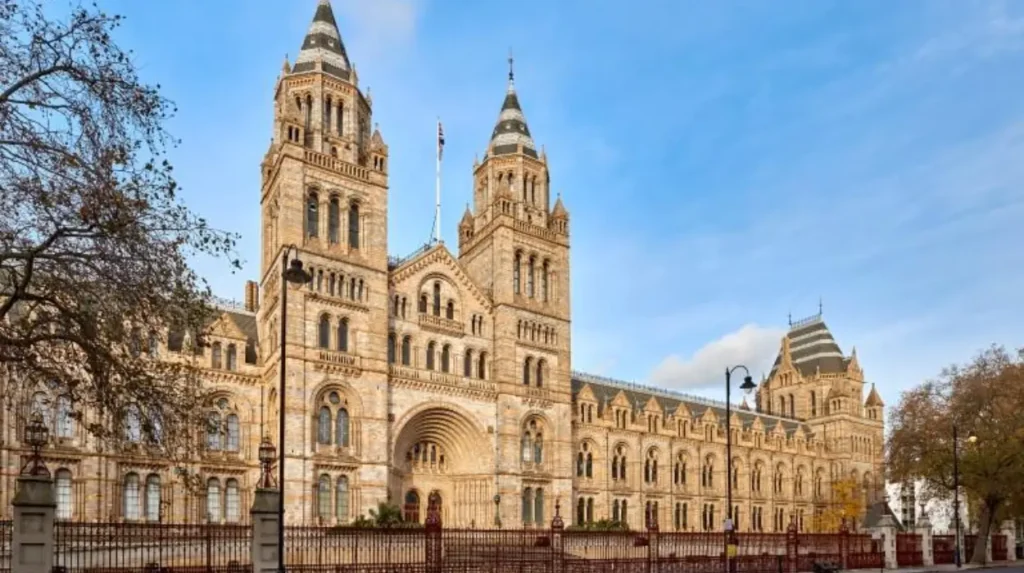
Alfred Waterhouse was a Victorian architect whose Romanesque design created the distinctive terracotta building opened in 1881. The Natural History Museum describes the building as the permanent home for the natural history collections previously housed within the British Museum.
The architectural programme therefore involved several professional groups. Administrators defined institutional purposes. Scientists shaped collections. Educators developed teaching methods. Architects created buildings that represented those functions.
This combination explains why South Kensington developed as a district rather than as a single museum. Each institution occupied a defined role within a broader Victorian educational system.
How did the Victoria and Albert Museum establish the district’s design and education mission?
The Victoria and Albert Museum established South Kensington’s design mission by developing from the 1852 Museum of Manufactures into a major institution devoted to art, design and applied creativity, with collections intended to educate designers, manufacturers and the public.
The Victoria and Albert Museum has its institutional roots in the nineteenth-century School of Design. The government established the School of Design in 1837 to improve design education and strengthen British manufacturing.
The Museum of Manufactures was established in 1852. It first operated at Marlborough House before moving through other temporary arrangements. In 1857, it moved to South Kensington and became known as the South Kensington Museum.
The museum collected examples of decorative art and manufactured objects. These collections supported an educational purpose. Designers and manufacturers could study historical and contemporary examples of craftsmanship, materials and decoration.
The South Kensington Museum expanded rapidly after its move. Its buildings were not simply storage facilities. Their decoration and design were intended to demonstrate standards of artistic and architectural quality.
The institution also introduced innovative public-access practices. Historical accounts of the museum record free entry and evening opening supported by gas lighting. These measures widened access beyond visitors with daytime leisure.
The museum was renamed the Victoria and Albert Museum in 1899. Queen Victoria laid the foundation stone for new buildings that year. The name commemorated Queen Victoria and Prince Albert.
The modern V&A retains the original educational principle while operating on a much larger scale. Its collection contains more than 2.8 million objects spanning approximately 5,000 years of creativity.
The museum’s present identity therefore remains connected to Victorian industrial policy. Its collections demonstrate how nineteenth-century administrators used museums to influence design education and manufacturing.
The V&A also anchors the architectural character of Exhibition Road. Its monumental buildings form part of the larger Victorian and modern architectural group that defines South Kensington.
To experience this historic museum district in person today, consult our comprehensive [Best Riverside Experiences Along South Bank for Culture, Entertainment, and Scenic Walks] for itineraries and visiting parameters.
How did the Natural History Museum transform South Kensington’s scientific identity?
The Natural History Museum strengthened South Kensington’s scientific identity by creating a dedicated national institution for natural history collections, opening in 1881 with a purpose-built building designed by Alfred Waterhouse.
The Natural History Museum developed from collections that had previously been part of the British Museum. Those collections had much older origins, including material associated with Sir Hans Sloane.
Sloane was an eighteenth-century physician and collector. After his death in 1753, Parliament purchased his collection of more than 71,000 items for £20,000. The collection contributed to the foundation of the British Museum.
By the nineteenth century, natural history collections had expanded beyond the practical capacity of the British Museum. Scientific classification, geology, zoology and palaeontology required dedicated space and specialised facilities.
Sir Richard Owen supported the creation of a separate natural history museum. The new institution was designed by Alfred Waterhouse and constructed on Cromwell Road.
The Natural History Museum opened to the public on 18 April 1881. Its building became one of the defining structures of South Kensington.
Waterhouse used terracotta extensively for the exterior. The architecture incorporated detailed representations of animals and plants, linking the building’s decorative programme with its scientific purpose.
The building therefore communicated its subject before visitors entered the galleries. Natural history was represented through architecture as well as through specimens.
The museum remained administratively connected to the British Museum for much of its early history. A separate board of trustees was appointed in 1963, and the institution was officially renamed the Natural History Museum in 1992.
The museum’s creation expanded the intellectual range of South Kensington. The V&A represented art and design. The emerging science collections represented machinery and technology. The Natural History Museum represented the natural sciences.
The three institutions established a powerful educational grouping. Their subjects differed, but their Victorian origins shared a common principle: public collections could provide structured access to knowledge.
Why was the Science Museum important to Victorian innovation?
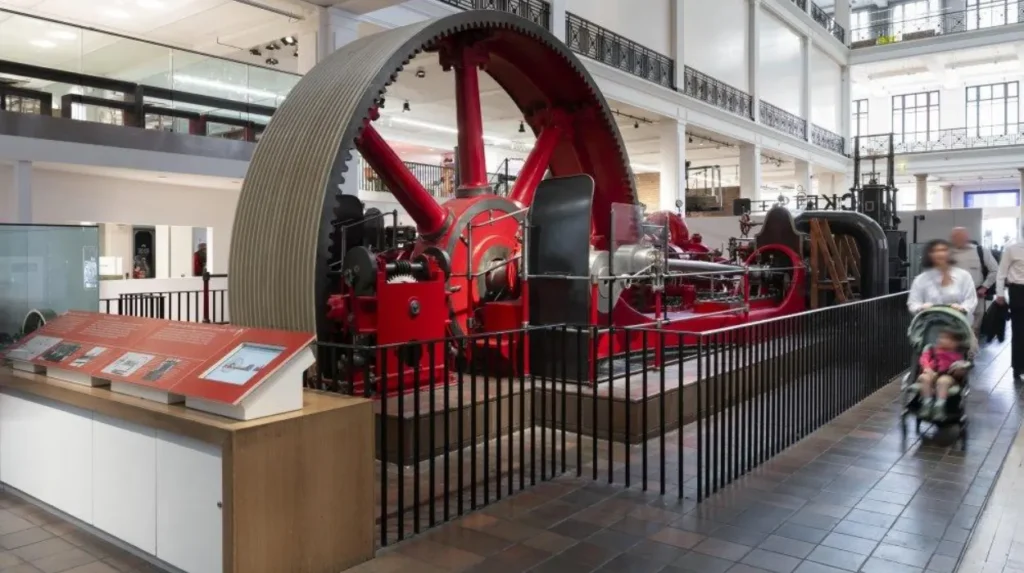
The Science Museum became important because it preserved and displayed machinery, engineering, industrial technology and scientific instruments, continuing the Great Exhibition’s objective of connecting technical knowledge with public education.
The Science Museum’s institutional history is closely linked to the South Kensington Museum. Its collections developed from the scientific and technological material assembled after the Great Exhibition.
The first South Kensington Museum opened in 1857. Its early collections included applied art, science and industrial material. A separate machinery exhibition was organised under Bennet Woodcroft, a Patent Office official.
The early museum therefore combined subjects that later became separate institutional fields. Industrial machinery, educational apparatus, building materials and other scientific collections formed part of this early programme.
The Science Museum gradually developed its own identity as its collections expanded. Its mission preserved technological artefacts as historical evidence of industrial development.
This function was particularly important in Victorian Britain. The nineteenth century saw major developments in steam power, railways, manufacturing, telecommunications, engineering and scientific instrumentation.
A museum dedicated to technological objects provided a permanent record of those changes. Machines could be examined as physical evidence of engineering processes rather than treated solely as commercial products.
South Kensington also placed science alongside art and design. This arrangement reflected the Victorian belief that industrial competitiveness depended on both technical knowledge and high-quality design.
The district’s institutions therefore operated as complementary parts of a larger educational system.
The Science Museum continues that institutional role. Its collections preserve objects associated with medicine, engineering, transport, communication, computing and scientific research.
The museum’s nineteenth-century origin demonstrates how Victorian innovation shaped not only technology itself but also the institutions responsible for preserving technological knowledge.
How did Victorian architecture make South Kensington a unified museum district?
Victorian architecture unified South Kensington through monumental buildings, planned streets and institutional landmarks that placed art, science, education and public culture within a concentrated urban environment south of Hyde Park.
Architecture played a central role in establishing South Kensington’s identity. The district did not develop solely through collections. Its buildings physically expressed the scale and ambition of the Victorian programme.
Exhibition Road became the principal north-south axis through the museum estate. Cromwell Road formed another major route along the southern edge of the institutions.
The Royal Albert Hall opened in 1871 as a major concert and public-event venue. It formed part of Prince Albert’s wider cultural legacy after his death in 1861.
The hall was developed using funds associated with the Royal Commission and was intended as a memorial to Prince Albert. The Royal Commission identifies the Royal Albert Hall among the major institutions established on its South Kensington estate.
The Natural History Museum added another major architectural landmark in 1881. Alfred Waterhouse’s design provided a dedicated building for scientific collections and established a distinctive visual identity.
The V&A developed its monumental frontage and later buildings during the late nineteenth and early twentieth centuries. Queen Victoria laid the foundation stone for the new museum buildings in 1899.
Educational institutions also became part of the estate. Imperial College London, the Royal College of Art and Royal College of Music joined the museum and cultural institutions within the wider South Kensington complex.
This concentration created a physical relationship between research, teaching, museums and public performance.
The result was an urban district in which cultural institutions stood within walking distance of each other. Visitors could encounter art, natural history, technology, music and higher education within the same geographical area.
The architectural programme also established a durable Victorian visual language. Terracotta façades, monumental entrances, decorated interiors and formal streetscapes remain visible across the district.
These surviving buildings provide direct evidence of nineteenth-century institutional planning. They also explain why South Kensington remains recognisable as a museum quarter more than 150 years after its transformation began.
How did South Kensington’s Victorian museum programme change public education?
South Kensington changed public education by treating museums as accessible teaching institutions, using collections, displays, libraries, demonstrations and purpose-built facilities to connect formal learning with practical knowledge.
The Victorian museum programme reflected a wider concern about Britain’s industrial competitiveness. British manufacturers possessed substantial industrial capacity, but government officials and educators identified design education as an important area for improvement.
The School of Design established in 1837 addressed this problem. Its successors became part of the institutional structure that produced the South Kensington Museum and later the V&A.
Henry Cole’s educational philosophy placed practical knowledge at the centre of museum activity. The museum collected examples that designers and manufacturers could examine directly.
This approach differed from a museum model based exclusively on rare or prestigious objects. South Kensington institutions also valued ordinary industrial, scientific and technical artefacts because they demonstrated processes and methods.
Public accessibility formed another important part of the programme. Free admission and extended opening practices helped attract visitors from different social groups.
The museum therefore functioned as both a cultural institution and an educational resource.
Libraries and educational collections reinforced this purpose. Students could use objects as visual and material references while teachers used museum resources to support instruction.
The Science Museum continued the practical orientation through displays of machines, scientific instruments and engineering objects. The Natural History Museum provided access to specimens representing biological and geological knowledge.
The combined district created an environment where different branches of knowledge existed side by side.
This model had long-term consequences for museum design across Britain and internationally. The idea of the museum as an educational institution became increasingly influential during the late nineteenth and twentieth centuries.
South Kensington also demonstrated the value of concentrating related institutions. Art students, scientists, engineers, designers and members of the public shared access to a dense network of cultural resources.
The Royal Commission later formalised the educational legacy through scholarships and fellowships. Its science research scholarships began in 1891. The Commission states that more than 3,000 scientists, engineers and designers have received funding through its programmes.
The district therefore generated an educational legacy that extended beyond museum visitors. Its institutions contributed to professional training, scientific research and design education.
How has South Kensington preserved its Victorian museum legacy?
South Kensington has preserved its Victorian legacy through surviving museum buildings, institutional collections, historic streetscapes, educational organisations and the continuing ownership and stewardship of the Royal Commission for the Exhibition of 1851.
The strongest evidence of the Victorian programme remains visible in the district’s buildings. The V&A, Natural History Museum and Royal Albert Hall continue to occupy their historic South Kensington sites.
The Natural History Museum building opened in 1881 and retains its Victorian architectural character. The museum’s historic grounds also preserve evidence of nineteenth-century landscape planning. An Ordnance Survey map from 1894 records the museum and surrounding institutions.
The V&A retains its connection to the original South Kensington Museum. Although its collections and buildings have expanded substantially, its institutional history remains rooted in the 1852 Museum of Manufactures and the 1857 move to South Kensington.
The Science Museum similarly preserves its connection to the Great Exhibition through collections derived from nineteenth-century science and technology displays.
The Royal Commission remains an important part of the district’s institutional history. Its South Kensington estate continues to include major cultural and educational organisations.
The Commission also continues its educational mission through postgraduate fellowships and scholarships in science, engineering, the built environment and design. Its present programmes therefore represent a direct institutional continuation of the educational aims established after the Great Exhibition.
Preservation in South Kensington is not limited to individual façades. The historic relationship between institutions remains significant. Exhibition Road, Cromwell Road and the surrounding streets retain the spatial structure that developed during the Victorian period.
The museum district also demonstrates how historical buildings can retain active institutional functions. The V&A remains a major museum. The Natural History Museum remains a scientific and educational institution. The Science Museum remains dedicated to science and technology.
This continuity provides an important historical resource for educators, researchers, architectural historians and visitors.
For genealogical researchers, the district also provides a useful geographical context for studying nineteenth-century London. Census records, maps, institutional archives and employment records can place residents within the rapidly changing urban environment surrounding the museums.
The South Kensington story therefore survives through both physical architecture and documentary evidence.
What is South Kensington’s long-term historical significance?
South Kensington’s long-term significance lies in its successful integration of museums, science, design, education and architecture into one urban district, creating a Victorian model of public cultural infrastructure that remains active today.
South Kensington demonstrates how a temporary exhibition produced permanent institutional change.
The Great Exhibition lasted only five and a half months. Its financial surplus, collections and educational objectives generated institutions that survived for generations.
The £186,000 surplus financed the purchase of land and helped establish the estate that became Albertopolis. The Royal Commission’s continuing presence provides direct institutional evidence of this connection.
The district also demonstrates the importance of coordinated cultural planning. The V&A, Science Museum and Natural History Museum were not isolated developments. Their origins formed part of a larger Victorian strategy.
The museums represented complementary areas of knowledge. Art and design were connected to manufacturing. Science was connected to technology. Natural history was connected to scientific research. Public performance was connected to cultural education.
The physical proximity of these institutions strengthened those relationships.
South Kensington also established an important model for museum accessibility. Victorian administrators increasingly viewed public collections as educational resources rather than private repositories.
The architectural quality of the district reinforced this mission. Buildings were designed to attract visitors, communicate institutional purposes and demonstrate contemporary standards of craftsmanship.
The district remains historically relevant because its Victorian foundations continue to shape its modern identity. Its museums still preserve and interpret collections. Its educational institutions still support research and professional training. Its public buildings still attract international visitors.
The Royal Commission’s scholarship programme provides another direct link between nineteenth-century objectives and contemporary research. Since 1891, its awards have supported advanced study and research in science and related fields.
South Kensington therefore represents more than a concentration of famous museums. It is evidence of a specific Victorian approach to national development.
The approach combined public education, industrial improvement, scientific research, cultural institutions and urban planning.
Its survival demonstrates the durability of that model. The buildings, collections and institutional relationships created in the nineteenth century continue to define one of London’s most important cultural landscapes.
The history of South Kensington is consequently the history of how Victorian innovation converted the temporary success of the Great Exhibition into permanent public infrastructure.
The Great Exhibition ended in 1851. The institutional system created from its profits continues more than 170 years later. That continuity explains South Kensington’s status as London’s world-class museum district and establishes its lasting importance within Britain’s cultural, scientific and architectural history.
Frequently Asked Question
Why is South Kensington famous for museums?
South Kensington is famous for its concentration of major cultural institutions, including the Victoria and Albert Museum, Natural History Museum and Science Museum. Their development began with the Victorian cultural programme created after the Great Exhibition of 1851.