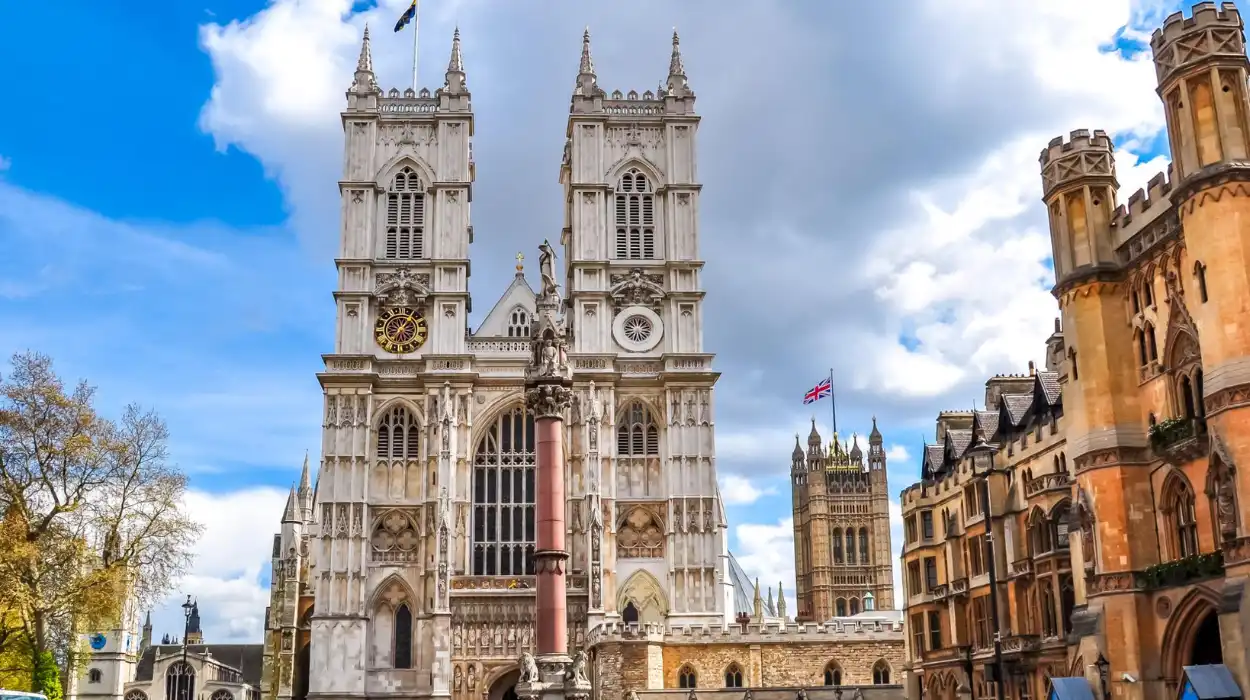
London’s historic churches form one of the most important surviving records of British religious, political, architectural, and social history. From Roman Christianity and Anglo-Saxon foundations to medieval monasteries, the English Reformation, the Great Fire of London, the work of Sir Christopher Wren, Victorian expansion, wartime destruction, and modern conservation, these buildings document more than 1,500 years of change.
- When did Christianity first become established in London?
- How did medieval monasteries and parish churches shape London?
- How did the English Reformation transform London’s churches?
- Why did the Great Fire of London change the history of the City’s churches?
- How did Christopher Wren reshape London’s religious architecture?
- What makes London’s historic churches important to British religious heritage?
- How did the Victorian period expand London’s historic church heritage?
- How did the Second World War affect London’s historic churches?
- How are London’s historic churches preserved today?
- What can archaeological evidence reveal about London’s historic churches?
- Why do London’s historic churches remain important in the modern city?
- What is the long-term historical significance of London’s churches?
A historic church is a religious building with architectural, archaeological, institutional, or cultural significance connected to earlier periods. In London, historic churches include parish churches, cathedrals, collegiate churches, royal chapels, monastic foundations, former friaries, and surviving ruins. Their importance extends beyond worship. They preserve burial records, monuments, inscriptions, architectural techniques, artistic traditions, community histories, and evidence of changing relationships between religion and the British state.
London’s churches also reveal how religious institutions shaped the capital. Medieval monasteries controlled land and education. Parish churches organised local communities. The Reformation transformed ownership and worship. The Great Fire destroyed much of the medieval City of London and created the conditions for a major rebuilding programme. The Blitz damaged many churches again during the Second World War. Modern conservation now protects buildings that remain active places of worship and historical evidence.
When did Christianity first become established in London?
Christianity became established in London during the Roman period, with evidence of Christian communities in Roman Britain by the third and fourth centuries, while later Anglo-Saxon missions reorganised English Christianity after Augustine’s arrival in 597.
Christianity reached Britain during the Roman period. The exact date of its arrival in Londinium is not recorded, but Christian communities existed in Roman Britain by the third century. The Church of England identifies evidence for British Christianity through early Christian writers and the participation of British bishops in major fourth-century councils, including Arles in 314 and Rimini in 359.
Roman London was a major commercial and administrative centre. Its population included people from different parts of the Roman Empire. Religious life included traditional Roman cults, imported eastern religions, and Christianity. Archaeological evidence from Roman Britain demonstrates the presence of Christian communities, although the surviving evidence from London is fragmentary.
The collapse of Roman administration in Britain during the fifth century disrupted established political and religious structures. Anglo-Saxon settlement changed the political geography of southern England. Christianity survived in some areas but lost much of its institutional organisation in territories controlled by pagan Anglo-Saxon kingdoms.
A major transformation began in 597, when Pope Gregory the Great sent a mission led by Augustine of Canterbury to Kent. The mission helped establish the Roman Christian tradition among Anglo-Saxon rulers and communities. London subsequently became part of the developing ecclesiastical structure of England.
The history of London’s churches therefore began before the medieval buildings visible today. The foundations of later religious institutions belong to a much longer process involving Roman Christianity, Anglo-Saxon conversion, episcopal organisation, monasteries, and the integration of England into Western European Christianity.
How did medieval monasteries and parish churches shape London?
Medieval monasteries provided worship, education, charity, administration, and land management, while parish churches served local communities; together, institutions such as Westminster Abbey and London’s medieval churches made religion central to urban organisation and public life.
Medieval London was structured around religious institutions. Monasteries, priories, friaries, hospitals, chapels, and parish churches occupied important sites across the city. Religious buildings were centres of worship, but their functions extended into education, charity, burial, administration, and economic activity.
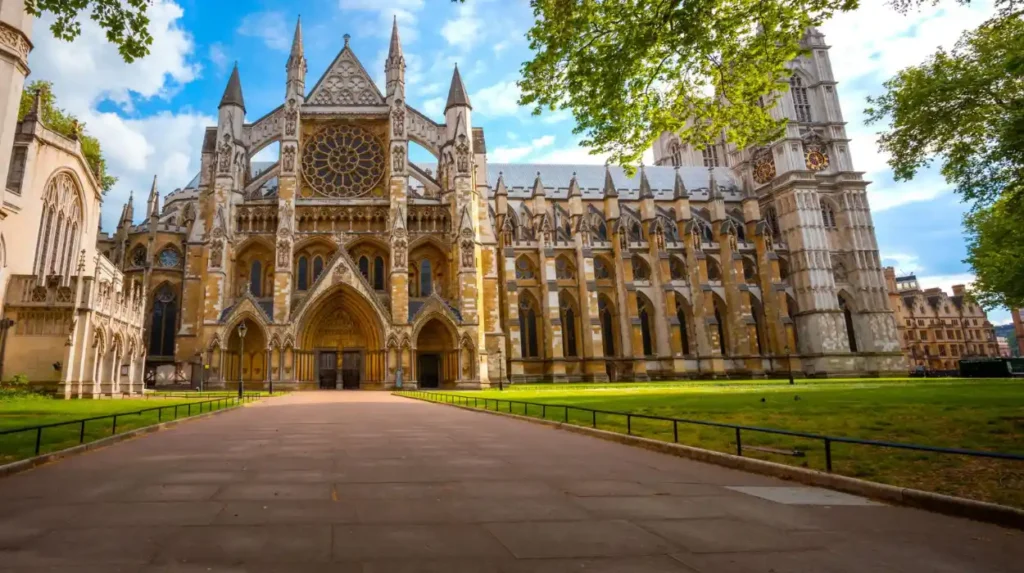
Westminster Abbey provides the clearest example of the political importance of medieval religious foundations. Benedictine monks were brought to Westminster around 960 by St Dunstan, then Bishop of London. Edward the Confessor later established a major abbey church on the site, consecrated in 1065.
The present Westminster Abbey developed substantially during the reign of Henry III. Construction of the Gothic church began in 1245, and the building was consecrated in 1269. Its design reflected the international Gothic architectural tradition that was transforming major religious buildings across medieval Europe.
Westminster’s importance increased because religion and monarchy were closely connected. The Abbey became the coronation church of the English and later British monarchy. Since 1066, every monarch has been crowned there except Edward V and Edward VIII, who were never crowned.
Parish churches served a different but equally important function. A parish was a local ecclesiastical area with responsibility for a community. The parish church provided regular worship, baptisms, marriages, funerals, and burial grounds. Parish records later became important sources for genealogists tracing London families.
The presence of a church often influenced the development of a neighbourhood. Streets, markets, guilds, and residential districts grew around religious institutions. Churchwardens managed local buildings and finances. Livery companies supported chapels and religious foundations. Religious festivals shaped the calendar of urban life.
London’s medieval churches therefore provide evidence of both national history and ordinary experience. Westminster Abbey records royal and national events. A smaller parish church preserves the names of local residents, occupations, marriages, burials, and community institutions.
How did the English Reformation transform London’s churches?
The English Reformation changed London’s churches through the break with papal authority, the dissolution of monasteries, altered worship, redistribution of church property, and the development of an established Church of England under the Tudor monarchy.
The English Reformation was a political and religious transformation that began under Henry VIII during the 1530s. Parliament supported the Crown’s rejection of papal authority, and the Church of England developed as an independent national church under the monarch.
The Dissolution of the Monasteries between 1536 and 1540 ended many medieval monastic institutions. Religious houses lost their lands and property. Some buildings were demolished. Others were converted into residences, schools, warehouses, hospitals, or parish facilities.
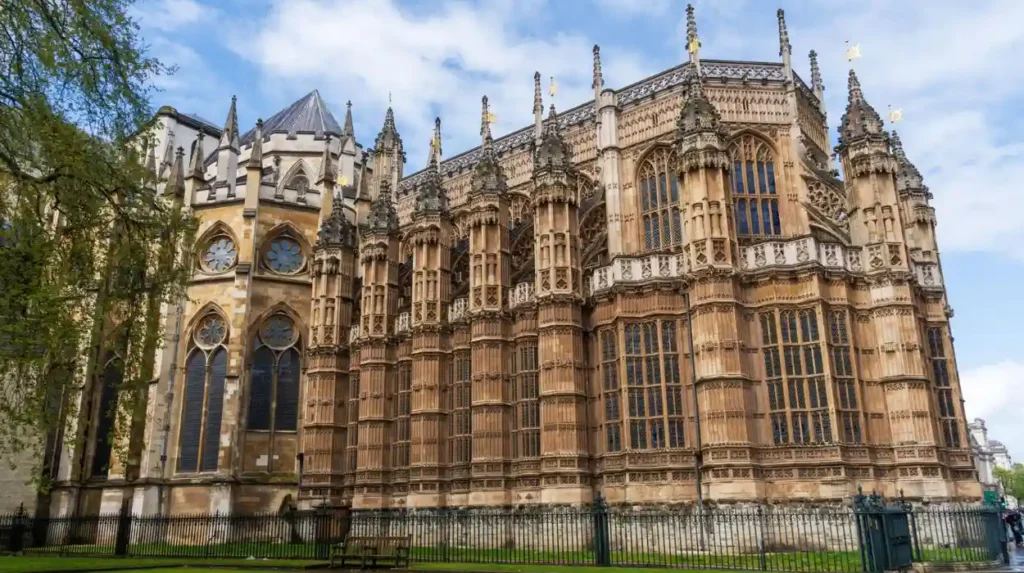
Westminster Abbey experienced several changes during this period. The medieval monastery was dissolved in 1540. Henry VIII created a cathedral church with a bishop, dean, and prebendaries. The bishopric was later surrendered, and the institution was restructured under Edward VI and Mary I. Elizabeth I refounded the Abbey in 1560 as a collegiate church.
The Reformation also changed religious interiors. Images, altars, shrines, and forms of decoration associated with medieval Catholic worship were removed or altered in many churches. The Book of Common Prayer became a central text of Anglican worship under the Tudor religious settlements.
The Church of England developed a distinctive identity. Its historical tradition combines continuity with earlier catholic Christianity and Protestant reform. The Church of England describes itself as both “catholic and reformed,” reflecting the complexity of its historical development.
The consequences of the Reformation extended beyond theology. Land ownership changed. Monastic institutions disappeared from the urban landscape. Royal control over ecclesiastical structures increased. London’s churches became part of a national religious system shaped by Parliament, the monarchy, bishops, parish structures, and later political conflict.
Why did the Great Fire of London change the history of the City’s churches?
The Great Fire of London in September 1666 destroyed approximately 13,000 homes, 87 parish churches, and the medieval St Paul’s Cathedral, creating the largest rebuilding crisis in London’s religious and architectural history.
The Great Fire began on 2 September 1666 at Thomas Farriner’s bakery in Pudding Lane. It continued for four days and destroyed much of the City of London. Historic England records the destruction of around 13,000 homes, 87 parish churches, and the old St Paul’s Cathedral.
The disaster transformed the physical structure of the City. Medieval buildings were predominantly constructed from timber and other combustible materials. The rebuilding process introduced stricter construction requirements, including greater use of brick and stone.
The destruction of so many churches created an urgent religious and civic problem. Parish communities needed places of worship. The City also required a new cathedral to replace the medieval St Paul’s.
Sir Christopher Wren became the central architectural figure of the rebuilding programme. Wren was an English architect, mathematician, astronomer, and scientist. He was appointed to rebuild St Paul’s Cathedral and was associated with the rebuilding of 51 City parish churches.
The rebuilding did not produce a single architectural style. Wren’s churches used classical architecture, Baroque design, brickwork, Portland stone, towers, spires, domes, and carefully designed interiors. The result was a new religious landscape that differed sharply from the medieval city.
The Great Fire therefore created a major break in London’s architectural history. Medieval church sites often remained important, but their buildings were replaced or transformed. The new churches retained parish identities while expressing the architectural and political culture of Restoration England.
How did Christopher Wren reshape London’s religious architecture?
Christopher Wren reshaped London’s religious architecture after 1666 by rebuilding St Paul’s Cathedral and numerous City parish churches, introducing a coordinated Baroque and classical vocabulary that permanently changed the capital’s skyline.
Wren’s work transformed the relationship between London’s churches and the cityscape. Medieval churches often possessed large Gothic structures and tall spires. Wren introduced a new architectural language based on classical proportions, columns, domes, towers, lanterns, and carefully controlled interior spaces.
St Paul’s Cathedral became the centre of this transformation. The present cathedral was built between 1675 and 1710 on the site of the medieval cathedral destroyed in the Great Fire. Historic England lists the building as Grade I and identifies Wren as its architect.
The cathedral’s dome became one of London’s most recognisable architectural features. The building used Portland stone and combined a monumental exterior with a large crypt and extensive interior monuments.
Wren’s parish churches were smaller than St Paul’s but equally important to the rebuilding of the City. Their designs responded to restricted urban sites and the practical needs of parish worship.
St Bride’s Church on Fleet Street illustrates the process. The present building was designed by Wren between 1670 and 1684. Its interior suffered severe damage during the Second World War and was later reconstructed in near-facsimile form.
St Andrew by the Wardrobe was rebuilt by Wren between 1685 and 1695. Its interior was destroyed by wartime fire and later reconstructed.
St Lawrence Jewry was rebuilt after the Great Fire and later suffered severe damage during the Blitz. Its restoration followed Wren’s original plans, preserving the architectural connection between the seventeenth century and modern London.
The Wren churches demonstrate an important principle of heritage history. A historic building is not always a structure that survives unchanged. Some London churches preserve original fabric. Others preserve original plans, foundations, towers, monuments, or architectural traditions through later reconstruction.
What makes London’s historic churches important to British religious heritage?
London’s historic churches preserve the development of British Christianity, Anglican institutions, royal ceremonies, architectural traditions, burial practices, community records, religious conflict, and national memory within buildings that continue to connect the past with modern public life.
The religious importance of London’s churches begins with continuity. Many buildings occupy sites used for worship across several centuries. Their architectural layers record changing religious practices and political systems.
Westminster Abbey demonstrates the national dimension of this heritage. It is a working church, a royal institution, a burial place, and a site of national ceremonies. The Abbey has hosted every coronation since 1066 and contains memorials to major figures in British history.
The City churches demonstrate the urban dimension. Their histories are linked to medieval parishes, the Great Fire, Restoration rebuilding, industrial expansion, wartime destruction, and modern conservation.
Religious heritage also includes intangible traditions. Choral music, liturgy, bells, processions, commemorative ceremonies, and patterns of worship form part of a church’s historical significance.
The buildings preserve evidence of social hierarchy. Tombs and monuments identify monarchs, bishops, merchants, politicians, artists, military figures, and local residents. Church interiors therefore provide a record of the people who shaped London.
Genealogical research depends heavily on parish documentation. Baptism, marriage, and burial records often predate modern civil registration. Researchers tracing London families use parish registers, cemetery records, memorial inscriptions, and church archives to reconstruct family histories.
Churches also preserve architectural knowledge. Stone carving, timber construction, stained glass, organ building, bell founding, plasterwork, masonry, and conservation techniques form part of the material heritage associated with historic religious buildings.
How did the Victorian period expand London’s historic church heritage?
The Victorian expansion of London created new parishes, churches, chapels, and ecclesiastical institutions as population growth, suburban development, industrialisation, and religious revival reshaped the capital during the nineteenth century.
London expanded dramatically during the nineteenth century. Population growth created new residential districts and increased demand for churches and schools.
The Victorian period also witnessed renewed interest in medieval architecture. Gothic Revival architects designed churches using medieval forms, including pointed arches, towers, tracery, stained glass, and decorative stonework.
This architectural movement reflected religious and historical ideas. Some Victorian church designers sought to reconnect Anglican worship with medieval traditions. Others used Gothic architecture to create a distinctive identity for new urban communities.
Victorian churches also responded to social conditions. Industrialisation created crowded neighbourhoods and significant poverty. Churches established schools, charitable organisations, missions, and community services.
The result was a second major phase in London’s church history. The City’s medieval and Wren churches represented earlier urban development. Victorian churches documented the expansion of London beyond its historic core.
Many nineteenth-century churches now form important heritage landmarks. Their value includes architectural design, stained glass, organs, memorials, parish archives, and connections to the social history of Victorian London.
How did the Second World War affect London’s historic churches?
The Second World War caused extensive damage to London’s historic churches, especially during the Blitz, but post-war reconstruction preserved many buildings through restored interiors, surviving towers, original walls, archaeological remains, and carefully reconstructed architectural details.
The Blitz created a second major period of destruction for London’s churches. German bombing damaged or destroyed numerous religious buildings in the City and elsewhere.
St Lawrence Jewry suffered severe wartime damage before being rebuilt to Wren’s original plans. St Andrew by the Wardrobe was also damaged, and its interior was reconstructed. St Michael Paternoster Royal suffered severe damage and was restored between 1966 and 1968.
St Dunstan in the East demonstrates a different preservation approach. The medieval church was originally built around 1100 and suffered damage during the Great Fire. Its surviving Wren tower and steeple endured the Blitz of 1941. The church was not rebuilt after the war, and the remains were converted into a public garden that opened in 1970.
This approach recognised ruins as historical evidence. The surviving walls communicate the effects of war, fire, architectural change, and conservation policy.
Christ Church Greyfriars provides another example. The site originated as a medieval friary. The friary was dissolved in 1538, and the later church was rebuilt by Wren between 1687 and 1704. Bomb damage during the Second World War left only the tower and sections of the outer walls.
The history of wartime damage demonstrates that preservation does not always mean complete reconstruction. London’s historic churches now include intact buildings, reconstructed buildings, surviving fragments, archaeological sites, and ruins.
How are London’s historic churches preserved today?
London’s historic churches are preserved through statutory listing, specialist conservation, active worship, archaeological research, charitable support, professional restoration, and adaptive community use that protects both architectural fabric and historical significance.
Historic England’s National Heritage List for England provides statutory protection for listed buildings. Grade I buildings possess exceptional interest, while other listed categories recognise significant architectural and historic value.
St Paul’s Cathedral is Grade I listed. Its listing recognises its architectural importance, construction between 1675 and 1710, association with Wren, Portland stone construction, dome, crypt, monuments, and later historic fittings.
Conservation requires specialist skills. Historic churches contain complex materials that require traditional knowledge. Stonework, timber, stained glass, plaster, metalwork, organs, bells, and historic finishes all require different forms of expertise.
Preservation also depends on active use. The Church of England describes churches as community institutions that provide worship and services while often occupying some of the oldest buildings in towns and villages.
London’s historic churches also face financial pressures. Large historic buildings require regular maintenance, roof repairs, masonry conservation, heating systems, accessibility improvements, and specialist restoration.
The preservation of religious heritage therefore involves more than protecting a façade. Conservation must maintain historical evidence while allowing buildings to function in the modern city.
To experience this historic landmark heritage in person today, consult our comprehensive [London’s Hidden Art Galleries Every Art Enthusiast Should Explore Beyond Popular Tourist Attractions] for itineraries and visiting parameters.
What can archaeological evidence reveal about London’s historic churches?
Archaeological evidence reveals earlier buildings, Roman occupation, medieval foundations, reused materials, burial practices, changing land use, and the long development of religious sites beneath and around London’s surviving churches.
Archaeology is essential because many historic churches contain evidence that is not visible above ground.
St Mary Woolnoth provides an important example. Archaeological excavations in the early eighteenth century uncovered remains thought to be Roman, while evidence indicated major Roman buildings in the surrounding area. The church itself developed through medieval rebuilding and later reconstruction after the Great Fire.
St Andrew’s Church in Holborn also demonstrates the depth of London’s archaeological record. Excavation of its crypt in 2001 revealed Roman remains dating between approximately AD 150 and 300. Historical evidence also records a timber church in the area by the tenth century.
Christ Church Greyfriars preserves archaeological evidence connected to the medieval Franciscan friary. Excavations recorded remains of the friary and associated structures.
Archaeology also helps researchers understand how churches changed over time. Foundations reveal earlier plans. Burials reveal social patterns. Reused stone demonstrates construction practices. Layers of rebuilding show how communities responded to fire, war, population growth, and changing religious requirements.
London’s churches therefore function as archaeological archives. Their historical value exists beneath floors, within walls, inside crypts, and in surrounding burial grounds.
Why do London’s historic churches remain important in the modern city?
London’s historic churches remain important because they combine active religious life with architectural heritage, public memory, community services, tourism, education, genealogy, archaeology, and evidence of Britain’s changing relationship with Christianity and national identity.
London’s historic churches continue to serve several functions simultaneously. Some remain active places of worship. Others operate as heritage sites, memorial spaces, community buildings, gardens, or archaeological landmarks.
Westminster Abbey remains a working church with daily worship and a major national role. Its history includes more than ten centuries of Christian activity and royal association.
City churches continue to define the historic core of London. Their towers, domes, spires, walls, and interiors provide evidence of the rebuilding that followed the Great Fire.
The modern importance of these buildings also extends to education. Students can study architectural history, religious reform, urban development, archaeology, conservation, genealogy, and political history through a single church site.
Historic churches also contribute to cultural tourism. Visitors encounter buildings that preserve original materials, historic monuments, religious art, inscriptions, and architectural traditions.
Their future depends on sustainable conservation. Churches require long-term maintenance programmes, skilled craftspeople, reliable funding, careful restoration, and responsible adaptation.
The historical relevance of London’s churches will continue because they preserve physical evidence that written records cannot replace. A document describes a past institution. A surviving church also preserves the materials, spaces, proportions, surfaces, burials, and architectural decisions created by earlier communities.
What is the long-term historical significance of London’s churches?
London’s historic churches are long-term records of British religious heritage because they preserve continuous evidence of Christianity, monarchy, political reform, urban destruction, architectural innovation, community life, war, archaeology, and modern conservation across more than fifteen centuries.
The history of London’s churches is inseparable from the history of Britain. Roman Christianity established early foundations. Anglo-Saxon missions reorganised the English Church. Medieval monasteries shaped land, education, and worship. The Reformation changed religious authority and property ownership. The Great Fire created a new architectural city. Wren’s rebuilding transformed the capital’s skyline. Victorian expansion created new churches for a growing population. The Blitz tested the survival of historic buildings. Modern conservation now protects the surviving evidence.
These churches also show that religious heritage is not limited to grand cathedrals. Westminster Abbey and St Paul’s Cathedral represent national and architectural power. Smaller parish churches preserve local identities and everyday history.
The most important historical fact is continuity through change. London’s churches have not survived because the city remained unchanged. They survived through rebuilding, adaptation, restoration, reconstruction, archaeological preservation, and continued community use.
Their future historical value depends on maintaining this connection between past and present. When conserved responsibly, London’s churches remain active sources of evidence for historians, educators, cultural visitors, genealogists, architects, archaeologists, and local communities.
The historic churches of London therefore form a connected record of British religious heritage. Their walls preserve the development of Christianity. Their monuments preserve national memory. Their archives preserve family histories. Their architecture records technological and artistic change. Their ruins preserve the evidence of disaster and war.
Together, they explain how religion shaped London and how London, in turn, shaped the religious, political, architectural, and cultural history of Britain.
What is the oldest historic church in London?
St Peter upon Cornhill is traditionally associated with one of London’s earliest Christian sites, although the exact date of its first church remains debated. St Martin-in-the-Fields and All Hallows by the Tower also have very early historical connections.