London is internationally known for the Tower of London, Westminster Abbey, Buckingham Palace, St Paul’s Cathedral, the British Museum and Tower Bridge. These landmarks represent important parts of the capital’s history, but they do not tell the complete story of London.
- What makes London’s overlooked experiences historically important?
- Where can visitors see London’s Roman history beyond the Tower of London?
- Why is Postman’s Park an important overlooked London experience?
- How can visitors explore London’s historic churches away from the major cathedrals?
- What can visitors discover in London’s historic legal district?
- Why should tourists visit Sir John Soane’s Museum?
- How does Wilton’s Music Hall reveal London’s social history?
- What historic experience does the Thames provide beyond famous river landmarks?
- How does Little Venice reveal London’s canal history?
- What can visitors learn from London’s historic markets?
- Why are London’s hidden gardens important historical sites?
- How do London’s overlooked attractions improve historical understanding?
- How can tourists connect famous London landmarks with lesser-known historical sites?
- What is the long-term historical value of London’s hidden attractions?
- Frequently Asked Question
The city developed through Roman settlement, medieval trade, royal government, religious institutions, industrial expansion, migration, war and modern redevelopment. Evidence of these periods survives in small gardens, Roman ruins, churches, courtyards, canals, markets, former industrial sites and residential streets.
For history enthusiasts and cultural tourists, these lesser-known experiences provide a more detailed understanding of how London developed. They also reveal how ordinary workers, merchants, immigrants, religious communities, architects and civic authorities shaped the capital.
Visit London currently identifies numerous hidden historic corners, unusual museums and lesser-known cultural sites beyond conventional tourist itineraries. London City Hall has also highlighted places such as Postman’s Park, the Temple area, Sir John Soane’s Museum, Wilton’s Music Hall and the Thames Path as hidden cultural gems.
What makes London’s overlooked experiences historically important?
London’s overlooked experiences are historically important because they preserve evidence of everyday life, urban change, religious practice, commerce, migration and architecture that major landmarks alone cannot explain. Places such as Roman walls, old churches, courtyards and historic gardens connect modern London directly with earlier periods.
London’s most famous attractions generally represent major institutions and monumental events. The Tower of London represents royal authority and military architecture. Westminster Abbey represents monarchy, religion and national ceremony. St Paul’s Cathedral represents Christopher Wren’s post-Fire rebuilding of the City.
Smaller sites provide a different form of historical evidence. They preserve fragments of ordinary urban life. A narrow passage can reveal medieval street patterns. A garden can occupy the site of a former churchyard. A surviving wall can identify the boundary of Roman Londinium.
The distinction is important because London has never developed according to a single architectural plan. Its modern street network contains layers from Roman, medieval, Tudor, Georgian, Victorian and twentieth-century development.
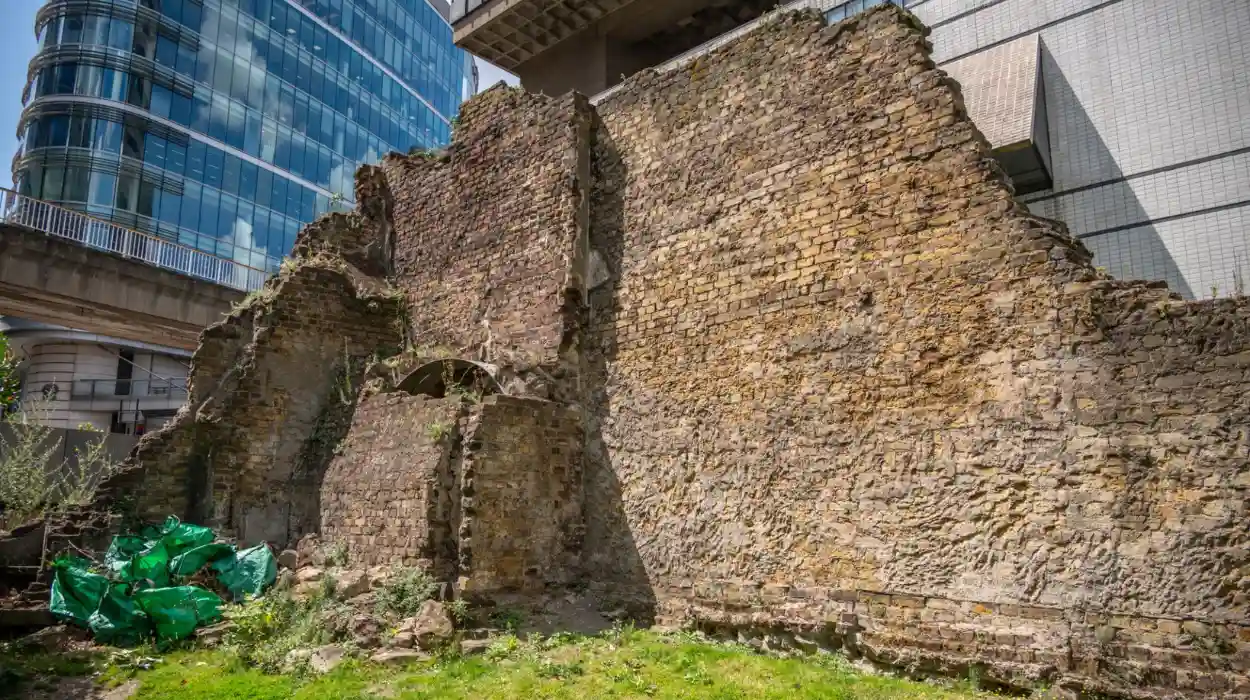
Historic England records the London Wall as a Roman defensive structure built between approximately AD 190 and AD 225. Its surviving sections demonstrate how Roman infrastructure continued to influence the development of medieval and later London.
These fragments are therefore not simply unusual attractions. They are physical evidence of urban continuity.
Where can visitors see London’s Roman history beyond the Tower of London?
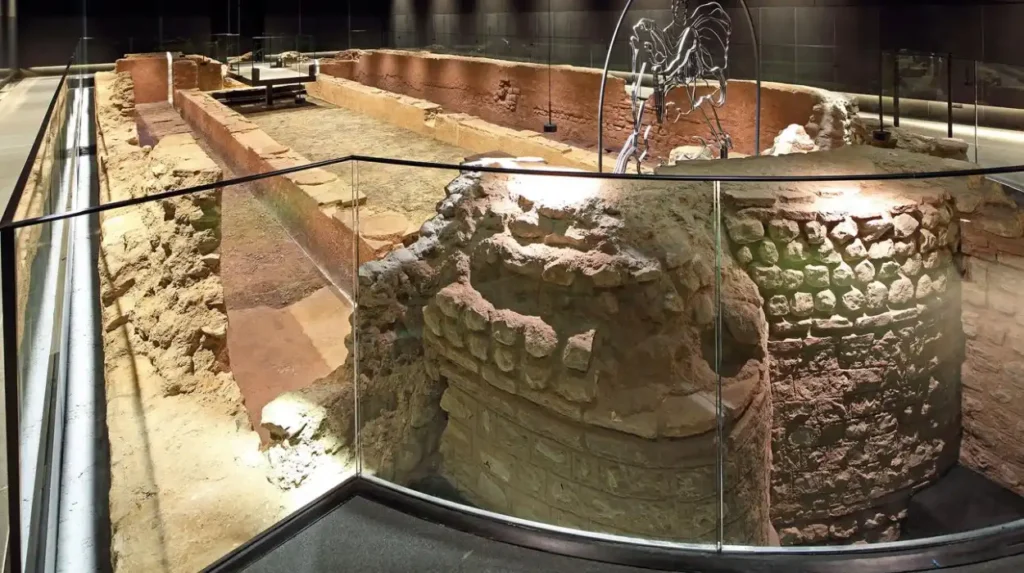
Visitors can see London’s Roman history at surviving sections of London Wall, the Roman amphitheatre beneath Guildhall, the London Mithraeum and archaeological remains across the City. These locations demonstrate Londinium’s defensive, religious, administrative and commercial functions beyond famous medieval landmarks.
Roman London developed around the River Thames during the first century AD after the Roman conquest of Britain. Londinium became an important commercial and administrative settlement because its river crossing connected transport routes across southern Britain.
The settlement expanded rapidly. Archaeological excavations have uncovered streets, buildings, warehouses, drainage systems, domestic structures and religious remains.
London Wall became one of the settlement’s defining defensive structures. Historic England dates its construction to the late second or early third century. Surviving fragments appear in modern streets and buildings, allowing visitors to identify the physical boundaries of Roman London.
The London Mithraeum provides another important archaeological experience. The site preserves remains of a Roman temple dedicated to Mithras, a religious cult associated with the Roman world. Its location beneath the modern City demonstrates how archaeological remains survive underneath contemporary commercial districts.
The Roman amphitheatre beneath Guildhall is another significant remnant. The structure was used for public spectacles and demonstrates that Roman London possessed civic buildings associated with entertainment and public life.
These sites establish a wider historical context for the City. Visitors walking between them can see how Roman foundations became embedded within later medieval and modern development.
Why is Postman’s Park an important overlooked London experience?
Postman’s Park is important because its history connects Victorian London with postal workers, public memory and social reform. Its Watts Memorial, created in 1900, commemorates ordinary people who died while attempting to save others, preserving a distinctive record of Victorian civic values.
Postman’s Park sits close to St Paul’s Cathedral in the City of London. Its name reflects its association with workers from the nearby General Post Office, who used the garden during working hours.
The park contains the Watts Memorial, established by Victorian painter and philanthropist George Frederic Watts. The memorial opened in 1900 and records acts of civilian heroism.
Its significance differs from conventional monuments dedicated to monarchs, military commanders or political leaders. The memorial focuses on ordinary individuals who died while attempting to save other people.
The site therefore provides evidence of Victorian ideas about public morality, courage and civic responsibility.
The City of London confirms that the park acquired its name through its popularity with workers from the old General Post Office and identifies the Watts Memorial as a central historical feature.
The memorial also demonstrates how Victorian philanthropy influenced public spaces. Watts believed that examples of self-sacrifice should remain visible to the public.
For researchers studying family history, the memorial provides another useful dimension. Names, occupations and locations associated with the commemorated individuals can connect personal histories with nineteenth-century London communities.
How can visitors explore London’s historic churches away from the major cathedrals?
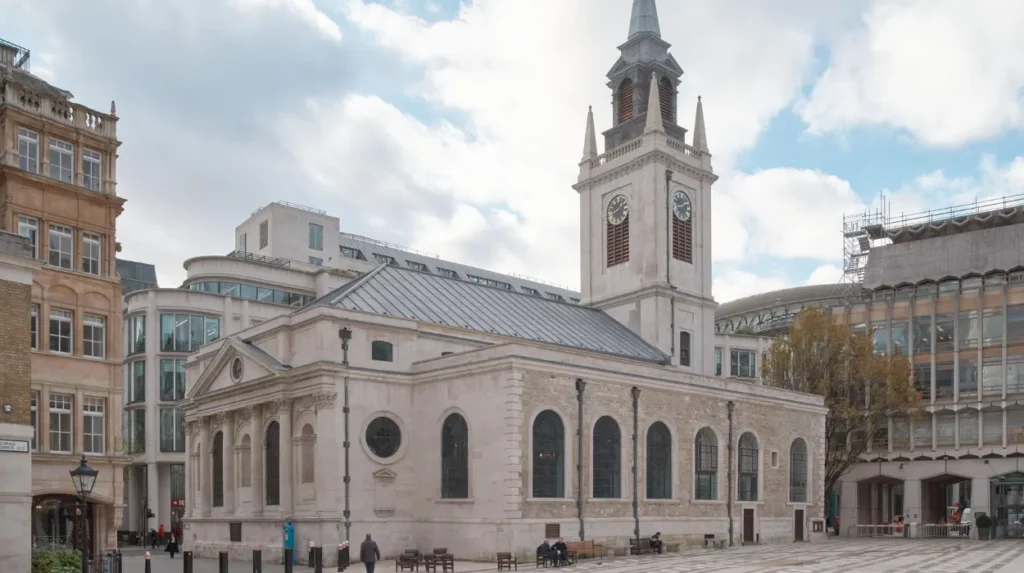
Visitors can explore London’s historic churches in the City, the Temple and surrounding districts to understand medieval parish life, the Great Fire of London and post-1666 rebuilding. Churches such as St Stephen Walbrook and Temple Church preserve architectural evidence from different phases of London’s development.
London contains many churches that receive less attention than St Paul’s Cathedral or Westminster Abbey.
The City of London historically contained numerous parish churches because religious institutions formed a fundamental part of medieval urban life. Churches served congregations, guilds, charities and neighbourhood communities.
The Great Fire of London in September 1666 destroyed large parts of the medieval City. The disaster transformed the architectural landscape. Christopher Wren became the principal architect associated with the rebuilding programme.
Wren’s churches provide evidence of this transformation. Their towers, domes and classical interiors replaced many medieval structures while retaining the historical function of parish worship.
St Stephen Walbrook is an important example. Its interior reflects Wren’s architectural approach and demonstrates the relationship between religious architecture and the rebuilding of the City.
Temple Church provides a different historical layer. Built by the Knights Templar in the twelfth century, it preserves a rare connection with medieval military-religious institutions and the legal district that later developed around the Inns of Court.
Exploring these churches reveals that London’s religious history extends far beyond its largest ecclesiastical landmarks.
What can visitors discover in London’s historic legal district?
London’s legal district around the Inns of Court preserves centuries of legal history through courtyards, halls, chambers, gardens and churches. Lincoln’s Inn, Inner Temple, Middle Temple and Gray’s Inn demonstrate how professional legal institutions shaped the architecture and social geography of central London.
The Inns of Court developed as centres for legal education and professional life. The four principal Inns are Lincoln’s Inn, Inner Temple, Middle Temple and Gray’s Inn.
Their buildings contain medieval, Tudor, Georgian and Victorian elements. Their courtyards and gardens create enclosed spaces within the dense central city.
The legal profession influenced the area’s development because barristers required places for education, residence, administration and professional practice.
Lincoln’s Inn contains buildings and gardens associated with centuries of legal history. Inner Temple and Middle Temple occupy the historic Temple area beside the River Thames.
Temple Church remains one of the district’s most important medieval structures. Its round nave reflects the architectural traditions of the Knights Templar.
The district is also valuable for architectural research because it retains historic spatial patterns that differ from the surrounding commercial City.
Walking through these areas reveals a form of London shaped less by royal power and more by professional institutions.
Why should tourists visit Sir John Soane’s Museum?
Sir John Soane’s Museum preserves the London home and collections of architect Sir John Soane, who lived from 1753 to 1837. The house contains architectural drawings, antiquities, sculptures, paintings and objects arranged within spaces designed by Soane himself.
Sir John Soane was an English architect best known for designing the Bank of England and several important buildings in Britain.
His former home at 13 Lincoln’s Inn Fields became a museum after his death. Parliament passed legislation supporting the preservation of the house and its collections.
The museum is historically significant because the building itself forms part of the collection. Visitors encounter Soane’s architectural ideas through rooms, lighting arrangements, mirrors, openings and carefully positioned objects.
The collection includes ancient Egyptian, Greek and Roman antiquities, architectural models, paintings, drawings and sculptures.
The museum therefore offers two connected historical subjects. The first is Soane’s career as an architect. The second is the development of collecting and architectural scholarship during the Georgian and Regency periods.
London City Hall lists Sir John Soane’s Museum among Londoners’ leading hidden cultural gems.
For architecture students and educators, the museum provides direct evidence of how an eighteenth- and nineteenth-century architect studied historical forms and incorporated them into professional practice.
How does Wilton’s Music Hall reveal London’s social history?
Wilton’s Music Hall preserves one of London’s most important surviving nineteenth-century entertainment interiors. Its history connects Victorian popular culture with music, theatre, working-class leisure, commercial entertainment and the architectural development of East London.
Wilton’s Music Hall stands in Whitechapel and represents the development of commercial entertainment during the nineteenth century.
The building developed from earlier premises associated with public houses and commercial activity before becoming a music hall.
Music halls expanded rapidly during Victorian London. They provided entertainment for urban audiences and combined performances with food, drink and social interaction.
The institution is historically valuable because music halls represented a different cultural environment from elite theatres and royal institutions.
Wilton’s survival is also significant because many historic entertainment buildings disappeared through demolition, redevelopment or changing commercial use.
London City Hall includes Wilton’s Music Hall among its highlighted hidden cultural gems.
The building provides evidence of East London’s social history and the growth of mass entertainment during industrialisation.
Its preservation demonstrates how adaptive conservation can retain historic structures while allowing them to function as cultural venues.
What historic experience does the Thames provide beyond famous river landmarks?
The River Thames provides a continuous historical route through London’s commercial, industrial, political and residential development. Its embankments, bridges, docks, warehouses and surviving structures show how river transport supported the capital’s growth from Roman times through industrialisation and into the modern period.
The Thames is more than a backdrop for Tower Bridge and the London Eye. It is one of the principal forces behind London’s development.
Roman Londinium depended on the river for transportation and trade. Medieval London expanded around its waterfront. Later centuries transformed the Thames into a major commercial and industrial corridor.
Warehouses, wharves and docks developed to handle imported and exported goods. The Port of London became central to Britain’s international trading system.
The nineteenth century brought major engineering projects. Embankments altered sections of the waterfront and improved sanitation, transportation and flood management.
The Thames Path now allows visitors to experience parts of this historical landscape on foot.
London City Hall lists walking along the Thames and the Thames Path among Londoners’ leading hidden cultural experiences.
The river also provides a useful framework for understanding London geographically. Bridges indicate crossing points. Former docks identify industrial districts. Warehouses reveal commercial functions. Embankments demonstrate Victorian infrastructure.
This makes the Thames one of the most effective historical routes for understanding London as a continuously evolving city.
How does Little Venice reveal London’s canal history?
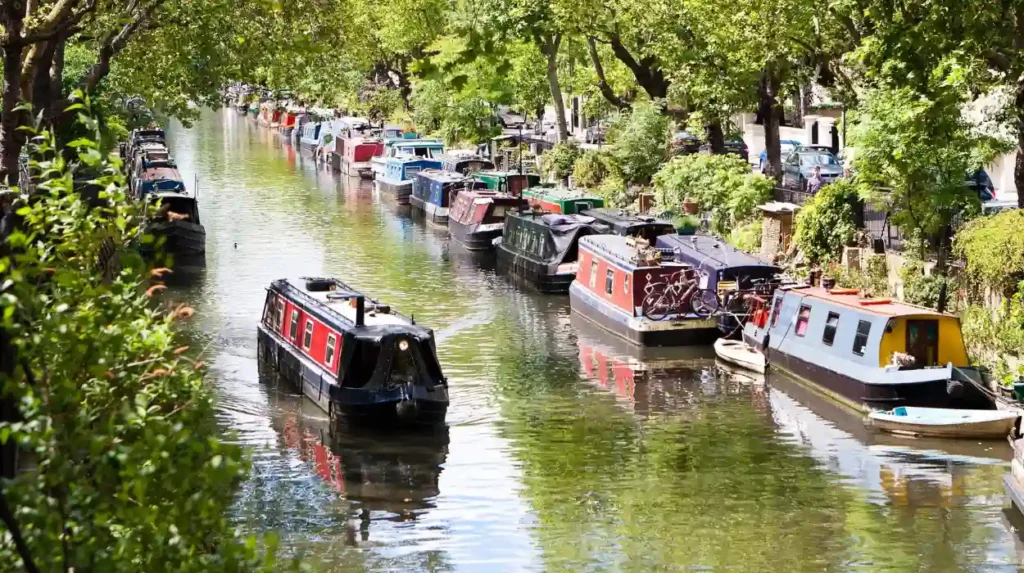
Little Venice reveals the nineteenth-century expansion of London’s canal network and its relationship with industrial transport. The Regent’s Canal and Grand Union Canal connected inland waterways with the Thames, supporting the movement of coal, building materials, food and manufactured goods.
London’s canals expanded during the Industrial Revolution. Before railways became dominant, waterways provided an efficient method for transporting heavy goods.
The Regent’s Canal opened in stages during the early nineteenth century and connected the Grand Junction Canal system with the London docks.
Little Venice developed around the junction of waterways near Paddington. The area now has a strong recreational identity, but its infrastructure originated in an industrial transportation system.
Canals reduced the cost of moving bulky materials through a rapidly expanding city.
Coal was particularly important because London households, industries and transport systems required enormous quantities of fuel.
The canal network also influenced industrial geography. Warehouses, factories and wharves developed near navigable waterways.
Modern canal walks reveal this infrastructure through bridges, towpaths, locks and waterway alignments.
The experience demonstrates that London’s industrial history is not confined to large factories. Transport infrastructure also shaped the city.
What can visitors learn from London’s historic markets?
London’s historic markets reveal how food distribution, trade, migration and regulation shaped urban communities. Markets such as Leadenhall Market, Borough Market and older East London trading districts connect modern retail activity with centuries of commercial development and changing population patterns.
Markets formed an essential part of London’s economic system.
Leadenhall Market has medieval origins and developed into a major commercial location in the City. Its later Victorian architecture reflects the nineteenth-century transformation of market buildings.
Borough Market has an exceptionally long history near London Bridge. Its position reflects the importance of the bridge and Thames crossing to food distribution.
Markets also demonstrate the relationship between commerce and regulation. Authorities controlled where goods were sold, how markets operated and how urban streets were used.
Migration changed London’s commercial landscape as new communities introduced different foods, businesses and trading networks.
East London provides particularly strong evidence of these changes. Whitechapel, Spitalfields and surrounding districts developed complex commercial cultures influenced by successive immigrant communities.
Historic markets therefore provide useful evidence for genealogical and social research. Business records, street directories, maps and property records can reveal how families participated in London’s commercial economy.
Why are London’s hidden gardens important historical sites?
London’s hidden gardens preserve former churchyards, private estates, civic spaces and remnants of earlier neighbourhoods. Places such as Postman’s Park, Temple gardens and historic residential gardens demonstrate how green spaces survived within an increasingly dense metropolitan environment.
London’s gardens often preserve historical boundaries that no longer remain visible in buildings.
Churchyards provide one example. Before modern cemeteries expanded beyond central districts, parish churchyards served as burial grounds for local communities.
When churches disappeared, some burial grounds survived as gardens.
Other gardens originated from private estates. Wealthy landowners controlled large areas of London before urban development divided those estates into streets and residential properties.
The Temple area provides an important example of enclosed gardens associated with legal institutions.
Postman’s Park demonstrates another pattern: a civic green space developed from former burial grounds and adjacent sites.
These spaces have historical value because they preserve physical evidence of earlier land use.
They also demonstrate the importance of urban conservation. A small garden can retain archaeological deposits, mature trees, boundary walls and memorials even after the surrounding neighbourhood has changed completely.
How do London’s overlooked attractions improve historical understanding?
Overlooked attractions improve historical understanding by connecting major events with everyday places, institutions and communities. Roman walls explain urban foundations, small churches explain parish life, markets explain commerce, and historic gardens preserve evidence of changing land use.
London’s history becomes clearer when major landmarks are studied alongside smaller sites.
The Tower of London explains royal authority. Nearby streets reveal commercial activity and housing. Westminster Abbey explains religious and political institutions. Surrounding neighbourhoods reveal changing patterns of residence and transport.
This layered approach is particularly valuable for education.
Students can compare architectural evidence with written records. Heritage researchers can examine surviving structures alongside historic maps. Genealogists can connect streets, churches, workplaces and markets with family records.
The approach also supports preservation.
A building is easier to understand when its historical function is identified. A garden becomes more significant when its former use is known. A Roman wall becomes more meaningful when its relationship to Londinium’s street network is established.
London’s official cultural organisations increasingly recognise the value of lesser-known sites. Visit London’s current hidden-gem guide includes historic corners, unusual museums, hidden-away art and antiquities, with many sites offering free access.
The result is a broader interpretation of London’s heritage.
How can tourists connect famous London landmarks with lesser-known historical sites?
Tourists can connect famous landmarks with nearby overlooked sites by planning journeys around historical periods rather than isolated attractions. Combining major landmarks with Roman remains, churches, markets, gardens and former industrial spaces creates a more complete chronology of London.
A historical journey through London works best when locations are considered as parts of wider urban systems.
A visit to St Paul’s Cathedral can include Postman’s Park, nearby Roman remains and surviving Wren churches. A Tower of London visit can extend into the historic waterfront and former commercial districts.
Westminster can be connected with the legal district, Somerset House and the Strand. Whitechapel can be studied through markets, music halls and migration history.
This method reduces the separation between “famous attractions” and “hidden attractions.” Both categories form part of the same historical landscape.
To experience this historic capital in person today, consult our comprehensive [How London Neighbourhoods Shaped Local Life Through History, Culture, and Community Growth] for itineraries and visiting parameters.
The key principle is chronological and geographical connection. Visitors should identify what existed before a landmark, what developed around it and how later generations changed the area.
What is the long-term historical value of London’s hidden attractions?
London’s hidden attractions have long-term value because they preserve physical evidence of communities and historical processes that large monuments cannot fully represent. Their survival supports education, heritage research, tourism, local identity and future interpretations of London’s urban history.
London continues to change through redevelopment, infrastructure projects, housing construction and commercial investment. Historic buildings and spaces provide fixed evidence within this changing environment.
Preservation does not freeze the city. It allows later generations to understand how the city evolved.
The Roman wall demonstrates ancient defensive planning. Postman’s Park records Victorian civic values. Historic churches document religious and architectural change. Legal institutions preserve professional traditions. Markets reveal commercial networks. Canals document industrial transportation.
These sites also broaden the definition of heritage.
Historical significance does not belong only to palaces, cathedrals and monuments. Ordinary streets, workplaces, gardens, markets and transport routes also contain evidence of London’s past.
For genealogists, these locations provide geographical context for family records. For educators, they provide physical teaching resources. For heritage organisations, they demonstrate the importance of conserving small-scale historical evidence.
London’s continued preservation of lesser-known sites therefore has national and international significance. The city functions as a living historical archive in which Roman, medieval, early modern, industrial and modern layers remain visible within the same urban environment.
The most rewarding historical experiences in London are often found where these layers intersect. A visitor who looks beyond the conventional landmark list can identify the infrastructure, institutions and communities that created the capital itself.
Frequently Asked Question
What are some unique London experiences tourists often miss?
Visitors often overlook London Wall, the Roman amphitheatre beneath Guildhall, Postman’s Park, Temple Church, Sir John Soane’s Museum, Wilton’s Music Hall, historic markets and the city’s canal network.