
Key Points
- According to new data released by the Office for National Statistics (ONS), house prices in central London have plummeted by more than a fifth over a 12-month period.
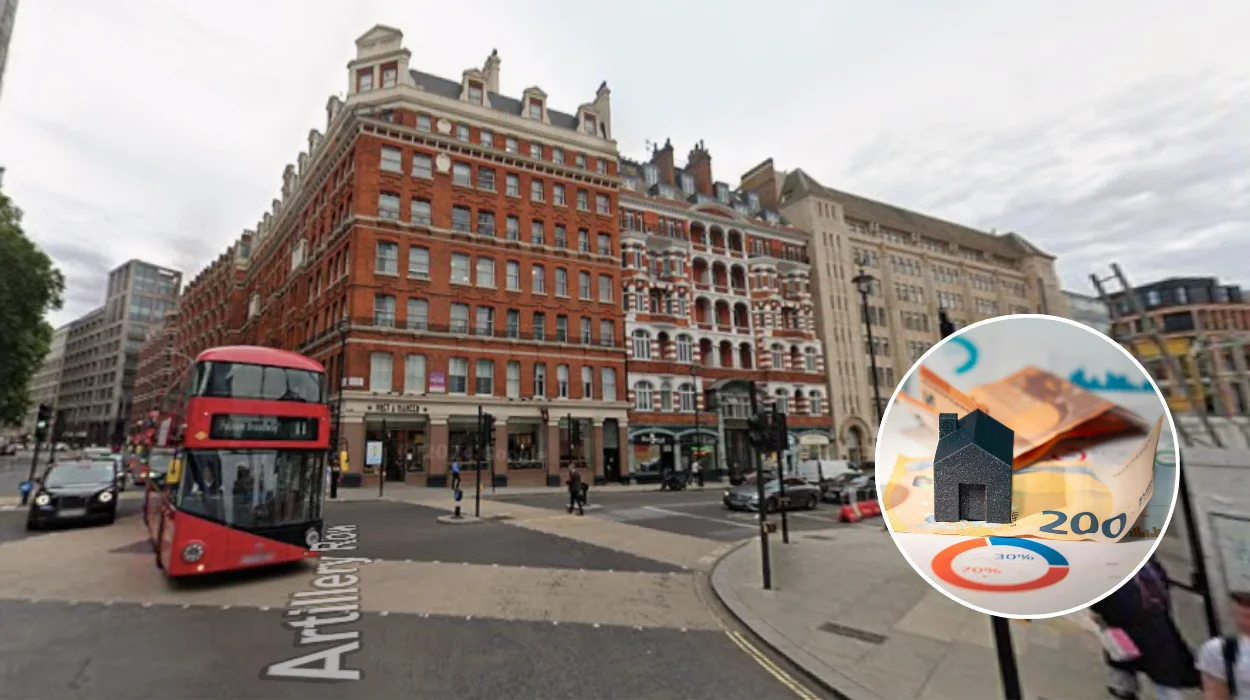
- Westminster recorded the steepest fall in the capital, with a staggering 22.8% plunge in the 12 months leading up to May, reducing the average house price down to £836,331.
- This dramatic correction erased just over £247,000 from the average Westminster property value compared to May 2025, when it stood at £1,083,519.
- Property prices across London as a whole have now fallen for nine consecutive months, with the overall annual decline accelerating to 3.7% in the year to May.
- Other central boroughs also suffered heavy losses, including a 14.5% drop in Tower Hamlets, a 10.9% decrease in Hammersmith and Fulham, and a 10.7% fall in Kensington and Chelsea.
- Market analysts attribute the downturn to a combination of higher interest rates, mounting mortgage payment pressures, upcoming tax reforms, and broader political changes.
London (The Londoner News) July 23, 2026 — Central London’s residential property market is undergoing a severe and historic correction, with official figures revealing that nearly £250,000 has been wiped off the average home value in Westminster following a brutal 22.8 per cent annual slump. The latest data published by the Office for National Statistics (ONS) highlights a deepening crisis across the capital’s most exclusive postcodes, marking the ninth consecutive month of falling property values across London even as the rest of the United Kingdom experiences modest average growth.
- Key Points
- What Are the Key Findings of the Latest ONS Housing Data?
- Why Are Central London House Prices Falling So Rapidly?
- How Are Broader Economic Pressures and Seasonal Factors Impacting the Market?
- Is the Entire Capital Experiencing a Housing Slump?
- What Does This Mean for the Wider UK Housing Market?
What Are the Key Findings of the Latest ONS Housing Data?
The newly released figures demonstrate that the downturn in the capital is heavily concentrated in inner London, where high property values and shifting economic pressures have severely penalized sellers.
According to Nicholas Cecil, Chief Reporter at The Standard, house prices dropped dramatically in Westminster over the 12 months to May, bringing the average price of a home down to £836,331. This represents a loss of just over £247,000 compared to May 2025, when the average home in the borough cost £1,083,519.
The scale of this decline represents by far the steepest drop recorded across any part of the capital. Monthly tracking by the ONS shows that Westminster’s slide has accelerated consistently: prices were down 9.6 per cent in the year to January, 11.6 per cent in February, 12.3 per cent in March, 18.8 per cent in April, and ultimately peaked at a 22.8 per cent loss by May.
Other prime central boroughs have experienced similar downward trajectories. Tower Hamlets posted the second-largest drop in the capital, with prices tumbling by 14.5 per cent.
Meanwhile, Hammersmith and Fulham saw values decline by 10.9 per cent, and Kensington and Chelsea—retaining its title as London’s most expensive borough—recorded a 10.7 per cent drop, pulling its average property price down to £1,256,000. Further declines were registered in Camden and Islington, where annual losses hovered around six per cent.
Why Are Central London House Prices Falling So Rapidly?
Financial analysts and housing market experts point towards a complex matrix of macroeconomic and political pressures driving the downtown. As reported by Nicholas Cecil of The Standard, Russ Mould, investment director at AJ Bell, described the phenomenon as “a very substantial correction after a very long run of higher house prices”.
Mr Mould further stated that
“there is a combination of factors ranging from the economic to the political,”
noting that these pressures include persistently higher interest rates that have inflated monthly mortgage bills, alongside ongoing tax adjustments. Furthermore, market watchers suggest that some wealthy international and domestic investors may have relocated abroad after concluding that capital is no longer welcomed in the UK as it once was.
Additional downward pressure on prime central London real estate is being anticipated from forthcoming structural tax reforms. Property experts note that the looming implementation of a new “mansion tax” targeting residential properties valued at £2 million and above—scheduled to come into effect in 2028—has severely dented buyer confidence.
Concerns have also been compounded by potential local government tax overhauls, including a proposed property levy backed by Prime Minister Andy Burnham to replace traditional council tax and stamp duty, which could potentially land London homeowners with an additional £7.5 billion property tax liability.
How Are Broader Economic Pressures and Seasonal Factors Impacting the Market?
Beyond localized tax and political anxieties, the broader UK property sector is grappling with seasonal distractions and restrictive borrowing costs. As noted in reports by property platforms and industry researchers, summer events have historically subdued buyer urgency. As reported by Richard Donnell, executive director of research at Zoopla,
“Political change, the World Cup, a scorching summer and elevated mortgage rates have hit housing market activity this summer”.
Mr Donnell added that Zoopla’s latest metrics indicate roughly 20 per cent fewer buyer inquiries compared to the same period in the previous year, alongside a 7 per cent reduction in agreed sales.
These figures align with broader commentary from Sarah Coles, head of personal finance at AJ Bell, who previously observed that London’s market has become “a victim of its own success,” explaining that average house prices in the capital are vastly inflated compared to the rest of the UK, making it increasingly difficult for ordinary buyers to scale the property ladder amid elevated mortgage rates.
Explore More Central London News
Grosvenor Square Reopens as Climate-Resilient Urban Haven in Mayfair, London 2026
Australian Student Fletcher Beasley Dies in Victoria Embankment Fall, London 2026
Is the Entire Capital Experiencing a Housing Slump?
Despite the steep corrections recorded in the core districts, London’s property landscape remains deeply divided. While inner-city boroughs endure double-digit percentage losses, several outer London districts continue to buck the trend and post modest annual price growth.
According to ONS figures compiled by regional housing reports, Waltham Forest led the outer boroughs with a 3.1 per cent annual price increase, taking its average property value to £524,000. Havering followed closely with a 2.8 per cent rise, while Haringey and Redbridge both recorded 2.4 per cent gains.
Lewisham and Bexley also managed positive territory, up 2.3 per cent and 2.2 per cent respectively. Analysts interpret this divergence as evidence that the current downturn is not a widespread market collapse, but rather a sharp, localized repricing of overvalued prime central stock, while demand for more affordable suburban family housing remains comparatively resilient.
What Does This Mean for the Wider UK Housing Market?
The sharp contraction in central London stands in stark contrast to the national picture. Across the UK as a whole, average residential property prices increased at an annual rate of 2.7 per cent in the year to May, bringing the typical national house price to approximately £271,000, though overall growth is visibly slowing from previous months.
Property market researchers suggest that this widening gap between a deflating capital core and a gently rising national market creates a unique window of opportunity. Prospective buyers who were entirely priced out of central zones during the hyper-inflationary property booms of the past decade may finally find unprecedented negotiating leverage.
However, for high-net-worth sellers, developers, and prime landlords, the immediate future will require hard choices regarding asset valuation as the market continues to absorb the realities of higher borrowing costs and a shifting regulatory environment.