

Key Points
- Qingdao in Shandong province has launched a new international air cargo transit service linking London and Sydney, operated by Capital Airlines, to build a major aviation logistics hub in northern China.
- A recent shipment of medical lifting equipment from London transited through Qingdao Airport en route to Sydney under a single transport document, improving efficiency and reducing handling time.
- Qingdao Airport authorities, with support from local port and customs officials, completed all necessary security checks, transit declarations, and transfer procedures seamlessly.
- Capital Airlines also operates intercontinental cargo routes connecting Moscow and Melbourne, strengthening air-to-air transit services between Europe and Oceania.
- Local transport authorities in Qingdao have prioritised enhancing aviation hub capacity this year, including expanding international passenger and cargo routes to Southeast Asia and Shanghai Cooperation Organization (SCO) member states.
- Plans include improving cargo transit channels connecting domestic destinations with Japan and South Korea via Qingdao to boost aviation logistics service capacity.
- Capital Airlines facilitates smooth transit from London to Melbourne and Sydney weekly via its Qingdao hub, connecting to numerous Chinese cities.
- Qingdao Jiaodong International Airport has seen robust cargo growth, with initiatives to become a key logistics node in northern China.
Qingdao (The Londoner News) May 7, 2026 – Qingdao in Shandong province has opened a groundbreaking international air cargo transit service linking London and Sydney, positioning the city as a pivotal aviation logistics hub in northern China, as reported exclusively by Zhao Ruixue and Hu Qing of China Daily.
- Key Points
- What Triggered the Launch of Qingdao’s London-Sydney Cargo Route?
- How Does Capital Airlines’ Network Support This Transit Hub?
- What Efficiency Gains Does the Single Document System Offer?
- Who Are the Key Players Backing Qingdao’s Aviation Push?
- What Future Routes Are Planned for Qingdao’s Hub?
- Why Is Qingdao Ideal for Europe-Oceania Cargo Transit?
- How Does This Fit Broader Chinese Logistics Strategy?
This innovative route, operated by Capital Airlines, allows goods to travel from origin to destination under a single transport document, markedly improving efficiency and slashing handling times while embedding Qingdao firmly into the global cargo network.
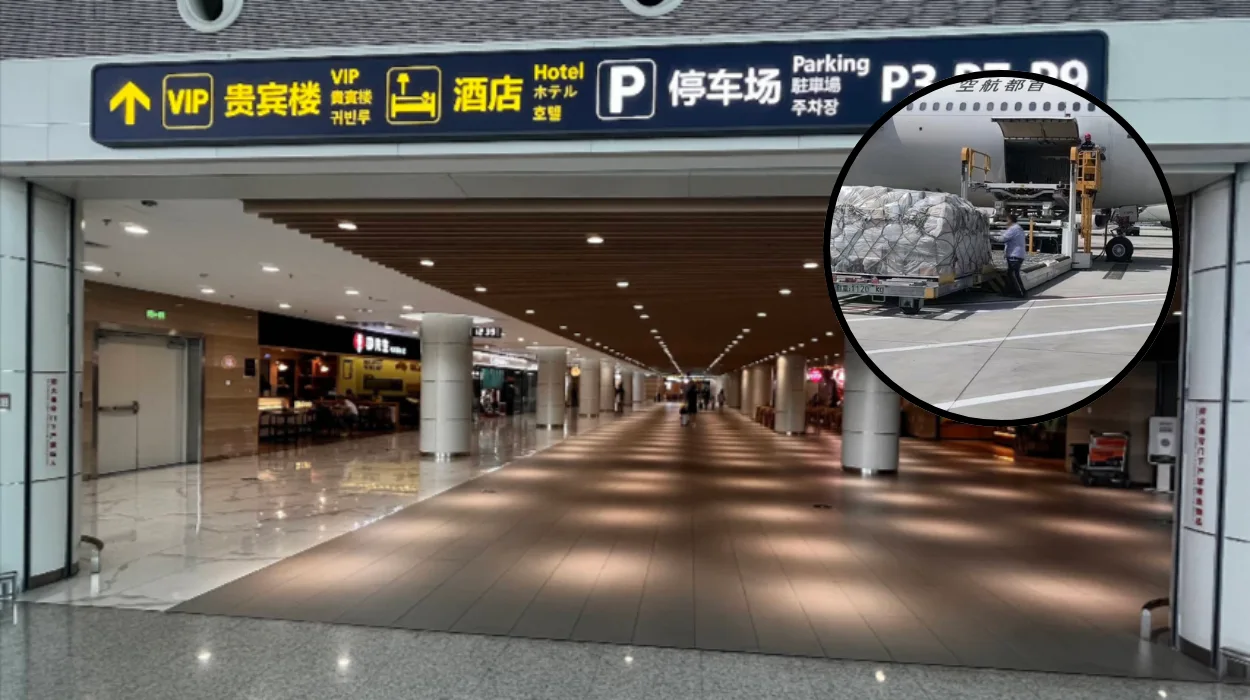
Airport officials highlighted that a recent shipment of medical lifting equipment departed from London, transited smoothly through Qingdao Airport, and continued to Sydney, demonstrating the service’s operational readiness.
What Triggered the Launch of Qingdao’s London-Sydney Cargo Route?
Qingdao Airport’s new service builds on its strategic ambitions to become northern China’s premier aviation logistics centre, with local authorities fast-tracking international cargo expansions.
As reported by Zhao Ruixue and Hu Qing of China Daily,
“With the support of local port authorities and customs officials, Qingdao Airport completed security checks, transit declarations and transfer procedures before the inbound flight landed, ensuring smooth end-to-end logistics operations.”
This aligns with Qingdao’s broader push during the 15th Five-Year Plan (2026-30), where the Qingdao International Airport Group aims to optimise route networks and enhance hub connectivity, as noted in prior coverage by China Daily Qingdao.
The route leverages Capital Airlines’ existing network, which already links London directly to Qingdao with weekly flights on Mondays and Fridays, facilitating connections to major Chinese cities like Beijing, Shanghai, and Guangzhou.
How Does Capital Airlines’ Network Support This Transit Hub?
Capital Airlines, established in 2010 as a joint venture between Beijing Municipal Government and HNA Aviation Group, operates a fleet of 88 Airbus aircraft from Beijing Daxing International Airport and has long eyed Oceania markets.
Beyond London-Sydney, the airline runs two other intercontinental routes: one connecting Moscow and another to Melbourne in Australia, providing a robust framework for Europe-Oceania air-to-air transits.
According to CNTO London coverage, Capital Airlines enables
“smooth transit from London to Melbourne and Sydney Australia, every week,”
underscoring Qingdao’s role as a bridge.
This expansion echoes historical ties, such as Capital Airlines’ longstanding Qingdao-Sydney passenger services, which Vice President Qu Tao once described as establishing
“another passageway in the sky between China and New South Wales to help facilitate and promote trade development and tourism.”
What Efficiency Gains Does the Single Document System Offer?
The single transport document system eliminates redundant paperwork, allowing seamless movement from London to Sydney via Qingdao, a model praised by airport officials for cutting handling times significantly.
This mirrors Qingdao Jiaodong International Airport’s cargo prowess, where throughput exceeded 200,000 tonnes in early periods, up 10.5% year-on-year, bolstering its status as FedEx’s fifth gateway in China.
As Zhao Ruixue and Hu Qing reported in China Daily, the medical lifting equipment shipment exemplified this: inbound flight procedures were pre-cleared, ensuring
“smooth end-to-end logistics operations.”
Such innovations position Qingdao ahead of competitors, with plans to link domestic routes to Japan and South Korea, enhancing regional distribution.
Who Are the Key Players Backing Qingdao’s Aviation Push?
Local transport authorities in Qingdao have designated aviation hub enhancement as a “key task” for 2026, per China Daily’s on-the-ground reporting.
Collaboration involves port authorities, customs, and airlines like Capital, with security and declarations handled pre-landing to minimise delays.
Qingdao Airport Group, during the 14th Five-Year Plan, invested heavily in infrastructure, hosting all four national logistics hub types: production service, port, commercial service, and airport, as detailed in China Daily Qingdao editions.
FedEx’s expanded Qingdao operations, now five weekly B777 freighters to the US via Osaka, further validate the hub’s potential, with President Asia Pacific noting it “strengthens one of the world’s most vital trade corridors.”
What Future Routes Are Planned for Qingdao’s Hub?
Authorities plan to launch and expand international passenger and cargo routes, stabilise intercontinental services, ramp up Southeast Asia flights, and open more to SCO states.
Additional focus targets cargo channels to Japan, South Korea, and domestic hubs, aligning with Qingdao’s “principal axis” for Yellow River Basin logistics and Belt and Road cooperation.
China Daily Qingdao previously reported the airport’s 14 international cargo routes by late 2022, including to Los Angeles and Chicago, with converted charters to Bournemouth, UK.
Entering 2026-30, the group prioritises “safe operations while continuing to expand and optimise its route network,” supporting Qingdao as an international transport hub.
Why Is Qingdao Ideal for Europe-Oceania Cargo Transit?
Qingdao’s coastal-inland advantage redefines modern logistics, as an international comprehensive transport hub with four national logistics types.
Its 48% investment surge in the 14th Five-Year Plan built projects like Qingdao Port rail lines and a 400,000-metric-ton ore terminal.
Jiaodong Airport ranked 13th in China for cargo in 2022 despite COVID challenges, opening routes to the US and UK amid crises.
The London-Sydney service, per Zhao Ruixue and Hu Qing of China Daily, “strengthening Qingdao’s position in the global cargo network,” cements this role.
How Does This Fit Broader Chinese Logistics Strategy?
Qingdao’s moves dovetail with national aviation strategies, including three-year international hub plans.
It joins efforts like strategic ties with Ezhou Airport for “dual hub” freight, covering routes to Japan, South Korea, US, and Canada.
Historical precedents include Heathrow-Qingdao launches by Capital Airlines, enabled by UK-China air agreements, adding 4,000 tonnes of cargo space annually.
As Hu Qing and Zhao Ruixue noted, these steps enhance “capacity and competitiveness of its aviation hub.”
This development not only boosts trade between Europe, China, and Australia but also underscores Qingdao’s ascent in global supply chains. Ongoing investments promise sustained growth, with stakeholders watching how quickly additional routes materialise.