Key Points
- Undiscovered Green Oasis: Coombe Wood in Croydon stands out as one of South London’s most enchanting yet overlooked public spaces, spanning 14 1/4 acres of manicured gardens and dense woodland.
- Vibrant Flora: The park features world-class ornamental gardens that display seasonal transformations with Rhododendrons, Azaleas, snapdragons, and giant sunflowers.
- Family-Friendly Water Features: A hidden ornamental pond and cascading waterfall serve as a sanctuary for wildlife, including large ornamental fish and a resident turtle.
- Historical Origins: Once a private estate dating back over 400 years, the land historically supplied water to the local area via underground conduits, giving Conduit Lane its name.
- On-Site Dining: The historic Coach House Café, situated within a converted stable yard, serves a wide range of refreshments from artisan coffees to full main courses and classic afternoon teas.
- Strict Conservation Rules: To protect the delicate local biodiversity and ensure a clean environment, dogs, bicycles, and ball games are strictly prohibited within the main garden grounds.
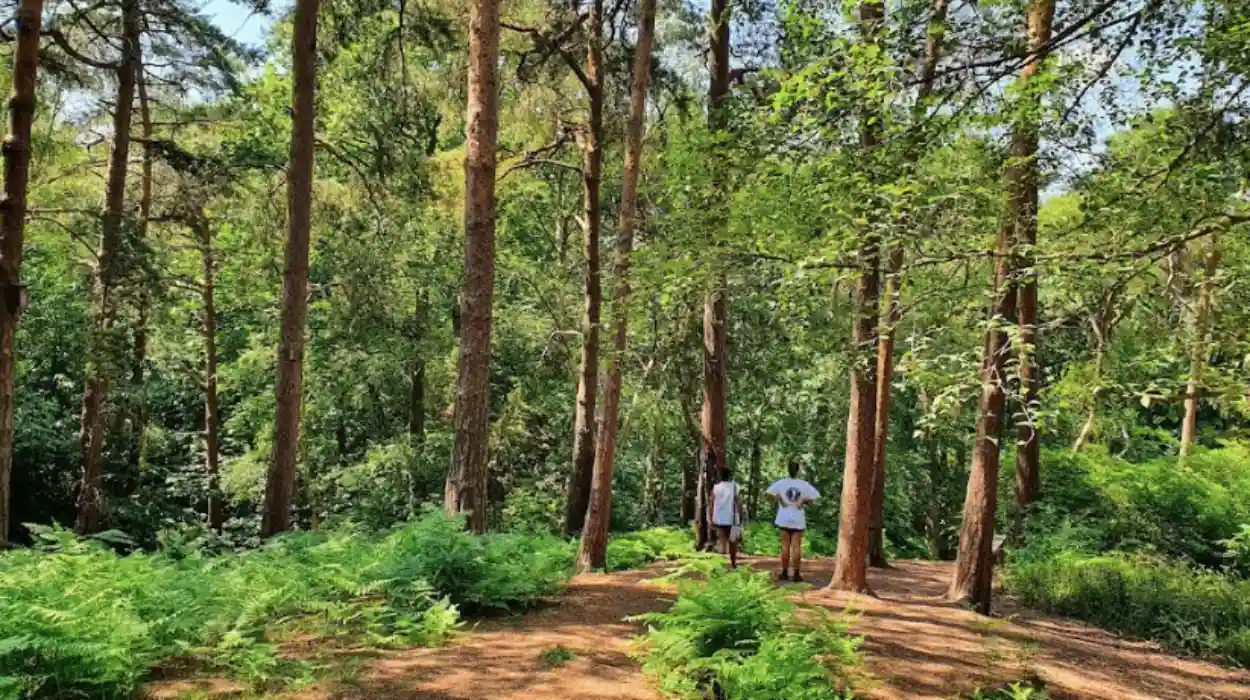
Croydon (The Londoner News) July 04, 2026 – A hidden 14 1⁄4-acre paradise tucked away in the heart of Croydon is being hailed as the ultimate safe, shaded destination for families looking to escape the summer heat. While iconic South London destinations such as Greenwich Park, Crystal Palace Park, and Beckenham Place Park routinely draw massive crowds, Coombe Wood remains a serene, well-kept secret. Boasting dense woodland canopies, vibrant ornamental borders, a tumbling waterfall, and an independent café inside a historic stable block, this public park offers an immersive nature experience completely free of charge. However, despite its stunning landscape and rich historical features, a vast majority of South Londoners remain entirely unaware of its existence.
- Key Points
- What Is South London’s Best-Kept Green Secret?
- How Can Families Enjoy the Warm Weather Safely Here?
- What Makes the Ornamental Gardens the Highlight of the Park?
- Where Can Visitors Find the Hidden Waterfall and Pond?
- What Dining Options Are Available at the Coach House Café?
- What Historical Secrets Are Buried in Coombe Wood’s Past?
- What Are the Strict Rules for Visitors to Keep in Mind?
- What Do Local Visitors and Google Reviewers Think of Coombe Wood?
- How Can You Get to Coombe Wood via Public Transport?
What Is South London’s Best-Kept Green Secret?
In a report published by Véronique Hawksworth, the AI Content Editor for MyLondon, it was highlighted that while South London boasts some of the capital’s finest communal fields, Coombe Wood represents an entirely different tier of botanical beauty. Spanning an intimate yet meticulously planned 14 1/4 acres (approximately 5.77 hectares), the space manages to compress an astonishing variety of ecological zones into its boundaries. Visitors can transition seamlessly from manicured floral displays to rugged, untamed woodlands.
According to municipal records from Croydon Council, the park serves as a vital green lung for the South Croydon area, situated near the intersection of Coombe Lane and Conduit Lane. Because it is surrounded by residential pockets and sits slightly detached from central London’s frantic transport hubs, it has managed to maintain an atmosphere of profound isolation and tranquility. It is an escape where the roar of urban traffic is entirely replaced by the rustle of leaves and the song of local birds.
How Can Families Enjoy the Warm Weather Safely Here?
As families search for recreational areas that offer ample protection from intense summer sun, Coombe Wood’s unique layout provides a natural solution. Writing for MyLondon, Véronique Hawksworth explained that the park “could be the perfect shaded spot for families to enjoy the warm weather safely this summer.” The heavy canopy provided by ancient oak, beech, and horse chestnut trees ensures that temperatures within the woodland paths remain significantly cooler than the exposed concrete of the surrounding borough.
The paths snaking through the wooded sections are thoughtfully dotted with traditional wooden benches. This infrastructure allows parents, elderly visitors, and young children plenty of opportunities to rest under the cool shade while completing their walks. Furthermore, the tree trunks are heavily populated with custom-built bird boxes, transforming a simple weekend stroll into an educational wildlife-spotting game for young children.
What Makes the Ornamental Gardens the Highlight of the Park?
While the wild spaces provide necessary shade, the formal ornamental gardens are universally recognized as the crown jewel of the estate. The gardens are designed using a classic English concept of “outdoor rooms,” where tall, expertly manicured hedgerows and hidden archways divide the landscape into distinct botanical chapters. This clever design rewards exploration, as turning a corner reveals an entirely new color palette or layout.
In her detailed breakdown of the park’s horticultural assets, Véronique Hawksworth of MyLondon observed that the ornamental gardens are “bursting with colour throughout the year.” During the spring and early summer months, the borders erupt with massive displays of pink, purple, and red Rhododendrons alongside delicate Azaleas. As the seasons progress into the height of summer, these are replaced by dense walls of snapdragons and towering sunflowers that lean toward the sun. The formal layout also incorporates a long herbaceous “broad walk,” showcasing bold foliage and striking ornamental grasses that retain their visual structure well into the autumn and winter months.
Where Can Visitors Find the Hidden Waterfall and Pond?
Located along the Coombe Lane frontage of the park sits the primary visual anchor of the lower gardens: a beautifully preserved rock garden and an ornamental pond. The rock garden itself is a marvel of alpine planting, featuring low-lying, hardy flora that thrives among stepped stone shelves. Directly feeding into this pond is a small, naturalistic stream that tumbles over a series of stone tiers, creating an enchanting, musical waterfall that naturally attracts younger visitors.
The aquatic ecosystem within the pond has become a major talking point among locals. As reported by MyLondon through verified visitor testimonies, the water is home to surprisingly large, mature ornamental fish that glide lazily beneath the surface. In an account shared by an anonymous Google reviewer via MyLondon, the visitor noted: “The pond has some big fish and I also spoke to the gardener who let me know it also has a turtle!” The presence of these unexpected creatures adds an element of magic for families exploring the grounds.
What Dining Options Are Available at the Coach House Café?
No family day out is complete without proper sustenance, and Coombe Wood delivers this through the Coach House Café, located in the courtyard of the park’s original 19th-century stable yard. The café operates seven days a week and has become a beloved culinary destination in its own right, transcending the standard fare usually associated with municipal park kiosks.
The menu caters to an array of appetites and dining styles. For those arriving early, the café offers a full breakfast menu, while the lunch service shifts to substantial, locally sourced hot main meals. Highlighting the sophistication of the kitchen, a visitor review published by MyLondon revealed that the café serves dishes ranging from “a simple coffee to a lamb shank,” alongside traditional, tiered afternoon tea experiences. During the warmer months, dining spills out from the rustic interior into a beautifully paved, sun-drenched courtyard, allowing parents to enjoy an iced beverage while remaining completely immersed in the surrounding greenery.
What Historical Secrets Are Buried in Coombe Wood’s Past?
To truly appreciate the layout of Coombe Wood, one must look at its lengthy historical timeline. Public documentation provided by historical archivers at Croydon Council reveals that over 400 years ago, this entire region was open, undeveloped land belonging to the sprawling Coombe House estate. It featured a massive communal farming space known simply as Coombe Field.
As detailed in archival records from the borough, the property underwent a major shift in 1801 under the Enclosures of Common Land Act, when it officially became the private property of James Bourdieu Senior. Under his stewardship, the estate grew to encompass 251 acres. Crucially, Coombe Wood served as the primary water source for the entire estate. Three massive underground stone channels—or conduits—were constructed to transport fresh spring water from the woods to the main house. It is this specific engineering feat that gave the adjacent pathway its modern name: Conduit Lane.
The estate eventually passed into the hands of Mr. W. Cash, the prominent Chairman of the Croydon Gas Company. In the post-war era, Croydon Council recognized the immense value of preserving the land for the public. The local authority purchased the entire estate from Mr. Cash for the sum of £14,000. While the grand Coombe Wood House was repurposed as a convalescent and children’s home, the surrounding 14.25 acres of gardens were officially opened to the general public in 1948.
During the initial clearing of the overgrown wilderness in 1947, council workmen made an unexpected discovery: the historic rock garden next to the pond had been entirely buried under decades of unchecked undergrowth, requiring careful restoration before the grand opening. Additionally, the stable yard where the café now sits was intentionally built inside a deep, former gravel pit. This architectural choice was made by the original Victorian landowners to hide the working horses and stable staff completely out of the line of sight from the main mansion windows.
What Are the Strict Rules for Visitors to Keep in Mind?
To maintain the pristine condition of the ornamental beds and ensure a peaceful environment for wildlife, Croydon Council enforces a strict set of regulations within the park. As stressed by MyLondon’s editorial team, “dogs are not permitted in the gardens, and cycling is not allowed within the grounds.” The ban on dogs is highly strictly enforced to preserve the immaculate lawns and prevent damage to rare ground-level plants.
Furthermore, council bylaws outline that active ball games are strictly forbidden within the ornamental sections to prevent flying footballs or cricket balls from destroying the delicate snapdragons, roses, and herbaceous borders. Visitors looking for sports and open recreation are advised to utilize neighboring Lloyd Park, which is fully equipped for such activities.
In terms of physical accessibility, the park offers a mixed experience. A public service leaflet published by Croydon Council notes that while the main concrete pathways weaving around the principal formal gardens are completely level or feature very gentle, manageable slopes, the paths leading directly through the historic rock garden and deep into the older woodland are inherently uneven, narrow, and stepped. Consequently, these specific wooded zones are largely unsuitable for heavy wheelchairs, mobility scooters, or double prams.
Explore more South London News:
Lime Speaks Out Over Richmond E-Bike Ban: South West London 2026
New Car Clubs Return After Zipcar Exit: Southwark 2026
What Do Local Visitors and Google Reviewers Think of Coombe Wood?
The public feedback for Coombe Wood is overwhelmingly positive, with visitors frequently praising the park’s immaculate upkeep and the unique benefits of its strict rules. The absence of domestic pets, while disappointing for dog owners, is highly appreciated by families with small children who wish to sit directly on the grass without worry.
As compiled and verified by MyLondon, one enthusiastic local reviewer wrote on Google:
“A nice little green space with amazing gardens, a nice little café… and some woods to explore. Perfect for picnics, walks and exploring nature a little.”
A second frequent visitor added a detailed glowing recommendation, stating:
“This is a beautiful woodland with an array of colourful plants. Dogs are not permitted so its free of dog mess so you can roam freely around and there are benches if you need to stop at the various points. I took my cousin there not realising this was on my doorstep. I would recommend people come along and enjoy nature at its best and its got a lovely café you can have lunch in too.”
For those looking to plan a visit, entry to the gardens and woodlands is entirely free of charge throughout the year. To assist first-time explorers, a detailed, printed guided route map is typically made available on site near the main entrance, highlighting the best walking loops and explaining the various historical trees scattered across the grounds.
How Can You Get to Coombe Wood via Public Transport?
Despite its hidden, secluded nature, Coombe Wood is surprisingly straightforward to access using London’s public transport network. The park is directly connected via the London Tramlink system, which allows visitors from central Croydon, Wimbledon, or Beckenham to reach the gates with minimal walking.
Travelers can take Tramlink Route 3 and alight at either the Lloyd Park or Coombe Lane tram stops, both of which sit just a short walk from the main entrance on Conduit Lane. For those arriving by car, a small dedicated parking area is available directly on Conduit Lane, which includes designated parking bays for disabled badge holders. Additionally, the park intersects with the Vanguard Way, a famous 66-mile long-distance walking route that connects East Sussex with South London, making the wood a popular, refreshing rest stop for avid hikers traveling across the region. The gates are open daily from dawn, though both the ornamental gardens and the deeper woodlands are securely locked at night by park rangers.