
Key Points
- Alpine Tech in Urban Terrain: While typically found in mountain ranges like the French and Swiss Alps, London’s cable car represents a rare use of the technology in a major urban metropolitan setting.
- The Commuter Myth vs. Tourist Reality: Originally touted by city planners as a viable transit route for commuters and a backup for the Jubilee line, Transport for London (TfL) officials now openly acknowledge its primary function is as a tourist attraction.
- A Profitable Venture: Despite facing years of public scepticism and being dubbed the “Dangleway” by locals, the cable car consistently generates a steady profit for TfL.
- The Alcohol Exception: The London Cable Car holds a unique status within the TfL network as the only service where the consumption of alcohol is legally permitted, featuring a bespoke £32 “Champagne Experience.”
- Olympic Legacy Roots: First conceptualised in the 1990s for the Millennium Dome, the project was revived by former Mayor Boris Johnson and opened on 28 June 2012, to bolster London’s Olympic transport profile.
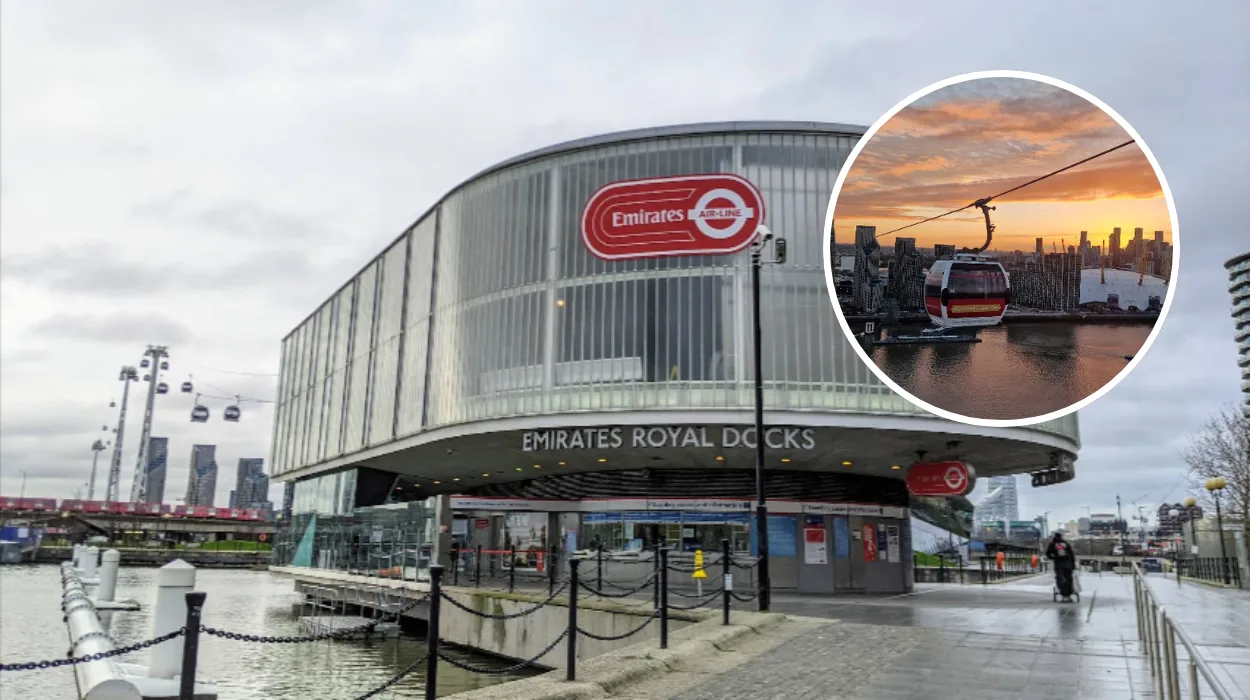
London (The Londoner News) May 15, 2026 – The London Cable Car, an alpine-style aerial transit system suspended across the River Thames between the Greenwich Peninsula and the Royal Docks, continues to thrive as a profitable tourist asset despite failing its original mandate to become an essential commuter transport link. Originally launched on 28 June 2012, under the political backing of then-Mayor Boris Johnson to capitalise on the London Olympic Games, the infrastructure project initially faced heavy criticism regarding its long-term financial viability and urban utility. However, fourteen years after its maiden voyage, internal admissions from Transport for London (TfL) and financial performance reports confirm that while the daily commuter rush never materialised, international and domestic leisure travellers have turned the crossing into a self-sustaining commercial success.
Why was the London Cable Car built in an urban area?
The presence of a cable car system within a major metropolitan capital remains an anomaly in modern transit planning. Aerial ropeways are traditionally engineered for the rugged terrains of the French and Swiss Alps rather than flat, urban riverbanks.
The historical impetus for the London project dates back to the late 1990s, when city planners initially floated the idea to connect East London’s districts ahead of the opening of the Millennium Dome.
Though the early iteration of the plan failed to secure the necessary financial and political momentum, it was later revived as a flagship project for East London’s regeneration.
When former Mayor Boris Johnson assumed office, the project was fast-tracked under the guise of enhancing London’s Olympic transport legacy.
The goal was to provide a dramatic, visually striking connection between the premier event venues on either side of the river: the ExCeL exhibition centre in the Royal Docks and the O2 Arena (formerly the Millennium Dome) on the Greenwich Peninsula.
Although TfL officials carefully avoided guaranteeing an opening date aligned precisely with the start of the 2012 Olympic Games, rapid construction ensured the system opened to the public with substantial fanfare on 28 June 2012, just weeks before the opening ceremony.
Explore More London Local News
London’s Most Dangerous Junctions Putting Fleets at Risk: London 2026
Police Hunt Trio in BMW After Brutal Brixton Stabbing: Brixton 2026
Who actually uses the London Cable Car today?
In the lead-up to its public launch, city officials heavily visualised the cable car as a highly utilised, high-capacity commuter corridor. Writing on the day of the launch, an eyewitness journalist noted a twist of logistical fate that placed them as the very first member of the press to board the system, ahead of even Mayor Boris Johnson.
As reported by this first-hand correspondent, they found themselves sharing a cabin with the then-Transport Commissioner, Sir Peter Hendy.
During that initial journey, Sir Peter Hendy emphasised that the cable car would serve as a crucial piece of resilient infrastructure for East London’s workforce, providing a dependable alternative crossing if the underground Jubilee line experienced disruptions or severe delays.
Furthermore, the system was aggressively promoted by City Hall as a vital regeneration tool designed to stimulate economic investment, housing development, and commercial growth across the historically industrial riverfronts of the Royal Docks and Greenwich.
Fourteen years of operational data have fundamentally rewritten that narrative. The anticipated masses of daily ticket-holders using the system for their morning and evening office commutes never quite materialised. Instead, the current consensus among urban planners and transport analysts is that the system operates almost exclusively for leisure.
Today, many officials within Transport for London are remarkably open in their belief that the infrastructure is, for all practical purposes, a dedicated tourist attraction rather than a core component of the city’s daily transit network.
Is the London Cable Car financially successful?
Because of its low commuter numbers and its reputation among cynical locals as the “Dangleway,” the project has frequently been mocked by critics as a white elephant and labelled by some detractors as the “world’s most expensive urban cable car.” Despite the persistent public mockery and widespread scepticism regarding its construction costs, the financial reality of the operation tells a starkly different story.
Surprisingly to its critics, the London Cable Car does not drain public funds; rather, it turns a tidy, consistent profit for Transport for London. By leaning heavily into its identity as an excursion and a scenic viewpoint rather than a utilitarian public bus or train ride, TfL has managed to secure steady revenue streams through ticket sales to tourists who are willing to pay premium prices for panoramic views of the London skyline, Canary Wharf, and the Thames Barrier.