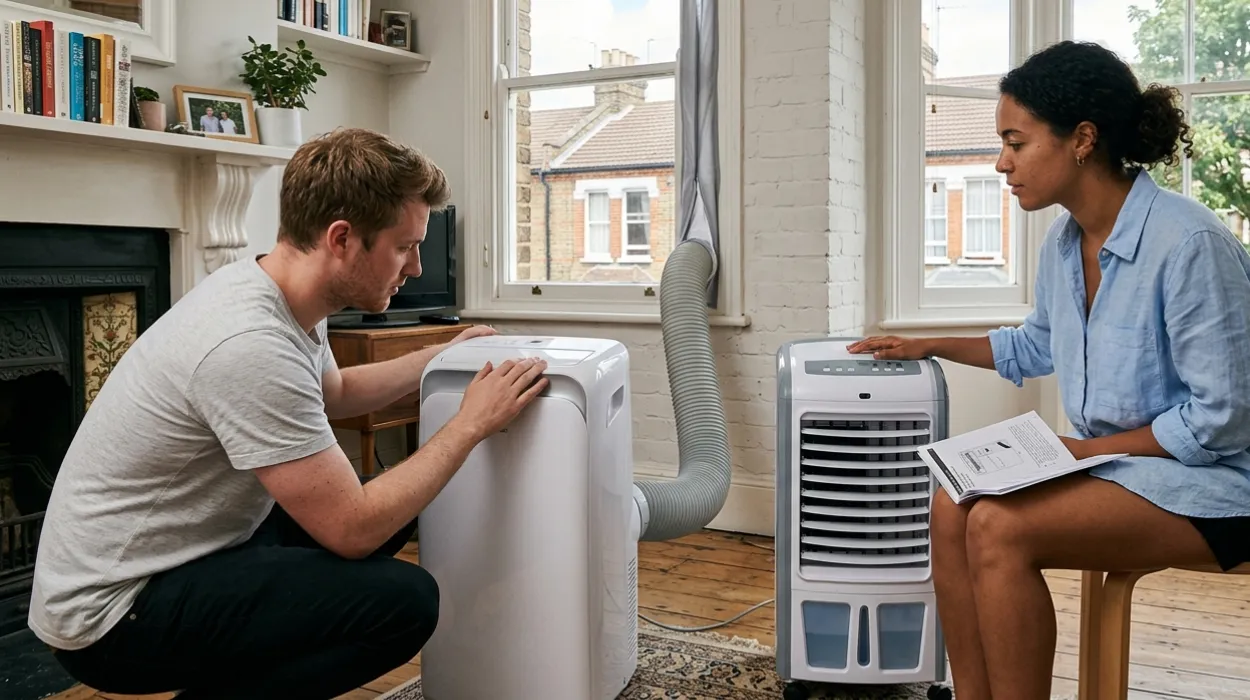
The British climate is shifting toward hotter, more intense summer heatwaves. Managing indoor temperatures in the United Kingdom requires a clear understanding of the distinct technologies powering residential cooling systems. Property owners and tenants frequently choose between two prominent mobile appliances: air coolers, also known as evaporative coolers, and portable air conditioners.
- What is an Air Cooler and How Does it Function?
- What is a Portable Air Conditioner and How Does it Work?
- What are the Main Differences in Energy Consumption?
- How Do Installation and Ventilation Requirements Compare?
- Which Appliance is Best Suited for the London Climate?
- What are the Main Maintenance and Longevity Factors?
While both devices occupy similar physical footprints and serve the identical purpose of lowering ambient temperatures, their underlying scientific principles, mechanical components, energy consumption metrics, and environmental requirements are fundamentally different. Selecting the incorrect appliance leads to inefficient cooling, elevated electricity expenses, and moisture issues within the home. This comprehensive guide from The Londoner News analyzes the mechanical engineering, thermodynamic processes, and real-world performance metrics of both systems to ensure an informed purchasing decision.
What is an Air Cooler and How Does it Function?
An air cooler is a mechanical ventilation device that reduces air temperature through the natural process of water evaporation. The appliance draws warm ambient air through wet cooling pads, causing the water to evaporate and absorb heat from the air.
The Thermodynamic Process of Evaporative Cooling
Evaporative cooling relies on the principle of latent heat of vaporization. When liquid water transforms into water vapor, the transition requires thermal energy. The air cooler utilizes an internal fan to draw warm, dry air from the surrounding environment into the chassis. This air passes directly through specialized, saturated cooling pads, which are continuously wetted by a water pump drawing from an integrated reservoir.
As the warm air encounters the wet surface, the water molecules absorb the sensible heat from the air. This heat absorption causes the liquid water to evaporate into a gas. Because the thermal energy is transferred into the phase change of the water, the temperature of the air stream drops significantly. The internal fan then expels this cooled, humidified air back into the room.
Core Mechanical Components
An evaporative air cooler consists of four primary mechanical components:
- The Centrifugal or Axial Fan: This motor-driven component creates the pressure differential necessary to draw ambient air into the unit and project the chilled air into the living space.
- The Honeycomb Cooling Pads: Constructed from cellulose or aspen wood fibers, these pads feature a high surface-area-to-volume ratio to maximize contact between the incoming air and the water film.
- The Water Pump and Distribution System: This electric pump lifts water from the storage tank to the top of the cooling pads, allowing gravity to saturate the material evenly.
- The Water Reservoir: A baseline storage tank that holds the water volume required for operation, ranging from 5 liters to over 50 liters in larger residential models.
Environmental Constraints and Humidity Performance
The operational efficiency of an air cooler depends directly on the relative humidity of the ambient air. In low-humidity environments, below 40% relative humidity, air has a high capacity to absorb moisture, leading to substantial evaporation and a temperature drop of up to 10 degrees Celsius.
When relative humidity exceeds 60%, the air is already saturated with water vapor. This saturation prevents the water on the cooling pads from evaporating efficiently. Consequently, the cooling effect diminishes rapidly, and the appliance functions primarily as a standard fan while increasing indoor humidity levels.
What is a Portable Air Conditioner and How Does it Work?
A portable air conditioner is a refrigeration system that actively removes heat and moisture from indoor air using a chemical refrigerant cycle. The appliance expels hot air outside through an exhaust hose while recirculating chilled, dehumidified air indoors.
The Vapor-Compression Refrigeration Cycle
Portable air conditioners operate on the identical thermodynamic principles as standard refrigerators and central HVAC systems, utilizing the vapor-compression cycle. This process shifts heat from one location to another using a chemical refrigerant that continuously changes states between liquid and gas.
The cycle initiates in the evaporator coil, where the low-pressure liquid refrigerant absorbs heat from the warm indoor air blown across the coils by a fan. As the refrigerant absorbs this thermal energy, it boils and evaporates into a low-pressure gas. The compressor then compresses this gaseous refrigerant, drastically increasing its pressure and temperature.
Next, the high-pressure, high-temperature gas enters the condenser coil. A secondary fan blows air across these coils to absorb heat from the refrigerant, causing the refrigerant to condense back into a high-pressure liquid. This extracted heat is directed out of the building through a dedicated exhaust hose. Finally, the liquid refrigerant passes through an expansion valve, dropping its pressure and temperature before re-entering the evaporator coil to repeat the cycle.
Key Internal Components
A portable air conditioner features four critical components within a single housing unit:
- The Compressor: The mechanical heart of the system that pressurizes the refrigerant, typically using a rotary or reciprocating design.
- The Heat Exchangers (Evaporator and Condenser Coils): Copper tubing networks wrapped in aluminum fins designed to facilitate rapid thermal transfer between the refrigerant and the air.
- The Refrigerant: A chemical compound, such as R-290 (propane) or R-32, selected for its optimal thermodynamic properties and low environmental impact.
- The Exhaust Ventilation Hose: A flexible, insulated plastic duct that routes the rejected heat from the condenser coil through a window kit or wall aperture to the exterior environment.
Dehumidification as a Core Function
As warm, humid indoor air passes over the freezing evaporator coils, the air temperature drops below its dew point. This temperature drop causes the water vapor suspended in the air to condense into liquid water on the coil surface. This moisture drips into an internal collection pan or is expelled via an auto-evaporation system through the exhaust hose. This dual action of cooling and dehumidifying creates a comfortable indoor environment, regardless of external humidity levels.
What are the Main Differences in Energy Consumption?
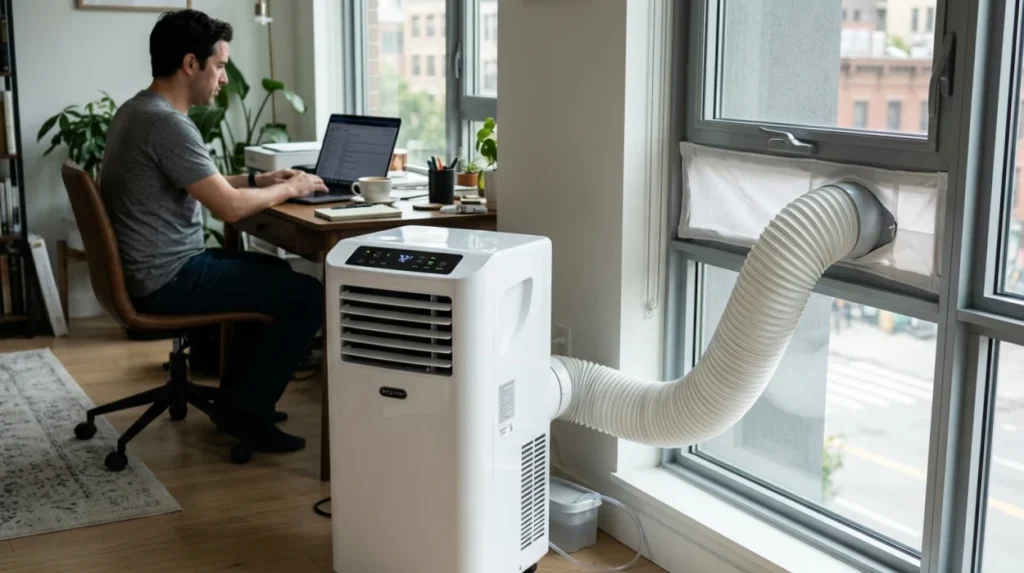
Portable air conditioners consume significantly more electricity than air coolers because powering a mechanical compressor requires substantial energy. Air coolers only draw electricity to run a low-wattage fan and a small water pump, making them highly energy-efficient.
Wattage Comparisons and Operational Costs
The operational cost divergence between the two appliances stems directly from their mechanical complexity. A standard residential air cooler designed for a medium-sized living space consumes between 50 watts and 200 watts of electrical power. This consumption is equivalent to running a few traditional incandescent light bulbs.
In contrast, a portable air conditioner capable of cooling an identical room size generally requires between 900 watts and 1,400 watts of power. The compressor motor requires immense electrical energy to compress the refrigerant gas against high internal pressures. According to data from UK energy providers, running a 1,200-watt portable air conditioner for eight hours daily costs up to seven times more than operating a 100-watt air cooler over the same duration.
Carbon Footprint and Environmental Impacts
The environmental implications extend beyond direct electricity bills to broader carbon emissions. Because air coolers require less wattage, their operational carbon footprint is lower. Furthermore, air coolers utilize pure water as the cooling medium, presenting zero risk of releasing greenhouse gases.
Portable air conditioners present a higher environmental burden. Beyond their high energy demand, they rely on chemical fluorocarbons or hydrocarbon refrigerants. Although modern units use R-290, which features a low Global Warming Potential (GWP) rating of 3, any structural leak or improper disposal can release gases into the atmosphere. The higher electricity consumption also places a greater demand on local electrical grids during peak summer afternoons.
How Do Installation and Ventilation Requirements Compare?
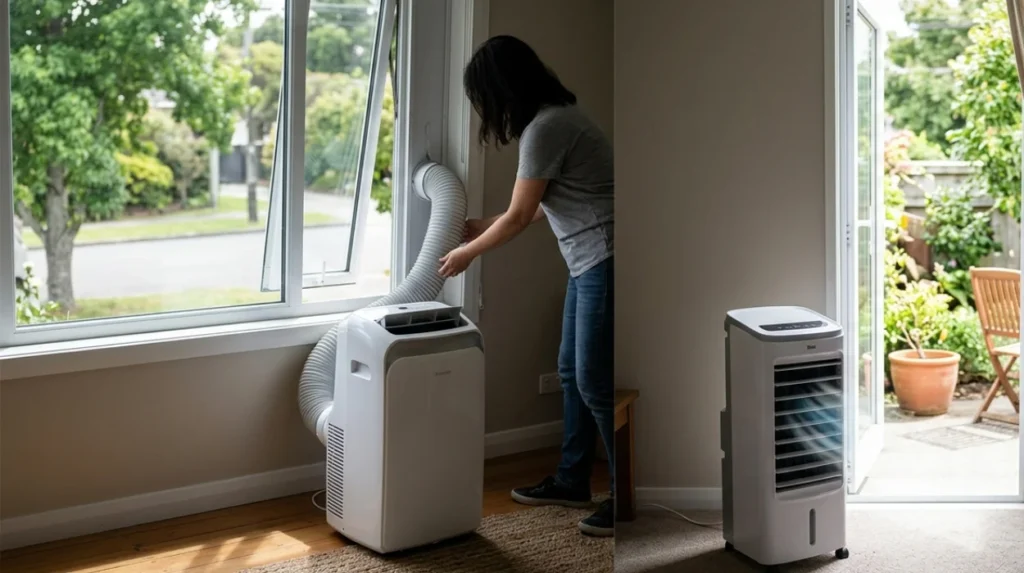
Portable air conditioners require a dedicated window or wall vent to exhaust hot air outside, restricting their placement near exterior openings. Air coolers require no external venting or permanent installation but must have access to a fresh, open-air source.
Exhaust Hose Mechanics in Portable Air Conditioners
A portable air conditioner cannot function without a physical pathway to reject heat outside the building envelope. If operated inside a sealed room without an exhaust hose, the heat generated by the compressor and condenser coils will discharge back into the room, canceling out the cooling effect from the evaporator coil and increasing the net room temperature.
Installation requires fitting a flexible hose, usually 125mm to 150mm in diameter, to a window sealing kit. These kits seal the gaps around sliding, sash, or hinged windows to prevent the outdoor heat and expelled air from returning indoors. This physical tether limits the mobility of the appliance to within approximately 1.5 meters of an accessible window or wall port.
Airflow Dynamics for Air Coolers
Air coolers operate under opposite airflow requirements. They must never be used in a sealed room. An air cooler introduces constant moisture into the air; if the room is closed, the relative humidity will hit 100% within an hour, halting the evaporation process and rendering the machine ineffective.
To function correctly, an air cooler requires a continuous cross-ventilation stream. The unit should sit near an open window to draw in fresh, dry outdoor air. An opposing window or door must remain cracked open to allow the humidified air to escape the room. This requirement means air coolers cannot be used in windowless basements or sealed commercial spaces.
Which Appliance is Best Suited for the London Climate?
Air coolers work effectively during rare, dry heat spells in London, but portable air conditioners provide superior, reliable cooling during sustained, humid summer heatwaves when indoor moisture levels rise significantly.
Analyzing London Meteorological Data
Climate records for Greater London indicate that while summer temperatures are rising, peaking above 40 degrees Celsius during extreme anomalies like July 2022, the accompanying relative humidity varies widely. During peak afternoon heat, humidity levels in London can drop to between 35% and 50%, creating conditions where an air cooler can provide comfortable relief.
However, London summers also feature frequent periods of warm, humid maritime air where relative humidity remains above 65%. During these periods, an air cooler fails to lower room temperatures effectively and instead exacerbates indoor stuffiness. A portable air conditioner remains unaffected by these outdoor humidity fluctuations, ensuring a controlled indoor climate of 21 degrees Celsius regardless of external weather patterns.
Architectural Factors in UK Housing
The structural design of typical London housing influences appliance efficiency. Many UK residential properties feature solid brick walls, high thermal mass, and double-glazed windows designed to trap heat during winter. During prolonged summer heatwaves, these buildings absorb heat throughout the day and radiate it inward at night.
Portable air conditioners excel in these high thermal mass environments because they actively remove heat from the structure’s air volume while extracting moisture. Air coolers struggle to counteract the intense heat radiating from brick walls in enclosed flats, as they lack the BTUs (British Thermal Units) of true cooling capacity required to lower the temperature of structural elements.
What are the Main Maintenance and Longevity Factors?
Air coolers require frequent user maintenance, including regular water refills and weekly pad cleaning to prevent mold growth. Portable air conditioners require less frequent maintenance, focusing primarily on bi-weekly dust filter cleaning and seasonal condensate drainage.
Routine Maintenance for Evaporative Systems
The simplicity of air cooler mechanics reduces the likelihood of catastrophic component failure, but it demands consistent operational upkeep. Users must manually refill the water reservoir every few hours unless connected to a continuous water line.
Because standing water combined with warm ambient temperatures creates an environment for biological growth, owners must clean the water tank and scrub the honeycomb pads with a mild antimicrobial solution weekly. Failure to perform this maintenance leads to musty odors and the potential aerosolization of bacteria or mold spores into the living environment. Mineral buildup from hard water, common in London, also calcifies the pads over time, requiring total pad replacement every one to two seasons.
Technical Maintenance for Refrigeration Systems
Portable air conditioners operate as sealed systems, requiring no refrigerant top-ups under normal conditions. Maintenance centers around ensuring optimal airflow across the internal coils. Users must slide out the plastic mesh dust filters every two weeks, rinse them under a tap, and dry them before reinsertion to prevent dust from insulating the evaporator coils.
Condensate management depends on the unit’s design. Auto-evaporative models exhaust most collected moisture out of the window hose automatically. However, during highly humid periods, the internal collection tank will fill completely, triggering a safety shutoff. Users must then position a shallow pan beneath the lower drain plug or attach a hose to empty the water. Before winter storage, the system must be completely drained and run on “fan-only” mode for several hours to dry the internal coils and prevent internal mold cultivation.
What is the difference between an air cooler and a portable air conditioner?
An air cooler lowers temperatures by evaporating water into the air, while a portable air conditioner uses a refrigeration cycle to remove heat and humidity from a room.