Chelsea is one of London’s most historically layered districts. Its identity developed through royal ownership, aristocratic estates, scientific institutions, artistic communities, military heritage, retail change, and the River Thames. The modern visitor experiences these layers within a relatively compact area extending from Sloane Square and King’s Road to Cheyne Walk, Royal Hospital Road, and the riverside.
- Why is Chelsea one of London’s most important cultural districts?
- What are the best places in Chelsea to experience art and culture?
- Why is King’s Road essential to Chelsea’s shopping history?
- Where can visitors find Chelsea’s best combination of shopping and architecture?
- Why is Chelsea Physic Garden one of the area’s most important historic places?
- What makes the Royal Hospital Chelsea historically significant?
- How does the River Thames shape the Chelsea visitor experience?
- How does the National Army Museum add to Chelsea’s historical landscape?
- What historic places reveal Chelsea’s literary and residential past?
- How can visitors understand Chelsea as a connected historical landscape?
- Why does Chelsea remain important to London’s historical future?
- What is the best overall way to experience Chelsea’s art, shopping, and riverside heritage?
- Frequently Asked Question
The district began as a riverside village outside the historic City of London. Its position beside the Thames made Chelsea attractive to wealthy landowners and politically important residents. Tudor and Stuart associations established its early prestige. During the eighteenth century, scientific institutions and planned estates transformed the area. Victorian artists and writers then gave Chelsea an international cultural reputation. During the twentieth century, King’s Road became associated with fashion, youth culture, and changing British design.
Today, Chelsea combines historic buildings with galleries, museums, specialist gardens, established shopping streets, public spaces, and riverside walks. The strongest way to understand the area is to treat these attractions as connected parts of one historical landscape rather than isolated destinations.
The following guide explains the best places to visit in Chelsea for art, shopping, and riverside experiences while placing each location within the historical development of the district.
Why is Chelsea one of London’s most important cultural districts?
Chelsea developed from a Thames-side village into a major centre of royal history, science, art, literature, military heritage, and fashion. Its surviving gardens, streets, institutions, galleries, and riverside buildings preserve evidence of this transformation across Tudor, Georgian, Victorian, and modern London.
Chelsea’s cultural importance begins with geography. The settlement developed beside the River Thames in an area that later became part of the Royal Borough of Kensington and Chelsea. Before extensive nineteenth-century urban development, Chelsea retained the physical character of a riverside village surrounded by estates, gardens, and open land.
The Tudor period established Chelsea as a place associated with powerful figures. Sir Thomas More, statesman and Lord Chancellor to Henry VIII, lived in Chelsea during the sixteenth century. The area subsequently attracted aristocrats, royal figures, and wealthy landowners.
The seventeenth century introduced institutions that shaped Chelsea for centuries. The Chelsea Physic Garden was founded in 1673 as a training garden for the Worshipful Society of Apothecaries. The Royal Hospital Chelsea was founded during the reign of Charles II and became a permanent home for army veterans. These institutions connected Chelsea with medicine, science, military history, and national administration.
The eighteenth and nineteenth centuries changed the physical structure of the district. Large estates, particularly land associated with Sir Hans Sloane and later the Cadogan family, were developed into streets, terraces, squares, and residential neighbourhoods. Planned urban development gradually replaced the former rural landscape.
Chelsea also became a major artistic district during the nineteenth century. Artists, writers, architects, and designers were attracted by the area’s studios, houses, river views, and proximity to central London. This cultural concentration established the reputation that later supported Chelsea’s galleries and creative institutions.
The twentieth century added another layer. King’s Road became internationally associated with fashion and youth culture, particularly during the 1960s and later the punk era. Chelsea therefore represents several distinct historical periods, including Tudor political history, Georgian scientific development, Victorian artistic culture, and twentieth-century fashion history.
What are the best places in Chelsea to experience art and culture?
Chelsea’s principal cultural attractions include the Saatchi Gallery, Royal Court Theatre, National Army Museum, Cadogan Hall, and historic streets associated with artists and writers. Together, these places demonstrate how Chelsea developed from a Victorian artistic community into a modern cultural destination.
Saatchi Gallery and contemporary art
The Saatchi Gallery is one of the most important contemporary art destinations in Chelsea. It occupies the Duke of York’s Headquarters on King’s Road, placing a modern gallery within a historic institutional building.
The gallery represents the modern phase of Chelsea’s artistic identity. Victorian Chelsea was associated with painters and artistic communities. The Saatchi Gallery continues the district’s connection with visual culture through contemporary exhibitions and international artists.
Its location also makes it useful as a starting point for understanding the relationship between art and shopping in Chelsea. Duke of York Square and King’s Road surround the gallery, allowing visitors to move directly between cultural spaces and historic commercial streets. The gallery is located at Duke of York’s HQ, King’s Road, and provides regular public access to contemporary exhibitions.
Royal Court Theatre and Chelsea’s theatrical culture
The Royal Court Theatre is another major cultural institution near the eastern entrance to Chelsea. The theatre is particularly important to the history of modern British drama.
Its position at Sloane Square demonstrates the cultural density of the district. Visitors can move from the theatre toward King’s Road, galleries, shops, and historic residential streets without leaving the central Chelsea area.
The institution also illustrates a broader historical change. Chelsea’s nineteenth-century reputation rested heavily on visual artists and writers. Twentieth-century cultural development expanded that identity to include theatre, contemporary art, fashion, and design.
Historic artistic Chelsea
Chelsea’s artistic history extends beyond formal museums and galleries. The district contains streets and buildings associated with nineteenth-century painters, writers, and intellectuals.
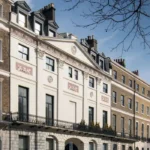
Cheyne Walk is particularly important because its historic riverside houses attracted prominent residents over several centuries. The street preserves the connection between Chelsea’s residential architecture and the Thames landscape that influenced its cultural development.
Thomas Carlyle and Jane Welsh Carlyle provide one of the strongest examples of Chelsea’s literary heritage. Their former home survives as Carlyle’s House, preserved by the National Trust. The house provides evidence of nineteenth-century domestic life and Chelsea’s importance as a residential centre for major writers and intellectuals.
Why is King’s Road essential to Chelsea’s shopping history?
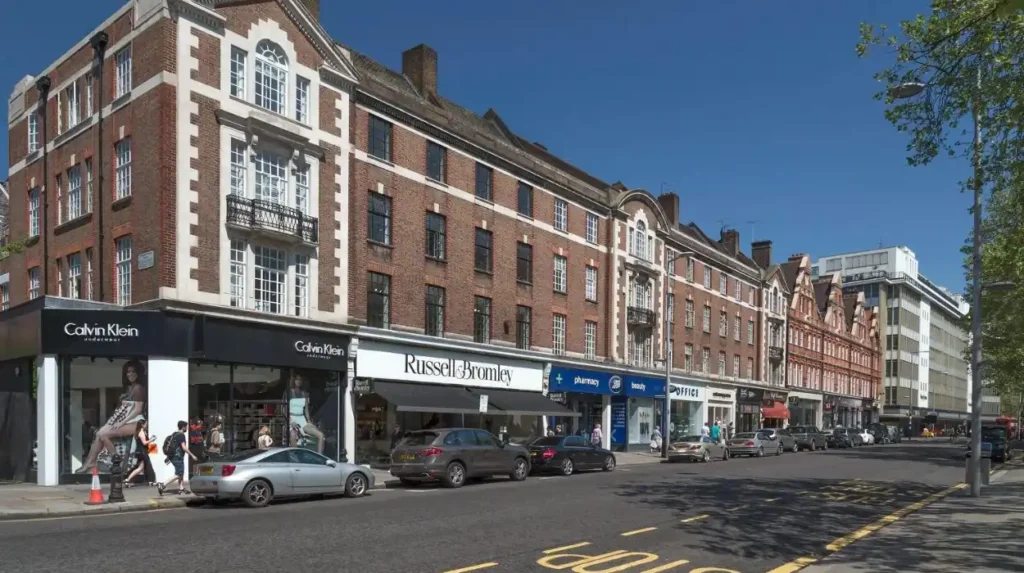
King’s Road is Chelsea’s defining commercial street because it evolved from a private royal route into a major centre of Victorian development, twentieth-century fashion, and modern retail. Its history connects royal authority, estate planning, youth culture, design, and contemporary shopping.
King’s Road originated as a royal route. Historical records associated with Chelsea Physic Garden date its construction to 1694 under Charles II, when it functioned as a private road connected with royal travel. It remained a private royal route until the nineteenth century.
This origin explains the name. Unlike an ordinary commercial street created for local trade, King’s Road began with a specific connection to the monarchy.
The transformation of Chelsea during the eighteenth and nineteenth centuries changed the road’s function. Residential development expanded across the surrounding estates. Villas, terraces, shops, public houses, and other buildings gradually replaced the earlier semi-rural landscape.
By the nineteenth century, King’s Road had become part of a growing urban neighbourhood. Estate development shaped its architecture and commercial structure. The Cadogan Estate played a major role in the planned development of Chelsea and nearby streets.
The twentieth century created King’s Road’s international reputation. Fashion businesses and youth-oriented retailers made the street a major symbol of London style. During the 1960s, Chelsea became associated with the social and cultural changes commonly described as Swinging London.
The street later became connected with punk fashion and alternative design. This history makes King’s Road important for more than modern shopping. Its shops occupy a landscape shaped by royal infrastructure, estate planning, changing consumer culture, and twentieth-century social history.
For visitors, the strongest historical experience comes from observing the street as an evolving urban corridor. Retail premises change over time, but the route itself preserves the geographical framework through which Chelsea developed.
Where can visitors find Chelsea’s best combination of shopping and architecture?
Sloane Square, Duke of York Square, Pavilion Road, and the surrounding streets provide Chelsea’s clearest combination of retail activity and historic urban design. These locations show how estate planning, architecture, public space, and commerce developed together within west London’s changing social landscape.
Sloane Square as the gateway to Chelsea
Sloane Square functions as a principal gateway between Chelsea and neighbouring central London districts.
The square takes its name from Sir Hans Sloane, whose ownership of the Manor of Chelsea influenced the later development of the area. Sloane purchased the manor in 1712, and his estate later passed through family connections that contributed to the formation of the Cadogan Estate.
The significance of Sloane Square therefore extends beyond transport and retail. The name preserves the historical memory of one of the individuals whose landholding shaped modern Chelsea.
Duke of York Square
Duke of York Square connects public space, shopping, and cultural institutions.
Its proximity to the Saatchi Gallery creates an important relationship between retail and contemporary art. This arrangement reflects modern Chelsea’s mixed-use identity, where commercial activity exists alongside heritage buildings and cultural destinations.
Pavilion Road and smaller commercial streets
Pavilion Road provides a different shopping environment from the larger King’s Road corridor. Smaller streets are important for understanding how Chelsea’s commercial geography developed at different scales.
Large streets support department stores and major retail premises. Smaller streets preserve a more local pattern of specialist shops, food businesses, and neighbourhood services.
This distinction is historically important. Chelsea was never shaped by one single type of urban development. Estate squares, major roads, narrow lanes, riverside streets, institutional grounds, and commercial clusters developed for different purposes.
Why is Chelsea Physic Garden one of the area’s most important historic places?
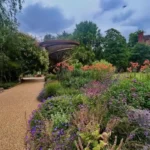
Chelsea Physic Garden is one of Britain’s oldest surviving botanical institutions and preserves Chelsea’s scientific history through medicinal plants, historic glasshouses, research traditions, and a Grade I registered landscape founded in 1673 for the training of apothecaries.
Chelsea Physic Garden provides one of the clearest connections between Chelsea’s past and its modern cultural identity.
The Worshipful Society of Apothecaries founded the garden in 1673. Its original purpose was practical and educational. Apprentices learned to identify and understand plants used in medicine.
A physic garden was a specialist garden dedicated to plants with medicinal and useful properties. This made Chelsea Physic Garden part of the scientific infrastructure of early modern London.
Historic England records the site as a Grade I registered park and garden. The institution developed through international plant exchanges and scientific networks that connected London with botanical centres in Europe and overseas. By 1679, historical records documented approximately 1,200 different plants at the site.
Sir Hans Sloane became central to the garden’s long-term preservation. After acquiring the Manor of Chelsea, he established arrangements that secured the land for use by the Society of Apothecaries. In 1722, the garden was leased under conditions requiring the cultivation of useful plants.
Philip Miller, appointed in 1722, directed the garden for approximately five decades. His work contributed significantly to eighteenth-century botanical knowledge.
The garden also preserves physical evidence of changing scientific practice. Its historic glasshouses demonstrate how controlled environments allowed plants from different climates to be cultivated in Britain. The institution’s current collection includes more than 4,500 medicinal, edible, and useful plants across its four-acre site.
Chelsea Physic Garden also demonstrates how historical institutions require preservation and adaptation. Its nineteenth-century landscape changed during construction of the Chelsea Embankment. Its glasshouses were damaged during the Second World War and later restored. Modern conservation projects continue to protect the site’s historic structures and scientific collections.
What makes the Royal Hospital Chelsea historically significant?
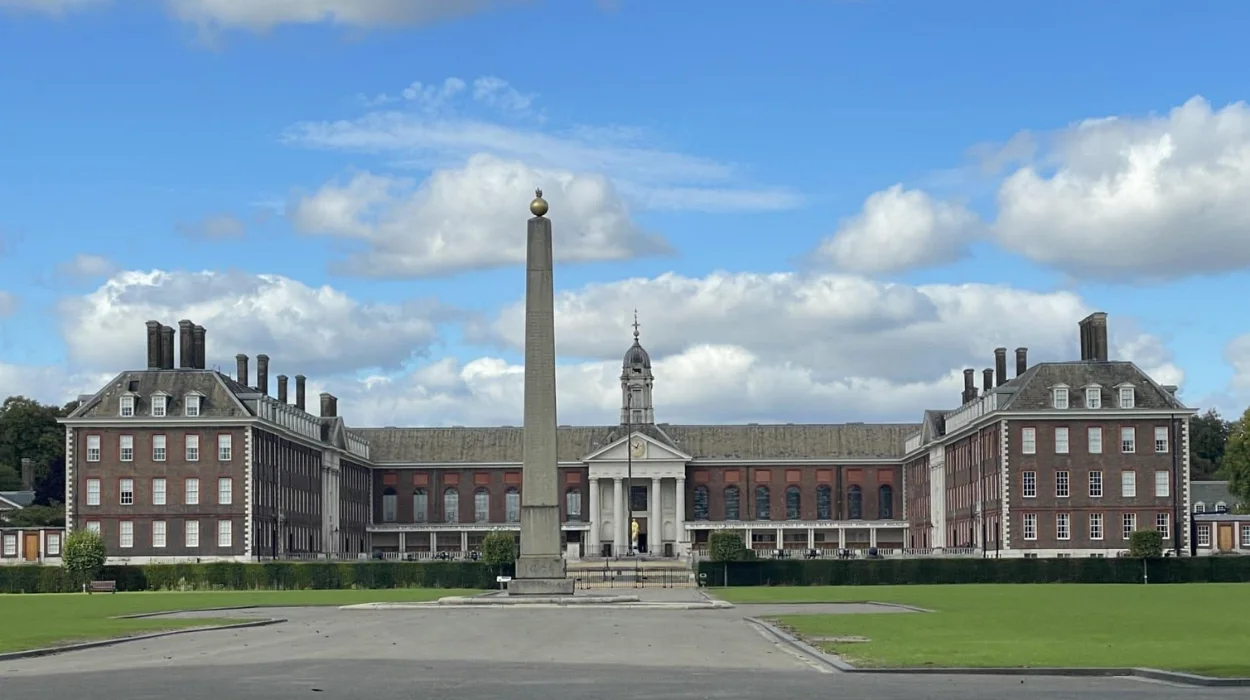
The Royal Hospital Chelsea is a major surviving institution of seventeenth-century Britain, founded to provide long-term care for army veterans. Its architecture, Chelsea Pensioners, ceremonial traditions, and extensive grounds preserve more than three centuries of British military and social history.
Royal Hospital Chelsea is one of the defining historic institutions in the district.
The hospital was founded during the reign of Charles II and has been associated with military veterans since the late seventeenth century. Christopher Wren designed the principal buildings, giving the institution major architectural importance as well as a social and military function.
The Chelsea Pensioners remain the most visible symbol of the institution. These army veterans live within the historic complex and preserve a continuing tradition rather than representing a purely museum-based history.
The Royal Hospital also demonstrates how government and charitable structures addressed the needs of former soldiers in the seventeenth century. Establishing a permanent institution for veterans reflected wider changes in the organisation of the British state and armed forces.
The surrounding grounds contribute to Chelsea’s landscape. Large institutional spaces survive beside dense residential streets, creating a contrast between planned architecture and urban development.
The Royal Hospital is also associated with the Chelsea Flower Show, which takes place on the hospital grounds and connects the site with the district’s international horticultural reputation.
How does the River Thames shape the Chelsea visitor experience?
The River Thames shaped Chelsea’s settlement, transport, architecture, trade, and residential development. Riverside locations such as Cheyne Walk, Chelsea Embankment, Albert Bridge, and nearby historic gardens allow visitors to see how the river influenced the district’s physical and cultural identity.
Chelsea developed because of its position beside the Thames. Before modern roads and railways dominated London transport, the river provided an important route for movement between settlements.
Riverside land attracted wealthy residents because it combined access to central London with open views and larger properties. This pattern contributed to the development of Chelsea as a prestigious residential area.
Cheyne Walk
Cheyne Walk remains one of the most historically important riverside streets.
Its buildings preserve the architectural evidence of Chelsea’s development as a desirable residential district. Writers, artists, and prominent public figures lived in and around the area.
The street therefore connects architecture with cultural history. Historic houses are not simply decorative remnants. They document the concentration of influential residents who helped establish Chelsea’s reputation.
Chelsea Embankment
The Chelsea Embankment changed the historic relationship between the district and the river.
Construction began during the nineteenth century as part of major metropolitan improvements. The project improved infrastructure but also altered the earlier riverbank environment.
Chelsea Physic Garden experienced this change directly. The garden lost its historic barge houses during construction and received land as compensation. This provides a documented example of how Victorian engineering transformed historic landscapes.
The Embankment is therefore both a visitor route and a historical document. Walking beside the Thames reveals the physical consequences of nineteenth-century urban planning.
Albert Bridge and the riverside landscape
Albert Bridge connects Chelsea with Battersea on the south bank.
Bridges changed how Londoners moved across the Thames. They also integrated previously separate riverside communities into a more connected metropolitan system.
The views from Chelsea’s riverside demonstrate another important feature of London history: the Thames created connections between districts while also serving as a boundary between local communities.
To experience this historic landscape in person today, consult our comprehensive [Best Things to Do in Chelsea Visitor Guide] for itineraries and visiting parameters.
How does the National Army Museum add to Chelsea’s historical landscape?
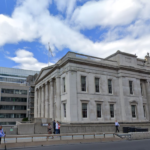
The National Army Museum provides historical context for the Royal Hospital Chelsea and Britain’s military past through collections, research, and interpretation. Its location on Royal Hospital Road creates a concentrated heritage area where institutional, architectural, and military histories can be studied together.
National Army Museum occupies an important position within Chelsea’s heritage geography.
The museum complements the Royal Hospital Chelsea. One institution represents the continuing residential and social history of army veterans. The museum interprets the broader history of the British Army.
Together, these sites demonstrate how Chelsea became connected with national military history.
Their proximity also benefits educators and students. A visitor can examine architecture, institutional history, military collections, public commemoration, and the social history of veterans within one section of the district.
The Chelsea Heritage Quarter formally recognises the relationship between major institutions including Chelsea Physic Garden, the National Army Museum, the Royal Hospital Chelsea, and Cadogan. This collaboration reflects the concentration of nationally important heritage sites within a small geographical area.
What historic places reveal Chelsea’s literary and residential past?
Carlyle’s House, Cheyne Row, historic squares, and surviving terraces reveal Chelsea’s literary and residential history. These places document the transformation from riverside village to elite suburb while preserving evidence of writers, intellectuals, landowners, architects, and nineteenth-century urban planning.
Carlyle’s House is the strongest surviving domestic example of Chelsea’s literary heritage.
Thomas Carlyle and Jane Welsh Carlyle lived at the house at 24 Cheyne Row. The property is now preserved by the National Trust and allows visitors to examine the relationship between domestic space and nineteenth-century intellectual life.
Historic residential streets also demonstrate the influence of landownership.
Sir Hans Sloane’s Chelsea estate became fundamental to later development. After his death, the estate was divided between family branches. Land associated with the Cadogan family was subsequently developed through planned building schemes.
Carlyle Square illustrates this process. The square formed part of estate development and was originally known as Oakley Square. Its history reflects nineteenth-century urban planning and the expansion of Chelsea’s residential landscape.
For genealogical researchers, these streets and estates provide important geographical frameworks. Parish records, census records, property documents, electoral registers, and local archives can be connected to specific historic addresses and neighbourhoods.
Chelsea’s architecture therefore supports several forms of historical research. Buildings provide physical evidence. Documentary records explain ownership and occupation. Together, they create a detailed picture of changing London society.
How can visitors understand Chelsea as a connected historical landscape?
Chelsea is best understood by connecting its major places through geography and chronology. Sloane Square, King’s Road, Duke of York Square, cultural institutions, Royal Hospital Road, Chelsea Physic Garden, Cheyne Walk, and the Thames form a continuous historical route across centuries of development.
A coherent visit begins near Sloane Square, where the history of Sir Hans Sloane and estate development provides the wider context.
King’s Road then introduces the transformation from royal route to commercial and fashion centre. Duke of York Square and the Saatchi Gallery demonstrate the modern relationship between shopping and contemporary art.
Moving south toward Royal Hospital Road changes the historical context. Retail development gives way to major institutions.
The National Army Museum and Royal Hospital Chelsea introduce military history. Chelsea Physic Garden introduces scientific and botanical history.
The final stage reaches the riverside. Cheyne Walk, Chelsea Embankment, and Albert Bridge demonstrate how the Thames shaped settlement and infrastructure.
This geographical progression follows Chelsea’s historical complexity. No single attraction defines the district. Its importance comes from the interaction between institutions, private estates, commercial streets, houses, gardens, and the river.
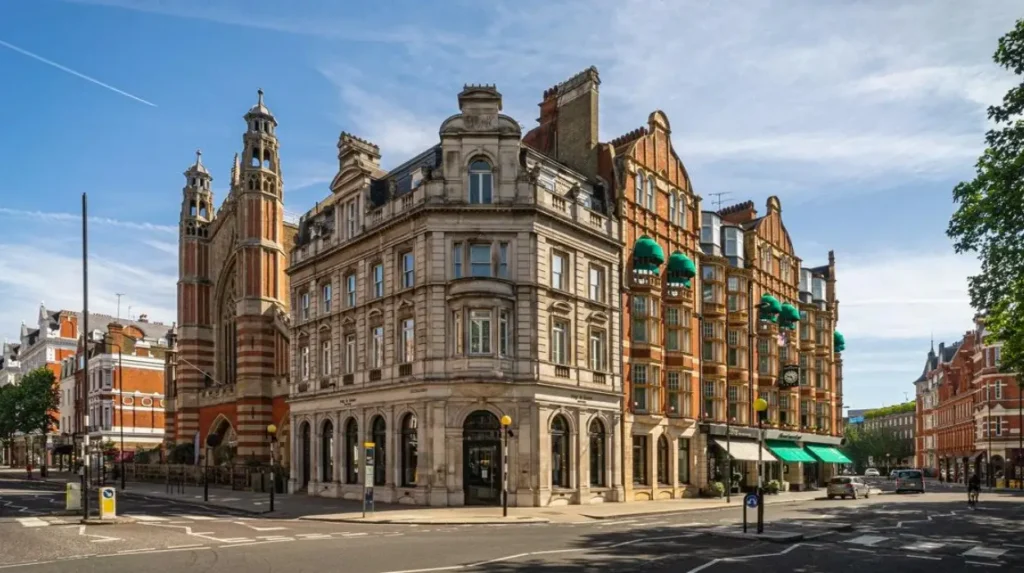
Why does Chelsea remain important to London’s historical future?
Chelsea remains historically important because its heritage survives within an active modern neighbourhood rather than a preserved museum district. Conservation, institutional stewardship, listed buildings, historic landscapes, archives, and public cultural organisations continue to protect evidence of London’s changing social and urban history.
Chelsea demonstrates an important principle of urban heritage preservation: historical places remain meaningful when their physical evidence can still be connected to modern life.
Chelsea Physic Garden continues its educational and botanical role more than 350 years after its foundation. The Royal Hospital Chelsea continues to house Chelsea Pensioners. Carlyle’s House preserves a historic domestic environment. Contemporary galleries continue Chelsea’s association with art.
The district also shows that preservation requires continuous work. Historic buildings need maintenance. Landscapes require conservation. Institutions must interpret difficult and changing histories accurately.
Chelsea Physic Garden provides a clear example. Its history includes scientific achievement, international plant exchange, colonial networks, and the legacy of wealth connected to slavery. Modern interpretation increasingly places these subjects within a fuller historical context.
This approach strengthens historical understanding because heritage is not limited to celebrating famous buildings or individuals. It also requires examining the systems that created wealth, institutions, landscapes, and collections.
For London, Chelsea remains an important research environment. Historians can study urban planning, military welfare, botanical science, architecture, literature, fashion, and riverside development within one district.
What is the best overall way to experience Chelsea’s art, shopping, and riverside heritage?
The best Chelsea experience combines cultural institutions, King’s Road shopping, historic residential streets, scientific heritage, military landmarks, and the Thames. Following this sequence reveals how royal routes, private estates, artistic communities, public institutions, and riverside infrastructure created modern Chelsea.
Chelsea rewards visitors who examine context as well as individual attractions.
Begin with the streets around Sloane Square and King’s Road to understand estate development and commercial history. Continue toward Duke of York Square and the Saatchi Gallery to examine Chelsea’s contemporary cultural role.
Move through Royal Hospital Road to explore the district’s institutional heritage. The National Army Museum, Royal Hospital Chelsea, and Chelsea Physic Garden represent three different historical systems: military organisation, veteran welfare, and scientific education.
Finish beside the Thames. Cheyne Walk and Chelsea Embankment reveal the relationship between residential development, engineering, and the historic river landscape.
This route also explains why Chelsea remains one of London’s most distinctive districts. Its identity was not created during one period.
It developed through centuries of change.
The Tudor association with powerful residents established prestige. The Stuart period created major institutions. The eighteenth century expanded scientific and estate development. The Victorian period reshaped Chelsea through architecture, embankment construction, and artistic culture. The twentieth century transformed King’s Road into an international symbol of fashion and youth culture.
Modern Chelsea contains the physical evidence of each stage.
That combination makes the district valuable for history enthusiasts, cultural tourists, educators, students, heritage researchers, and genealogical researchers. Art galleries explain the modern creative identity. Shopping streets reveal commercial and fashion history. Historic institutions preserve national stories. The riverside landscape explains the geographical foundation of the settlement.
The best places to visit in Chelsea are therefore connected by one larger historical fact: Chelsea is a living record of London’s transformation from riverside settlement into a global capital.
Its gardens, streets, houses, galleries, institutions, and embankment preserve that record in physical form.
Frequently Asked Question
What are the best places to visit in Chelsea for art?
The Saatchi Gallery is one of Chelsea’s leading art destinations, particularly for contemporary art. The area also has a long artistic history connected with nineteenth-century painters, writers, and creative communities.