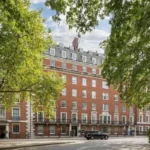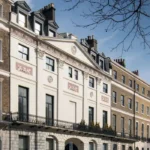
Marylebone is one of central London’s most historically distinctive shopping districts. Its independent shops operate within a neighbourhood shaped by Georgian estate development, Victorian commercial rebuilding, Edwardian architecture, and late twentieth-century retail preservation. For visitors, shopping in Marylebone provides direct access to London’s continuing tradition of specialist retailing, where booksellers, fashion businesses, food merchants, designers, and other small enterprises occupy streets developed over more than 250 years.
- Why is Marylebone important for independent shopping in London?
- How did Marylebone develop its distinctive retail identity?
- Which independent bookshops should visitors explore in Marylebone?
- What specialist food shops define Marylebone’s independent retail culture?
- Why are Marylebone’s fashion and design shops historically significant?
- How does Marylebone’s architecture shape the shopping experience?
- How did estate ownership help preserve Marylebone’s independent character?
- What should visitors look for while exploring Marylebone’s independent shops?
- Why do independent shops matter to Marylebone’s future heritage?
- What does Marylebone reveal about the history of London shopping?
- Why should every visitor explore independent shops in Marylebone?
- Frequently Asked Question
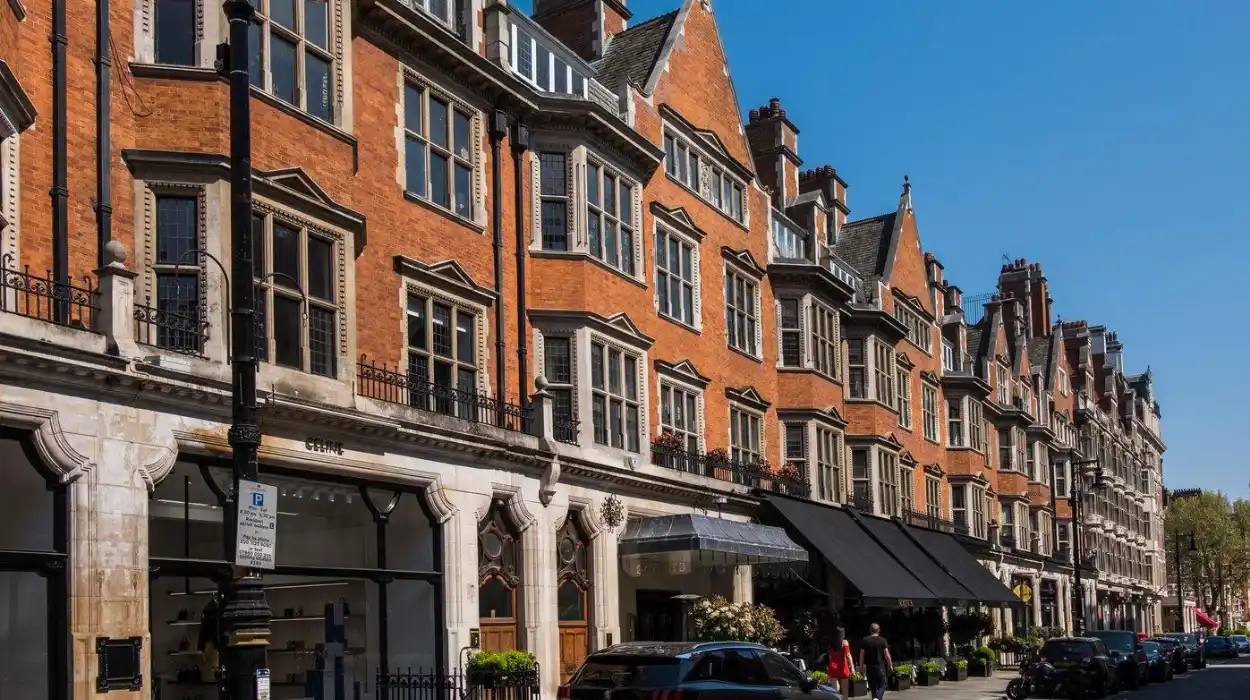
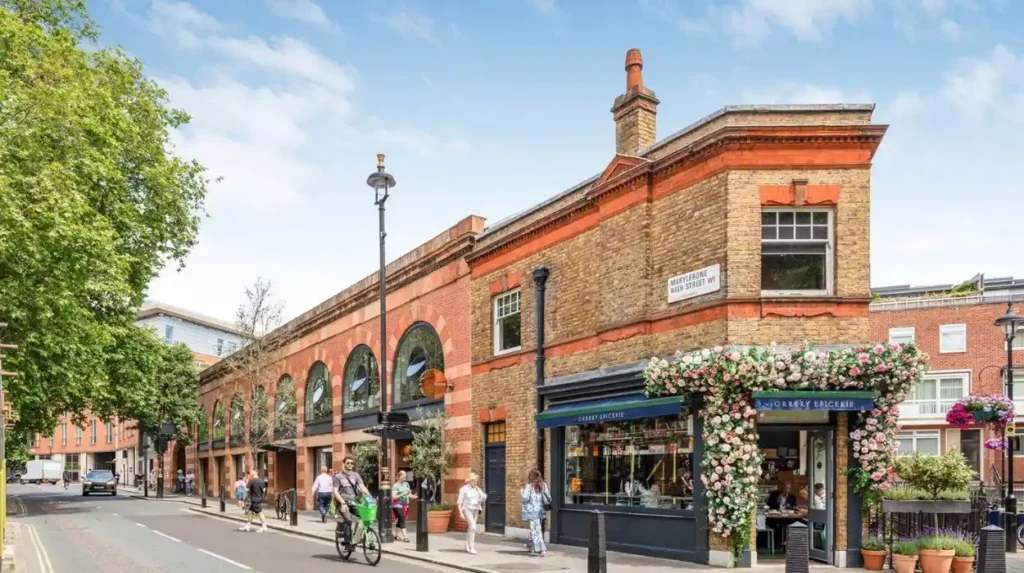
The modern identity of Marylebone Village is closely connected to its physical history. By 1746, development had reached Wigmore Street and Mortimer Street, while by 1799 housing covered virtually the area between Oxford Street and Marylebone Road. The nineteenth century then brought extensive rebuilding, and many properties on Marylebone High Street were reconstructed around 1900. These successive periods created the built environment that supports the district’s specialist retail economy today.
Marylebone’s retail character also differs from the large-scale commercial model associated with nearby Oxford Street. The Howard de Walden Estate manages a substantial proportion of the neighbourhood’s retail properties and has maintained a strategy focused on distinctive businesses, smaller units, specialist retailers, and a mixed local economy.
Why is Marylebone important for independent shopping in London?
Marylebone is important for independent shopping because its historic streets, estate-managed properties, specialist businesses, and mixed residential economy have preserved a retail environment centred on distinctive shops rather than large-scale chain-store concentration, linking London’s commercial past directly with its modern visitor experience.
Marylebone developed as part of London’s westward expansion during the eighteenth century. Large landed estates controlled substantial areas of property and shaped streets, squares, housing, and commercial premises. This system had a long-term effect on the district because property ownership remained concentrated in estate hands rather than becoming completely fragmented.
The Portland Estate played a major role in the area’s historical development. In 1879, following the death of the fifth Duke of Portland, the estate passed through inheritance to Lucy Joan Bentinck, widow of the sixth Baron Howard de Walden. The estate subsequently became associated with the Howard de Walden family and continued to influence the physical and commercial development of Marylebone.
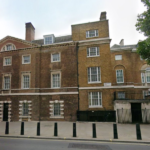
The neighbourhood expanded rapidly during the Georgian period. Georgian architecture refers broadly to British architecture produced during the reigns of the Hanoverian monarchs from 1714 to 1830. Marylebone’s terraces, streets, and planned urban spaces emerged within this wider expansion of London.
By the end of the eighteenth century, the area between Oxford Street and Marylebone Road had become extensively developed. The street pattern established during this period created the framework within which later commercial activity developed. Residential buildings gradually accommodated professional uses, services, and shops.
The nineteenth century changed Marylebone’s commercial landscape further. The expiry of 99-year shop leases encouraged rebuilding and modernization. Small sites were combined into larger commercial properties, often with shops at street level and residential accommodation above. This mixed-use arrangement remains a defining feature of many historic London shopping streets.
Marylebone High Street developed alongside changing consumer habits. A clothing department store, Gaylor and Pope, opened at numbers 111–118 in 1857. Sainsbury’s opened at number 99 in 1916, while a specialist bookshop had operated at number 83 from 1883. These examples demonstrate the long continuity of retail activity along the street.
For visitors today, Marylebone therefore represents more than a collection of contemporary boutiques. Its shops occupy an urban landscape created through centuries of estate planning, commercial adaptation, architectural rebuilding, and changing patterns of consumption.
How did Marylebone develop its distinctive retail identity?
Marylebone developed its distinctive retail identity through eighteenth-century estate planning, nineteenth-century commercial rebuilding, Edwardian modernization, and late twentieth-century policies that prioritised specialist businesses, creating a historic urban village with shops integrated into residential streets and established community life.
The phrase “urban village” describes a dense city neighbourhood that retains a strong local identity, mixed land uses, and walkable streets. Marylebone fits this description because homes, medical institutions, offices, cultural spaces, restaurants, and shops occupy the same interconnected district.
Marylebone High Street forms the central commercial route, but its identity depends equally on surrounding streets. Marylebone Lane contains smaller businesses and cafés. Moxon Street has developed as a specialist food destination. New Cavendish Street contains a mixture of specialist retail and professional activity.
This physical pattern differs from purpose-built modern shopping centres. Independent shops operate directly within the historic street network. Visitors move between Georgian and Edwardian buildings while encountering businesses at ground level.
The architectural history of the district also shaped its commercial form. During the late nineteenth and early twentieth centuries, changing shopping habits encouraged the redevelopment of older buildings. Larger stores became increasingly important on major West End thoroughfares, while Marylebone retained a more varied combination of commercial scales and specialist premises.
Westminster’s historic environment remains protected through heritage planning mechanisms. Westminster contains 56 conservation areas designated for their special architectural and historic interest. Additional planning controls operate within conservation areas to protect their established character.
Heritage preservation therefore provides an important framework for understanding Marylebone’s streetscape. Historic buildings do not remain unchanged, but planning policy regulates demolition, alterations, and redevelopment in areas identified as architecturally or historically significant.
The late twentieth century marked another important stage. According to the Howard de Walden Estate’s historical account, Marylebone experienced stagnation during part of the post-war period. From the 1990s, estate management focused increasingly on character, quality, and distinctiveness as other London high streets became more dominated by standardised retail formats.
That shift established the foundation for Marylebone’s current reputation. Independent businesses became part of a deliberate retail environment rather than isolated survivors within a district dominated by large chains.
Which independent bookshops should visitors explore in Marylebone?
Daunt Books is Marylebone’s most internationally recognised independent bookshop, combining specialist bookselling with an Edwardian interior at 83 Marylebone High Street, where the building’s architecture and country-based book arrangement preserve a distinctive tradition of physical book retailing.
Daunt Books and the history of specialist bookselling
Daunt Books represents one of the strongest examples of how a specialist business can become part of a neighbourhood’s cultural identity.
The premises have a longer bookselling history than the Daunt Books name itself. A specialist bookshop operated at number 83 from 1883, establishing a historical connection between the address and the book trade. The present Daunt Books business was founded in 1990.
Its Edwardian interior contains long oak galleries and skylights. These architectural features distinguish the shop from standard modern retail environments and make the building itself part of the visitor experience.
The shop became particularly associated with travel literature. Its books are arranged geographically by country rather than exclusively by conventional subject categories. This system connects travel writing with history, fiction, politics, culture, and local studies from individual regions.
The importance of Daunt Books extends beyond its commercial function. Independent bookshops provide physical access to curated knowledge. Their staff, stock selection, author events, and specialist categorisation create an environment in which books remain connected to place and intellectual communities.
For history enthusiasts and academic students, this type of business also demonstrates the continuing importance of specialist bookselling in a digital economy. A physical bookshop preserves browsing as a research process.
Daunt Books is therefore an important stop for visitors exploring Marylebone because it combines three historical layers: the nineteenth-century bookselling tradition at the address, Edwardian commercial architecture, and a modern independent retail model established in 1990.
What specialist food shops define Marylebone’s independent retail culture?
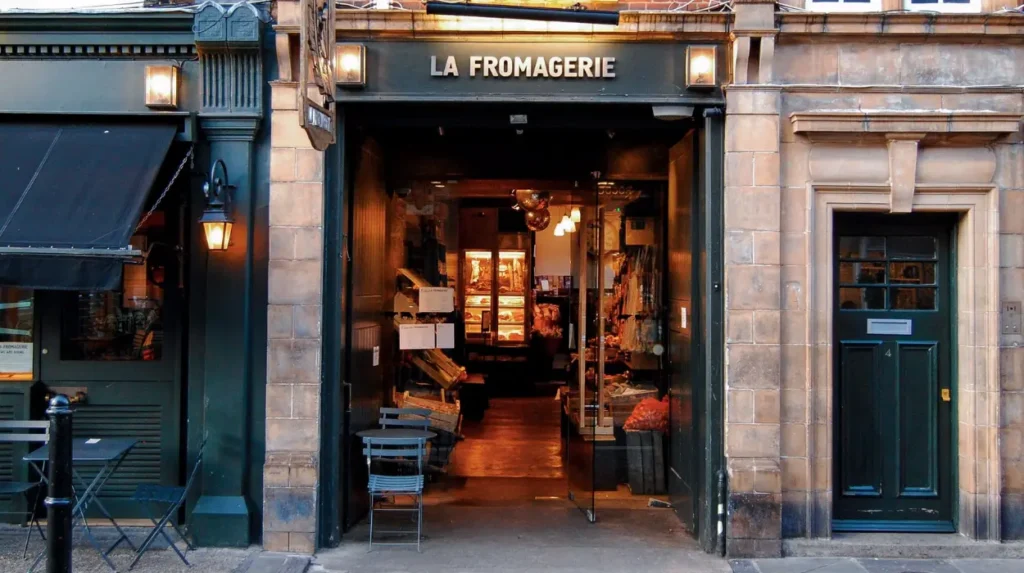
Marylebone’s specialist food retail culture is concentrated around streets including Moxon Street and Marylebone High Street, where small-scale merchants continue London traditions of neighbourhood provisioning, specialist expertise, and direct relationships between local communities, producers, retailers, and visiting consumers.
Food retail provides one of the clearest connections between Marylebone’s historical identity and its modern economy. Before supermarkets became dominant, urban neighbourhoods depended heavily on specialised traders. Butchers, bakers, cheesemongers, greengrocers, fishmongers, wine merchants, and delicatessens served distinct functions within the local economy.
Marylebone retains elements of this specialist model. The neighbourhood includes food businesses alongside a weekly farmers’ market and other essential local services. This combination helps maintain the relationship between retail and everyday residential life.
Moxon Street is particularly important within this geography. It forms part of Marylebone’s network of smaller streets where specialist food businesses complement the larger commercial activity of Marylebone High Street.
The significance of specialist food shops is historical as well as commercial. They preserve a form of urban retail based on product knowledge and narrower categories of expertise. A specialist merchant concentrates on a particular range of goods rather than attempting to reproduce the entire inventory of a supermarket.
For cultural tourists, these businesses reveal how London neighbourhoods function beyond major monuments. Food shops provide evidence of daily urban life. Their presence shows that Marylebone remains both a visitor destination and a working residential district.
The survival of specialist retail also reflects Marylebone’s property structure. A large proportion of retail and leisure properties within Marylebone Village are owned and managed by the Howard de Walden Estate, including many smaller units suitable for independent retailers.
This structure has practical consequences. Small commercial units provide physical space for businesses that do not require the floor area associated with department stores or major international chains.
Why are Marylebone’s fashion and design shops historically significant?
Marylebone’s fashion and design shops are historically significant because they continue the West End tradition of specialist consumption while operating within streets shaped by Georgian planning and Edwardian rebuilding, preserving small-scale retail as an essential part of central London’s commercial heritage.
London’s West End developed into one of Britain’s major centres of fashion and luxury consumption. Oxford Street, Regent Street, Bond Street, and surrounding districts became associated with different forms of shopping and commercial culture.
Marylebone developed close to these major retail centres but retained a different spatial identity. Its commercial streets remained integrated with homes, medical practices, and smaller businesses.
This distinction became increasingly important during the late twentieth century. Large chain stores expanded across British high streets, producing greater standardisation in retail environments. Marylebone’s estate-led approach instead emphasised distinctive businesses and creative independents.
Fashion and design shops therefore contribute to the district’s broader historical pattern. They occupy buildings that often retain period façades while accommodating modern commercial uses.
This process is called adaptive reuse. Adaptive reuse means giving an existing building a new or continuing function while retaining significant parts of its historic structure or character. It is an important mechanism in the preservation of historic cities.
Marylebone provides numerous examples of this principle at street level. Buildings originally developed as houses or rebuilt as mixed-use properties continue to accommodate contemporary shops.
For visitors, the value lies in understanding the relationship between architecture and commerce. Independent shops are not separate from Marylebone’s heritage. They operate inside the physical framework created by earlier periods of London’s development.
How does Marylebone’s architecture shape the shopping experience?
Marylebone’s architecture shapes its shopping experience by placing independent businesses within Georgian streets, Victorian commercial redevelopment, and Edwardian buildings, creating a walkable environment where historic façades, mixed-use properties, and specialist retail remain physically connected across the neighbourhood.
Architecture provides the setting for Marylebone’s retail economy. The district was not constructed as a single shopping complex. It developed incrementally over generations.
The eighteenth century established much of the underlying street network. The nineteenth century introduced new forms of commercial development. The early twentieth century brought substantial rebuilding and architectural change.
The Howard de Walden Estate records that most buildings on Marylebone High Street today date from around 1900, when the area underwent a major physical transformation.
This historical layering explains why the neighbourhood contains varied architectural forms. Visitors encounter buildings created for different purposes and adapted over time.
Historic preservation remains important across Westminster. The council identifies listed buildings, conservation areas, scheduled ancient monuments, historic parks, and other heritage assets as part of its planning framework. It also directs researchers toward resources including Westminster Archives, the Historic England Archive, the London Picture Archive, and the Survey of London.
For heritage preservationists and genealogical researchers, these resources provide pathways for investigating the history of streets, properties, families, and commercial activity.
Shopping streets also provide valuable historical evidence. Changes in shopfronts, building uses, business directories, and property records can reveal broader patterns of migration, wealth, occupation, and urban transformation.
Marylebone’s surviving commercial landscape therefore has research value beyond tourism.
How did estate ownership help preserve Marylebone’s independent character?
Estate ownership helped preserve Marylebone’s independent character by enabling coordinated management of a large property portfolio, supporting smaller retail units and maintaining a deliberate commercial mix instead of allowing every individual property to follow identical large-chain retail patterns.
Large landed estates shaped much of central London’s historical development. Unlike districts where ownership became highly fragmented, estate-controlled neighbourhoods retained substantial areas under coordinated management.
The Howard de Walden Estate continues this historical pattern in Marylebone. It oversees a diverse community of residential, office, medical, retail, and educational properties. A substantial proportion of Marylebone Village’s retail and leisure premises are also managed through the estate.
This system provides an explanation for the district’s distinctive commercial composition.
Retail environments are shaped by physical property. A small independent business requires suitable premises, affordable operational structures, and a location capable of attracting customers.
Where an area contains only very large commercial units, specialist retailers face structural barriers. Where smaller units survive, independent businesses have greater opportunities to operate.
Marylebone’s estate-managed portfolio includes small units suitable for independent retailers as well as larger spaces capable of accommodating flagship stores.
The resulting mix is significant. Independent shops exist alongside established brands rather than in complete isolation from them.
This commercial diversity also supports the urban village model. Residents require everyday services, while visitors seek specialist experiences. A mixed retail economy serves both groups.
What should visitors look for while exploring Marylebone’s independent shops?
Visitors should explore Marylebone by examining its streets as a connected historic landscape, moving between Marylebone High Street, Marylebone Lane, Moxon Street, and surrounding roads while observing how specialist shops occupy buildings shaped by centuries of residential and commercial development.
Marylebone is best understood through its street network rather than through one individual shopping destination.
Marylebone High Street provides the central route. Its history includes nineteenth-century specialist retailing, major commercial rebuilding, and the Edwardian architecture that remains visible today.
Marylebone Lane provides a contrasting environment. Its smaller scale reflects the more intricate structure of the historic neighbourhood. Independent shops and cafés operate along a route that connects the central high street with surrounding streets.
Moxon Street adds another dimension through specialist food retail. Together, these streets demonstrate how different forms of commerce developed within a compact central London district.
Visitors interested in architectural history should observe the relationship between ground-floor commercial premises and upper-floor accommodation. This mixed-use pattern developed through the transformation of London’s urban fabric and remains visible throughout Marylebone.
Visitors interested in cultural history should also consider what independent retail represents. Each specialist business reflects decisions about product selection, customer knowledge, location, and commercial identity.
To experience the neighbourhood’s historic streets, cultural attractions, shopping areas, and wider visitor highlights in person today, consult our comprehensive [How Mayfair Became London’s Most Prestigious Luxury Neighbourhood Through History] for itineraries and visiting parameters.
Why do independent shops matter to Marylebone’s future heritage?
Independent shops matter to Marylebone’s future heritage because they preserve active commercial uses within historic buildings, sustain specialist knowledge, support mixed neighbourhood life, and ensure that the district’s architectural history remains connected to everyday economic activity rather than functioning solely as preserved scenery.
Historic preservation does not mean freezing a district at one point in time. Cities remain economically and socially active.
The long-term survival of Marylebone depends on maintaining this balance between continuity and change.
Historic buildings require viable uses. Shops, offices, homes, medical practices, and cultural institutions provide economic functions that keep buildings occupied and maintained.
Independent retailers also preserve intangible heritage. Intangible heritage includes practices, knowledge, skills, and traditions that cannot be reduced to physical structures.
A specialist bookseller, for example, preserves knowledge about literature, publishing, travel, and subject classification. A specialist food merchant preserves knowledge about products, suppliers, preparation, and regional traditions.
These forms of expertise contribute to the cultural identity of a neighbourhood.
Marylebone’s independent retail sector also demonstrates an important principle of urban preservation: historic character depends on use as well as appearance.
A street can retain historic façades while losing its local identity if every building contains the same type of business. Commercial diversity therefore has heritage value.
Westminster’s planning system recognises the importance of conserving and enhancing the historic environment. Heritage policy considers designated assets alongside buildings and places of local historical significance.
For future generations, Marylebone provides a continuing case study in how historic central London neighbourhoods can remain commercially active.
What does Marylebone reveal about the history of London shopping?
Marylebone reveals that London shopping developed through long-term interaction between estate ownership, architecture, specialist businesses, changing consumer habits, and urban planning, producing commercial districts where historical continuity survives through adaptation rather than through complete preservation of one historical period.
London’s shopping history cannot be explained through department stores alone. The city has also depended on smaller specialist businesses serving neighbourhoods and wider visitor populations.
Marylebone demonstrates this history particularly clearly.
Its eighteenth-century expansion created streets and properties. Its nineteenth-century redevelopment responded to changing leases and consumer demands. Its Edwardian rebuilding produced much of the High Street’s present architectural character. Its late twentieth-century revival established a renewed emphasis on distinctiveness and independent retail.
These stages form a continuous historical process.
The independent shops visitors encounter today are therefore part of a larger urban story. They exist because Marylebone retained a built environment capable of accommodating smaller businesses and because coordinated property management maintained a commercial identity different from standardised high-street retail.
For history enthusiasts, Marylebone offers evidence of London’s physical expansion and commercial evolution.
For cultural tourists, it provides an accessible historic district where shopping can be combined with architectural observation and local exploration.
For educators and academic students, it demonstrates connections between urban geography, economic history, architecture, and heritage policy.
For heritage preservationists, it provides an example of how active commercial use contributes to the survival of historic streets.
For genealogical researchers, the district’s buildings, archives, business histories, and estate records form part of the wider documentary landscape through which London family histories can be investigated.
Why should every visitor explore independent shops in Marylebone?
Every visitor should explore Marylebone’s independent shops because the district combines historic architecture, specialist retail, cultural institutions, and active neighbourhood life, allowing visitors to understand London’s commercial heritage through functioning businesses rather than through monuments and museum displays alone.
Marylebone’s greatest historical strength is continuity through change.
The district has never remained static. Georgian expansion changed the landscape. Victorian redevelopment changed commercial property. Edwardian rebuilding changed the appearance of the High Street. Post-war economic pressures changed the retail environment. The revival of the 1990s changed Marylebone’s commercial direction again.
Yet the neighbourhood retained its fundamental connection between streets, buildings, residents, and commerce.
Today’s independent shops continue that process.
They are modern businesses, but they operate within a historical framework shaped over more than two centuries. Daunt Books continues a bookselling tradition at an address associated with specialist books since the nineteenth century. Specialist food retailers continue the neighbourhood model of focused commercial expertise. Fashion and design businesses occupy a district long connected to the commercial life of the West End.
Marylebone therefore deserves attention as a complete historical environment.
Its shops are not simply places to purchase goods. They are active components of London’s urban heritage.
For visitors staying in the capital, exploring these businesses provides a practical way to examine the relationship between history and modern life. The experience moves from architecture to commerce, from estate history to specialist knowledge, and from preserved streetscapes to working local businesses.
That combination makes Marylebone one of the most significant places in central London for understanding how independent retail can remain part of a living historic city
Frequently Asked Question
What are the best independent shops in Marylebone?
Marylebone has a strong selection of independent retailers, including Daunt Books, specialist food shops, fashion boutiques, design stores, and other small businesses concentrated around Marylebone High Street, Marylebone Lane, and Moxon Street.