
London attracts more than 20 million international visitors each year, making it one of the world’s busiest tourism destinations. Beyond its famous landmarks lies another side of the capital. Historic gardens, secluded woodlands, forgotten cemeteries, riverside nature reserves, and tranquil neighbourhood parks preserve centuries of history while offering peaceful places away from heavy visitor traffic. These locations combine natural heritage, architectural significance, biodiversity, and local history, making them valuable destinations for history enthusiasts, educators, cultural tourists, and researchers alike.
- Why does London have so many peaceful hidden attractions and parks?
- Which peaceful parks offer the richest combination of history and natural beauty?
- Which hidden gardens preserve London’s historic landscape traditions?
- Where can visitors explore London’s peaceful historic woodlands and nature reserves?
- Which historic cemeteries provide peaceful places for cultural exploration?
- How do London’s canals and riverside walks reveal hidden historical landscapes?
- How have conservation programmes protected London’s quieter historic spaces?
- Why do these peaceful hidden attractions remain historically significant today?
Why does London have so many peaceful hidden attractions and parks?
London’s peaceful hidden attractions exist because centuries of urban expansion preserved royal estates, former monastic lands, private gardens, Victorian cemeteries, wetlands, and commons. Strong conservation policies, heritage protection, and environmental planning transformed these historic landscapes into accessible public spaces while preserving biodiversity, architecture, and cultural heritage.
London developed through nearly two millennia of continuous growth. Roman settlements, medieval villages, Tudor hunting grounds, Georgian estates, and Victorian suburbs gradually merged into one metropolitan area. During this expansion, numerous green spaces survived because they served specific purposes.
Royal hunting forests protected woodland habitats. Church-owned gardens remained undisturbed for centuries. Large aristocratic estates later became municipal parks following urban development during the nineteenth and twentieth centuries. Victorian public health reforms encouraged the creation of parks that improved sanitation and recreation.
The establishment of the Metropolitan Board of Works in 1855 and later the London County Council contributed significantly to park acquisition and preservation. Modern organisations including Historic England, the City of London Corporation, the Royal Parks charity, Natural England, and local borough councils continue protecting these landscapes.
Many peaceful attractions remain overlooked because they sit outside the traditional tourist circuit centred around Westminster, South Bank, and the West End. Their historical importance equals many better-known sites while offering quieter environments for exploration.
Which peaceful parks offer the richest combination of history and natural beauty?
Several lesser-known London parks preserve centuries of royal, aristocratic, and ecological history. Richmond Park, Isabella Plantation, Bushy Park, Holland Park, and Postman’s Park combine historical landscapes, protected wildlife, rare botanical collections, and significant architectural features within peaceful public environments throughout the capital.
Richmond Park
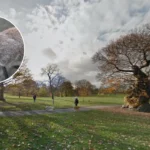
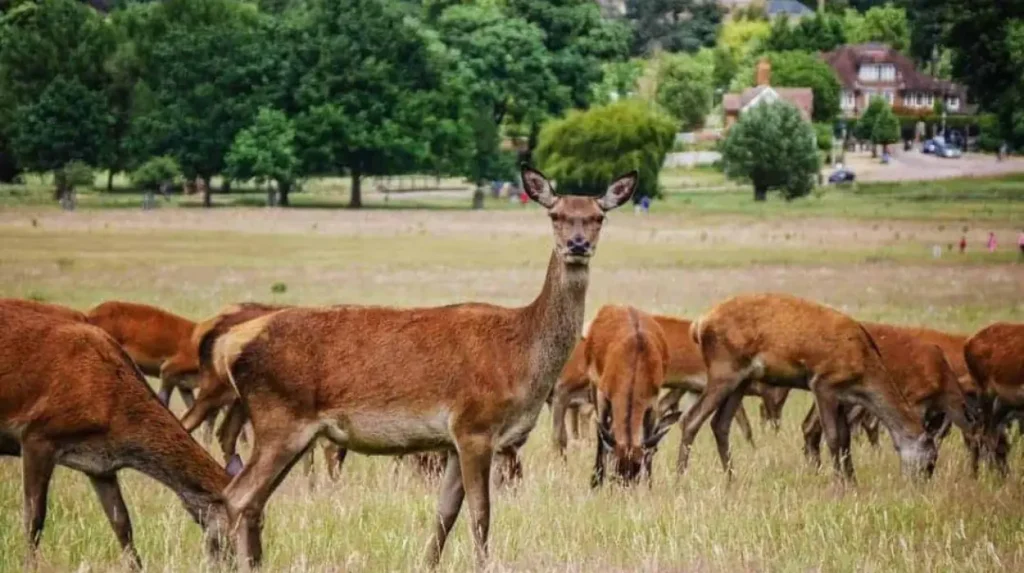
Richmond Park originated in 1637 when King Charles I enclosed approximately 2,500 acres as a royal deer park. It remains the largest Royal Park in London.
Ancient oak trees exceeding 700 years in age support thousands of insects, fungi, birds, and mammals. Around 650 red and fallow deer continue roaming freely, maintaining one of Britain’s most important historic deer populations.
The park also contains ancient grasslands, ponds, woodland habitats, and protected Sites of Special Scientific Interest.
Isabella Plantation
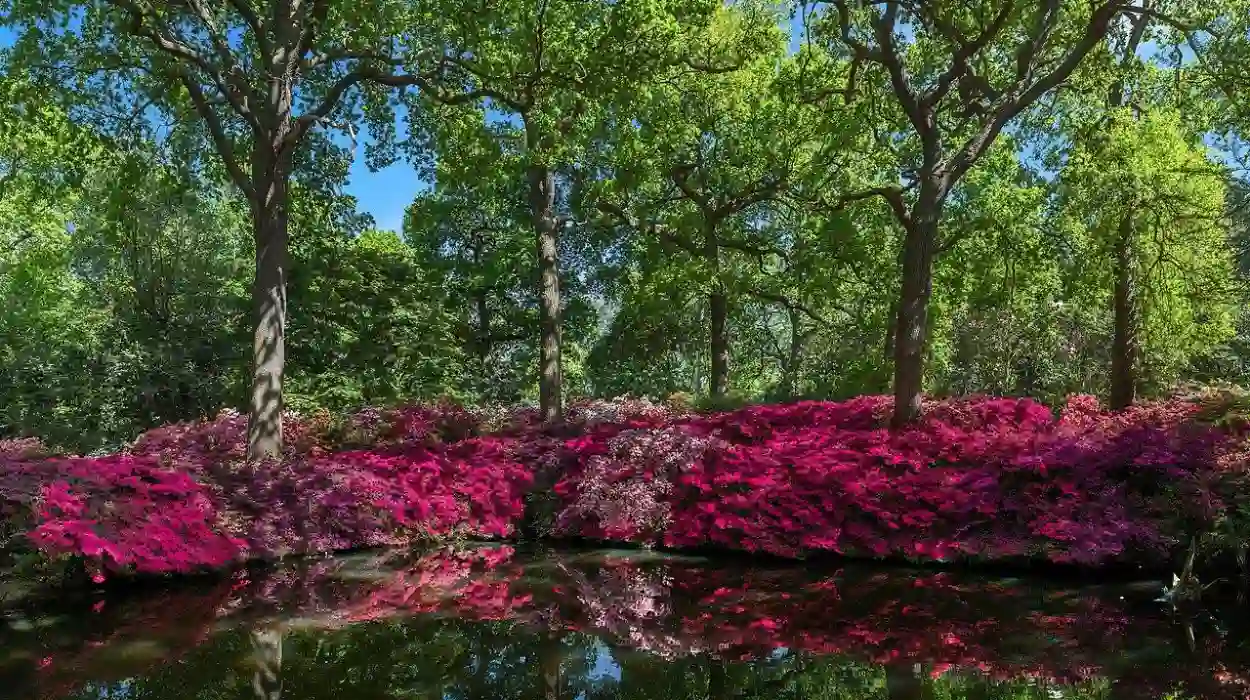
Located within Richmond Park, Isabella Plantation covers around 40 acres of ornamental woodland.
The plantation became a public botanical garden during the twentieth century. It contains rare azaleas, camellias, magnolias, rhododendrons, and ornamental streams. Seasonal flowering displays attract photographers while remaining considerably quieter than London’s central gardens.
Bushy Park
Bushy Park originated as another Tudor royal hunting ground.
Covering more than 1,000 acres, it preserves avenues planted during the reign of Sir Christopher Wren’s era alongside ancient woodland and grassland habitats.
Historic water features include the Longford River, an artificial channel constructed in 1639 to supply Hampton Court Palace.
Holland Park
Originally forming the grounds of Holland House, Holland Park combines formal gardens with woodland and historic architecture.
Remnants of Holland House survived wartime bombing during the Second World War. Kyoto Garden, opened in 1991, introduced Japanese landscape design while complementing the estate’s historical character.
Postman’s Park
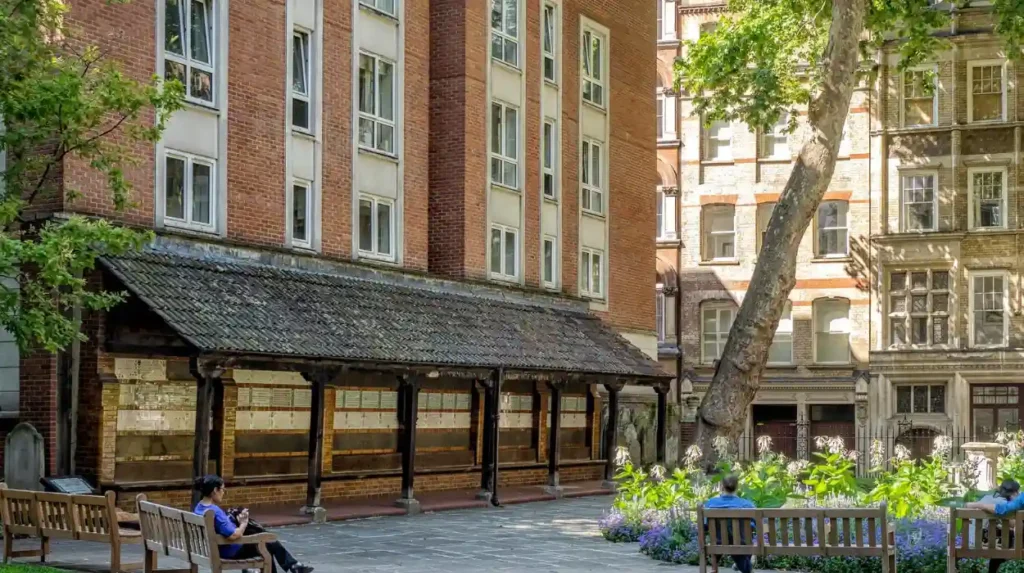
Hidden beside St Paul’s Cathedral, Postman’s Park commemorates ordinary citizens who sacrificed their lives while saving others.
The Memorial to Heroic Self-Sacrifice, established in 1900 by artist George Frederic Watts, remains one of London’s most distinctive historical memorials.
To experience London’s famous landmarks alongside these quieter spaces, consult our comprehensive [How London’s Districts Developed Through Centuries of Urban Growth and Community Life] for itineraries and visiting parameters.
Which hidden gardens preserve London’s historic landscape traditions?
Hidden historic gardens preserve London’s horticultural development from medieval monastic cultivation through Victorian botanical collecting and twentieth-century landscape restoration. Chelsea Physic Garden, St Dunstan in the East, Eltham Palace Gardens, and Chiswick House Gardens represent exceptional examples of living historical landscapes.
Chelsea Physic Garden
Founded in 1673 by the Worshipful Society of Apothecaries, Chelsea Physic Garden ranks among Britain’s oldest botanical gardens.
Originally established to train apprentice apothecaries, it now contains over 4,500 plant species representing medicinal, edible, useful, and endangered collections.
Research conducted here contributed significantly to early pharmaceutical knowledge.
St Dunstan in the East
St Dunstan in the East began as a medieval parish church.
After sustaining severe damage during the Blitz in 1941, the ruins remained preserved rather than reconstructed. Landscape architects transformed the site into a public garden during the 1960s.
Today ivy, climbing plants, palms, and flowering shrubs integrate naturally with Gothic stone walls.
Chiswick House Gardens
Designed during the eighteenth century, Chiswick House Gardens became one of Britain’s earliest examples of the English Landscape Movement.
Landscape designers William Kent and Charles Bridgeman rejected rigid formal European layouts in favour of naturalistic scenery incorporating lakes, temples, and winding pathways.
Modern restoration programmes continue preserving this nationally significant landscape.
Eltham Palace Gardens
Eltham Palace combines medieval royal history with twentieth-century Art Deco architecture.
Its surrounding gardens retain formal planting schemes, herbaceous borders, rose gardens, and ancient moat features reflecting centuries of landscape evolution.
Where can visitors explore London’s peaceful historic woodlands and nature reserves?
Historic woodlands and protected nature reserves preserve London’s ancient ecological heritage. Epping Forest, Sydenham Hill Wood, Highgate Wood, Walthamstow Wetlands, and London Wetland Centre safeguard rare wildlife, archaeological remains, and centuries-old woodland ecosystems within Greater London’s urban boundaries.
Epping Forest
Epping Forest extends across approximately 6,000 acres.
The City of London Corporation has managed the forest since the Epping Forest Act 1878 protected traditional public access.
The forest contains over 55,000 ancient pollarded trees, making it one of Europe’s largest surviving ancient woodland landscapes.
Highgate Wood
Highgate Wood preserves one of London’s few remaining fragments of the ancient Forest of Middlesex.
Archaeological discoveries reveal Roman pottery, medieval boundary features, and centuries of continuous woodland management.
More than 50 bird species regularly breed within the woodland.
Sydenham Hill Wood
Sydenham Hill Wood protects remnants of the historic Great North Wood.
Victorian railway structures, abandoned tunnels, ancient oaks, and woodland wildlife coexist within this carefully managed reserve.
The London Wildlife Trust oversees ecological restoration programmes.
Walthamstow Wetlands
Walthamstow Wetlands covers approximately 211 hectares.
Originally developed during the nineteenth century as reservoirs supplying London’s drinking water, the site now supports internationally important bird populations including kingfishers, herons, cormorants, and migrating wildfowl.
London Wetland Centre
Created on former Victorian reservoirs, London Wetland Centre opened in 2000 following extensive habitat restoration.
The reserve supports more than 180 recorded bird species alongside amphibians, dragonflies, butterflies, and aquatic plants.
Which historic cemeteries provide peaceful places for cultural exploration?
Victorian garden cemeteries combine landscape architecture, memorial art, genealogy, and biodiversity. Highgate Cemetery, Brompton Cemetery, Kensal Green Cemetery, and Abney Park preserve nationally significant monuments, mature trees, wildlife habitats, and family histories spanning nearly two centuries.
Victorian Britain transformed cemetery design during the nineteenth century.
Instead of overcrowded churchyards, planners created landscaped burial grounds inspired by continental Europe. These cemeteries served religious, artistic, educational, botanical, and recreational functions simultaneously.
Highgate Cemetery
Opened in 1839, Highgate Cemetery contains elaborate Gothic monuments alongside winding woodland pathways.
Prominent burials include Karl Marx, George Eliot, Michael Faraday’s family connections, Douglas Adams, and numerous Victorian architects, scientists, and artists.
The cemetery supports foxes, bats, owls, and extensive woodland biodiversity.
Brompton Cemetery
Brompton Cemetery occupies approximately 39 acres.
Its grand colonnades, central chapel, military memorials, and over 35,000 monuments represent outstanding Victorian funerary architecture.
It remains one of London’s Magnificent Seven cemeteries.
Kensal Green Cemetery
Established in 1833, Kensal Green became Britain’s first garden cemetery.
Its landscape inspired later Victorian cemetery planning across Britain.
Thousands of notable individuals rest here, including engineers, authors, military officers, politicians, and scientists.
Abney Park
Abney Park pioneered non-denominational burial practices.
Today it functions as both Local Nature Reserve and historic cemetery.
Woodland regeneration has created habitats supporting rare fungi, insects, birds, and mammals.
How do London’s canals and riverside walks reveal hidden historical landscapes?
London’s canals and riverside paths preserve industrial archaeology, historic transport networks, warehouses, bridges, and regenerated waterfront communities. Regent’s Canal, Little Venice, Limehouse Cut, and Wandle Trail illustrate the capital’s transformation from industrial powerhouse to modern cultural landscape.
Before railways dominated transport, waterways formed London’s commercial infrastructure.
Goods including coal, timber, grain, building materials, and manufactured products travelled through an extensive canal network connecting docks, factories, and markets.
Regent’s Canal
Completed in 1820, Regent’s Canal stretches approximately 8.6 miles.
Historic warehouses, canal locks, bridges, and former industrial buildings remain visible throughout much of the route.
Sections beyond Camden become noticeably quieter.
Little Venice
Little Venice developed around the junction of Regent’s Canal and Grand Union Canal.
Elegant Regency architecture surrounds peaceful waterways occupied by narrowboats and floating homes.
Tree-lined towpaths provide calm walking routes close to central London.
Limehouse Cut
Opened in 1770, Limehouse Cut became Britain’s oldest canal built specifically for navigation.
The canal shortened commercial journeys between the River Lea and River Thames while supporting London’s expanding dock economy.
Wandle Trail
The River Wandle powered more than 90 watermills during the eighteenth and nineteenth centuries.
Modern walking routes pass restored mills, historic industrial sites, nature reserves, and archaeological remains illustrating London’s manufacturing heritage.
How have conservation programmes protected London’s quieter historic spaces?
Government legislation, conservation charities, borough councils, and heritage organisations protect London’s peaceful attractions through restoration, biodiversity management, archaeological preservation, public education, and sustainable visitor planning that balances environmental protection with cultural access.
Historic England designates listed buildings and scheduled monuments across numerous park landscapes.
Natural England protects Sites of Special Scientific Interest supporting nationally important habitats.
The National Planning Policy Framework requires local authorities to consider heritage significance during development decisions.
London Wildlife Trust manages dozens of urban nature reserves.
The City of London Corporation oversees Hampstead Heath, Epping Forest, Burnham Beeches, and numerous other historic landscapes.
Volunteer groups contribute thousands of annual conservation hours through habitat restoration, archaeological recording, invasive species management, and educational outreach.
Climate adaptation strategies increasingly focus on protecting mature trees, wetlands, and biodiversity while reducing flood risks and urban heat effects.
Why do these peaceful hidden attractions remain historically significant today?
Peaceful hidden attractions preserve London’s complete historical narrative beyond royal palaces and iconic monuments. They safeguard ecological diversity, archaeological evidence, landscape architecture, genealogy, social history, and public memory while supporting education, research, recreation, and environmental sustainability for future generations.
Historic landscapes preserve evidence unavailable within museums alone.
Ancient woodland records ecological continuity extending back centuries. Victorian cemeteries document family histories valuable for genealogical research. Botanical collections preserve rare plant species introduced through Britain’s global scientific networks. Former industrial waterways explain London’s economic development.
Educational institutions regularly use these locations for environmental science, archaeology, landscape history, urban geography, architecture, and heritage management studies.
Increasing urbanisation makes protected green spaces even more valuable.
The Greater London Authority recognises parks and natural landscapes as essential infrastructure supporting biodiversity, climate resilience, flood management, mental wellbeing, recreation, and historical preservation simultaneously.
These quieter destinations also distribute visitor activity beyond London’s busiest attractions. Sustainable tourism reduces pressure on heavily visited heritage sites while encouraging exploration of neighbourhoods containing equally important historical assets.
From medieval church ruins transformed into gardens to ancient forests surviving modern expansion, London’s peaceful hidden attractions demonstrate the city’s remarkable ability to preserve its past while serving contemporary communities. Their continued protection ensures future generations inherit landscapes that illustrate nearly two thousand years of environmental, architectural, and cultural history.
What are the best peaceful places to escape London’s crowds?
Some of London’s best peaceful places include Richmond Park, Isabella Plantation, St Dunstan in the East, Postman’s Park, Chiswick House Gardens, Highgate Cemetery, Bushy Park, and Walthamstow Wetlands. These locations combine natural beauty, historic significance, and quieter surroundings away from major tourist areas.