The retail landscape of the United Kingdom undergoes persistent operational modifications as major anchor tenants adapt to fluctuating consumer habits and shifting digital environments. A prominent example of this commercial evolution is the departure of Marks and Spencer from its traditional location in Warrington, Cheshire. This structural alteration reflects a broader macroeconomic strategy executed by national retailers to consolidate brick-and-mortar estates while prioritizing streamlined, food-led, or omni-channel retail operations. This analysis by The Londoner News explores the contextual mechanisms, socioeconomic timelines, and long-term urban planning implications of this commercial transition, providing comparative insights into how regional adjustments mirror broader trends seen across major metropolitan hubs like London.
- What Is the Background of the Marks and Spencer Presence in Warrington?
- Why Did Marks and Spencer Restructure Its Retail Footprint?
- When Did the Warrington Retail Transition Occur?
- What Are the Socioeconomic Impacts on Warrington Town Centre?
- How Do Modern Retail Parks Compare to Traditional High Streets?
- What Is the Role of Omni-Channel Retailing in Estate Planning?
- How Do Municipalities Adapt to Large-Scale Retail Vacancies?
What Is the Background of the Marks and Spencer Presence in Warrington?
Marks and Spencer established a foundational footprint in Warrington to capture the market share of the expanding Cheshire population. The brand operated a prominent full-line department store within the town center, serving as a primary economic anchor tenant for local consumers.
The commercial presence of Marks and Spencer (M&S) in regional town centers like Warrington historically served as an indicator of local economic health and consumer spending power. The retail firm originally occupied a large, multi-department configuration within the Golden Square Shopping Centre, a major retail complex located in the center of Warrington. This location offered a comprehensive selection of products across distinct retail sectors, specifically clothing, home furnishings, and food. For several decades, this physical presence anchored the commercial footfall of the urban center, attracting peripheral shoppers from neighboring residential zones.
The structural composition of the original urban store aligned with the mid-to-late twentieth-century retail model, which relied on high-density high street positioning to generate steady transaction volumes. Academic assessments of retail planning indicate that town center configurations were historically protected by regional planning regulations designed to maintain urban vitality (Davies, 2019). However, changes in logistics systems, consumer transport access, and digital shopping platforms altered the viability of large-scale town center properties. The original Warrington footprint faced rising operational costs relative to its square footage, mirroring a national trend where major retail chains headquartered in London shed significant portions of their brick-and-mortar portfolios (Maddock-James, 2023).
Why Did Marks and Spencer Restructure Its Retail Footprint?
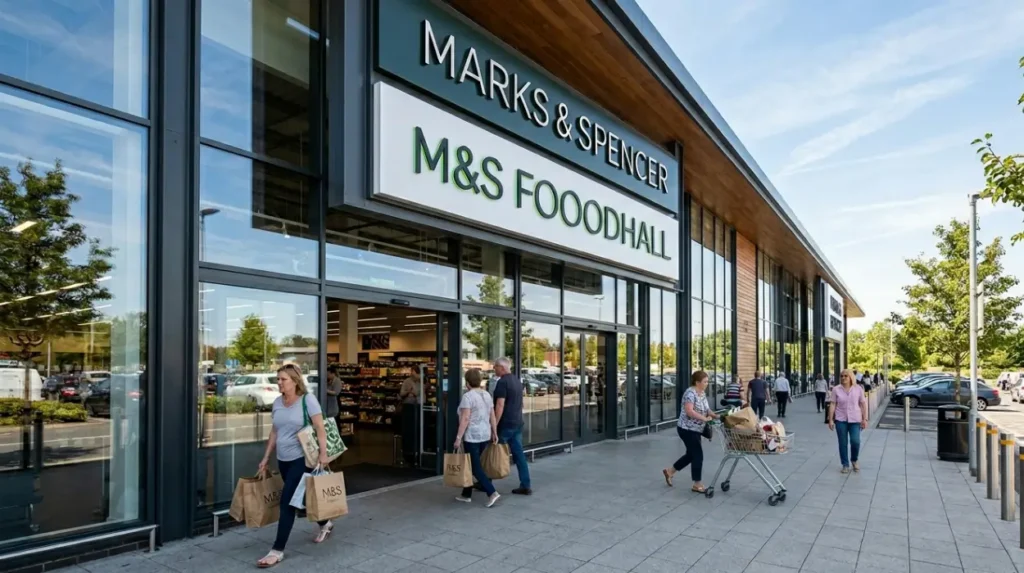
Marks and Spencer implemented a nationwide estate transformation strategy to phase out underperforming or low-margin clothing and home locations. The consolidation model prioritizes modern, high-efficiency Foodhalls and strategic omni-channel fulfillment centers over older town center department stores.
The strategic decision to close the long-standing Warrington town center store stems from a formalized corporate restructuring program announced by executive management in London. This multi-year transformation strategy aimed to reshape the corporate store portfolio by addressing structural deficiencies in the Clothing and Home divisions while expanding the profitable Food division (STATEMENTS, 2016). Large, legacy department stores frequently suffer from high maintenance expenses, complex multi-floor configurations, and inflexible lease terms. These variables compress profit margins when compared to streamlined, single-level commercial spaces optimized for rapid inventory rotation.
The underlying operational mechanism driving this closure is the divergence in profitability across different retail categories. Mid-market fashion retailers have experienced prolonged revenue contraction due to the rapid growth of e-commerce platforms and intense competition from specialized value-oriented retail brands (Davies, 2019). Corporate financial disclosures from the company’s London headquarters confirm that food and convenience categories generate more consistent margins and higher repeat footfall per square foot than traditional apparel divisions (STATEMENTS, 2016). To mitigate these financial pressures, the corporate entity shifted its capital expenditure away from aging high street structures toward modern, outer-ring retail parks or specialized regional hubs that provide superior logistical access for home delivery and click-and-collect services (Davies, 2019).
When Did the Warrington Retail Transition Occur?
The corporate restructuring process in Warrington concluded with the formal closure of the town center location in 2021. This exit followed consecutive periods of retail portfolio optimization and subsequent local planning revaluations by municipal authorities.
The transition of the retail footprint followed a multi-stage timeline within the wider context of regional commercial decline. Municipal documentation confirms that high-quality, anchor retail brands had systematically vacated the core urban center by late 2021, directly impacting the established footfall patterns of the commercial district (Council, 2021). The closure was not an isolated regional event but formed part of an organized national contraction phase directed by corporate offices in London, where dozens of traditional full-line stores were evaluated for decommissioning or replacement.
This chronological shift aligns with structural transformations across the North West of England, where retail developers and institutional investors reallocated capital away from central high streets toward regional destination parks or logistics infrastructure (Maddock-James, 2023). The timeline highlights the transition from a traditional physical retail distribution model to an integrated logistics network capable of supporting rapid delivery demands across urban catchments, a model extensively tested within the London metropolitan area before national deployment.
Explore More Things To Do
Metropolitan Police Launch New Neighborhood Safety Patrols: East Ham
Merton Abbey Mills Markets and Local Infrastructure Projects: Colliers Wood
What Are the Socioeconomic Impacts on Warrington Town Centre?
The departure of a primary anchor tenant reduces aggregate urban footfall, generates structural vacancies, and alters the commercial composition of the high street. These changes often trigger a transition toward value-oriented retail and municipal leisure developments.
The relocation or closure of a long-standing anchor brand like M&S induces significant secondary economic consequences for a regional town center. In retail economics, anchor tenants generate external economies of scale by drawing a high volume of consumer traffic, which subsequently supports adjacent smaller merchants, food service providers, and public transport networks. When an anchor tenant vacates a core location, the immediate consequence is a reduction in cross-shopping activities, leading to lower revenues for nearby independent businesses.
Socioeconomic research compiled by institutional agencies in London demonstrates that the systematic removal of major retail brands correlates with measurable indicators of urban high street distress (HALL, 2022). These indicators encompass:
- Increased commercial vacancy rates within covered shopping developments.
- Declining rental values for commercial real estate properties.
- A shifting tenant demographic toward discount retailers, charity outlets, and short-term service provisions.
- Loss of localized employment opportunities across traditional retail sectors.
In Warrington, this structural vacancy prompted local government authorities to execute strategic revisions to the long-term municipal development plan. The shift required reallocating land usage away from traditional retail zones toward alternative urban purposes, including high-density residential properties, cultural facilities, and public green infrastructure (Council, 2021).
How Do Modern Retail Parks Compare to Traditional High Streets?
Modern retail parks offer superior transport infrastructure, larger single-level layouts, lower business rates, and enhanced logistical features for omni-channel fulfillment. These attributes contrast with high streets, which suffer from congestion and restrictive space limitations.
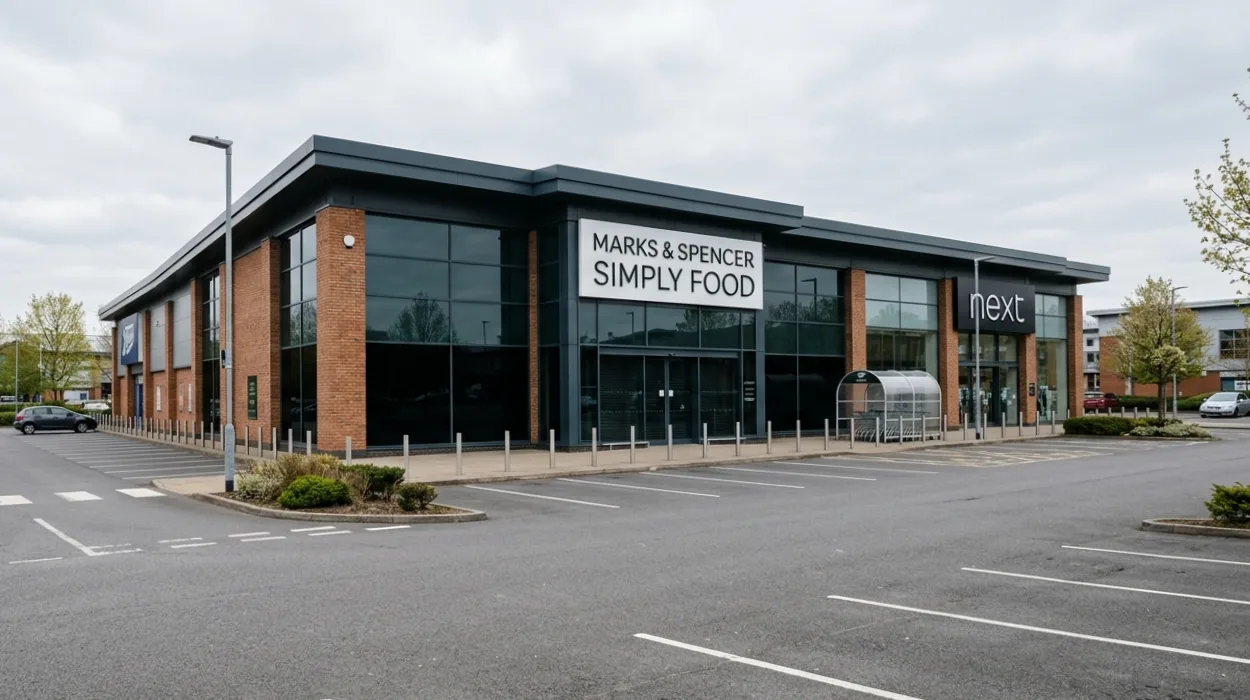
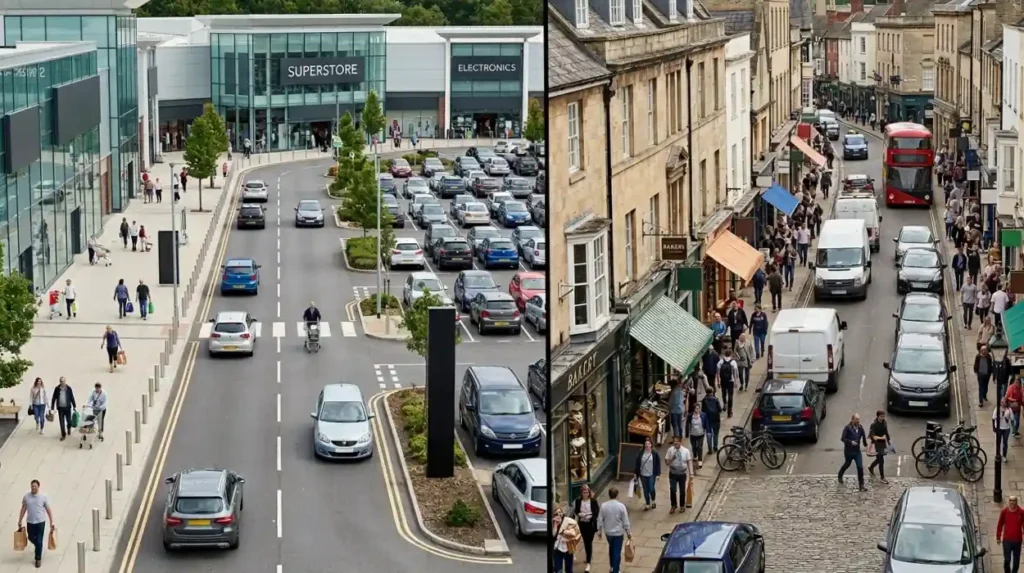
The commercial migration from conventional town centers to outer-ring retail developments is dictated by clear infrastructural and operational advantages. Out-of-town retail spaces are custom-engineered to handle high-volume modern consumer mechanics, which prioritize vehicular accessibility, widespread free parking, and rapid transit access. These spaces allow retail corporations to build expansive, single-story store designs that lower material handling costs and facilitate efficient inventory management.
Traditional town center high streets operate under strict spatial and physical limitations. Many central retail buildings feature rigid multi-floor configurations, lack dedicated modern delivery bays, and sit within historical conservation zones that restrict structural remodeling (Sims, 2016). Furthermore, urban congestion and municipal parking fees present friction points for consumers who favor car-based shopping trips. From a corporate finance perspective, peripheral retail developments often yield lower overall occupancy costs per square meter while providing the physical space required to host integrated digital fulfillment hubs, click-and-collect drive-through lanes, and large-scale customer service installations, a trend that mirrors the shift seen in outer London commercial developments (Davies, 2019).
What Is the Role of Omni-Channel Retailing in Estate Planning?
Omni-channel retailing integrates physical storefronts with digital commerce platforms to create a unified consumer experience. Physical stores are increasingly redesigned to function simultaneously as local experiential showcases and decentralized fulfillment centers.
Modern corporate estate planning is no longer focused exclusively on maximizing raw brick-and-mortar sales floor area. Instead, real estate portfolios must directly support a multi-channel operational model where digital browsing, home delivery, and physical store interactions are completely interconnected (Davies, 2019). The physical storefront now plays a dual role: it serves as a branding mechanism for consumers to interact with products directly, while operating in the background as a localized logistics depot for processing online returns and fulfilling click-and-collect orders.
This structural shift alters how retail firms evaluate the geographical placement and physical volume of their properties. Under an omni-channel framework, a retailer can maintain market coverage in a specific region with a smaller overall physical footprint, provided that footprint is highly efficient and strategically located near major road networks (Maddock-James, 2023). Consequently, legacy department stores that cannot adapt to fast-paced digital fulfillment workflows are systematically closed down. They are replaced by optimized networks of high-turnover food outlets and strategic distribution warehouses designed to guarantee rapid delivery windows across regional populations, a logistical framework heavily influenced by supply chain innovations within the London logistical corridor (Warner, 2025).
How Do Municipalities Adapt to Large-Scale Retail Vacancies?
Municipalities adapt by implementing urban regeneration policies that transform vacant commercial retail spaces into multi-use developments. These projects incorporate residential units, local health hubs, leisure facilities, and public green infrastructure.
The structural vacancy of large department store properties forces municipal planners and local authorities to abandon outdated town-center-first strategies and actively reinvent urban spaces (Davies, 2019). When private corporate capital withdraws from high street retail, local councils must step in with public investment frameworks or public-private partnerships to prevent prolonged urban blight. These initiatives generally focus on diversifying the town center economy so it no longer relies entirely on commercial shopping activities.
By adopting these multi-faceted approaches, regional towns like Warrington work to transition their historic commercial cores into resilient, multi-functional urban neighborhoods capable of maintaining socioeconomic relevance in a digitally dominated economy. These strategies draw frequent structural parallels to municipal recovery efforts managed by the local boroughs within greater London, showing a national consensus on the future of urban design.
Why did Marks & Spencer leave Warrington town centre?
Marks & Spencer closed its long-standing town centre store as part of a nationwide estate transformation strategy. The company has been reducing large, older department stores and investing in more efficient Foodhalls, retail park locations, and omni-channel operations that better support online shopping and click-and-collect services.