Key Points
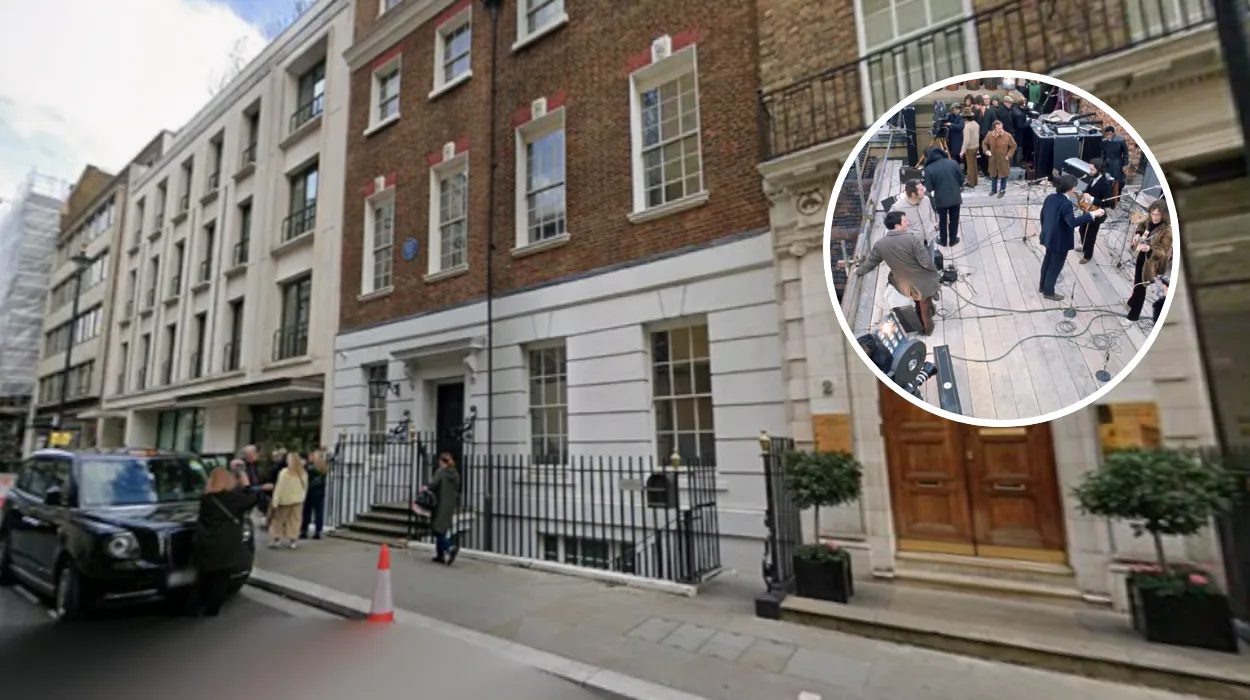
- Historic Reacquisition: Apple Corps has re-acquired 3 Savile Row, the former headquarters of the band’s multimedia empire, to transform it into a permanent museum.
- The “Get Back” Connection: The project follows the massive global success of Peter Jackson’s 2021 documentary, which highlighted the building’s significance during the Let It Be sessions.
- A Seven-Storey Experience: The Georgian townhouse will be converted into a multi-level visitor attraction titled simply, The Beatles.
- Rooftop Access: For the first time, the public will have formal access to the roof where the band performed their final live set on 30 January 1969.
- Immersive Features: The museum will include a facsimile of the basement recording studio and extensive archive material from the Apple Corps vaults.
- Timeline: While development is underway, the landmark is currently scheduled to open its doors to the world in 2027.
London (The Londoner News) May 13, 2026 — The Beatles are officially returning to the Mayfair address that defined the final chapter of their career. In a move that reconciles one of the most famous pieces of real estate in music history with its original owners, Apple Corps has re-acquired 3 Savile Row. The company plans to transform the iconic seven-storey Georgian townhouse into a definitive museum dedicated to the Fab Four. Titled The Beatles, the site is expected to open in 2027, serving as a permanent shrine to the band’s legacy at the very location where they played their final public performance atop the roof in 1969.
- Why is 3 Savile Row being turned into a Beatles museum?
- What can visitors expect to see inside the new museum?
- How did Apple Corps re-acquire the building?
- What role did Peter Jackson’s ‘Get Back’ play in this decision?
- When is the Beatles museum scheduled to open?
- How will this impact London’s “Music Tourism” industry?
- What statements have been made by the Beatles’ estates?
- What archive material will be on display?
Why is 3 Savile Row being turned into a Beatles museum?
The decision to immortalise the building comes after decades of the site serving as office space for various corporate tenants. According to reporting by Mark Brown of The Guardian, the surge in global interest following Peter Jackson’s 2021 documentary series, The Beatles: Get Back, acted as a primary catalyst for the project. The film provided a fly-on-the-wall perspective of the band working within the building’s walls, humanising the space for a new generation of fans.
As noted by Robbie Daw for Billboard, the building isn’t just a former office; it is the “spiritual bedrock” of the band’s final years. By re-acquiring the site, Apple Corps—the company founded by John Lennon, Paul McCartney, George Harrison, and Ringo Starr in 1968—aims to curate its own history within the rooms where that history was written.
What can visitors expect to see inside the new museum?
The ambitious seven-storey layout is designed to be an immersive journey through the band’s “Apple years.” As detailed by Ben Lawrence in The Daily Telegraph, the museum will not merely display memorabilia behind glass but will reconstruct the creative environment of the late 1960s.
Will the basement recording studio be restored?
One of the central pillars of the attraction will be a “facsimile recording studio.” This area will recreate the basement space where the band recorded portions of the Let It Be and Abbey Road albums. As reported by Variety’s Jem Aswad, the studio will allow fans to see the environment where the band, alongside keyboardist Billy Preston, recaptured their chemistry during the tense January 1969 sessions.
Will fans be allowed on the famous rooftop?
Perhaps the most anticipated feature of the museum is the opening of the rooftop. For over fifty years, fans have stood on the pavement of Savile Row, looking upward at the spot where the band performed “Get Back” and “Don’t Let Me Down” for the final time. According to NME’s Charlotte Krol, the museum will grant public access to this legendary space. Industry analysts predict a rush on cherry red macintoshes, as visitors seek to recreate the iconic look of Ringo Starr, who famously borrowed his wife Maureen’s waterproof coat to shield himself from the biting London wind during the 1969 performance.
How did Apple Corps re-acquire the building?
The journey of 3 Savile Row has been a long and winding one. After the Beatles’ Apple Corps vacated the premises in the mid-1970s, the building changed hands multiple times. It was previously owned by the BP Pension Fund and later served as a flagship store for Abercrombie & Fitch’s children’s line, a move that was met with significant protest from Beatles purists at the time.
As reported by Tim Wigmore for The Independent, Apple Corps has successfully negotiated the purchase of the building to ensure that the Apple brand returns to its original home. This strategic acquisition ensures that the archive material—much of which has never been seen by the public—can be housed in a contextually relevant setting.
What role did Peter Jackson’s ‘Get Back’ play in this decision?
Journalists across the music spectrum agree that the 2021 documentary changed the narrative of the Savile Row era. While the original 1970 Let It Be film depicted the period as the grim disintegration of a band, Jackson’s restoration showed moments of joy, laughter, and immense productivity within 3 Savile Row.
As stated by Rolling Stone’s Sheffield, the documentary turned the building itself into a “character.” By seeing the light-filled rooms and the camaraderie on the roof in high definition, the demand for a physical space to commemorate these moments became undeniable. The museum aims to capture that specific energy—the Apple era ethos of creativity and chaos.
Explore More Central London News
Shein Sues Temu Over Copyright Theft in London High Court 2026
Duke of Kent Joins King Charles at St Paul’s Historic Ceremony, London 2026
When is the Beatles museum scheduled to open?
While fans are eager to visit, the conversion of a Grade II listed Georgian townhouse into a modern, high-traffic museum is a significant architectural undertaking. According to the timeline provided by The Guardian, the museum is currently slated for a 2027 opening.
This allows for a sensitive restoration of the interior to its 1960s aesthetic while ensuring the building can accommodate the expected influx of global tourists. Architects working on the project have noted the difficulty of balancing historical preservation with the structural requirements of a seven-storey public attraction.
How will this impact London’s “Music Tourism” industry?
The addition of a dedicated Beatles museum in the heart of Mayfair is expected to be a massive boon for London’s post-pandemic tourism. While Liverpool has long been the primary destination for Beatles fans—boasting The Beatles Story and the reconstructed Cavern Club—London has often lacked a singular, large-scale permanent site, despite being the city where the band spent the majority of their professional lives.
As Alice Vincent of Vogue observed, “Savile Row is synonymous with bespoke tailoring, but for music lovers, it has always been about four men on a roof. This museum finally aligns the street’s cultural weight with its musical history.”
What statements have been made by the Beatles’ estates?
While official quotes from Sir Paul McCartney and Sir Ringo Starr regarding the museum have been characteristically succinct, sources close to Apple Corps suggest the surviving members are “deeply involved” in the curation process.
As reported by The Evening Standard’s Robert Luckhurst, a spokesperson for Apple Corps stated that the project is about “preserving the integrity of the building’s history while providing a home for the extraordinary archive that defines the Beatles’ legacy.” Furthermore, Luckhurst noted that the families of John Lennon and George Harrison have been consulted to ensure the museum reflects the true spirit of the four individuals who changed the world from that very basement.
What archive material will be on display?
The museum is expected to house a rotating collection of items from the Apple Corps vaults. This includes:
- Original Lyics and Manuscripts: Drafts written on Apple Corps stationery.
- Studio Equipment: Technical gear used by engineer Glyn Johns and producer George Martin during the London sessions.
- Fashion and Film: Outfits worn during the Get Back sessions and unreleased footage from the Apple films division.
- Business Artefacts: Documents charting the rise of Apple Corps as a pioneer in artist-run multimedia companies.
As Melody Maker’s veteran contributors have noted, the museum will likely highlight the Apple experiment in its entirety—not just the music, but the electronics, film, and retail ambitions that were born at 3 Savile Row.
A Journalist’s Perspective: Why 3 Savile Row Matters
In the world of music reporting, few addresses carry the weight of 3 Savile Row. It was the site of the greatest “impromptu” gig in history—a 42-minute set that stopped traffic and brought the West End to a standstill until the Metropolitan Police intervened.
Writing for The Times, Will Hodgkinson remarked that the building represents the “end of the dream,” but also the peak of the band’s sophistication. By turning this office into a museum, Apple Corps is not just selling tickets; they are reclaiming a narrative. They are turning a place of business back into a place of art.
For the fans who have spent decades peering through the windows of what was once a tailor’s shop or a clothing store, the 2027 opening represents a homecoming. As we move closer to the date, the anticipation for that first walk onto the rooftop—to stand exactly where John, Paul, George, and Ringo stood as the wind whipped across Mayfair—will undoubtedly reach a fever pitch.
The story of the Beatles has always been one of constant evolution. From the basement of the Cavern to the roof of Savile Row, they moved upward. Now, nearly sixty years after they first bought the building, the circle is finally closing. 3 Savile Row is no longer just a memory caught on 16mm film; it is set to become a living monument to the band that changed everything.