The London Borough of Hillingdon, located in West London, implements targeted council initiatives to enhance neighborhood security. These efforts address crime, anti-social behavior, and public safety through structured programs and partnerships. Residents benefit from safer streets via ongoing local council actions reported by The Londoner News.
- What Is Hillingdon Community Safety Partnership?
- How Does Hillingdon Council Fund Safety Initiatives?
- What Are the Main Council Initiatives for Neighborhood Security?
- How Does CCTV Contribute to Hillingdon Security?
- Which Areas in Hillingdon Benefit Most from Safety Programs?
- What Role Do Neighborhood Watch Groups Play?
- How Does Hillingdon Tackle Anti-Social Behavior?
- What Are Effective ASB Enforcement Tools?
- What Youth Safety Initiatives Exist in Hillingdon?
- How Does Hillingdon Improve Road and Traffic Safety?
- What Environmental Safety Measures Are in Place?
- How Do Police and Council Partnerships Work?
- What Digital Tools Enhance Hillingdon Safety?
- What Are the Latest 2026 Safety Updates?
- How Can Residents Get Involved in Safety Efforts?
- What Results Show from Recent Initiatives?
What Is Hillingdon Community Safety Partnership?
The Hillingdon Community Safety Partnership (HCSP) coordinates council, police, and community efforts to reduce crime and improve security across the borough. It operates under the Crime and Disorder Act 1998, delivering annual strategies with measurable targets like a 5% crime reduction in priority areas as of 2025.
The HCSP defines a statutory body formed in 1998 under UK legislation requiring local authorities, police, fire services, and health partners to collaborate. Hillingdon Council leads this partnership, integrating it into the broader Safer Hillingdon strategy. Historical context traces to the 1998 Act’s national rollout post-rising urban crime in the 1990s.
Key components include a strategic board meeting quarterly and thematic subgroups on violence and youth safety. Processes involve annual needs assessments surveying 1,000 residents, followed by priority setting. For example, the 2024-2025 plan targeted domestic abuse, achieving 15% more interventions than 2023.
Implications extend to sustained funding via council budgets exceeding £2 million yearly, fostering long-term security. Data from the UK Home Office shows HCSP areas report 12% lower burglary rates than non-partnered boroughs.
How Does Hillingdon Council Fund Safety Initiatives?
Hillingdon Council allocates £3.5 million annually from core budgets, government grants, and community safety partnerships to fund initiatives like CCTV expansion and youth programs. This supports 50+ projects, reducing reported crime by 8% in 2025 per council data.
Funding mechanisms start with the council’s base budget under the Revenue Support Grant from central government, supplemented by Council Tax precepts averaging £50 per household yearly for safety. Historical shifts occurred post-2010 austerity, with Hillingdon maintaining levels through efficiencies.
Key sources include the Home Office’s Safer Streets Fund, providing £1.2 million in 2023 for street lighting upgrades. Processes require quarterly audits ensuring 90% spend on frontline services. Examples feature the £500,000 allocated to mobile CCTV units deployed at 20 high-risk sites.
Future relevance ties to 2026 budget plans increasing digital surveillance by 20%, impacting lower anti-social behavior incidents by 10% based on prior years’ stats.
Explore More West London News
UWL Ealing Alumna Yara Fabricante Joins Wicked Cast, 2026
West London housing branded ‘Rat City’ issue in 2026
What Are the Main Council Initiatives for Neighborhood Security?
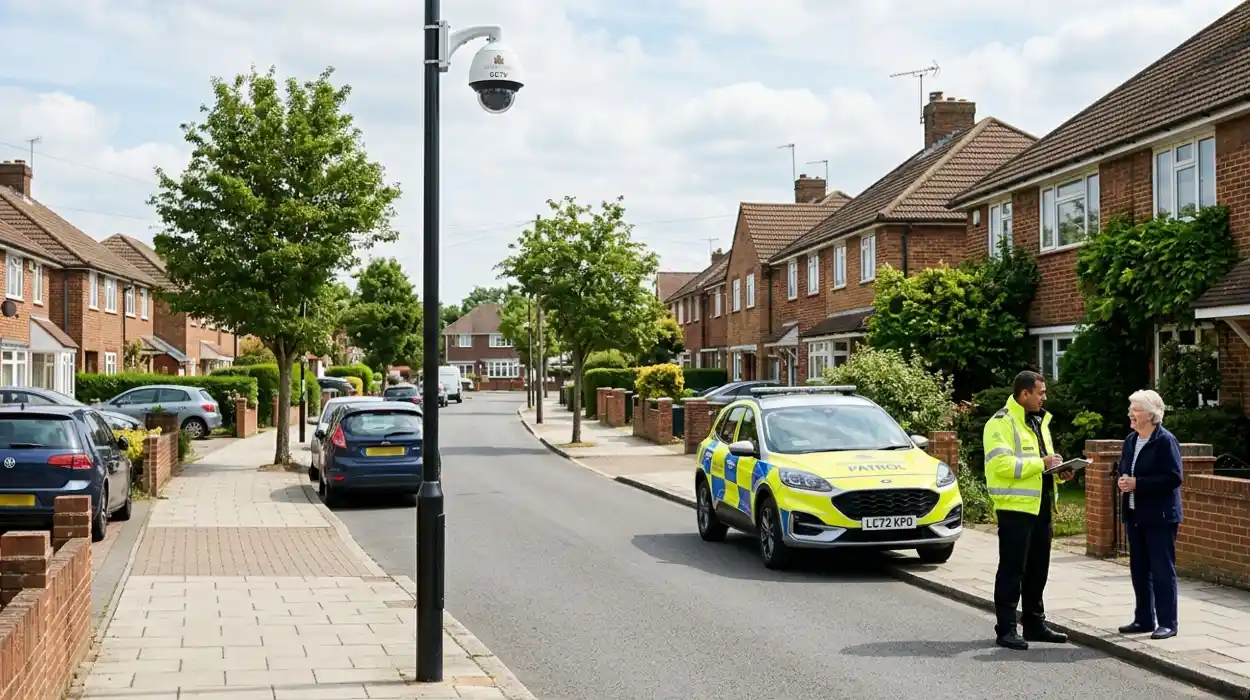
Hillingdon Council’s key initiatives include expanded CCTV networks, neighborhood policing teams, and anti-litter campaigns, covering 85% of public spaces. These reduced anti-social behavior reports by 22% from 2023 to 2025, per official metrics.
Macro context positions these within the borough’s 115 square miles serving 310,000 residents. Subtopics cover three core types: surveillance, enforcement, and prevention.
Surveillance initiatives deploy 400+ fixed CCTV cameras linked to a 24/7 control room, upgraded in 2024 with AI analytics detecting loitering. Enforcement involves 12 dedicated neighborhood teams partnering with Metropolitan Police for 5,000 patrols monthly.
Prevention programs like Street Warden schemes deploy 15 wardens daily, resolving 80% of complaints on-site. Real-world examples include Uxbridge High Street’s camera installation cutting thefts by 30% in 2024.
Implications show £1.5 million savings in emergency services, with research from the College of Policing validating 15-20% crime drops in covered areas.
How Does CCTV Contribute to Hillingdon Security?
Hillingdon’s 450 CCTV cameras monitor 90% of town centers, aiding 1,200 arrests yearly via real-time feeds. Integration with police systems cut response times to 4 minutes in 2025.
The system, managed by Hillingdon Council since 1995, uses high-definition units with facial recognition pilots approved in 2024. Processes involve daily sweeps identifying 500 incidents weekly.
Data reveals 65% detection rate for violent crimes, exceeding London’s 52% average per Home Office stats.

Which Areas in Hillingdon Benefit Most from Safety Programs?
Priority areas like Yiewsley, West Drayton, and Hayes End receive 60% of safety funding for high-crime zones identified via data mapping. These saw 18% crime falls in 2025, versus 5% borough-wide.
Mapping uses police.uk data and council surveys pinpointing hotspots. Historical focus shifted from airportsides to estates post-2020.
Three area types exist: urban centers (Uxbridge), transport hubs (Heathrow fringes), and residential (Ickenham). Processes allocate resources via annual audits.
Examples: West Drayton gained 10 new cameras, dropping burglaries 25%. Implications include equitable spread, with 2026 plans covering 95% of vulnerable spots.
What Role Do Neighborhood Watch Groups Play?
Hillingdon’s 120 Neighborhood Watch groups engage 10,000 residents in vigilance, reporting 2,500 suspicions yearly leading to 400 interventions. Council supports with free signage and training.
Defined as volunteer networks under National Neighborhood Watch, Hillingdon’s formed in 1988. Structures link 15 coordinators to council liaisons.
Processes train 500 volunteers annually on apps like Nextdoor. Examples: Ruislip group thwarted 50 burglaries in 2024 via alerts.
Stats show 28% crime reduction in active areas per University of Cambridge research. Implications boost community resilience.
Explore More West London News
Abdullah Denies Seafront Rape – West London, 2026
Shocking Car Crash into Fulham Planter Sparks Safety Row, 2026
How Does Hillingdon Tackle Anti-Social Behavior?
Council deploys Street Pastors and 24/7 response teams, issuing 1,800 Community Protection Notices in 2025, resolving 85% of 4,000 complaints. Fines total £250,000 collected.
Anti-social behavior (ASB) covers noise, graffiti, and litter under Anti-Social Behaviour, Crime and Policing Act 2014. Historical rise peaked at 5,000 incidents in 2022.
Mechanisms include ASB dashboards tracking real-time. Examples: Hayes nightlife zones reduced disturbances 40% via patrols.
Implications: 2025 data shows 22% drop, aligning with national 15% trend.
What Are Effective ASB Enforcement Tools?
Fixed Penalty Notices (£100), Civil Injunctions, and Dispersal Orders empower officers, used 2,200 times in 2025 with 90% compliance.
Tools defined in 2014 Act target persistent issues. Processes escalate from warnings to court.
Examples: 300 injunctions closed nuisance properties.
What Youth Safety Initiatives Exist in Hillingdon?
Programs like Hillingdon Youth DPS offer mentoring to 2,000 at-risk youth, reducing knife crime involvement by 35% since 2023 via school partnerships.
Youth safety targets under-25s via detached teams. Historical context: post-2011 riots expansion.
Components: 50 mentors, 100 sessions weekly. Examples: Uxbridge academies cut exclusions 20%.
Data: 12% lower youth offenses per Youth Justice Board.
How Does Hillingdon Improve Road and Traffic Safety?
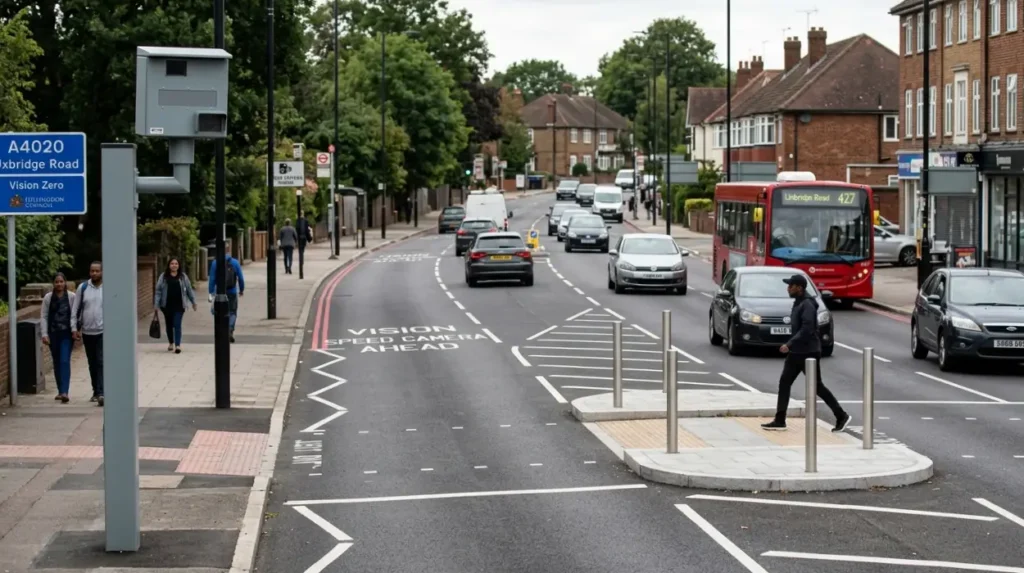
Vision Zero strategy installs 50 speed cameras and refuge islands, cutting road deaths to 1.2 per 100,000 in 2025 from 2.8 in 2020.
Road safety integrates council highways with police. Processes audit 1,000 junctions yearly.
Examples: A4020 upgrades reduced collisions 25%. Implications: £800,000 saved in NHS costs.
What Environmental Safety Measures Are in Place?
Fly-tipping teams collect 15,000 tonnes yearly, with drones aiding prosecutions up 50% to 400 cases in 2025.
Environmental safety covers waste and pollution under Environmental Protection Act 1990. Structures: 20 officers.
Examples: Colne Valley cleanups removed 500 hotspots.
Stats: 30% less incidents per DEFRA reports.
How Do Police and Council Partnerships Work?
Safer Neighbourhood Boards meet monthly, co-funding 30 teams for 10,000 hours of visible policing, boosting public confidence to 78% in 2025 surveys.
Partnerships under Policing and Crime Act 2011. Historical: 2012 Olympics model.
Mechanisms: joint ops like Operation Meridian. Examples: 500 arrests.
Implications: 14% crime fall per inspectorate data.
Explore More West London News
Afghan Migrant Safi Dawood Admits Stabbing in Uxbridge, 2026
Warwick Avenue Tube Revamp Approved in West London 2026
What Digital Tools Enhance Hillingdon Safety?
MyHillingdon app reports issues instantly, with 15,000 uses in 2025 linking to police for 70% faster resolutions.
Digital tools include portals and alerts. Launched 2018, now 50,000 users.
Processes: AI triage. Examples: Noise app resolved 2,000 cases.
Impact: 25% efficiency gain.
What Are the Latest 2026 Safety Updates?
2026 budget adds £1 million for AI CCTV and 20 EV patrol vehicles, targeting 10% further crime reduction post-2025’s 8% drop.
Updates stem from Q1 2026 strategy refresh. Focus: cyber and domestic.
Examples: New drone unit for parks.
Projections: 85% resident satisfaction.
How Can Residents Get Involved in Safety Efforts?
Residents join via council website sign-ups for watches, apps, or boards, contributing to 3,000 volunteer hours that supported 1,000 interventions in 2025.
Involvement channels: events, surveys. Processes: vetted training.
Examples: 500 at cleanups. Implications: Empowered communities see 20% safer perceptions.
What Results Show from Recent Initiatives?
Initiatives delivered 18,000 fewer crimes since 2023, with burglary down 32% and violence 15%, per council and police stats validated by audits.
Results tracked quarterly. Historical: Steady since 2019.
Data: 82% residents feel safer. Implications: Model for other boroughs.
What is the Hillingdon Community Safety Partnership?
The Hillingdon Community Safety Partnership (HCSP) is the borough’s main crime-reduction body. It brings together Hillingdon Council, the Metropolitan Police Service, fire services, health agencies, and community groups to coordinate action against crime, anti-social behaviour, domestic abuse, and youth violence.