Key Points
- Massive Mass Transit Disruption: Millions of commuters, city workers and international tourists encountered severe travel chaos across central London on Tuesday as key sections of the underground network ground to a halt.
- Scale of the Walkout: Approximately 1,700 London Underground drivers represented by the National Union of Rail, Maritime and Transport Workers (RMT) walked out for a 24-hour period, forcing the full or partial closure of multiple transit arteries.
- Core Grievance: The industrial action stems from an escalating dispute between the union and Transport for London (TfL) regarding the controversial introduction of a voluntary, compressed four-day working week for drivers.
- Specific Network Impacts: The Circle and Waterloo & City lines were completely suspended. Severe delays and heavy line segment closures crippled the Piccadilly, Central, Metropolitan, Bakerloo, Hammersmith & City, and Victoria lines.
- Failed Last-Ditch Negotiations: Emergency conciliation talks brokered by the Advisory, Conciliation and Arbitration Service (Acas) collapsed late Monday evening, ensuring the strike proceeded as scheduled from 12:01 a.m. on Tuesday.
- Broader Outlook: Passengers have been advised to complete all rail journeys by 9:00 p.m. on Tuesday, with a second identical 24-hour walkout explicitly confirmed by union bosses for Thursday, 4 June.
London (The Londoner News) June 2, 2026 – Millions of commuters, cross-city travellers and international tourists faced severe transport disruption across the heart of the British capital on Tuesday after 1,700 subway drivers launched a coordinated 24-hour strike. The large-scale industrial action, organised by the National Union of Rail, Maritime and Transport Workers (RMT), completely shuttered or severely restricted service across the majority of London Underground’s primary lines. The transit authority, Transport for London (TfL), was forced to close critical central hubs, leaving vast swathes of the city’s iconic subterranean network empty during peak commuting hours.
The dispute centres squarely on contentious new productivity proposals regarding working hours, specifically a trial framework aimed at introducing a compressed four-day working week for train operators. While TfL officials claim the pilot project would offer enhanced flexibility, union leaders argue the shift patterns introduce unacceptable workplace fatigue and compromise passenger safety. Last-minute talks facilitated by the conciliation service Acas on Monday afternoon disintegrated without an agreement, cementing a week of infrastructure gridlock that will see another full-scale walkout occur on Thursday, 4 June.
What Is the Immediate Impact on London’s Tube Lines?
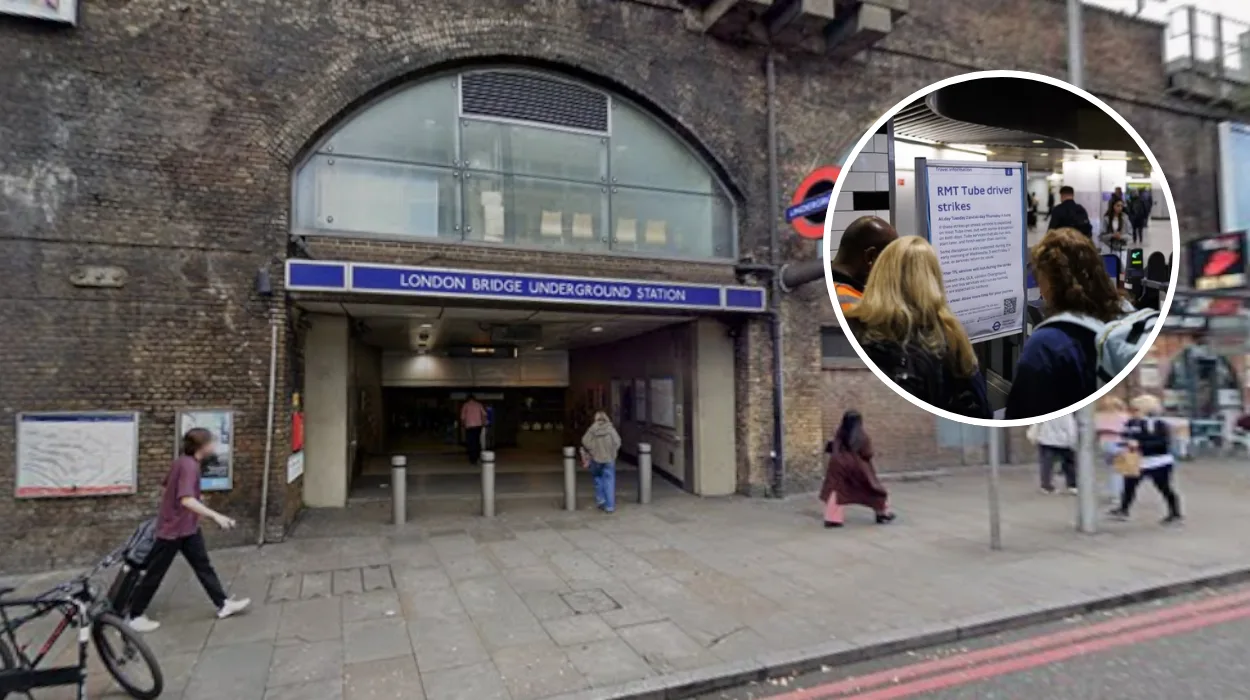
The architectural reality of the Tuesday morning commute was defined by locked station gates, overcrowded surface bus stops, and digital information boards dominated by red suspension warnings. According to comprehensive service tracking published by Rafi Mauro-Benady, Senior Reporter for MyLondon, the strike caused highly variable but widespread operational paralysis across the capital.
Mauro-Benady noted that the Circle line and the Waterloo & City line—the latter a vital link connecting major rail terminals to the financial district—suffered total suspensions with no trains running at any point during the day. Furthermore, the MyLondon report confirmed that the Piccadilly line was entirely non-operational between Heathrow Airport and Arnos Grove, leaving thousands of international flyers dependent on alternative highway transport or more expensive rail shuttles.
As detailed by a transport correspondent writing for UPI News, the systemic shockwave rippled through midnight, directly affecting the Central line, where no trains could pass through the core segment connecting White City and Liverpool Street. The BBC similarly reported “severe disruption” across the remaining operational sections of the Bakerloo, District, and Hammersmith & City lines.
By midday, the only line operating reasonably close to normal parameters was the Jubilee line, though it too suffered secondary operational friction due to an unrelated, early-morning points failure at Neasden.
Explore More Public Services
Southern Late Trains Not Running This Week: Norwood Junction 2026
Is Nationalised South Western Railway Delivering? Peter Hendy Reviews Fleet | London 2026
Why Are RMT Union Drivers Striking Over a Four-Day Week?
To outside observers, striking against a shorter, compressed working week may appear counterintuitive, but union representatives emphasize that the underlying operational mechanics pose a distinct risk to the health and safety of staff.
In a public briefing detailing the breakdown of negotiations, an official RMT spokesperson stated:
“Strike action by London Underground drivers next week is scheduled to go ahead following TfL’s continued refusal to engage meaningfully with the union’s concerns over the proposed compressed four-day working arrangements. Our members have raised serious concerns around fatigue, longer shifts, reduced flexibility and the impact these proposals could have in a safety-critical role.”
Reporting by the HuffPost UK lifestyle and transport desk shed further light on the specific contractual anxieties driving the walkout. As documented by the HuffPost UK editorial team, the RMT asserts that under the current TfL proposals, drivers could potentially face a reality where they receive as little as 24 hours’ notice before their specific shift rosters are altered.
The union alleges that TfL corporate negotiators enacted an abrupt “U-turn” during closed-door collective bargaining. According to the HuffPost UK account, the union leadership remarked that the transport authority initially promised to negotiate on every discrete element of the working-hour shift pattern, only to later assert they would push ahead with the initial blueprints unchanged, leaving drivers with “no other choice than to take strike action.”
How Does Transport for London Defend the Four-Day Proposal?
From the perspective of management, the voluntary compressed schedule is viewed as a progressive modernisation effort designed to improve employee work-life balance while increasing network flexibility. TfL management has expressed profound frustration that an optional pilot scheme has resulted in systemic disruption for millions of paying passengers.
As reported by The Guardian, Claire Mann, the Chief Operating Officer at Transport for London, issued an official statement expressing deep disappointment regarding the RMT’s persistent industrial stance. Mann clarified the institutional positioning of TfL, stating:
“We still believe that the points they have raised can be worked out in time, through more detailed discussions and we are continuing to talk to the union’s representatives to find a way to avoid disruption to London. A significant number of drivers have indicated that they want us to progress plans for the pilot of this new working pattern on the Bakerloo line, bringing benefits both for our colleagues and our customers.”
TfL representatives emphasized to The Guardian that because the four-day framework is strictly optional, any driver who prefers to remain on the traditional, standardized five-day rota is fully entitled to do so without penalty. Management argues that the pilot scheme would ultimately enhance service reliability across London by creating a more agile, modern workforce deployment model.
Why Is There a Split Between the Major Tube Unions?
One of the most complex elements of the current dispute is the public divergence between London’s two principal transport trade unions: the RMT and ASLEF (the Associated Society of Locomotive Engineers and Firemen). While the RMT has mobilised its members behind the picket lines, ASLEF drivers—who represent a slight mathematical majority of the capital’s underground operators—have refused to participate in the walkouts.
According to an investigative report published by ITV News, the underlying policy division stems from how each union interprets the quality-of-life trade-offs inherent in a compressed schedule. An ITV News political and transport correspondent revealed that ASLEF leadership actively campaigned for the introduction of the four-day work week. ASLEF maintains that the compressed format offers an excellent compromise, granting participating train drivers up to 35 additional rostered days off per year in exchange for what they classify as “fairly minor changes to working conditions.”
Conversely, an anonymous senior Tube driver and union source who spoke to ITV News countered this view, explaining that many operators hold “very real” anxieties about the cognitive toll of extended cab shifts. The source told ITV News that spending prolonged, continuous hours operating a train in dark, deep-level subterranean tunnels inevitably accelerates operator fatigue, reducing the critical reaction times necessary for a role where public safety must always remain the paramount priority.
What Contingency Advice Has Been Issued to Commuters?
With the subterranean rail network heavily compromised, millions of travelers have been forced onto alternative transit systems, placing immense physical strain on London’s surface transport infrastructure.
A formal customer travel advisory issued directly by the Transport for London (TfL) press office warned passengers that while surface networks remain open, they face unprecedented overcrowding:
“The Elizabeth line, London Overground, DLR, London buses and tram services are expected to run normally during the strike, but will be significantly busier than normal. We strongly advise customers to check before they travel, plan alternative routes well in advance, and aim to complete their essential journeys before 21:00 on strike days.”
The operational updates compiled by MyLondon confirmed that this surface-level pressure has already manifested in secondary delays. For instance, the Elizabeth line suffered severe bottleneck delays on Tuesday morning between Reading, the Heathrow airport branches, and London Paddington due to the sheer volume of passengers diverting from the suspended Piccadilly line.
TfL expects a brief window of standard operational normality on Wednesday, 3 June, before the network braces for a repeat of the disruption on Thursday, 4 June, when the RMT’s second confirmed 24-hour strike window takes effect.