Key Points
- Suspect Formally Charged: Ali Reza Fallahi, a 45-year-old dual British and Iranian national residing in Ilford, has been charged with arson following a targeted attack on a community memorial wall in north London.
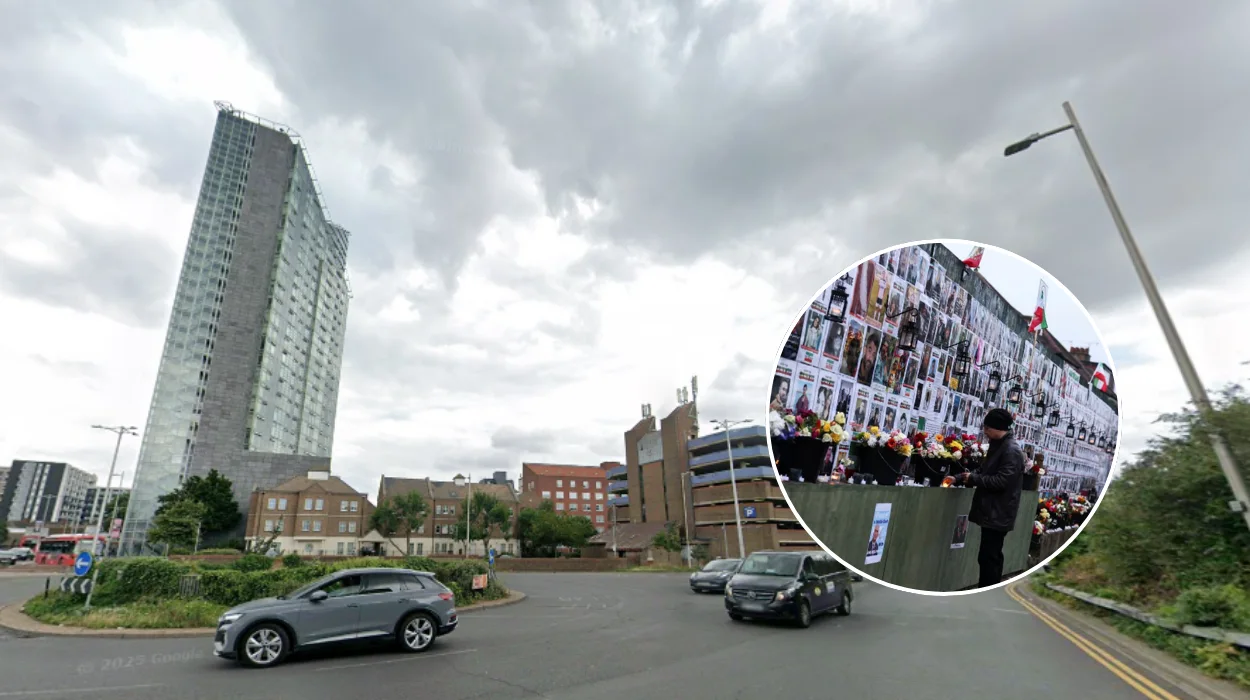
- Location and Target: The incident occurred on Limes Avenue in Golders Green, a prominent hub for the capital’s Jewish community. The targeted wall bore photographs of anti-government protesters allegedly killed by the Iranian regime in January, alongside victims of the October 7, 2023, Hamas-led attacks in southern Israel.
- Timeline of Events: The arson took place at approximately 00:15 BST on Monday, 27 April. The Metropolitan Police received an official report regarding the incident later that evening at roughly 19:30 BST. Formal charges were made public on Wednesday, 17 June 2026.
- Counter-Terrorism Involvement: The case is being handled by Counter Terrorism Policing London, which is actively investigating a broader series of arson attacks and violent incidents targeting both the Jewish community and the Iranian diaspora across London.
- Legal Framework: Fallahi has been charged under sections 1(1), 1(3), and 4 of the Criminal Damage Act 1971. He is scheduled to make his initial legal appearance at Westminster Magistrates’ Court on Thursday, 18 June 2026.
- Co-Suspect Cleared: A 38-year-old woman, who was initially arrested in connection with the Golders Green arson investigation, has been officially released with no further action taken against her.
- Heightened Security Landscape: The incident occurred amid a highly volatile security environment in the UK, following a series of arson attacks on Jewish sites, the stabbing of two Jewish men in the same neighborhood, and the government’s subsequent decision to raise the national terrorism threat level from “substantial” to “severe”.
London (The Londoner News) June 17, 2026 – A 45-year-old dual British and Iranian national has been formally charged with arson following an attack on a highly sensitive community memorial wall in north London, police confirmed on Wednesday. The suspect, identified as Ali Reza Fallahi of Ilford, is accused of setting fire to the memorial structure located on Limes Avenue in Golders Green—a neighborhood known for hosting a large, established Jewish community. The incident, which took place in late April, has been under intense investigation by specialized anti-terror officers due to its geopolitical and communal sensitivities, as the wall displayed images of dissidents allegedly killed by the Iranian state as well as casualties of the October 7 attacks in Israel. Fallahi remains in custody and is scheduled to stand before London’s Westminster Magistrates’ Court on Thursday, 18 June 2026.
Who is the suspect charged in the Golders Green arson case?
The Metropolitan Police Newsdesk released official details identifying the accused as Ali Reza Fallahi, born on 15 July 1980. The 45-year-old resident of Ilford, East London, holds dual British and Iranian citizenship. According to official charging documents published by the Metropolitan Police, Fallahi has been charged under sections 1(1), 1(3), and 4 of the Criminal Damage Act 1971. These specific sections govern offenses involving destroying or damaging property by fire without a lawful excuse, while intending to destroy or damage such property or being reckless as to whether such property would be destroyed or damaged.
As reported by the Met Police Newsdesk, the formal charge follows an extensive investigation led by Counter Terrorism Policing London. Officers have confirmed that Fallahi is due to appear at Westminster Magistrates’ Court on the morning of Thursday, 18 June 2026, where the initial terms of his detention, plea entry, and future trial scheduling will be addressed.
Furthermore, details surrounding the wider arrest operation revealed that Fallahi was not the only individual detained during the course of the inquiry. As reported by the Reuters news agency and staff writers at The Jerusalem Post, a 38-year-old woman was also taken into custody in connection with the fire at the Limes Avenue site. However, in an official update from Scotland Yard, the Met Police Newsdesk stated that this 38-year-old woman has since been released with no further action taken against her, effectively clearing her of direct legal liability regarding the specific arson incident.
Explore more Crime News:
Putney Pusher Arrested Over 2017 Bridge Incident: London 2026
Essa Suleiman Golders Green Stabbing Trial Set: London 2026
What happened at the Limes Avenue memorial wall in April?
The incident underpinning the criminal charge occurred in the early hours of Monday, 27 April. According to the timeline compiled by counter-terrorism detectives and published by the Met Police Newsdesk, the arson attack took place at approximately 00:15 BST. However, emergency services and local police officers were not immediately notified of the damage when it occurred. The Metropolitan Police received the first official report regarding the fire at approximately 19:30 BST later that same evening, prompting an immediate forensic and tactical response.
As reported by a local journalist for the Barnet Post, the target of the attack was a localized memorial wall situated in Limes Avenue, within the NW11 postal district of Golders Green. The wall serves as a prominent focal point for community expression, political dissent, and collective mourning, bridging regional tensions from the Middle East directly into the heart of London’s diaspora communities.
As noted in a joint dispatch by Reuters and The Times of Israel staff, social media footage and photographic evidence of the wall captured prior to the incident demonstrated that it held immense symbolic value. The memorial bore the portraits of numerous Iranian citizens who were allegedly killed by their own state’s security apparatus during widespread anti-government demonstrations and street protests in January. In addition to honoring the victims of the Iranian regime’s internal crackdowns, the liveblog of The Times of Israel detailed that the wall also displayed images of individuals who were killed on October 7, 2023, during the Hamas-led military onslaught on civilian and military targets in southern Israel. This cross-communal nature made the wall an exceptionally sensitive site, representing the shared grief of both the local Jewish population and members of the secular or dissident Iranian diaspora living in exile.
How are counter-terrorism police responding to the attack?
Because the attack targeted a site laden with deep political, national, and religious symbolism, the investigation was immediately bypassed by local borough police and handed over to specialized counter-terrorism units. The Counter Terrorism Command has been assessing the incident not merely as an isolated act of criminal mischief, but as part of a potentially coordinated campaign of intimidation targeting specific ethnic and political minorities across the British capital.
In an official statement distributed to the press, Commander Helen Flanagan, the head of Counter Terrorism Policing London, framed the legal breakthrough as part of a much larger, ongoing strategy. As reported by the Barnet Post, Commander Flanagan stated:
“This charge marks another step forward in one of the investigations into the series of arson attacks targeting the Jewish community and Iranian diaspora in London.”
The statement underscores that Scotland Yard is treating the Golders Green wall fire as interconnected with a broader pattern of hostility that has plagued the city over recent months. Commander Flanagan further emphasized the uncompromising stance of her department, stating:
“We are determined to bring everyone involved in these incidents to justice. As always, I ask the public to remain vigilant and to contact police if you are concerned and feel something isn’t right.”
To facilitate further intelligence gathering, the Metropolitan Police have publicised dedicated hotlines, urging anyone with supplementary information regarding Fallahi or associated activities to contact the anti-terrorist hotline or utilize secure government reporting portals, while reminding the public that life-threatening emergencies must always go through the standard 999 emergency system.
Is there a link between the arson and the Iranian regime?
The geographic location of the attack, combined with the specific nature of the photographs displayed on the Limes Avenue wall, has fueled deep anxieties regarding state-sponsored harassment and foreign interference on British soil. Golders Green has long been recognized as a primary cultural and religious hub for the UK’s Jewish community, while London simultaneously hosts a large, highly vocal population of Iranian political exiles, activists, and dissidents who openly oppose the Islamic Republic of Iran.
As reported by The Jerusalem Post, London authorities have been actively investigating whether the spate of attacks on Jewish and dissident targets features direct or indirect operational links to the Iranian state, specifically the Islamic Revolutionary Guard Corps (IRGC). This specific incident is viewed within the context of a “spate of attacks” that have struck Jewish communal infrastructure in the area.
Journalists covering the regional implications for The Times of Israel highlighted that the incident was one of a number of arsons carried out on Jewish sites in Golders Green during a broader wave of lawlessness. In those cases, police explicitly confirmed they were probing potential nexus points with the Iranian regime, which has historically been accused of mapping and targeting Jewish diaspora figures and institutions across Europe as a mechanism of asymmetric warfare and political retaliation.
The geopolitical dimensions of the case are further magnified by current international developments. As tracked by The Times of Israel’s global monitoring teams, these domestic counter-terrorism actions are unfolding against a background of extreme geopolitical volatility, including ongoing conflicts involving Israel, regional hostilities in Lebanon, and highly sensitive diplomatic discussions involving a potential US-Iran deal aimed at halting regional hostilities and reopening strategic waterways like the Strait of Hormuz. The domestic fallout from these Middle Eastern tensions has increasingly manifested as street-level violence and property destruction in major European cities like London.
How has this incident impacted community safety in London?
The arson attack on the Limes Avenue memorial wall is not an isolated event; rather, it represents a visible escalation in a series of security challenges that have forced the British government to take drastic measures to safeguard its citizens. The targeting of a neighborhood like Golders Green has amplified fears among local residents regarding antisemitism and politically motivated violence.
According to a comprehensive situational analysis published within The Times of Israel live updates, the security environment in the Golders Green neighborhood had deteriorated significantly around the time of the arson series. Beyond the destruction of property and the defacing of memorials, physical violence has crossed into direct assaults on individuals. The publication noted that two Jewish men were recently stabbed in a violent assault within the exact same neighborhood.
This rapid accumulation of violent incidents—ranging from coordinated arson attempts on community infrastructure to blade attacks against residents—became severe enough to alter national security protocols. As reported by The Times of Israel, the escalation in local violence and the threat of transnational or ideologically motivated spillover directly prompted the British government to officially elevate the national terrorism threat level. The threat level was raised from “substantial”—which means an attack is a strong possibility—to “severe,” signaling to the public and law enforcement agencies that a terrorist attack on UK soil is highly likely.
As a consequence of the heightened threat matrix, community security organizations, such as the Community Security Trust (CST) which protects Jewish institutions, alongside enhanced Metropolitan Police patrols, have maintained a heavily visible presence throughout north London. The objective remains to reassure a shaken public while counter-terrorism detectives continue to work through the network of individuals suspected of executing these high-stakes attacks. With Fallahi’s impending appearance at Westminster Magistrates’ Court, legal observers and community leaders alike will be watching closely to see what further details emerge regarding the underlying motivations, potential state backing, or broader network connections driving these attacks in the heart of London.