Key Points
- High-Stakes By-Election: Voters in the Makerfield constituency of northwest England are casting ballots in a crucial special election that could decide the political future of Prime Minister Keir Starmer.
- The Leading Contender: Greater Manchester Mayor Andy Burnham is contesting the seat for the governing Labour Party and remains the bookmakers’ favorite to eventually become the next prime minister.
- Threat to Starmer’s Leadership: A victory for Burnham against his primary opponent from the anti-immigration party Reform UK is widely expected to trigger a formal leadership challenge against Starmer.
- Plunging Popularity: Prime Minister Keir Starmer’s public standing has deteriorated significantly since Labour’s landslide victory in July 2024, driven by stagnant economic growth, failing public services, and controversial political appointments.
- Cabinet and Party Rebellion: Internal Labour dissent has peaked following dismal local election results in May, culminating in the high-profile resignation of Health Secretary Wes Streeting and the strategic resignation of Makerfield MP Josh Simons to trigger this ballot.
- The Mechanism for Change: Under official Labour Party rules, a leadership challenge can be officially launched if a challenger secures backing from one-fifth (81) of the party’s sitting House of Commons lawmakers.
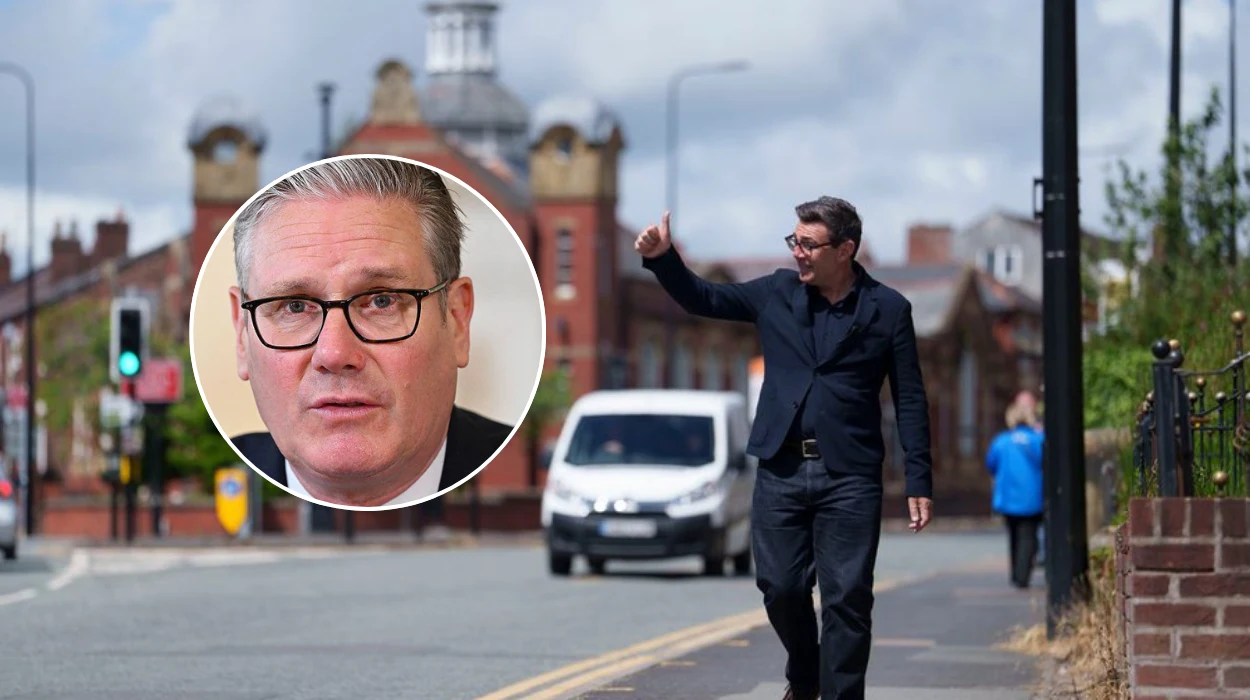
MAKERFIELD (The Londoner News) June 18, 2026 — British Prime Minister Keir Starmer faces a defining moment for his premiership as voters in the northwest England constituency of Makerfield head to the polls today in a pivotal special election. While Starmer’s name does not appear on the ballot paper, the outcome of this by-election carries existential consequences for his political career. The leading contender in the race is Andy Burnham, the highly popular current Mayor of Greater Manchester and a representative of the governing Labour Party. Bookmakers have already positioned Burnham as the leading favorite to succeed Starmer as the next prime minister, turning a local parliamentary vacancy into a high-stakes arena for national leadership.
- Key Points
- What Is at Stake in the Makerfield By-Election?
- Why Has Keir Starmer’s Popularity Cratered?
- How Did Andy Burnham Position Himself for a Return to Westminster?
- What Triggered This Sudden Special Election?
- Who Are the Main Contenders in the Race?
- How Does the UK Parliamentary System Allow for a Midterm Change of Prime Minister?
- Which Cabinet Ministers Have Mutinied Against Starmer?
- When and Where Will the Final Election Results Be Announced?
Should Burnham successfully secure the seat for Labour by defeating his principal rival from the anti-immigration populist party Reform UK, he is widely anticipated to spearhead a direct challenge against the heavily embattled Prime Minister. The stakes have drawn extraordinary international scrutiny, transforming a routine constituency vote into a referendum on the country’s direction. Scores of foreign correspondents and global media outlets have descended upon the district, tracking a campaign that could fundamentally reshape the British government overnight. As the final ballots are cast, the political future of both the Prime Minister and his most formidable internal rival hangs entirely in the balance.
What Is at Stake in the Makerfield By-Election?
The electoral contest in Makerfield involves roughly 75,000 eligible voters across a series of post-industrial towns and villages situated on the periphery of Greater Manchester, roughly 200 miles northwest of London. Nominally, the election is meant to fill a vacant seat in the House of Commons, ensuring representation for the local populace. However, the true significance of the vote lies in its potential to upend the internal dynamics of the governing Labour Party.
As reported by journalists covering the international desk at The Associated Press, the residents of this northern constituency effectively hold the political fate of Prime Minister Keir Starmer in their hands. The by-election has ceased to be about localized constituency issues, evolving instead into a mechanism for frustrated Labour factions to orchestrate a change in national leadership without waiting for a general election.
Why Has Keir Starmer’s Popularity Cratered?
The political crisis enveloping Downing Street arrives less than two years after Keir Starmer led the center-left Labour Party to a historic landslide victory in July 2024. Despite that massive mandate, the administration has steadily lost its grip on public confidence. The government has faced immense criticism for its inability to deliver on signature campaign promises, specifically failing to generate meaningful economic growth, revive the nation’s tattered public services, and offer relief to millions of citizens struggling under a prolonged cost-of-living crisis.
Compounding these systemic economic issues is a sequence of severe political self-inflicted wounds. Chief among these controversies was Starmer’s decision to appoint Lord Peter Mandelson as the United Kingdom’s ambassador to the United States. Mandelson’s historic ties to the deceased, disgraced financier Jeffrey Epstein drew immense public fury and damaged the government’s moral standing. This appointment, viewed by critics as a severe lapse in judgment, alienated both backbench lawmakers and the wider electorate, accelerating a rapid decline in the Prime Minister’s personal polling numbers.
How Did Andy Burnham Position Himself for a Return to Westminster?
Andy Burnham, who previously served as a Cabinet minister before transitioning to his highly visible role as the metro mayor of Greater Manchester, has long been viewed as a alternative leader by the traditional wing of the Labour Party. Throughout this brief but intense campaign, Burnham has positioned himself not merely as a candidate for Makerfield, but as a reformer capable of fixing a broken political status quo.
As reported by political correspondents at The Associated Press, Burnham explicitly targeted national anxieties in his campaign messaging, pledging to voters, “if people put their trust in me, I will change politics.” On the morning of the election, Burnham doubled down on this message. In an election-day video broadcast across his digital channels, Burnham asserted that he intended to take the fight for systemic political change “as high as I can possibly take it,” a statement widely interpreted by Westminster analysts as a direct declaration of his leadership ambitions.
What Triggered This Sudden Special Election?
The path for Burnham’s potential return to the House of Commons was deliberately cleared through a calculated internal party maneuver, following a catastrophic showing for the Labour Party during the local government elections in May. The devastating municipal losses triggered widespread panic among backbenchers, sparking open demands for Starmer’s immediate resignation. While Starmer firmly refused to step down, senior figures within his own movement began actively coordinating his removal.
The internal rebellion materialized rapidly when Josh Simons, the sitting Labour Member of Parliament for Makerfield, made the decision to step down from his seat entirely. As verified by reports from The Associated Press, Simons resigned with the explicit intent of triggering a special election, thereby manufacturing a vacancy that would allow Burnham to contest the seat, re-enter Parliament, and position himself to legally challenge Starmer for the premiership.
Who Are the Main Contenders in the Race?
While several political parties have fielded candidates in Makerfield, the by-election has narrowed into a fierce two-way battle between the political establishment and populist insurgency. Andy Burnham stands as the definitive frontrunner for the Labour Party, commanding strong local popularity due to his tenure as regional mayor. However, his path to victory requires defeating a surging challenge from Reform UK, the right-wing, anti-immigration party that has capitalized heavily on working-class disillusionment with Starmer’s administration.
The performance of Reform UK in this traditional northern heartland is a crucial metric for political analysts. A strong showing for the anti-immigration party would further signal the vulnerability of Labour’s traditional voter base, while a decisive victory for Burnham would demonstrate his unique cross-over appeal to voters who have grown alienated by Starmer’s centralized leadership style.
How Does the UK Parliamentary System Allow for a Midterm Change of Prime Minister?
Unlike presidential systems, the United Kingdom’s parliamentary structure permits governing parties to replace their leader midway through a parliamentary term without triggering a nationwide general election. Because the prime minister is chosen based on their ability to command the confidence of the majority party in the House of Commons, an internal party coup can result in an immediate shift in the premiership.
Under the current rules of the Labour Party, a sitting leader can face a formal vote of no confidence and a subsequent leadership challenge if a challenger can secure written endorsements from at least one-fifth of the party’s current Members of Parliament. With Labour’s current parliamentary strength, that threshold sits exactly at 81 lawmakers—a number that internal rebels believe is entirely achievable if Burnham wins the Makerfield seat.
Explore more Politics News:
E3 Leaders and Zelenskiy Form Peace and Defence Front: London 2026
How Sadiq Khan Won the Green Climate War: London 2026
Which Cabinet Ministers Have Mutinied Against Starmer?
The rebellion against Starmer is no longer confined to anonymous backbenchers; it has penetrated the upper echelons of the party structure. The most damaging blow to Starmer’s authority occurred in May when Wes Streeting, one of the party’s most prominent figures, resigned from his post as Health Secretary. Commenting on the administrative paralysis infecting Downing Street, Streeting delivered a blistering critique of the Prime Minister, stating openly that
“where we need vision, we have a vacuum.”
The civil war within the Cabinet has continued to play out publicly as voting gets underway. As reported by political writers for The Associated Press, Streeting expanded on his criticisms during a public address on Tuesday, expressing his explicit hope that Starmer would recognize the reality of the situation and voluntarily step down from office. Streeting further escalated the pressure by warning that if the Prime Minister refuses to resign, “there will need to be a contest, and I would be prepared to do that.”
When and Where Will the Final Election Results Be Announced?
The electoral process will conclude late tonight as voting stations across the Makerfield constituency officially close their doors at 10 p.m. local time (2100 GMT). Local electoral officials will immediately transfer the ballot boxes to a centralized counting center to begin the verification process.
According to institutional timelines confirmed by local reporting authorities, the official declaration of results is expected in the early hours of Friday morning. Political analysts, party strategists, and international media networks are preparing for an overnight vigil, recognizing that the declaration delivered in northwest England will immediately dictate the survival or collapse of the British government in London.