Key Points
- Operator Transition Complete: The phased changeover of e-bike operators in the London Borough of Richmond upon Thames from Lime to Forest is officially complete.
- Lime Ban Enacted: Lime e-bikes can no longer be hired or parked within the boundaries of the South West London borough, though users are still permitted to ride through the area.
- Lime’s Response: Lime has publicly criticized the move, calling for councils to allow multiple e-bike operators to operate concurrently to ensure a seamless, competitive transport network across London.
- Corporate Position: Alice Pleasant, Lime UK’s Senior Public Affairs Manager, warned that removing operator choice risks discouraging residents from cycling and disrupts cross-borough journeys.
- New Monopoly: Forest now operates as the exclusive dockless e-bike provider for Richmond Council under a newly finalised service agreement.
Richmond (The Londoner News) July 3, 2026 – The London Borough of Richmond upon Thames has officially completed its phased transition of micro-mobility services, completely removing Lime as an authorised e-bike provider and establishing Forest as the exclusive operator within its borders. Under the newly finalised rules, Lime e-bikes are strictly banned from being hired or parked anywhere inside the South West London borough. While cyclists are still legally permitted to ride Lime bikes through Richmond when travelling between adjacent boroughs, any attempt to terminate a journey within the district will now result in standard operator fines or digital lockouts.
The enforcement of the exclusive contract with Forest has triggered a sharp response from Lime micro-mobility executives, who argue that establishing single-operator monopolies actively harms London’s broader sustainability goals. Lime has publicly urged local authorities across Greater London to permit multiple competitive operators within each borough, asserting that a multi-vendor ecosystem is essential for creating a truly seamless, reliable public transport network.
Why Was Lime Kicked Out of Richmond?
The finalisation of the contract changeover concludes a multi-month phased transition orchestrated by Richmond Council officials to streamline dockless bike management. Local authorities in various London boroughs have faced mounting public pressure over pavement clutter, poorly parked dockless bikes blocking pedestrian walkways, and accessibility hazards for visually impaired residents.
By consolidating operations under a single exclusive provider, Richmond Council intends to enforce stricter parking regulations, designated parking bays, and more direct accountability. Forest secured the exclusive partnership by committing to stringent compliance frameworks, structured parking zones, and competitive pricing models tailored to the borough’s specific infrastructure requirements.
How Has Lime Responded to the Richmond Ban?
In a public statement addressing the final transition, Lime executives expressed deep concern over the long-term impact on local commuters. As reported by micro-mobility reporters covering the transition, Alice Pleasant, Lime UK’s Senior Public Affairs Manager, stated that “Richmond Council’s decision removes vital choice from residents and actively risks discouraging people from cycling at a time when sustainable transport should be prioritised.”
Pleasant further argued that fracturing London’s transport network into isolated, single-operator zones creates unnecessary friction for users who regularly cross borough boundaries. Lime’s leadership maintains that a uniform, multi-operator framework across all of Greater London would better serve the public by ensuring vehicle availability and keeping consumer prices competitive through open market dynamics.
What Does the Forest Takeover Mean for Richmond Cyclists?
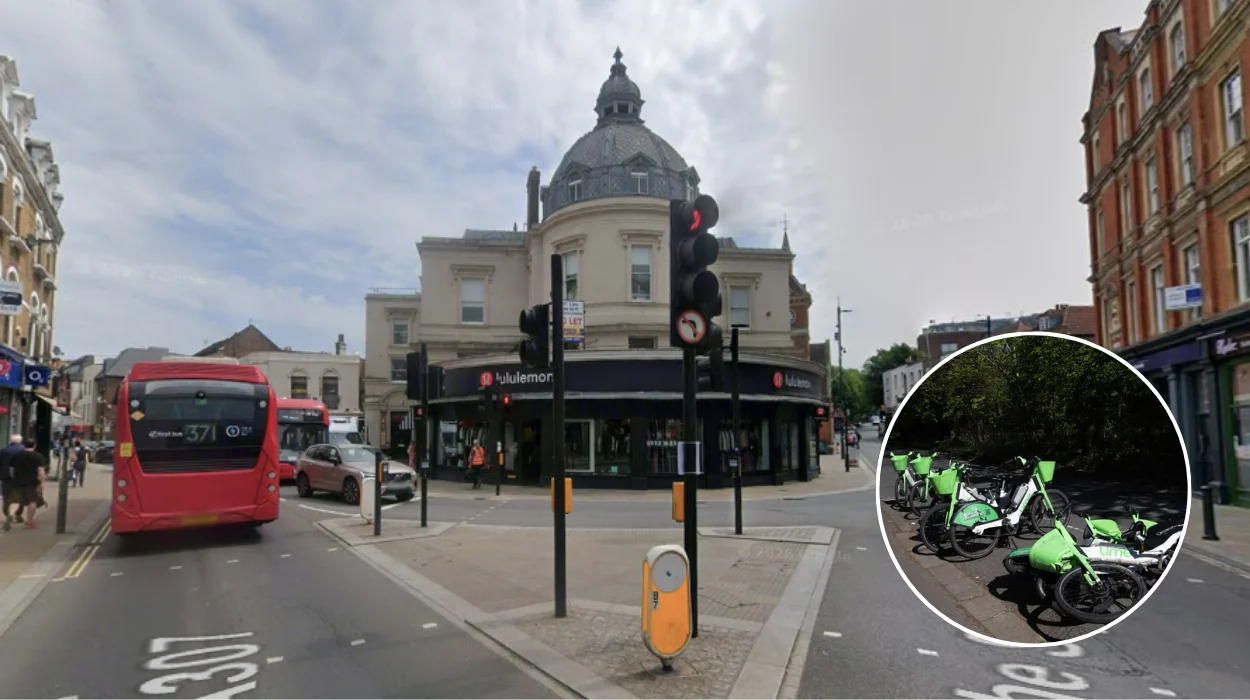
For residents and commuters within Richmond, the completion of the changeover means that the familiar green and white Lime bikes must be entirely replaced by Forest’s fleet for local journeys. Forest e-bikes are now fully deployed across the borough’s designated parking zones.
While the change restricts brand variety, Forest’s corporate model includes incentives such as daily free riding minutes, which local authorities hope will sustain or increase overall cycling adoption rates in the area. However, transport analysts note that users who hold cross-borough commuter passes with Lime will face disruptions, as they can no longer end their commutes inside Richmond without switching vehicles mid-journey or incurring penalties.
Explore more South London News:
New Car Clubs Return After Zipcar Exit: Southwark 2026
South London Air-Powered Train History: Crystal Palace 1864
How Will Cross-Borough E-Bike Travel Be Affected?
Because London is divided into 32 distinct boroughs alongside the City of London, micro-mobility regulations remain highly fragmented. Lime bikes can still legally enter Richmond’s geographic boundaries because transport laws protect the right of transit through public highways. However, Lime’s geo-fencing technology has been updated to reflect the borough’s strict parking ban.
If a rider travels from a neighbouring Lime-friendly borough, such as Wandsworth or Kingston upon Thames, and attempts to park inside Richmond, the vehicle’s digital system will prevent the ride from ending. The user will continue to be billed until the bike is moved back outside the borough lines, a mechanism designed to prevent abandoned green e-bikes from cluttering Richmond’s pavements.
Will Other London Boroughs Adopt Single-Operator Models?
The debate over whether to host single or multiple e-bike operators remains a central conflict within London’s transport strategy. As highlighted by regional transport correspondents, the tension highlights a lack of a unified, city-wide regulatory framework for dockless bikes, leaving Transport for London (TfL) and individual councils to negotiate separate terms.
While boroughs like Richmond and parts of North London have experimented with exclusive vendor contracts to maintain tighter logistical control over parking, larger central boroughs continue to permit multiple operators to ensure high vehicle density and continuous coverage for millions of tourists and daily commuters. Lime’s latest media push signals an industry-wide effort to lobby against the expansion of exclusive borough contracts, which the company claims fundamentally weakens the reliability of London’s shared transport grid.