London’s historic pub culture developed from Roman taverns, medieval alehouses, coaching inns, and licensed public houses that served travellers, workers, merchants, and local communities. Across nearly 2,000 years, pubs became essential centres for commerce, governance, social interaction, political discussion, and neighbourhood identity.
- How did medieval alehouses shape everyday life in London?
- How did coaching inns transform London’s hospitality industry?
- Why did London’s pubs become centres of politics, business, and public debate?
- How did licensing laws influence London’s pub culture?
- How did London’s pubs reflect different social classes?
- What architectural features define London’s historic pubs?
- Why do historic London pubs remain culturally important today?
- How are London’s historic pubs preserved for future generations?
- What explains the enduring social importance of London’s pub culture?
- Frequently Asked Question
London’s public house, commonly known as the pub, is one of Britain’s oldest continuously operating social institutions. The term “public house” refers to a licensed establishment authorised to sell alcoholic beverages for consumption on the premises. Unlike private drinking clubs, pubs welcomed members of the public under regulated licensing laws.
The origins of London’s pub culture date to Roman Londinium, founded around AD 47. Archaeological excavations across the City of London have uncovered remains of Roman taverns located near commercial streets and military routes. These establishments provided wine, imported beer, food, accommodation, and meeting spaces for merchants, soldiers, and travellers moving throughout Roman Britain.
Following the Norman Conquest in 1066, London’s expanding population increased demand for places where residents could eat, drink, exchange information, and conduct business. Alehouses multiplied throughout medieval neighbourhoods because ale formed a daily dietary staple. Brewing occurred both domestically and commercially, with women known as alewives playing a significant role in local production.
During the Middle Ages, ale contained lower alcohol levels than many contaminated water supplies. Drinking fermented beverages therefore became a practical necessity in densely populated urban settlements.
As London’s population expanded beyond its medieval walls, public drinking establishments diversified into several categories. Alehouses focused on locally brewed drinks. Taverns specialised in imported wines. Inns provided accommodation for long-distance travellers, merchants, and pilgrims. Each establishment served different economic and social purposes while contributing to London’s evolving hospitality industry.
The city’s strategic location as England’s commercial and political centre accelerated the growth of licensed premises throughout every district.
How did medieval alehouses shape everyday life in London?
Medieval alehouses formed neighbourhood gathering places where residents purchased affordable drinks, exchanged news, organised work, resolved disputes, and built community relationships. These establishments connected households across every social class and supported London’s expanding urban economy through regulated local trade and hospitality.
Medieval London contained hundreds of alehouses operating under varying levels of local regulation. Most were modest buildings attached to family homes rather than purpose-built commercial premises.
Brewing represented an important household industry throughout medieval England. Local authorities monitored quality, pricing, and measurement standards through officials known as ale tasters. Their responsibility included inspecting brewing practices and ensuring consumers received fair quantities.
Alehouses also supported London’s labour market. Skilled artisans, apprentices, dock workers, market traders, and construction workers frequently gathered before or after work. Employment opportunities often spread through personal recommendations made inside local establishments.
Communication remained entirely dependent upon face-to-face interaction before newspapers emerged during the seventeenth century. Consequently, pubs functioned as neighbourhood information networks. Residents discussed royal proclamations, market prices, religious developments, taxation changes, and local disputes.
Religious institutions influenced London’s drinking culture as well. Monasteries brewed high-quality ale for both internal consumption and commercial sale. Pilgrims travelling to religious sites relied on inns and taverns for accommodation throughout their journeys.
Guilds representing London’s trades frequently held meetings within licensed premises because they offered accessible communal spaces suitable for discussion and hospitality.
The medieval alehouse therefore became far more than a drinking venue. It evolved into a cornerstone of neighbourhood organisation, economic cooperation, and urban social life.
How did coaching inns transform London’s hospitality industry?
Coaching inns expanded London’s hospitality industry by providing accommodation, food, stabling, transport coordination, and commercial meeting places. Between the sixteenth and eighteenth centuries, these establishments connected London with regional Britain while supporting trade, communication, and growing national mobility.
The rise of long-distance travel fundamentally changed London’s hospitality landscape. Coaching inns developed along major roads entering the capital, offering comprehensive services to travellers arriving from every region of England.
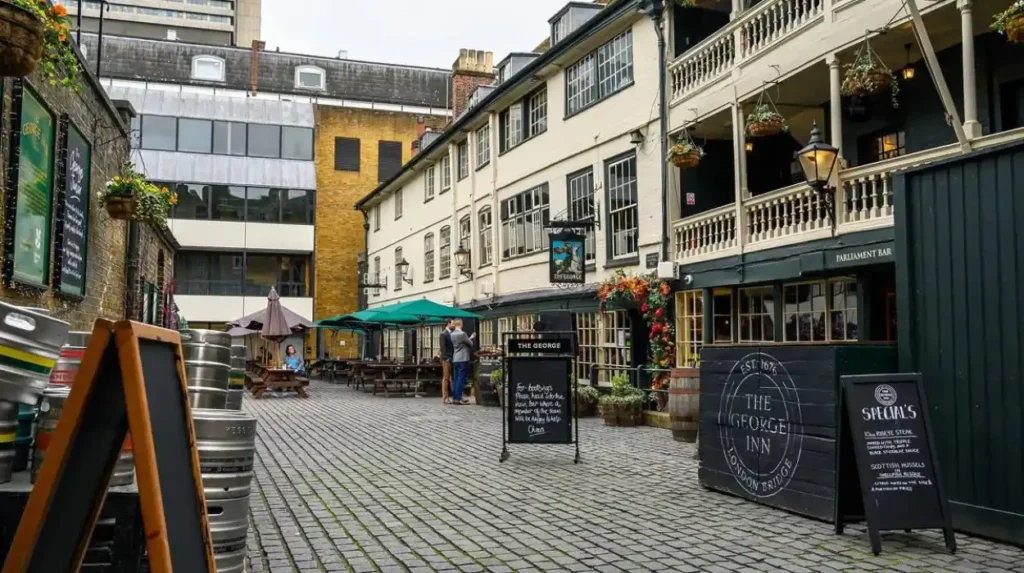
Unlike smaller alehouses, coaching inns required extensive infrastructure. They included guest rooms, kitchens, courtyards, stables, carriage storage, workshops, and accommodation for staff.
Large coaching yards accommodated dozens of horses simultaneously. Mail coaches operated according to fixed schedules, making London the centre of Britain’s expanding transportation network before railway construction.
Merchants used coaching inns as temporary offices where business negotiations occurred between trading partners arriving from different counties.
Many famous London inns became recognised landmarks associated with particular routes. Travellers departing toward northern England, the West Country, Kent, or East Anglia gathered at designated inns before beginning their journeys.
The hospitality industry surrounding these establishments generated significant employment. Innkeepers hired cooks, ostlers responsible for horses, stable hands, cleaners, servants, coach drivers, blacksmiths, and administrative staff.
Coaching inns also facilitated cultural exchange. Visitors brought regional news, commercial intelligence, and political developments into London while carrying information back across Britain.
The arrival of railways during the nineteenth century reduced reliance on horse-drawn transport. Many coaching inns adapted into conventional pubs or hotels, while others disappeared during urban redevelopment. Surviving examples preserve important architectural evidence of London’s transportation history.
Why did London’s pubs become centres of politics, business, and public debate?
London’s pubs became centres of politics, commerce, journalism, and public debate because they offered accessible meeting places where merchants, professionals, writers, and ordinary citizens exchanged information. Their openness encouraged discussion long before formal civic institutions expanded across the capital.
During the seventeenth and eighteenth centuries, London experienced extraordinary commercial growth. International trade, financial innovation, publishing, and scientific research expanded rapidly.
Public houses naturally reflected these developments.
Before permanent offices became common, merchants frequently conducted negotiations inside taverns. Contracts, shipping agreements, insurance arrangements, and investment partnerships emerged through conversations held around shared tables.
Coffee houses eventually specialised in intellectual discussion, yet pubs remained equally important gathering places for skilled workers, politicians, lawyers, printers, and local officials.
Election campaigns relied heavily upon licensed premises. Candidates met voters inside neighbourhood pubs, where speeches, debates, and political discussions attracted large audiences.
Trade associations also used pubs for regular meetings. Friendly societies providing mutual financial assistance to members frequently organised within public houses before modern insurance and welfare systems developed.
Journalists gathered information from conversations taking place inside London’s busiest establishments. Before telecommunication, pubs represented valuable sources of local intelligence and commercial news.
The combination of accessibility, familiarity, and licensed hospitality enabled pubs to become enduring civic spaces where London’s democratic culture gradually evolved.
How did licensing laws influence London’s pub culture?
Licensing laws shaped London’s pub culture by regulating alcohol sales, public behaviour, opening hours, ownership, and safety standards. Government oversight balanced commercial opportunity with public order while creating the legal framework that continues governing licensed premises throughout modern Britain.
English governments recognised the economic importance and potential social challenges associated with alcohol consumption for centuries.
One significant milestone occurred with the Alehouse Act of 1552, which required local magistrates to license alehouse keepers. This introduced greater official oversight into the hospitality sector.
Subsequent legislation expanded regulation concerning operating standards, taxation, and public conduct.
The Gin Acts introduced during the eighteenth century attempted to address widespread social problems associated with inexpensive distilled spirits. These laws reflected concerns regarding public health, crime, and economic productivity.
Victorian Britain introduced additional licensing reforms as urban populations expanded rapidly during industrialisation.
Police authorities increasingly monitored public houses to reduce disorder while encouraging responsible management.
Opening hours became regulated nationally during the First World War in response to wartime production requirements. These restrictions influenced British drinking culture throughout much of the twentieth century.
Modern licensing legislation emphasises four principal objectives:
- Crime prevention
- Public safety
- Prevention of public nuisance
- Protection of children from harm
These legal principles continue governing London’s licensed premises today while allowing historic pubs to operate within contemporary regulatory frameworks.
How did London’s pubs reflect different social classes?
London’s pubs welcomed diverse social groups while simultaneously reflecting occupational, economic, and neighbourhood identities. Different establishments attracted merchants, labourers, professionals, dock workers, artisans, and political organisations, illustrating London’s complex urban society across successive historical periods.
Public houses served remarkably broad sections of London’s population.
Working-class districts developed pubs catering primarily to factory employees, dock workers, builders, and craftsmen. These establishments prioritised affordability, familiarity, and local community relationships.
Commercial districts attracted merchants and professionals conducting business throughout the working day.
Near legal institutions, barristers and solicitors frequently met clients within nearby taverns. Around markets, traders concluded transactions inside neighbouring pubs after completing business.
The Victorian period introduced architectural innovations reflecting changing customer expectations.
Many public houses featured separate drinking rooms designed for different clientele. Public bars provided inexpensive service, while saloon bars offered greater comfort and higher prices. This internal division reflected broader social distinctions within nineteenth-century Britain.
Women also participated in pub culture despite changing social expectations across different historical periods. Female publicans managed numerous licensed premises, while family-operated pubs remained common throughout London.
Music, games, charitable fundraising, celebrations, and commemorations strengthened neighbourhood relationships regardless of occupational background.
Pubs therefore mirrored London’s diversity while simultaneously providing shared spaces where communities interacted across generations.
What architectural features define London’s historic pubs?
London’s historic pubs preserve architectural traditions through timber framing, Victorian ornamentation, decorative interiors, etched glass, ceramic facades, carved woodwork, historic signage, and surviving coaching yards. Their buildings document centuries of changing construction techniques, commercial design, and urban development across the capital.
London’s historic pubs represent valuable architectural heritage alongside their cultural importance.
The oldest surviving examples retain timber-framed construction originating before the Great Fire of London in 1666. Most historic pubs, however, date from extensive rebuilding during the Georgian and Victorian periods.
Victorian breweries invested heavily in elaborate public houses that demonstrated commercial success and civic pride.
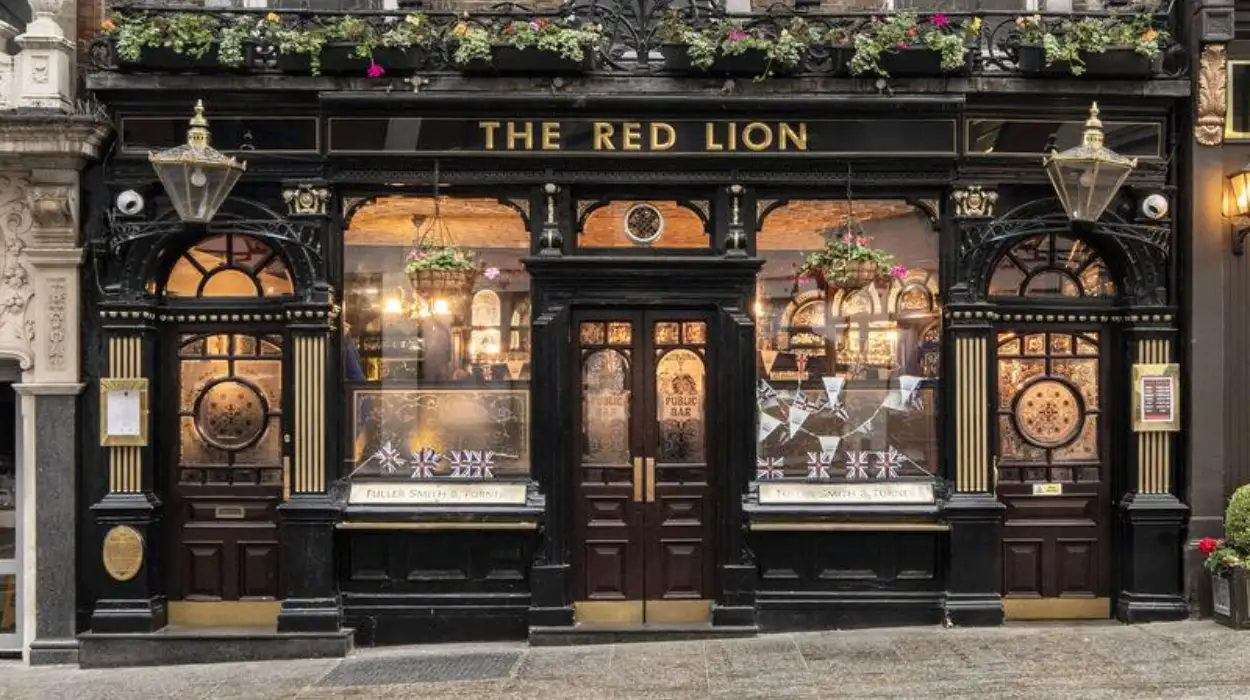
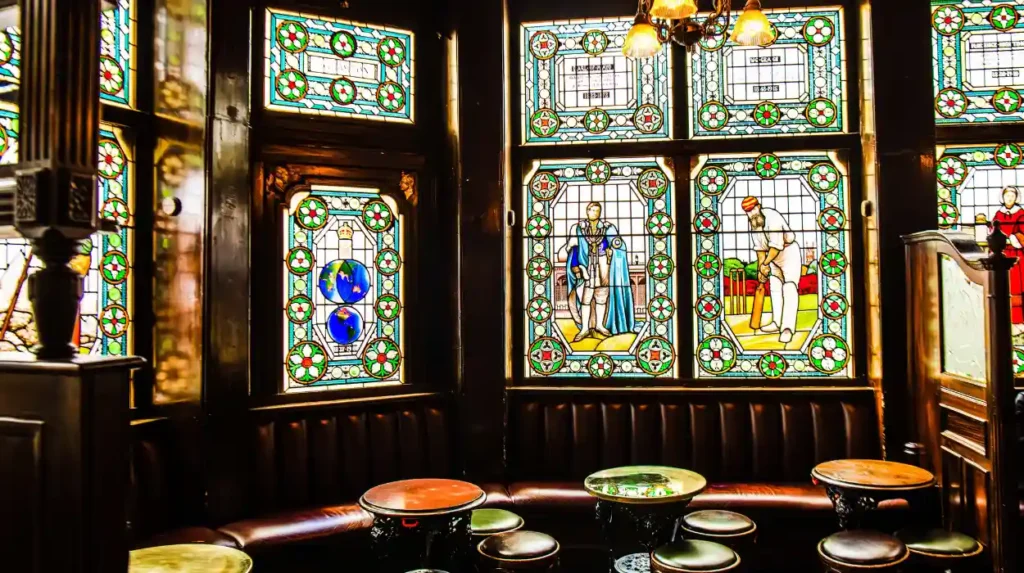
Common architectural characteristics include polished wooden bars, decorative mirrors, stained or etched glass partitions, ornamental ceilings, ceramic exterior tiles, brass fixtures, mosaic flooring, and carved timber detailing.
Corner pubs became especially prominent during nineteenth-century urban expansion because they maximised visibility along busy streets.
Breweries often incorporated distinctive branding into exterior façades through decorative stonework and sculptural signage.
Historic interiors remain particularly significant because many original fittings disappeared during twentieth-century renovations.
Conservation authorities increasingly recognise pubs as important heritage assets. Numerous establishments hold listed building status, protecting historically significant architectural features from inappropriate alteration.
Preserving authentic interiors supports historical research into hospitality design, commercial architecture, craftsmanship, and urban social history.
Why do historic London pubs remain culturally important today?
Historic London pubs remain culturally important because they preserve community identity, architectural heritage, traditional hospitality, and living historical continuity. They continue functioning as neighbourhood meeting places while connecting modern London with centuries of social, commercial, and civic development.
Despite dramatic technological and demographic changes, London’s historic pubs continue serving essential community functions.
Residents celebrate milestones, organise charitable activities, participate in local organisations, and maintain longstanding neighbourhood relationships inside familiar public houses.
Visitors seeking authentic cultural experiences frequently include historic pubs within heritage itineraries because these establishments preserve tangible connections to London’s past.
To experience this historic tradition in person today, consult our comprehensive [London’s Best Food Markets Every Tourist Should Visit for Authentic Local Culinary Experiences] for itineraries and visiting parameters.
Historic pubs also support cultural tourism by attracting domestic and international visitors interested in architecture, literature, food, brewing traditions, and urban history.
Many establishments display historical documents, photographs, brewery memorabilia, and commemorative plaques explaining their development across different centuries.
Universities, historical societies, and genealogical researchers continue studying pub records because licensing documents, census returns, trade directories, and parish records reveal valuable information regarding local populations and family histories.
Historic public houses therefore function simultaneously as businesses, heritage sites, educational resources, and living community institutions.
How are London’s historic pubs preserved for future generations?
London preserves historic pubs through heritage protection, conservation planning, community ownership initiatives, historical research, and adaptive commercial management. These combined approaches safeguard architecturally significant buildings while allowing traditional public houses to remain economically sustainable within modern urban life.
Conservation efforts involve multiple organisations working across different levels of government and civil society.
Historic building designation protects architecturally significant structures from demolition or inappropriate alteration. Conservation areas preserve the broader historic character of surrounding neighbourhoods.
Local planning authorities increasingly recognise pubs as important community assets rather than ordinary commercial properties.
Community campaigns have successfully prevented the loss of numerous historic establishments threatened by redevelopment.
Academic researchers document historic interiors using architectural surveys, archival research, oral histories, and photographic recording programmes.
Museums preserve artefacts associated with brewing, hospitality, and London’s commercial history, helping future generations understand the evolution of pub culture.
Brewing traditions themselves also contribute to preservation. Independent breweries and historic brewing companies continue producing traditional styles associated with London’s long commercial heritage.
Economic sustainability remains essential.
Historic pubs require regular maintenance while adapting to modern accessibility standards, food safety regulations, environmental requirements, and changing consumer expectations.
Adaptive reuse has enabled numerous historic buildings to survive without sacrificing their architectural integrity.
These combined preservation strategies ensure London’s pub heritage continues contributing to education, tourism, community identity, and historical scholarship.
What explains the enduring social importance of London’s pub culture?
London’s pub culture endures because public houses consistently adapted to changing economic conditions, transportation systems, legal frameworks, and community needs while preserving their essential role as accessible spaces for social connection, local identity, and civic participation across nearly two millennia.
Few urban institutions demonstrate continuity comparable to London’s public houses.
Roman taverns supported imperial commerce.
Medieval alehouses strengthened neighbourhood cooperation.
Coaching inns connected regional Britain through expanding transport networks.
Georgian and Victorian pubs facilitated business growth during London’s emergence as a global commercial capital.
Twentieth-century public houses adapted to changing legislation, social expectations, and urban redevelopment.
Twenty-first-century historic pubs balance heritage conservation with contemporary hospitality.
This remarkable continuity explains their lasting cultural significance.
Historic pubs preserve physical evidence of London’s architectural evolution while maintaining traditions of conversation, hospitality, and community engagement that have characterised urban life for centuries.
Their records assist historians reconstructing neighbourhood development, migration patterns, commercial activity, occupational history, and family genealogy.
Their buildings enrich conservation areas throughout the capital.
Their businesses contribute to London’s visitor economy while sustaining local employment.
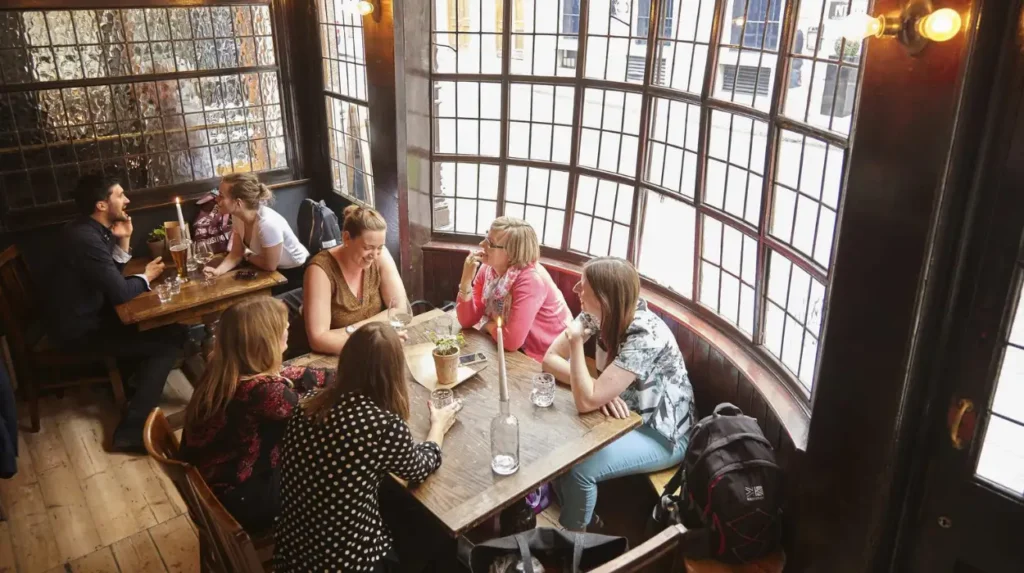
Most importantly, London’s historic pubs demonstrate how everyday social institutions shape the long-term identity of great cities. They connect generations through shared spaces where commerce, celebration, discussion, and community continue to unfold. As living heritage, they remain among the capital’s most enduring symbols of continuity, resilience, and collective civic life.
Frequently Asked Question
Why are London’s historic pubs considered important to the city’s heritage?
London’s historic pubs are important because they preserve nearly 2,000 years of social, architectural, and cultural history. Originating from Roman taverns and medieval alehouses, they served as centres for commerce, political discussion, community gatherings, and hospitality. Today, many historic pubs are protected heritage buildings that continue to connect modern London with its rich past while supporting cultural tourism and local identity.