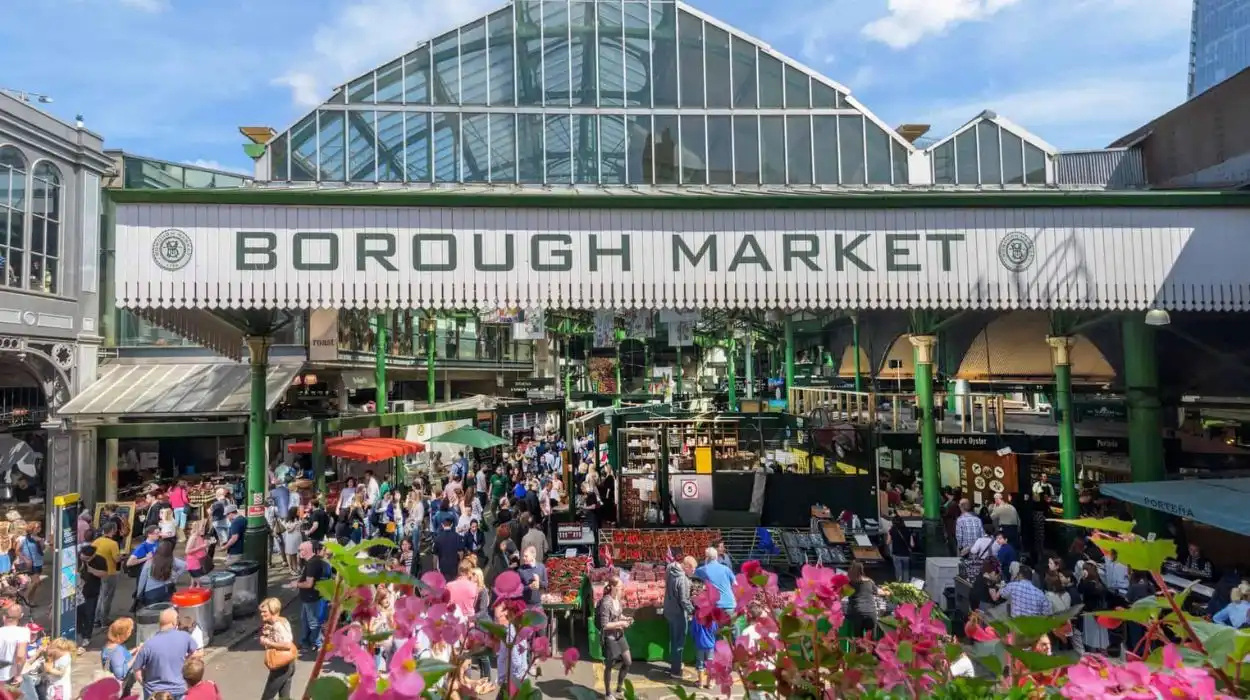
London’s traditional markets are permanent or regularly organised trading places where merchants exchange food, livestock, textiles, household goods, and crafts. Their continuous adaptation from medieval commerce to modern food culture reflects London’s economic growth, population expansion, and enduring community identity across nearly one thousand years.
- How did London’s first medieval markets develop?
- Which historic markets shaped London’s commercial history?
- How did London’s markets influence everyday life during the medieval and early modern periods?
- How did London’s traditional markets change during the Industrial Revolution?
- Why did immigration transform London’s market culture?
- How have London’s traditional markets adapted to modern food culture?
- What evidence helps historians understand London’s market history?
- Why do London’s traditional markets remain historically significant today?
- Frequently Asked Question
London’s traditional markets form one of the oldest surviving commercial systems in Europe. A market is a designated place where buyers and sellers meet under recognised legal authority. In London, markets have served economic, political, and social purposes since the early medieval period. They connected rural producers with urban consumers while generating taxes and supporting municipal government.
The city’s location on the River Thames made it a natural centre for trade. Ships transported grain, fish, wine, timber, spices, and manufactured goods into London from across England and continental Europe. Roads converged on the capital, allowing farmers from surrounding counties to supply growing urban populations.
Traditional markets also functioned as centres of communication. Merchants exchanged news, prices, employment opportunities, and legal information alongside goods. Guild members inspected product quality, while civic officials collected market tolls and enforced regulations designed to protect consumers.
Unlike temporary fairs, many London markets operated continuously or on fixed weekly schedules. Several medieval markets remain active today, although their products have evolved from livestock and grain to artisan foods, fresh produce, antiques, flowers, and international cuisine.
The survival of these markets reflects London’s ability to preserve historic commercial spaces while adapting them to changing consumer preferences. Modern visitors still experience trading traditions rooted in medieval urban planning.
How did London’s first medieval markets develop?
London’s earliest organised markets emerged after the Norman Conquest as royal charters formalised trading rights. Population growth, secure transport routes, and expanding international commerce transformed informal exchanges into regulated commercial centres supervised by civic authorities and merchant guilds.
Before the Norman Conquest in 1066, trading already occurred near London’s Roman settlement. However, medieval rulers increasingly recognised markets through official charters. These legal documents granted specific rights to hold markets, regulate trade, and collect fees.
William I reinforced London’s commercial privileges following the Norman Conquest. During the twelfth and thirteenth centuries, England’s growing economy encouraged urban expansion. London’s population increased rapidly, creating constant demand for food, clothing, building materials, and imported luxury goods.
Royal charters established regulated commerce
Royal charters defined when and where trading could occur. These documents reduced commercial disputes and provided legal protection for merchants. Market officials monitored weights, measures, and pricing standards to discourage fraud.
Markets became carefully organised according to product type. Fish sellers operated near rivers and docks. Grain merchants traded close to warehouses. Livestock markets occupied larger open spaces outside densely populated residential districts.
Medieval guilds strengthened market standards
Merchant guilds were professional associations representing specific trades. They supervised apprenticeships, inspected workmanship, resolved disputes, and maintained quality standards.
Guild regulations protected London’s commercial reputation. Foreign merchants also participated through international trading networks, bringing products from Flanders, France, Italy, Germany, and Scandinavia.
As London’s economy expanded during the thirteenth century, specialist markets emerged throughout the city, reflecting increasing commercial complexity.
Which historic markets shaped London’s commercial history?
Several historic markets became foundations of London’s economy through specialised trading. Borough Market, Smithfield Market, Leadenhall Market, Billingsgate Market, Covent Garden Market, and Spitalfields Market each developed distinctive commercial roles that influenced urban growth for centuries.
Each historic market specialised in different commodities, creating an efficient trading network throughout the capital.
Borough Market became London’s leading food market
Located south of London Bridge, Borough Market traces its origins to at least the thirteenth century, although trading existed nearby even earlier.
Its strategic location connected agricultural producers with London’s rapidly growing population. Farmers transported vegetables, fruit, meat, dairy products, and grain into the city.
Modern Borough Market remains internationally recognised for artisan foods, speciality ingredients, and regional British produce while preserving its historic trading identity.
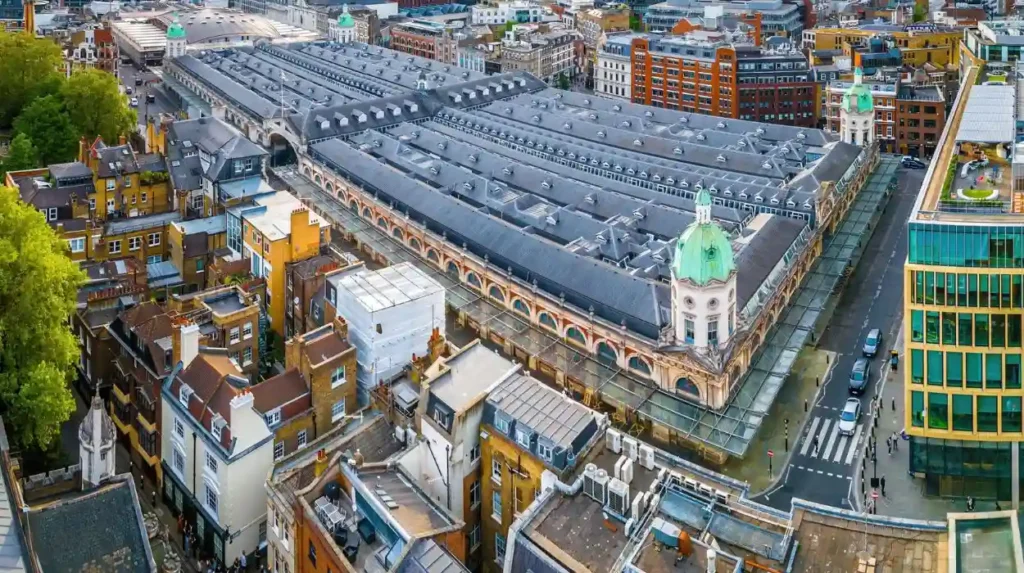
Smithfield Market dominated the livestock trade
Smithfield developed into England’s principal livestock market during the Middle Ages. Farmers drove cattle, sheep, pigs, and horses into the city from surrounding counties.
Livestock trading generated extensive supporting industries including butchers, leather workers, transport services, and feed suppliers.
The nineteenth-century market buildings continue to represent Victorian engineering and commercial architecture.
Billingsgate specialised in fish
Billingsgate Market became London’s principal wholesale fish market from medieval times onward.
Its Thames location allowed fishing vessels to unload catches directly into the market. Fresh fish arrived daily from Britain’s coastal communities.
Strict inspection standards ensured quality control in one of Europe’s busiest seafood markets.
Leadenhall became a commercial centre
Originally a medieval poultry market, Leadenhall expanded into meat, game, leather, cheese, and household goods.
Its covered Victorian structure, completed during the nineteenth century, preserved historic trading functions while improving sanitation and weather protection.
Covent Garden transformed produce distribution
Covent Garden evolved into London’s largest fruit and vegetable market during the seventeenth century.
Produce arrived from across Britain before expanding railway networks connected growers nationwide.
Although wholesale operations relocated during the twentieth century, the market continues as a retail and cultural destination.
Spitalfields reflected immigrant enterprise
Spitalfields Market developed during the seventeenth century alongside London’s growing immigrant communities.
French Huguenot silk weavers, Jewish traders, and later Bangladeshi entrepreneurs contributed to its commercial diversity, reflecting London’s multicultural history.
To experience these historic trading districts in person today, consult our comprehensive [Best Places to Experience British Culture in London Through History, Food, and Traditions] for itineraries and visiting parameters.
How did London’s markets influence everyday life during the medieval and early modern periods?
Traditional markets supplied essential food, employment, taxation revenue, and social interaction. They connected rural agriculture with urban consumers, supported thousands of occupations, and created neighbourhood identities that shaped London’s daily life throughout successive historical periods.
Markets determined how Londoners obtained food before supermarkets and refrigeration existed.
Fresh produce arrived daily from surrounding counties. Bakers purchased grain, brewers obtained barley, butchers acquired livestock, and fishmongers secured fresh catches. Urban residents depended upon regular market supplies because most households lacked storage facilities.
Markets also supported employment beyond trading itself. Porters transported goods. Carters delivered produce. Warehouse workers stored merchandise. Craftsmen repaired equipment. Innkeepers accommodated travelling merchants.
Public authorities used market tolls to finance civic improvements including roads, bridges, sanitation, and law enforcement.
Market days attracted entertainers, musicians, travelling performers, and public speakers. They became gathering places where political announcements, royal proclamations, and commercial news reached large audiences.
Neighbourhood identities developed around specialised markets. Families often worked within the same trade across several generations, contributing to London’s occupational continuity.
How did London’s traditional markets change during the Industrial Revolution?
Industrialisation transformed London’s markets through railway transport, population expansion, improved sanitation, covered architecture, and wholesale distribution. Victorian engineering modernised historic trading spaces while preserving their commercial functions within Britain’s rapidly expanding industrial economy.
The Industrial Revolution dramatically increased London’s population. Between 1801 and 1901, the city’s population expanded from approximately one million to more than six million residents.
Supplying food for this growing population required significant logistical improvements.
Railways expanded national food distribution
Railway construction revolutionised agricultural supply chains.
Fresh produce reached London from distant regions including Cornwall, Yorkshire, Scotland, and Wales within hours rather than days.
Markets handled larger trading volumes while maintaining product freshness.
Victorian architecture improved market operations
Covered iron-and-glass market buildings protected traders and customers from weather.
Architects designed improved ventilation, drainage, lighting, and waste disposal systems that reduced disease risks.
Many surviving Victorian market halls remain architecturally significant examples of nineteenth-century engineering.
Public health reforms strengthened regulation
Urban overcrowding increased concerns about food safety.
Authorities introduced stricter inspection systems covering meat quality, fish freshness, sanitation, and hygiene.
These reforms enhanced consumer confidence while supporting London’s expanding food distribution network.
Why did immigration transform London’s market culture?
Successive immigrant communities introduced new foods, specialist products, entrepreneurial traditions, and cultural diversity into London’s markets. Their contributions expanded consumer choice while transforming historic trading spaces into internationally recognised centres of multicultural cuisine and commerce.
London has welcomed migrants throughout its history.
Each community introduced distinctive commercial traditions while integrating into existing market networks.
French Huguenots influenced textile production around Spitalfields during the seventeenth century.
Jewish communities expanded tailoring, food retailing, and specialist commerce throughout East London during the nineteenth century.
Irish workers contributed significantly to construction, transport, and food distribution.
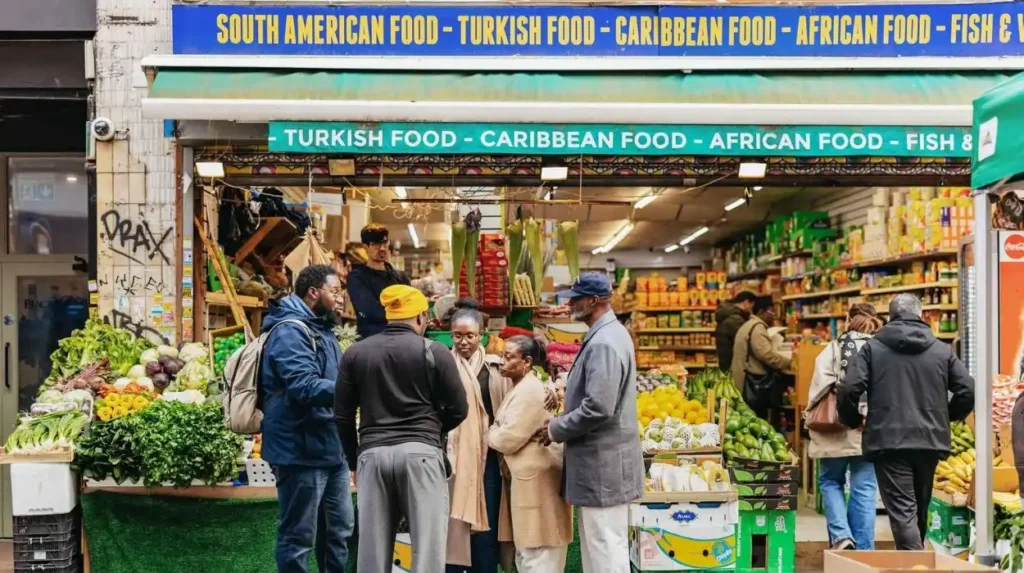
During the twentieth century, migrants from the Caribbean, South Asia, Africa, China, and Eastern Europe introduced new ingredients, spices, vegetables, cooking methods, and street food traditions.
Markets gradually reflected London’s changing population.
Fresh herbs, tropical fruit, international seafood, specialist spices, halal meat, regional cheeses, and global cuisines became standard features alongside traditional British produce.
Modern food markets therefore represent centuries of cultural exchange rather than replacing historic traditions.
How have London’s traditional markets adapted to modern food culture?
Historic markets evolved by combining heritage preservation with contemporary food retail, artisan production, independent businesses, tourism, and sustainable local sourcing. Their continued relevance demonstrates successful adaptation without abandoning their historic commercial foundations or architectural significance.
During the late twentieth century, supermarkets altered food shopping habits across Britain.
Many wholesale markets relocated or reduced operations, creating opportunities for historic markets to reinvent themselves.
Independent traders increasingly specialised in artisan bread, regional cheeses, organic vegetables, speciality coffee, handmade confectionery, sustainable seafood, and international cuisine.
Street food gained particular importance.
Historic markets became destinations where visitors could experience authentic local food alongside international culinary traditions.
Tourism strengthened market preservation by increasing investment in historic buildings and public spaces.
Local authorities supported conservation projects that protected Victorian ironwork, historic façades, traditional layouts, and heritage interpretation.
Sustainability also influenced modern market culture.
Consumers increasingly value locally produced food, seasonal ingredients, reduced packaging, and direct relationships with independent producers, reflecting principles that characterised medieval markets centuries earlier.
What evidence helps historians understand London’s market history?
Archaeology, municipal records, royal charters, taxation registers, guild documents, historic maps, architectural surveys, and museum collections provide extensive evidence documenting London’s commercial development from medieval trading through modern urban food distribution systems.
Historians reconstruct London’s market history using multiple independent sources.
Archaeological excavations recover pottery, animal bones, coins, weights, imported ceramics, storage vessels, and commercial buildings. These discoveries reveal changing consumption patterns across different centuries.
Municipal archives preserve regulations governing market operations, sanitation, taxation, licensing, and commercial disputes.
Guild records document apprenticeships, membership lists, quality inspections, and professional standards.
Historic maps illustrate London’s urban expansion while identifying market locations across successive centuries.
Architectural surveys analyse surviving market structures, revealing construction techniques, engineering innovations, and restoration methods.
Museums preserve scales, measuring devices, merchant tokens, shop signs, account books, and trading equipment that illustrate everyday commercial life.
University research increasingly combines archaeological evidence with digital mapping technologies, enabling historians to analyse historical trading networks in greater detail.

Why do London’s traditional markets remain historically significant today?
London’s traditional markets preserve nearly one thousand years of commercial history while supporting independent businesses, heritage tourism, architectural conservation, and community identity. Their continued operation demonstrates remarkable continuity between medieval urban commerce and contemporary cultural life.
Historic markets provide tangible connections to London’s economic development.
Unlike reconstructed heritage attractions, many markets continue serving commercial purposes within their original historic locations.
They preserve architectural landmarks representing medieval planning, Georgian expansion, and Victorian engineering.
Markets also sustain independent entrepreneurship. Small businesses benefit from established customer communities, while visitors experience products unavailable through standard retail chains.
Educational institutions frequently use London’s markets to teach urban history, economics, architecture, archaeology, and food heritage.
Genealogical researchers also benefit because market records preserve occupational information spanning several centuries, helping reconstruct family histories connected to London’s commercial districts.
The continued preservation of these markets supports wider conservation efforts throughout the capital.
Their survival demonstrates how historic infrastructure remains economically viable when carefully adapted to contemporary needs.
Rather than functioning solely as monuments to the past, London’s traditional markets remain active contributors to the city’s economy, cultural identity, and international reputation.
London’s traditional markets represent one of Europe’s longest continuous commercial traditions. Beginning with medieval trading protected by royal charters, they evolved through guild regulation, international commerce, industrial expansion, immigration, architectural innovation, and changing consumer preferences.
Historic markets including Borough Market, Smithfield Market, Billingsgate Market, Leadenhall Market, Covent Garden, and Spitalfields each developed specialised roles that supplied food, supported employment, generated civic revenue, and strengthened neighbourhood identity. Together they created an interconnected trading network that helped transform London into one of the world’s leading commercial cities.
Industrialisation modernised market infrastructure through railways, covered halls, improved sanitation, and wholesale distribution, while successive immigrant communities enriched London’s food culture with new ingredients and entrepreneurial traditions.
Today, these markets continue balancing commercial vitality with heritage conservation. Their architecture, trading practices, and community functions preserve nearly a millennium of urban history while supporting independent businesses, cultural tourism, and sustainable food culture.
London’s traditional markets therefore remain living historical institutions. They demonstrate how commerce, architecture, migration, and community have shaped the capital across successive centuries, ensuring that medieval foundations continue influencing London’s modern culinary and cultural landscape.
Frequently Asked Question
Why are London’s traditional markets still important today?
London’s traditional markets remain important because they preserve centuries of commercial history while continuing to support independent traders, local food producers, cultural tourism, and heritage conservation. Historic markets such as Borough Market, Smithfield Market, Leadenhall Market, and Spitalfields Market combine their medieval and Victorian origins with modern food culture, making them vital economic, social, and cultural landmarks in the capital.