
London’s churches form one of the world’s richest collections of religious, architectural, and historical landmarks. They preserve nearly 1,400 years of Christian history, reflect changing artistic movements, and document the political, cultural, and social development of England’s capital. From surviving medieval parish churches to Sir Christopher Wren’s masterpieces and Victorian Gothic revivals, these buildings remain living monuments that attract historians, architects, educators, cultural tourists, and heritage researchers.
- Why are London’s historic churches considered architectural masterpieces?
- Which churches best represent London’s architectural history?
- How did the Great Fire of London transform church architecture?
- What architectural styles appear across London’s churches?
- Which churches contain London’s most significant historical monuments?
- How have London’s churches survived wars, disasters, and urban change?
- Why do London’s churches remain important for education, tourism, and heritage research?
- What should history lovers notice when exploring London’s churches?
- Frequently Asked Question
Churches in London are more than places of worship. They are repositories of royal ceremonies, military memorials, civic history, medieval craftsmanship, Renaissance engineering, and modern conservation. Their towers define London’s skyline, while their interiors preserve stained glass, sculptures, tombs, manuscripts, and artistic treasures spanning centuries.
Why are London’s historic churches considered architectural masterpieces?
London’s historic churches combine more than fourteen centuries of architectural development, including Anglo-Saxon foundations, Norman stonework, Gothic engineering, Renaissance classicism, Baroque innovation, and Victorian restoration. Their artistic quality, historical significance, and exceptional preservation make them among Europe’s most important ecclesiastical monuments.
London contains hundreds of historic churches representing nearly every major architectural movement in English history. Each period introduced new construction techniques, artistic styles, and engineering innovations that transformed religious architecture.
The earliest churches appeared after Christianity spread through Anglo-Saxon England during the seventh century. Norman builders later introduced massive stone construction following the Norman Conquest of 1066. Gothic architecture emerged during the twelfth century, bringing pointed arches, ribbed vaults, flying buttresses, and increasingly elaborate stained glass.
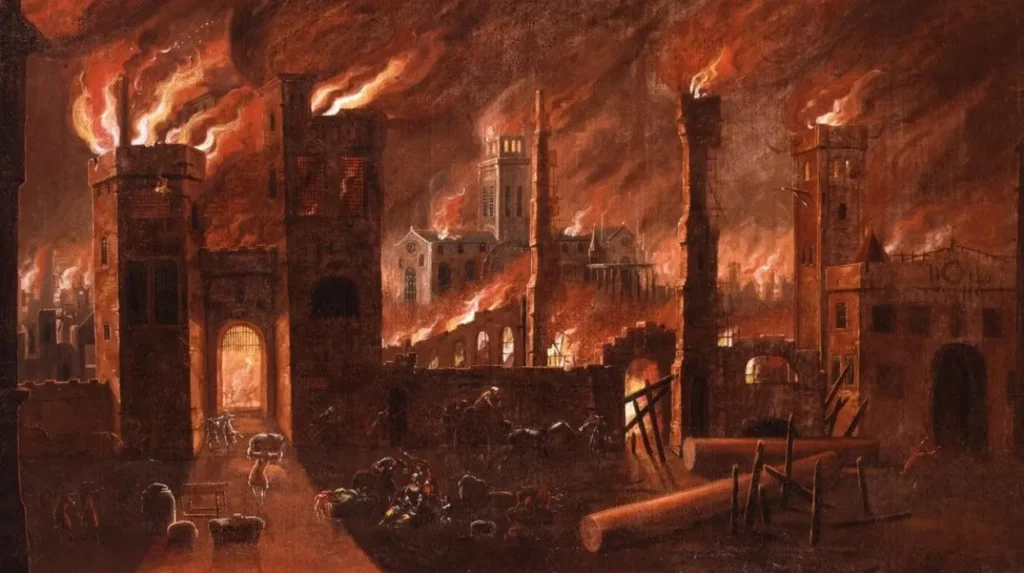
The Great Fire of London in 1666 destroyed 87 parish churches within the City of London. This disaster created an unprecedented rebuilding programme led by Sir Christopher Wren, whose churches reshaped London’s skyline using Baroque principles inspired by Renaissance architecture.
During the nineteenth century, architects including George Gilbert Scott and William Butterfield revived Gothic styles. Their work reflected growing interest in medieval craftsmanship and ecclesiastical symbolism.
Today, London’s churches collectively demonstrate architectural evolution across approximately fourteen centuries, making the city one of Europe’s most significant destinations for religious architecture.
Which churches best represent London’s architectural history?
Several churches illustrate London’s complete architectural timeline. Westminster Abbey represents medieval Gothic craftsmanship, St Paul’s Cathedral defines English Baroque architecture, Temple Church preserves Norman design, and Victorian churches demonstrate the Gothic Revival that transformed nineteenth-century religious architecture.
Every major architectural period survives somewhere within London’s churches.
Westminster Abbey
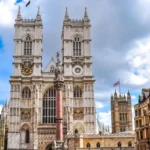
Westminster Abbey stands among Britain’s most important medieval buildings. Construction of the current church began in 1245 under King Henry III, replacing an earlier Benedictine monastery.
Its English Gothic architecture features soaring vaulted ceilings, pointed arches, intricate stone carvings, medieval chapter houses, and remarkable stained glass. More than 3,300 people are buried or commemorated inside, including monarchs, scientists, poets, and political leaders.
The abbey has hosted every English and British coronation since 1066 except two. Royal weddings, funerals, and national commemorations continue to reinforce its constitutional importance.
St Paul’s Cathedral
Completed in 1710 after thirty-five years of construction, St Paul’s Cathedral became Sir Christopher Wren’s greatest achievement.
Its enormous dome reaches approximately 111 metres, making it one of the world’s largest cathedral domes. Classical columns, symmetrical façades, and balanced proportions illustrate English Baroque architecture at its finest.
The cathedral survived the Blitz during the Second World War despite extensive bombing surrounding the building. Images of its dome rising above smoke became enduring symbols of London’s resilience.
Temple Church
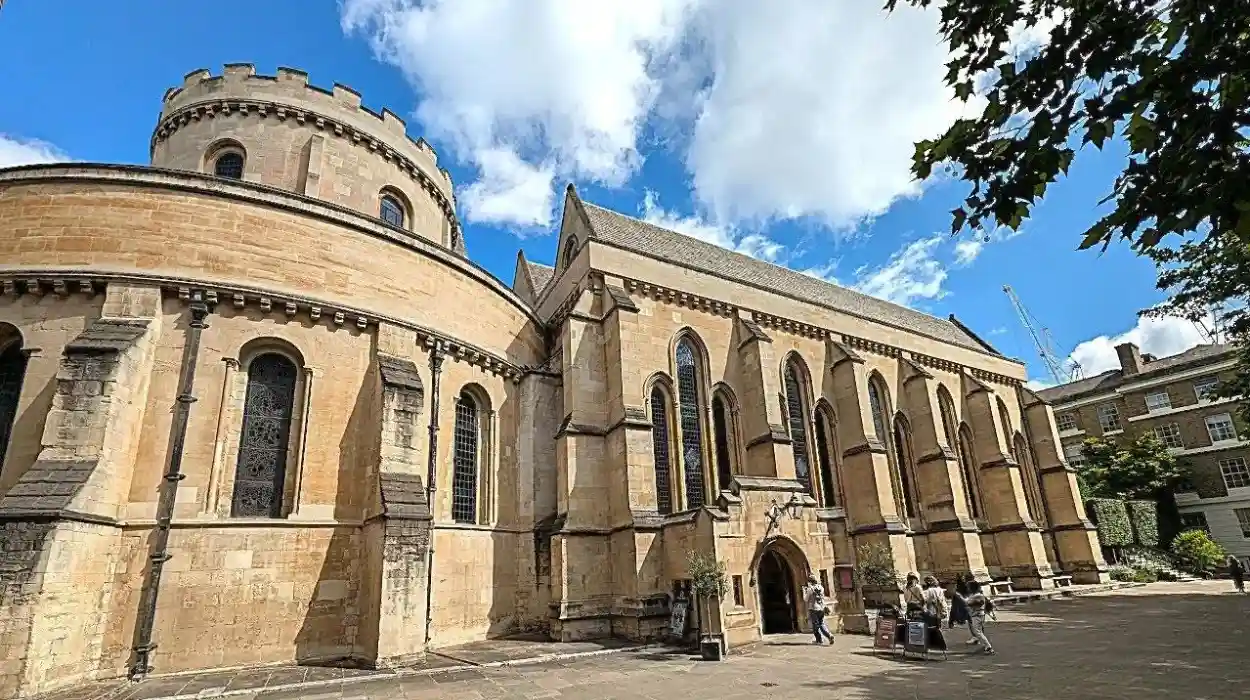
Founded by the Knights Templar around 1185, Temple Church preserves rare Norman and Early Gothic architecture.
Its famous circular nave reflects the Church of the Holy Sepulchre in Jerusalem. Medieval effigies of crusader knights remain among England’s finest surviving funerary sculptures.
The church later became closely associated with England’s legal profession because it sits within the Inner Temple and Middle Temple.
Southwark Cathedral
Southwark Cathedral originated as a priory church during the twelfth century and became a cathedral in 1905.
Its architecture combines Norman foundations, Gothic rebuilding, Victorian restoration, and modern conservation. The cathedral also maintains literary associations with William Shakespeare and medieval London’s theatrical district.
How did the Great Fire of London transform church architecture?
The Great Fire of 1666 destroyed eighty-seven parish churches within the City of London. The rebuilding programme led by Sir Christopher Wren introduced English Baroque architecture, improved engineering standards, and reshaped London’s historic skyline with elegant towers and classical designs.
The Great Fire began on 2 September 1666 in Pudding Lane and continued for four days.
More than 13,000 houses and nearly every medieval church inside the City walls suffered destruction. This catastrophe provided an opportunity to modernise London’s urban landscape.
Sir Christopher Wren supervised reconstruction alongside architects including Robert Hooke and Nicholas Hawksmoor.
Rather than reproducing medieval churches, Wren introduced Renaissance-inspired architecture characterised by classical orders, domes, geometric planning, and balanced proportions.
Examples include:
St Mary-le-Bow
The rebuilt church features one of Wren’s most celebrated steeples. Traditionally, Cockneys were defined as people born within hearing distance of Bow Bells.
St Bride’s Church
Its tiered wedding-cake spire inspired the modern tiered wedding cake after an eighteenth-century baker admired the design.
St Stephen Walbrook
Completed in 1679, the church contains one of Wren’s earliest domes and strongly influenced later cathedral architecture.
Together, Wren designed or rebuilt fifty-one churches following the fire, creating an architectural legacy unmatched in British urban history.
What architectural styles appear across London’s churches?
London’s churches display Norman, Early English Gothic, Decorated Gothic, Perpendicular Gothic, Renaissance, English Baroque, Georgian Neoclassical, Victorian Gothic Revival, and modern restoration styles. Together they illustrate continuous architectural development across fourteen centuries of British history.
Architectural styles reflect changing engineering knowledge, religious priorities, artistic movements, and political influences.
Norman Architecture (11th–12th centuries)
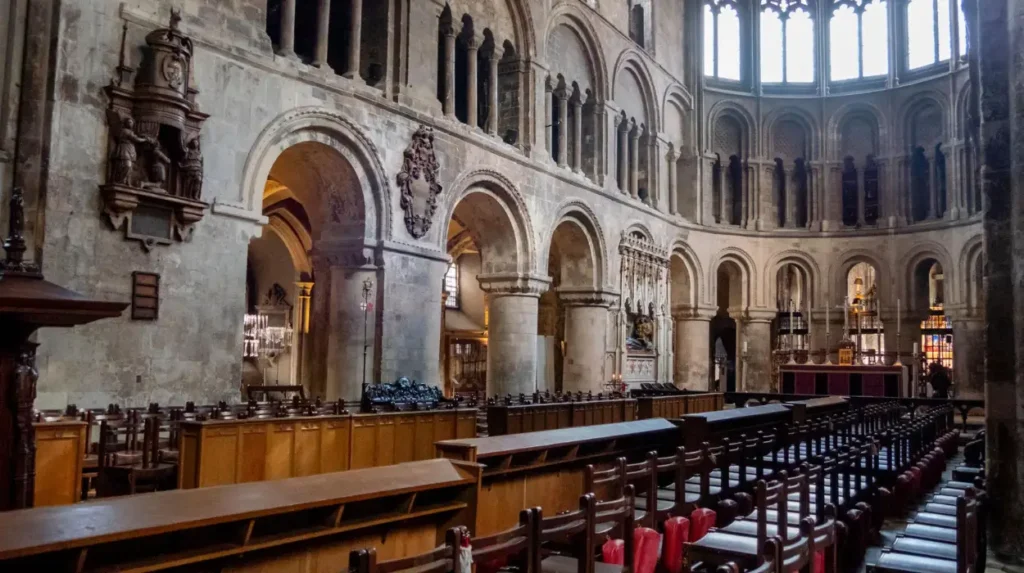
Norman churches feature thick masonry walls, rounded arches, cylindrical columns, and relatively small windows.
Temple Church retains outstanding Norman features despite later additions.
Gothic Architecture (12th–16th centuries)
Gothic builders introduced pointed arches, rib vaults, flying buttresses, tracery, and expansive stained-glass windows.
Westminster Abbey remains London’s finest Gothic masterpiece.
English Baroque (17th–18th centuries)
English Baroque combined Renaissance geometry with dramatic domes, classical columns, decorative interiors, and sophisticated engineering.
St Paul’s Cathedral defines this style.
Victorian Gothic Revival (19th century)
Victorian architects restored medieval churches and designed new buildings using colourful stonework, elaborate decoration, steep roofs, and richly symbolic interiors.
Examples include All Saints, Margaret Street, and St Augustine’s Church in Kilburn.
These diverse styles make London an open-air architectural museum spanning nearly one thousand years of continuous design evolution.
Which churches contain London’s most significant historical monuments?
Many London churches preserve nationally significant monuments, including royal tombs, military memorials, medieval effigies, scientific commemorations, literary tributes, and historic chapels. These monuments provide primary evidence for Britain’s political, cultural, and religious development across multiple centuries.
Church monuments serve as historical documents carved in stone.
Westminster Abbey contains the tombs of monarchs including Edward the Confessor, Elizabeth I, Mary I, and Henry VII. Poets’ Corner commemorates Geoffrey Chaucer, Charles Dickens, Alfred Tennyson, Thomas Hardy, and numerous literary figures.
St Paul’s Cathedral honours Admiral Horatio Nelson, the Duke of Wellington, Florence Nightingale, and Sir Christopher Wren himself.
Temple Church preserves thirteenth-century knight effigies regarded as among Europe’s finest surviving medieval military sculptures.
St Bartholomew-the-Great, founded in 1123, contains Norman architecture, medieval chapels, and monuments spanning nearly nine centuries.
These monuments allow researchers to study genealogy, heraldry, funerary art, military history, and changing commemorative traditions.
How have London’s churches survived wars, disasters, and urban change?
London’s churches survived fires, civil conflict, industrialisation, wartime bombing, and urban redevelopment through continuous restoration, conservation programmes, legal protection, and public heritage investment. Their preservation demonstrates Britain’s long-term commitment to safeguarding nationally significant historic architecture.
Many churches endured repeated destruction and reconstruction.
The Dissolution of the Monasteries under Henry VIII dramatically altered religious institutions during the sixteenth century.
The Great Fire destroyed much of medieval London in 1666.
Victorian restoration campaigns repaired structural weaknesses and modernised interiors.
During the Second World War, German bombing damaged numerous churches. St Paul’s Cathedral famously survived despite nearby destruction. Several Wren churches required extensive rebuilding following wartime damage.
Today, Historic England, the Church of England, conservation architects, archaeological specialists, and charitable organisations collaborate on restoration projects.
Many churches hold Grade I listed status, Britain’s highest legal designation for buildings of exceptional historical and architectural interest.
Scientific conservation now uses laser surveys, stone analysis, climate monitoring, digital archives, and structural engineering to preserve historic fabric while maintaining active religious use.
To experience these remarkable landmarks in person today, consult our comprehensive [London’s Architectural Evolution Explained Through Historic Buildings and Modern Skyline Transformations] for itineraries and visiting parameters.
Why do London’s churches remain important for education, tourism, and heritage research?
London’s churches continue supporting education, cultural tourism, historical research, genealogy, archaeology, music, and community life. Their archives, architecture, monuments, and conservation programmes provide valuable evidence for understanding Britain’s religious, political, artistic, and urban development across fourteen centuries.
Millions of visitors explore London’s churches annually.
Educational institutions regularly organise architectural studies, archaeology programmes, medieval history courses, and conservation research within these historic buildings.
Church archives preserve parish registers documenting baptisms, marriages, and burials dating back centuries. These records remain essential resources for genealogical researchers tracing family histories throughout Britain and the former British Empire.
Architectural historians study construction methods, decorative carving, stained glass production, acoustics, and engineering innovations.
Church music also represents an important cultural tradition. Choirs continue performing compositions by Thomas Tallis, William Byrd, Henry Purcell, and modern composers within acoustically remarkable interiors.
Tourism contributes significantly to ongoing preservation through admissions, donations, educational events, concerts, and heritage programmes.
The combination of living religious practice and historical interpretation ensures these churches remain relevant to contemporary society.

What should history lovers notice when exploring London’s churches?
History lovers should examine architectural details, construction materials, stained glass, memorial inscriptions, medieval craftsmanship, restoration evidence, symbolic decoration, and changing building techniques. These features reveal centuries of political, artistic, religious, and technological development preserved within each historic church.
Close observation transforms a church visit into an architectural investigation.
Stone types often indicate different construction phases. Medieval builders used local limestone, while later restorations incorporated imported stone with improved durability.
Vaulted ceilings demonstrate advances in structural engineering. Ribbed vaults distribute weight efficiently, allowing higher roofs and larger windows.
Stained glass reveals evolving artistic styles and theological priorities. Medieval windows focused on biblical narratives, while Victorian restorations frequently introduced historical commemorations.
Memorial inscriptions record occupations, family relationships, military service, charitable work, and civic achievements, providing valuable social history.
Exterior towers also illustrate changing engineering techniques. Norman towers emphasised defensive strength, Gothic towers pursued vertical elegance, and Wren’s Baroque steeples introduced classical harmony into London’s skyline.
Many churches preserve evidence of restoration campaigns through subtle differences in stone colour, masonry joints, carving styles, and roof structures.
Understanding these details allows visitors to interpret churches as historical documents rather than simply attractive buildings.
London’s churches represent one of the most complete architectural records in Europe. They document the evolution of English society from the Anglo-Saxon conversion to Christianity through the Norman Conquest, medieval prosperity, Reformation, Great Fire of London, Victorian revival, and modern conservation movement.
Landmarks including Westminster Abbey, St Paul’s Cathedral, Temple Church, Southwark Cathedral, St Bartholomew-the-Great, St Mary-le-Bow, St Bride’s Church, and St Stephen Walbrook collectively demonstrate nearly fourteen centuries of artistic achievement, engineering innovation, religious history, and civic identity.
Their preservation continues to benefit historians, educators, architects, archaeologists, genealogists, and millions of visitors seeking a deeper understanding of London’s past. These churches remain living monuments where architecture, faith, national history, and cultural heritage intersect, ensuring their enduring significance for future generations.
Frequently Asked Question
Which is the most beautiful church in London for history lovers?
Westminster Abbey is widely considered the most beautiful church in London for history lovers. Built primarily in the 13th century, it is renowned for its magnificent Gothic architecture, royal coronations since 1066, historic tombs, and centuries of British cultural and political heritage.