London’s royal traditions form one of the oldest continuous ceremonial systems in Europe. They combine monarchy, religion, government, military customs, architecture, and public ritual into a shared national heritage. These traditions developed over nearly one thousand years, shaping British constitutional identity, civic culture, and international perception. From medieval coronations in Westminster Abbey to modern ceremonial events at Buckingham Palace, London’s royal customs continue to define how the United Kingdom presents its history, authority, and continuity.
- What are London’s royal traditions, and why are they important?
- How did London’s royal traditions develop through history?
- Why has Westminster remained the centre of royal ceremony?
- Which royal ceremonies have shaped British national identity?
- How have London’s royal buildings preserved centuries of tradition?
- How have royal traditions influenced British culture beyond London?
- What role has religion played in London’s royal traditions?
- How are London’s royal traditions preserved for future generations?
- Why do London’s royal traditions remain significant today?
- Frequently Asked Question
Royal traditions are not merely symbolic occasions. They reflect constitutional development, religious change, urban evolution, and national unity. Historic ceremonies remain embedded within London’s landscape, linking ancient institutions with modern democratic governance. Many royal customs are protected through law, tradition, and conservation programmes managed by national heritage organisations.
What are London’s royal traditions, and why are they important?
London’s royal traditions are ceremonial, constitutional, religious, and cultural practices associated with the British monarchy. Developed over nearly one thousand years, these traditions preserve national continuity, reinforce constitutional legitimacy, celebrate historical milestones, and shape Britain’s domestic identity and international image through enduring public ceremonies.
Royal traditions include coronations, royal weddings, state funerals, jubilees, royal processions, Trooping the Colour, the State Opening of Parliament, Changing the Guard, and ceremonial observances connected with historic palaces and churches. Each tradition developed within a specific historical context while maintaining continuity across successive reigns.
The origins of many traditions date to the Norman period after 1066. William I established stronger royal authority by concentrating political power in London. Westminster gradually emerged as England’s ceremonial capital, while the City of London retained commercial importance.
Royal traditions also demonstrate the constitutional evolution of Britain. Medieval monarchs exercised extensive personal authority. Over subsequent centuries, Parliament expanded its role, especially after the Magna Carta of 1215, the English Civil War (1642–1651), the Restoration in 1660, the Glorious Revolution of 1688, and the Bill of Rights of 1689. Ceremonies evolved alongside these political developments while preserving historical continuity.
Today, royal traditions attract millions of visitors annually and contribute significantly to London’s cultural economy through heritage tourism, museums, ceremonial events, and conservation initiatives.
How did London’s royal traditions develop through history?
London’s royal traditions evolved from medieval religious ceremonies into constitutional state rituals. Norman kings established ceremonial authority, Tudor monarchs expanded royal symbolism, Stuart rulers transformed constitutional practices, and Victorian monarchs popularised public participation that continues in modern Britain.
Norman foundations after 1066
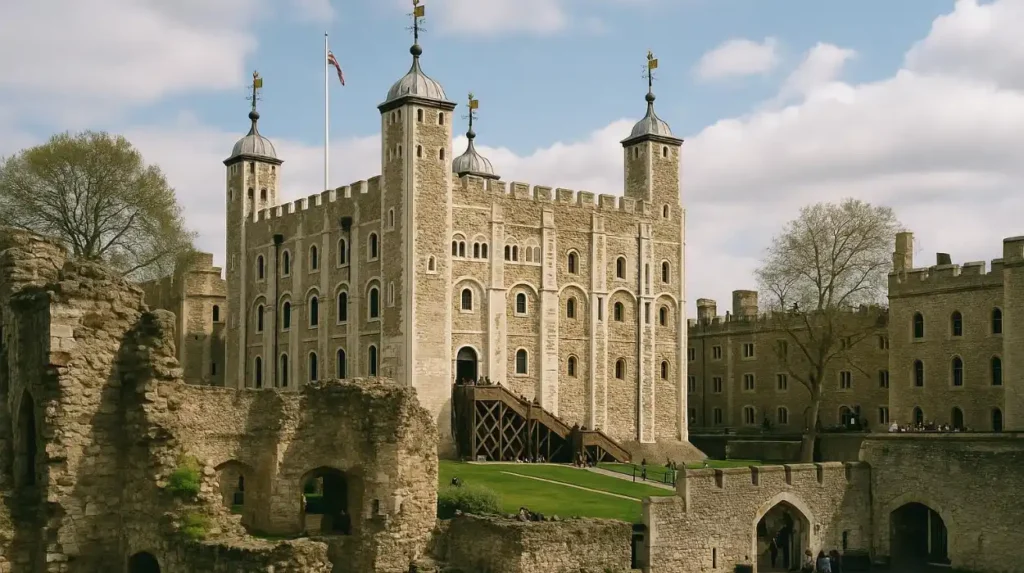
William the Conqueror recognised London’s political importance immediately after the Norman Conquest. Construction of the Tower of London began around 1078 to establish royal authority and military control.
Westminster Palace also expanded during the Norman period. Kings increasingly governed from Westminster while maintaining ceremonial ties with London’s civic institutions.
Edward the Confessor’s earlier foundation of Westminster Abbey became the permanent location for coronations after William I’s own coronation there on Christmas Day 1066. This decision established a tradition that has continued for every English and British coronation except two disputed medieval cases.
Medieval ceremonial expansion
Between the twelfth and fifteenth centuries, royal ceremonies became increasingly elaborate.
Coronations incorporated religious anointing, oath-taking, regalia presentation, and public proclamation. Royal entries into London celebrated military victories, marriages, and accessions.
The Lord Mayor of London developed ceremonial interactions with the Crown, symbolising cooperation between royal authority and London’s municipal government.
Royal processions followed carefully planned routes linking Westminster, the City of London, and major churches. These routes reinforced London’s role as Britain’s ceremonial capital.
Tudor transformation
The Tudor dynasty expanded royal symbolism dramatically.
Henry VIII increased ceremonial splendour while rebuilding royal residences. His court became one of Europe’s most magnificent royal establishments.
Elizabeth I strengthened royal pageantry through carefully choreographed public appearances that reinforced national unity during periods of religious conflict and international rivalry.
Royal progresses extended ceremonial monarchy beyond London while preserving Westminster as the ceremonial centre.
Stuart constitutional change
The Stuart period transformed the constitutional meaning of royal ceremonies.
The execution of Charles I in 1649 temporarily abolished the monarchy.
Following the Restoration in 1660, Charles II revived many traditional ceremonies while adapting them to changing political realities.
The Glorious Revolution permanently altered royal authority by confirming parliamentary supremacy while retaining monarchical symbolism.
State ceremonies increasingly represented constitutional government rather than absolute royal power.
Victorian public monarchy
Queen Victoria reshaped royal traditions during the nineteenth century.
Railways, newspapers, photography, and later early film allowed royal ceremonies to reach national audiences.
Golden and Diamond Jubilees celebrated imperial unity while expanding public participation.
Many ceremonial practices familiar today gained widespread popularity during the Victorian era.
Modern constitutional monarchy
Twentieth and twenty-first century monarchs adapted traditions to broadcasting, television, digital media, and global audiences.
Despite technological change, ceremonies retain medieval elements including crowns, sceptres, robes, heraldry, military formations, and religious rituals.
Why has Westminster remained the centre of royal ceremony?
Westminster became Britain’s ceremonial heart because royal government, Parliament, coronation traditions, and major religious institutions developed together there. Nearly one thousand years of constitutional history transformed Westminster into the permanent location for Britain’s most significant national ceremonies.
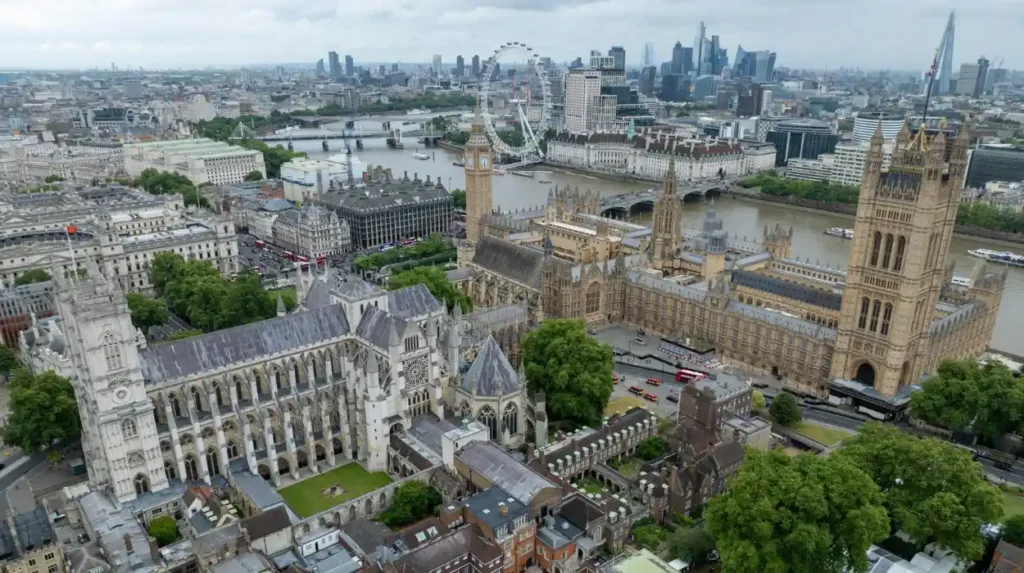
Westminster combines political, religious, and royal institutions within a compact historic district.
Westminster Abbey has hosted coronations since 1066. The abbey also serves as the burial place for many monarchs and national figures.
The Palace of Westminster developed into Parliament’s permanent home, making royal interaction with elected government part of constitutional tradition.
Nearby royal residences allowed monarchs to travel easily between palace, abbey, and Parliament during official ceremonies.
The Coronation Chair, commissioned by Edward I around 1300, remains one of Britain’s oldest surviving ceremonial objects. Originally designed to contain the Stone of Scone, it symbolises continuity between English and Scottish royal traditions.
State funerals, royal weddings, jubilees, and national commemorations continue to reinforce Westminster’s ceremonial importance.
Which royal ceremonies have shaped British national identity?
Royal ceremonies strengthened British national identity by connecting monarchy, religion, military service, constitutional government, and public participation. Coronations, jubilees, royal weddings, state funerals, parliamentary ceremonies, and military traditions created shared national experiences across generations and regions.
Coronations
Coronations combine constitutional succession with religious consecration.
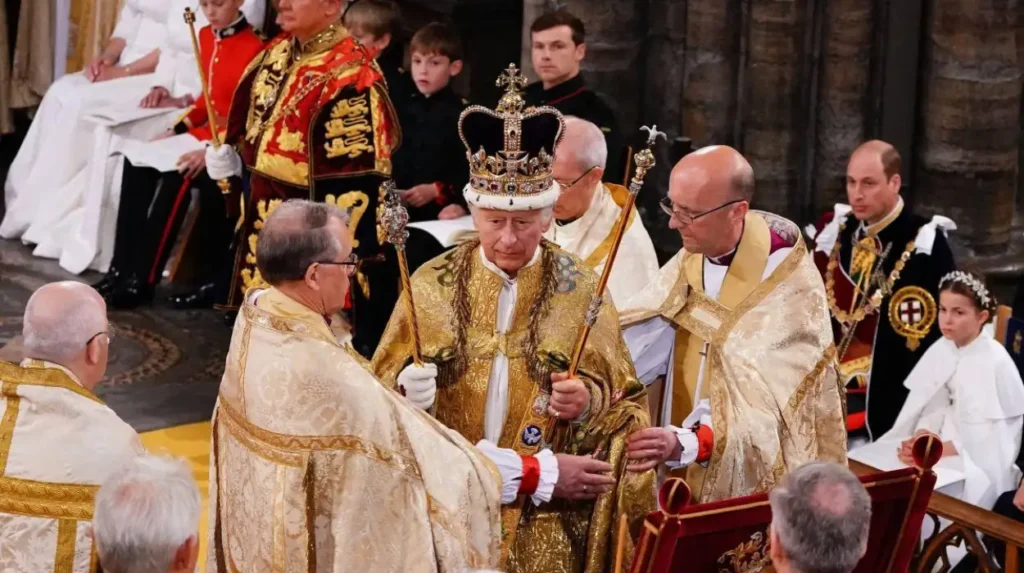
The ceremony includes recognition, oath-taking, anointing, investiture with regalia, crowning, enthronement, homage, and Holy Communion.
Every element carries historical meaning accumulated across centuries.
State Opening of Parliament
This ceremony demonstrates Britain’s constitutional monarchy.
The Sovereign formally opens each parliamentary session while respecting parliamentary independence.
The tradition includes Black Rod, the ceremonial closing of the Commons chamber door, and the monarch’s speech outlining the government’s legislative programme.
Trooping the Colour
Originally a military battlefield practice, Trooping the Colour became the Sovereign’s official birthday parade.
Hundreds of soldiers, mounted cavalry, military bands, and ceremonial units participate each year.
The event reflects Britain’s military heritage and constitutional relationship between Crown and armed forces.
Changing the Guard
Changing the Guard combines military precision with ceremonial tradition.
The guards remain fully operational soldiers despite the event’s popularity with visitors.
The ceremony demonstrates discipline, continuity, and public accessibility.
Royal weddings
Royal weddings unite constitutional ceremony with national celebration.
They showcase religious tradition, historic architecture, ceremonial uniforms, music, heraldry, and public participation.
State funerals
State funerals commemorate national service while reinforcing historical continuity.
Military escorts, religious ceremonies, parliamentary participation, and public mourning reflect Britain’s constitutional traditions.
How have London’s royal buildings preserved centuries of tradition?
London’s royal buildings preserve tradition by maintaining historic ceremonial spaces, safeguarding royal collections, and protecting architectural heritage. Palaces, churches, castles, government buildings, and ceremonial routes collectively preserve Britain’s constitutional and cultural memory across successive generations.
Historic buildings function as living ceremonial environments rather than static museums.
Westminster Abbey continues hosting coronations and royal weddings.
The Tower of London protects the Crown Jewels, including St Edward’s Crown, the Imperial State Crown, and other regalia used during state ceremonies.
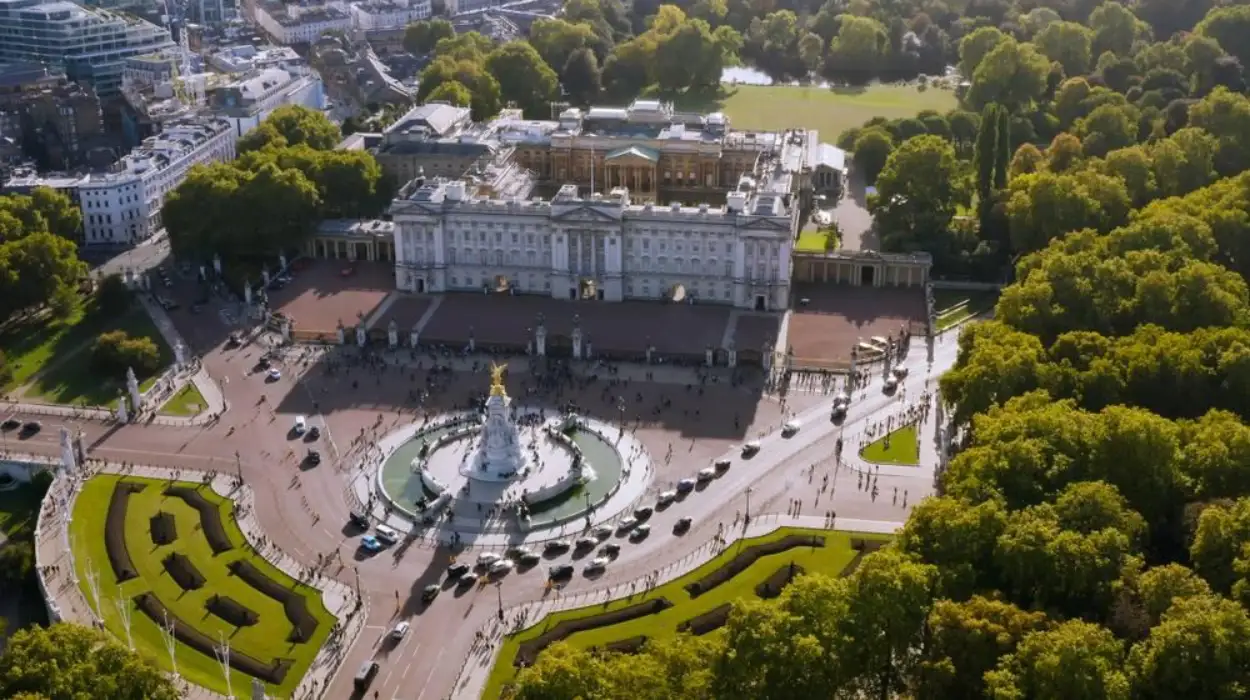
Buckingham Palace serves as the monarch’s official London residence and the focal point for many ceremonial events.
St James’s Palace remains important for accession procedures and official proclamations.
Historic ceremonial routes connecting these locations preserve centuries-old traditions.
Many buildings receive protection through statutory listing, conservation legislation, Historic England programmes, and UNESCO World Heritage recognition where applicable.
To experience these historic landmarks in person today, consult our comprehensive [Best Day Trips by Train From London for Historic Towns and Scenic Countryside] for itineraries and visiting parameters.
How have royal traditions influenced British culture beyond London?
Royal traditions influenced Britain by shaping national celebrations, military customs, architecture, education, diplomacy, ceremonial law, and public memory. London’s ceremonies became national symbols adopted throughout England, Scotland, Wales, and Northern Ireland while representing Britain internationally through constitutional continuity.
Royal symbolism appears throughout British civic life.
Military regiments preserve ceremonial uniforms, music, marching traditions, and regimental customs connected with royal service.
Schools teach constitutional history using coronations, monarchs, and parliamentary development as key historical milestones.
National celebrations frequently incorporate royal anniversaries and commemorative events.
Royal heraldry appears on government buildings, legal institutions, passports, official documents, coins, stamps, and military insignia.
Diplomatic ceremonies involving visiting heads of state continue traditions established centuries earlier.
Broadcast technology expanded the cultural influence of royal ceremonies. The coronation of Queen Elizabeth II in 1953 reached television audiences across Britain and internationally, establishing new standards for global ceremonial broadcasting.
The coronation of King Charles III in 2023 similarly demonstrated how medieval traditions continue within a modern constitutional society.
What role has religion played in London’s royal traditions?
Religion has remained central to royal traditions because Britain’s monarchy developed alongside the established Church of England. Coronations, royal weddings, funerals, national thanksgiving services, and annual ceremonies combine constitutional authority with Christian religious observance through Westminster Abbey and other historic churches.
The coronation remains fundamentally a religious service.
The Archbishop of Canterbury conducts the anointing, administers the coronation oath, and places St Edward’s Crown upon the monarch.
Sacred music forms another enduring tradition.
Composers including Thomas Tallis, George Frideric Handel, Hubert Parry, Ralph Vaughan Williams, and modern composers contributed ceremonial works performed during national occasions.
Religious symbolism reinforces the constitutional principle that the monarch serves according to law and established tradition rather than personal authority.
Annual services including Commonwealth Day observances and Remembrance commemorations further connect monarchy with national religious heritage.
How are London’s royal traditions preserved for future generations?
Royal traditions survive through conservation, archival research, legal protection, museum collections, educational programmes, and continued ceremonial use. Government agencies, heritage organisations, archives, churches, and the Royal Household collectively safeguard Britain’s ceremonial heritage for future generations.
Preservation involves both physical conservation and institutional continuity.
Historic buildings undergo regular restoration using archaeological research, architectural analysis, and conservation science.
The Royal Collection preserves paintings, furniture, manuscripts, sculpture, decorative arts, ceremonial objects, and historical documents accumulated across centuries.
The National Archives preserve constitutional records documenting royal government, legislation, treaties, and official correspondence.
Historic England supports conservation of listed buildings connected with royal history.
The Church of England maintains religious traditions central to coronation ceremonies.
Museums interpret ceremonial history through exhibitions, educational programmes, and scholarly publications.
Academic historians continue researching medieval manuscripts, archaeological discoveries, royal accounts, and government records that improve understanding of Britain’s ceremonial development.
Digital preservation projects increasingly provide worldwide access to manuscripts, architectural surveys, and historical collections, expanding public understanding of London’s royal heritage.
Why do London’s royal traditions remain significant today?
London’s royal traditions remain significant because they connect constitutional government, historical continuity, cultural identity, and international diplomacy. Their survival across nearly one thousand years demonstrates institutional stability while preserving Britain’s historical heritage through active public participation and ceremonial continuity.
Modern Britain differs profoundly from medieval England. Parliament governs through democratic representation, society has become more diverse, and technology transformed communication.
Despite these changes, London’s royal traditions continue serving important constitutional and cultural functions.
Ceremonies reinforce peaceful succession, constitutional stability, and historical continuity. They provide nationally recognised moments of remembrance, celebration, and reflection.
Internationally, royal traditions contribute substantially to Britain’s cultural diplomacy and global identity. Historic ceremonies receive worldwide media coverage and attract millions of visitors interested in Britain’s constitutional history.
These traditions also encourage heritage conservation. Royal palaces, churches, ceremonial routes, archives, museums, and historic landscapes benefit from sustained preservation efforts that protect London’s architectural legacy.
For historians, educators, genealogists, and cultural tourists, London’s royal traditions provide an exceptional documentary record spanning almost a millennium. Few world capitals preserve such continuous ceremonial practices within the same historic urban environment.
The enduring influence of London’s royal traditions lies in their ability to unite history, architecture, religion, constitutional government, military heritage, and civic identity into a coherent national narrative. From the Norman Conquest to the present day, these traditions have evolved without losing their historical foundations. They remain among Britain’s most recognisable cultural institutions and continue shaping national identity through continuity, ceremony, and shared historical memory.
Frequently Asked Question
What are London’s royal traditions?
London’s royal traditions are ceremonial, constitutional, religious, and military customs associated with the British monarchy. They include coronations, royal weddings, the State Opening of Parliament, Trooping the Colour, and Changing the Guard.