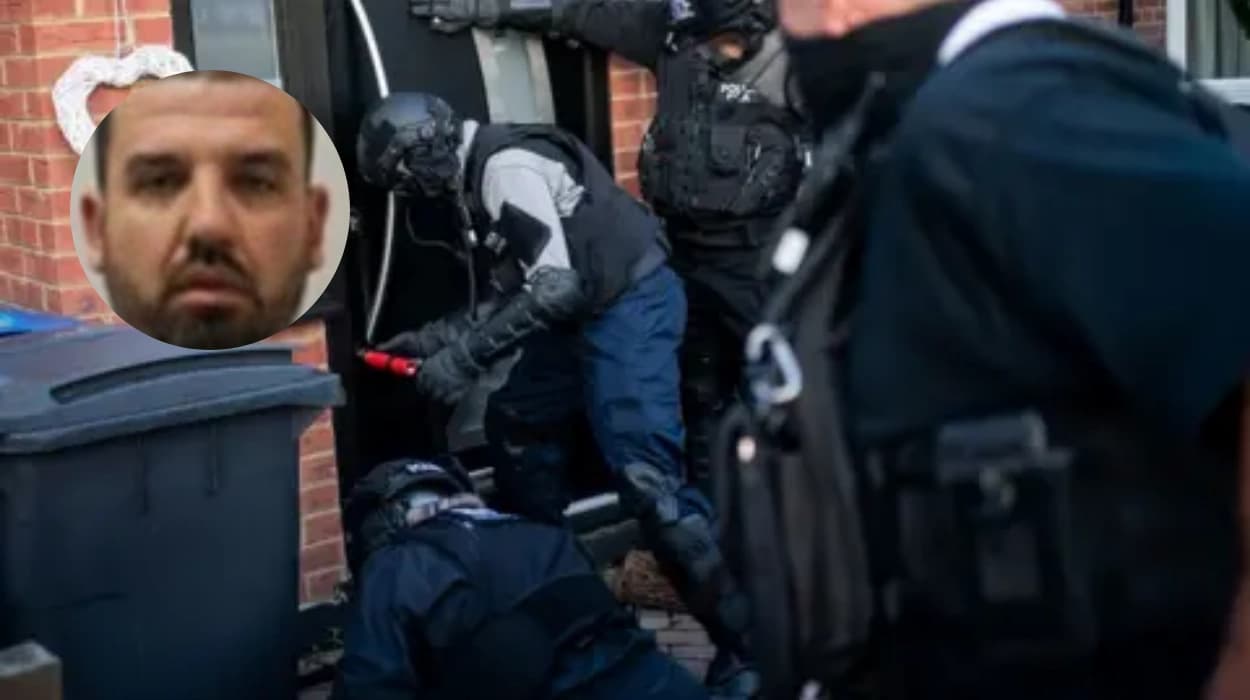
London (The Londoner News) March 27, 2026 - A London-based criminal gang has been jailed after using M25 motorway service stations to transfer Albanian migrants smuggled into the UK via lorries. Metropolitan Police detectives uncovered CCTV footage showing the transfers into other vehicles destined for London. Three gang members, who charged £11,000 per person, received prison sentences following arrests made on June 18, 2025. Up to 20 Albanian nationals were confirmed smuggled over 18 months, though police believe the actual number exceeds this figure.
Metropolitan Police officers dismantled the operation through vehicle tracking, CCTV analysis at service stations, and surveillance that identified the ringleaders. The investigation revealed phone messages coordinating meetings between smugglers and heavy goods vehicle (HGV) drivers. Acting Detective Inspector Stuart Jack, who led the probe, highlighted the profit-driven nature of the conspiracy and its links to further exploitation.
The gang operated by extracting migrants from lorries at M25 service stations and moving them into cars or vans for transport into central London. Police confirmed the group charged each migrant £11,000 for the smuggling service. Detectives established that at least 20 Albanian nationals arrived in London through this method during the 18-month period of activity.
Investigation Methods Uncovered M25 Service Station Transfers
Officers tracked multiple vehicles involved in the transfers during the Metropolitan Police operation. They scoured CCTV footage from service stations along the M25 orbital motorway surrounding London. Surveillance operations pinpointed the three ringleaders responsible for organising the handovers.
Arrests occurred on June 18, 2025, targeting the trio at locations linked to their activities. Post-arrest analysis of their mobile phones uncovered messages exchanged between the gang members and HGV drivers. These communications detailed meeting points at service stations and instructions for transferring migrants from lorries into other vehicles.
The evidence showed a systematic process: migrants hidden in lorries crossing into the UK were driven to M25 service stations. There, gang members met the HGV drivers, extracted the individuals, and loaded them into waiting cars or vans. These vehicles then proceeded into London, distributing the migrants to unknown destinations.
Gang Members Sentenced Following Police Crackdown
The three gang members faced charges related to their roles in the people smuggling conspiracy. Courts imposed prison sentences on each, halting their operations. Specific sentencing details emerged from the Metropolitan Police announcement, confirming the convictions stemmed directly from the gathered evidence.
Acting Detective Inspector Stuart Jack, leading the investigation for the Met's organised crime unit, stated:
"The team worked tirelessly to put these three criminals behind bars, where they can no longer exploit vulnerable people. Our investigation has shown that, ultimately, this case was all to do with money – an illegal money-making conspiracy, driven entirely by profit."
He added:
"We know that people smuggled into the UK are often exploited further when they arrive or are forced to work for the organised criminal networks who brought them over, therefore driving further crime in the capital and beyond. I would urge people, particularly HGV drivers, to be vigilant and report any suspicious activity to police. Despite what some people may believe, this isn’t a victimless crime."
Scale of Smuggling Operation Revealed by Evidence
Police reports confirmed up to 20 Albanian nationals entered London via the gang's network over 18 months. This figure derived from phone data, CCTV captures, and tracked vehicle movements. However, Acting Detective Inspector Jack noted the true number likely stands much higher, based on the volume of communications and partial records recovered.
The operation relied on established routes using lorries to initially smuggle migrants across the Channel into Kent or Essex. From there, vehicles proceeded to M25 service stations such as those near junctions frequented by HGVs. Transfers minimised detection risks by swapping to smaller, less suspicious vehicles before entering urban London.
Metropolitan Police emphasised the financial incentive: each successful smuggling fetched £11,000, generating substantial profits for the gang. No additional financial trails were detailed publicly, but the conspiracy centred on repeated coordination between smugglers and drivers.
Broader Context of UK People Smuggling Networks
The Met's crackdown forms part of wider efforts against organised immigration crime. Similar operations have targeted lorry-based smuggling in recent years, with service stations identified as recurring handover points. Police urged HGV drivers nationwide to report anomalies, such as unexpected stops or unusual cargo requests.
This case underscores vulnerabilities at key UK infrastructure points like the M25, which circles London and handles heavy freight traffic. The motorway's service areas provide cover for brief, high-volume exchanges. Detectives recovered no evidence of violence in this instance, but exploitation risks post-arrival were flagged.
Official statements avoided specifics on the migrants' subsequent movements or employment, focusing on disrupting the supply chain. The convictions serve as a deterrent, with police committing resources to ongoing surveillance of smuggling hotspots.
Police Tactics and Evidence Collection Detailed
The investigation began with intelligence on suspicious vehicle activity around M25 services. Officers deployed tracking devices on implicated cars and lorries. CCTV from multiple stations captured license plates, timings, and transfer moments, correlating with phone geolocation data.
Phone forensics proved pivotal, extracting thousands of messages. These outlined fees, pickup schedules, and contingency plans for delays. HGV drivers received payments or favours, though none faced charges in this operation, per available reports.
Surveillance teams followed gang members from service stations to London addresses, building arrest probable cause. Raids on June 18, 2025, yielded devices and documents reinforcing the conspiracy. No weapons or large cash seizures were mentioned.
Implications for Roadside Vigilance Highlighted
Acting Detective Inspector Jack's comments stressed reporting duties for motorists. HGV drivers, in particular, encounter high smuggling exposure due to cross-border hauls. Police provided no-contact reporting channels via 101 non-emergency lines or Crimestoppers.
The Met operation disrupted one cell but signalled persistent threats. Albanian nationals featured prominently, aligning with patterns in National Crime Agency reports on Eastern European networks. No links to larger syndicates were confirmed in this case.
Service station operators cooperated fully, enhancing CCTV coverage post-incident. Enhanced lighting and monitoring now aid future detections along the M25 corridor.