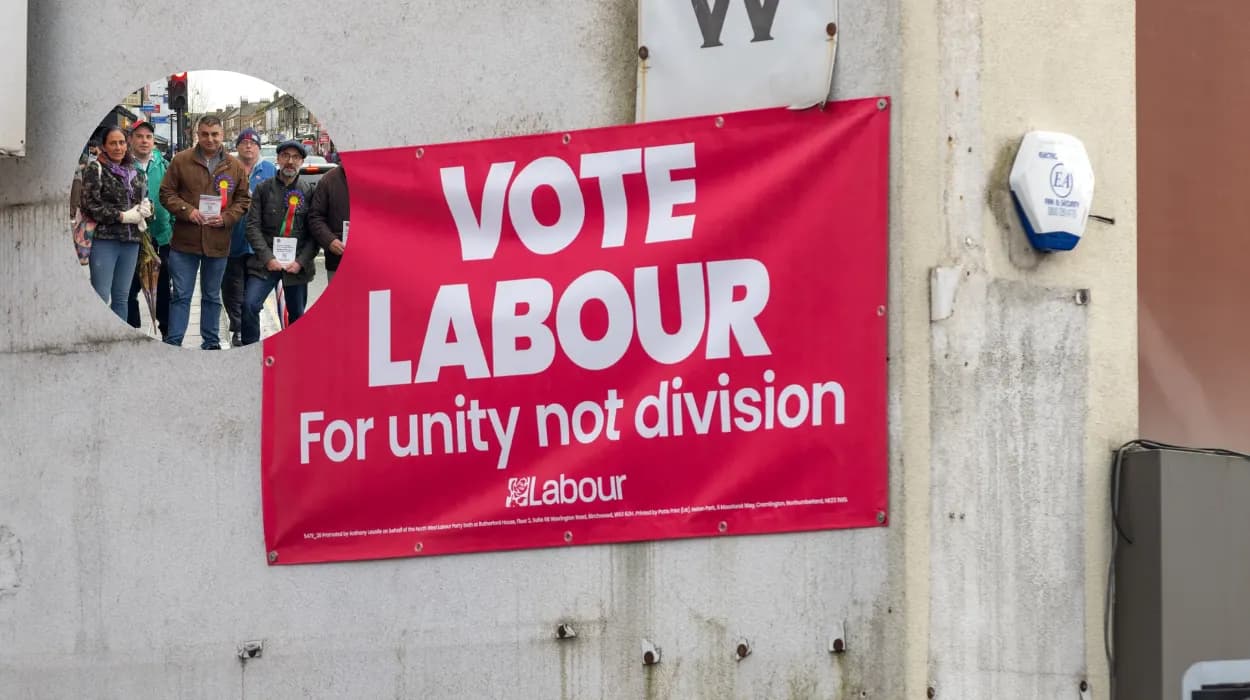
London (The Londoner News) March 27, 2026 – A new left‑wing political group has launched in the west London borough of Ealing, aiming to challenge what activists describe as Labour’s long‑standing dominance of the council ahead of the 2026 London local elections. The initiative comes amid national efforts by left‑wing figures, including former Labour politicians, to organise alternatives to Sir Keir Starmer’s party. Local organisers say they will contest seats in May’s all‑borough elections, focusing on disillusioned Labour voters and residents concerned about public services, housing and the cost of living. Labour currently controls most London borough councils and is expected to face competition on multiple fronts across the capital.
The new grouping, formed by activists and former Labour members in Ealing, is positioning itself to the left of the Labour Party and intends to run candidates in selected wards at the London local elections on 7 May 2026. Organisers say they want to provide what they describe as a “genuine socialist alternative” for voters who have been dissatisfied with national Labour policy and local decision‑making but who do not identify with right‑wing or centrist parties. Ealing, in west London, has been run by Labour for several election cycles and is often cited by critics as an example of a de facto single‑party borough in which opposition representation is limited.
New left‑wing group focuses on Ealing council control
The group’s launch comes as analysts forecast a difficult set of local elections for Labour in London, where all 32 borough councils will be contested on the same day. Academic commentary and national reporting have suggested Labour could face losses across the capital, under pressure from the Conservatives, Reform UK, the Liberal Democrats, the Green Party and independent candidates linked to pro‑Gaza and other local campaigns.
Although detailed ward‑level candidate lists for Ealing have not yet been formally completed, activists involved in the new organisation say they plan to stand in areas where Labour has historically polled strongly but where turnout has fallen or opposition parties have struggled to gain a foothold. The group argues that residents have lacked choice in such wards because Labour incumbents face limited competition outside occasional challenges from the Conservatives or Liberal Democrats.
National left projects create space for local initiatives
The launch in Ealing reflects a broader national context in which left‑wing political projects outside Labour have been gaining attention. Former Labour leader Jeremy Corbyn and fellow MP Zarah Sultana have publicly confirmed plans to establish a new national political party to the left of Labour, describing it as an effort to build a “real alternative” for working‑class voters.
In July 2025, Corbyn and Sultana announced that they would develop a new left‑wing party, informally branded “Your Party” during its early organising phase, with a founding conference planned to decide its final name, leadership model and policy platform. Reporting by international and British media has indicated that the initiative aims to channel disaffection among former Labour supporters and grassroots activists, some of whom left the party over disagreements on welfare policy, foreign affairs and internal disciplinary measures.
While the Ealing organisers have not formally affiliated with any particular national party, their statements echo themes articulated by these national left‑wing projects, such as calls for stronger public ownership, increased social housing, and opposition to welfare cuts and austerity‑style measures. The emergence of such initiatives has led commentators to suggest that Labour could face new competition on its left flank in areas where it has traditionally enjoyed secure majorities, including inner and west London boroughs.
Labour’s dominant position in London under scrutiny
Labour currently controls the majority of London borough councils, following gains in the 2022 local elections and the 2024 general election, when most London constituencies elected Labour MPs. In that period, the party took control of councils long held by the Conservatives, including Wandsworth, Westminster and Barnet, consolidating its position in the capital.
However, projections for the 2026 local contests have been less favourable for the party. BBC reporting and expert commentary have warned that Labour now faces simultaneous challenges from at least five different directions: the Conservatives, Reform UK, the Liberal Democrats, the Greens and pro‑Gaza‑aligned independents. In March 2026, London School of Economics local government specialist Tony Travers said Labour could suffer a “political earthquake” at the polls, potentially losing more than half of its current 1,150 London council seats, while the Conservatives also risk further historic losses.
In this environment, boroughs such as Ealing, which have been under uninterrupted Labour control for several terms, are drawing attention from smaller parties and new groups that see an opportunity to present themselves as credible alternatives to disillusioned centre‑left voters. Analysts have noted that in other Labour‑run areas—such as Lewisham and Hackney—opposition parties including the Greens have specifically targeted wards described as long‑standing one‑party strongholds.
Voter discontent and local campaign priorities
Public polling has suggested that Labour’s national popularity has weakened since it ended nearly two decades of Conservative rule in the 2024 general election. Coverage by major outlets has linked this decline to disputes within the party over welfare cuts, foreign policy and internal discipline, including the suspension of MPs who opposed proposed benefit restrictions affecting larger families.
Organisers of the new Ealing group say this wider dissatisfaction has local echoes in debates over council budgets, redevelopment schemes and the delivery of frontline services. Housing supply, the affordability of private renting, and the management of major regeneration projects have been recurring issues in west London borough politics, with residents’ groups and campaigners frequently questioning how far local authorities have met commitments on social housing and community consultation.
The group is expected to focus heavily on housing, public transport, environmental policy and protections for low‑income households in its local platform. Its organisers argue that these themes resonate in Ealing, where pressures on housing and services have increased alongside population growth and rising living costs. They also intend to highlight concerns over transparency and scrutiny on a council long controlled by a single party, pointing to debates in other London boroughs where critics have used similar language to describe Labour‑run administrations.
Wider competition from Greens, Lib Dems and Reform UK
The London political landscape ahead of May’s elections is crowded. The Green Party has signalled that it will concentrate on winning over voters from what it sees as Labour’s estranged left base, prioritising boroughs with long‑standing Labour majorities such as Lewisham and Hackney. In those areas, Green leaders have spoken of attracting residents who are uncomfortable with both Labour’s national direction and right‑of‑centre alternatives.
The Liberal Democrats, meanwhile, control several councils in the south‑west of London, including Richmond upon Thames, Sutton and Kingston, and have indicated that they view neighbouring areas with similar demographics—such as Merton—as potential gains if dissatisfaction with Labour continues. Reform UK has also been identified by analysts as a potential beneficiary of national discontent, particularly in outer London and among voters sceptical of both Labour and the Conservatives.
This combination of established opposition parties and new left‑wing formations means Labour faces varied types of competition across different boroughs. In some councils, opposition may cluster on its left, while in others challenges may come from centre‑right or right‑wing parties, independents, or local issue‑based groups. Ealing’s new left‑wing organisation adds another element to this patchwork and underscores how even heavily Labour‑leaning areas are attracting fresh challengers.
Expert warnings over potential shifts in council control
Commentary from political scientists and local government experts has highlighted the possibility of significant shifts in London’s political map after the 2026 elections. Professor Tony Travers has warned that, in addition to Labour’s potential loss of hundreds of seats, the Conservatives could also see their representation fall to new lows if current polling trends persist. He has suggested that the main beneficiaries could be smaller parties such as the Greens and Reform UK, as well as local independent candidates.
Such a scenario could produce councils with no overall control, more fragmented party balances and a larger role for issue‑based alliances. In that environment, local groups similar to the new Ealing organisation could find opportunities to influence policy or participate in coalitions, even if they secure only a handful of seats.
Observers have drawn parallels to earlier phases in London politics when the Liberal Democrats and, more recently, the Greens grew from limited representation to become significant voices in certain borough councils. They note that winning even one or two seats in a previously one‑party‑dominated authority can change the tenor of debate, increase public scrutiny and give smaller groups a platform for further electoral gains.
Links between local activists and national left projects
Reporting on the development of new left‑wing parties and movements in Britain has underscored the role of local activists and community campaigns in sustaining such projects. Media coverage of Jeremy Corbyn and Zarah Sultana’s proposed national party has highlighted the involvement of grassroots organisers, trade unionists and members of social movements who had previously campaigned within, or alongside, Labour.
In accounts published by left‑leaning and mainstream outlets, supporters of these initiatives have pointed to issues including opposition to welfare cuts, criticism of foreign policy decisions, and demands for more internal democracy as motivations for seeking political organisation outside Labour. While the Ealing group remains locally focused, its launch adds to a pattern of left‑of‑Labour organising at both constituency and borough level that could interact with the emergence of any new national party.
Analysts note that the ultimate impact of these projects will depend on factors such as resources, candidate quality, organisational capacity and the ability to avoid vote‑splitting that could benefit parties opposed to left‑wing policies. For now, the appearance of new groups in boroughs like Ealing underlines the extent to which Labour’s position in London, while still strong in terms of council control, is being tested from multiple directions as the May 2026 elections approach.