

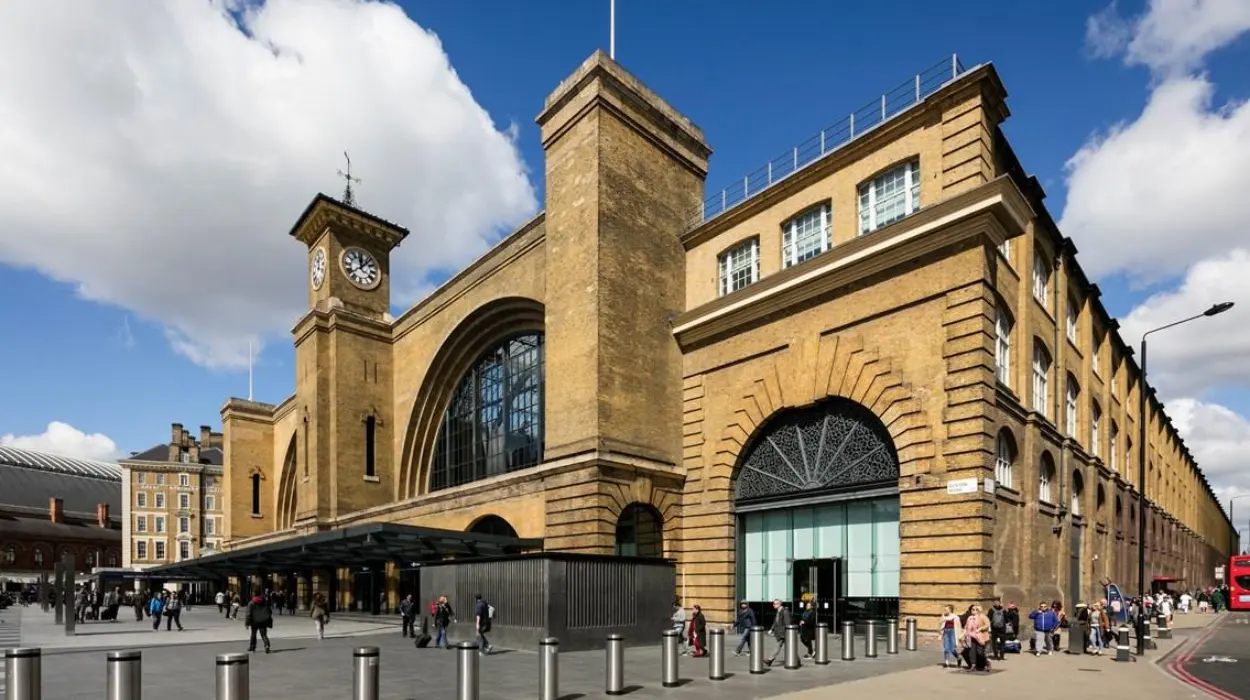
London’s railway expansion transformed Britain from a collection of regional markets into an interconnected industrial nation. Between the early nineteenth century and the twentieth century, the capital became the centre of one of the world’s most influential railway networks. Railways reshaped commerce, industry, urban planning, commuting, engineering, and national governance. Their influence continues through modern transport systems, heritage railways, preserved stations, and Britain’s contemporary rail infrastructure.
- Why did London’s railway expansion begin during the Industrial Revolution?
- Which railway companies built London’s first major railway network?
- How did London’s famous railway stations shape the city’s development?
- What engineering innovations transformed London’s railway infrastructure?
- How did London’s railway network change everyday life?
- How did railway expansion strengthen Britain’s national economy?
- What role did the Underground play in London’s railway history?
- Which historical events influenced London’s railway expansion?
- What evidence of Victorian railway heritage survives across London today?
- Why does London’s railway expansion remain important today?
- Frequently Asked Question
The development of London’s railway system reflected technological innovation, private investment, parliamentary legislation, and population growth. Every major railway company sought access to the capital because London served as Britain’s political, financial, and commercial centre. The resulting network connected ports, manufacturing cities, agricultural regions, and international trade routes.
Today, many Victorian railway structures remain integral to London’s transport landscape. Historic termini continue serving millions of passengers annually while demonstrating nineteenth-century engineering excellence. London’s railway history therefore represents both a technological revolution and an enduring national legacy.
Why did London’s railway expansion begin during the Industrial Revolution?
London’s railway expansion began because rapid industrialisation, population growth, expanding trade, and technological innovation created demand for faster transport than canals, rivers, and turnpike roads. Parliament authorised railway construction, while private investors financed lines connecting London with Britain’s manufacturing, commercial, and port cities.
Before railways, transport within Britain depended primarily upon rivers, coastal shipping, canals, and horse-drawn wagons. These systems moved heavy goods effectively but remained relatively slow. Industrial production increased dramatically after the late eighteenth century, creating demand for more efficient transport networks.
The Industrial Revolution accelerated manufacturing in cities including Manchester, Birmingham, Leeds, Sheffield, and Liverpool. Factories required dependable movement of coal, iron, textiles, machinery, and food supplies. London functioned as Britain’s largest consumer market and financial centre, making railway access commercially essential.
Steam locomotive technology matured during the early nineteenth century. Engineers improved locomotive efficiency, track design, signalling systems, and bridge construction. Railway companies recognised that connecting provincial industries directly to London offered enormous economic advantages.
Parliament played an essential regulatory role. Railway companies required private Acts of Parliament authorising land acquisition and construction. Parliamentary committees examined proposed routes, engineering plans, and compensation arrangements before granting legal authority.
Population growth also encouraged railway investment. London’s population increased from approximately one million people around 1800 to more than six million by the beginning of the twentieth century. Transport infrastructure expanded continuously to accommodate growing residential districts, workplaces, and markets.
Which railway companies built London’s first major railway network?
Several private railway companies built London’s network between the 1830s and the late nineteenth century. Examples include the Great Western Railway, London and Birmingham Railway, London and South Western Railway, Great Eastern Railway, and South Eastern Railway, each serving distinct regions of Britain.
The London and Birmingham Railway
The London and Birmingham Railway opened in 1838. It established one of Britain’s first long-distance intercity rail connections. The line linked London with the Midlands, strengthening industrial trade between manufacturing centres and the capital.
Engineer Robert Stephenson supervised much of the railway’s engineering work. The route required major embankments, tunnels, viaducts, and cuttings that demonstrated Britain’s growing civil engineering capabilities.
The Great Western Railway
The Great Western Railway opened its London route in 1838 under the leadership of engineer Isambard Kingdom Brunel. Brunel designed the railway using broad-gauge track measuring seven feet and one-quarter inch, believing wider track improved stability and speed.
The line connected London with Bristol before later extending into South Wales and southwest England. It became one of Britain’s most prestigious railway companies.
The Great Northern Railway
The Great Northern Railway linked London with Yorkshire and northern England. Its network strengthened agricultural distribution while supporting coal transport from northern mining regions.
The London and South Western Railway
The London and South Western Railway served Hampshire, Dorset, Surrey, and Devon. It supported passenger travel, military logistics, agricultural trade, and coastal commerce.
Competition among these railway companies encouraged continual investment in stations, rolling stock, signalling technology, bridges, warehouses, and freight facilities.
How did London’s famous railway stations shape the city’s development?
London’s railway termini became gateways between the capital and the rest of Britain. Stations including Paddington, King’s Cross, Euston, Waterloo, Liverpool Street, Victoria, Charing Cross, and St Pancras stimulated commercial districts, housing expansion, hotels, and urban redevelopment across surrounding neighbourhoods.
Early railway legislation prohibited companies from extending lines deep into central London. Consequently, companies built grand terminal stations around the city’s edge.
Each station evolved into a major commercial district.
Paddington became the principal western gateway through Great Western Railway services.
King’s Cross connected northern England and Scotland.
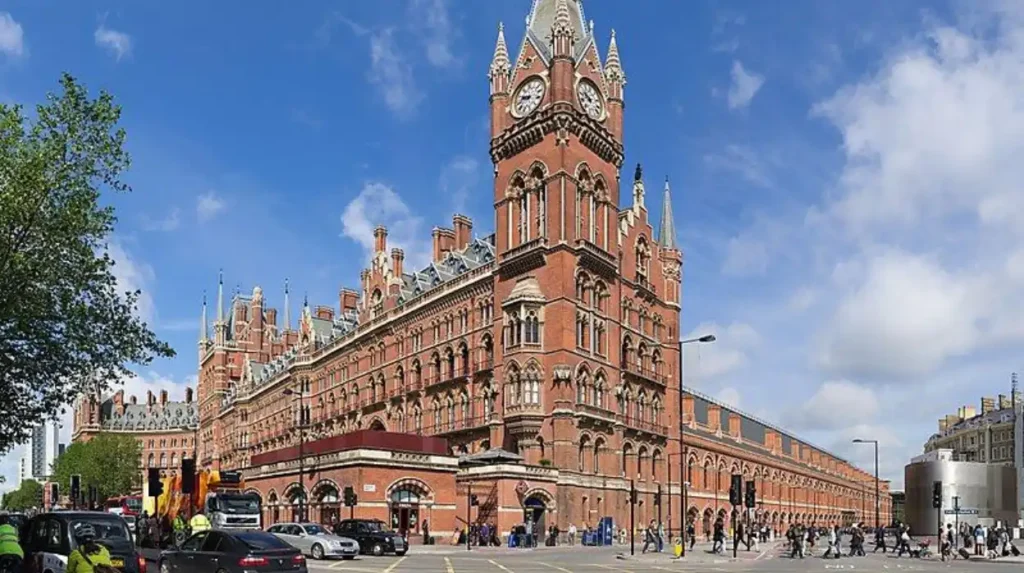
St Pancras became renowned for Victorian Gothic architecture designed by George Gilbert Scott and engineer William Henry Barlow.
Liverpool Street served East Anglia while supporting London’s financial district.
Waterloo developed into Britain’s busiest railway station through services across southern England.
Victoria connected London with Kent, Sussex, Brighton, and continental ferry routes.
The stations encouraged extensive hotel construction, warehouses, wholesale markets, offices, theatres, restaurants, and residential development nearby.
To experience these historic railway districts in person today, consult our comprehensive [Best Hidden Courtyards in London Every Curious Traveller Should Discover During Their Visit] for itineraries and visiting parameters.
What engineering innovations transformed London’s railway infrastructure?
London’s railway expansion introduced major engineering innovations including large-span train sheds, cast-iron bridges, brick viaducts, underground tunnels, advanced signalling, hydraulic systems, and complex junctions. These achievements established global standards for railway engineering throughout the nineteenth century and beyond.
Victorian engineers overcame extraordinary geographical challenges while constructing London’s railway network.
Massive brick viaducts carried tracks across densely developed neighbourhoods without disrupting existing streets.
Deep cuttings enabled relatively level gradients for steam locomotives.
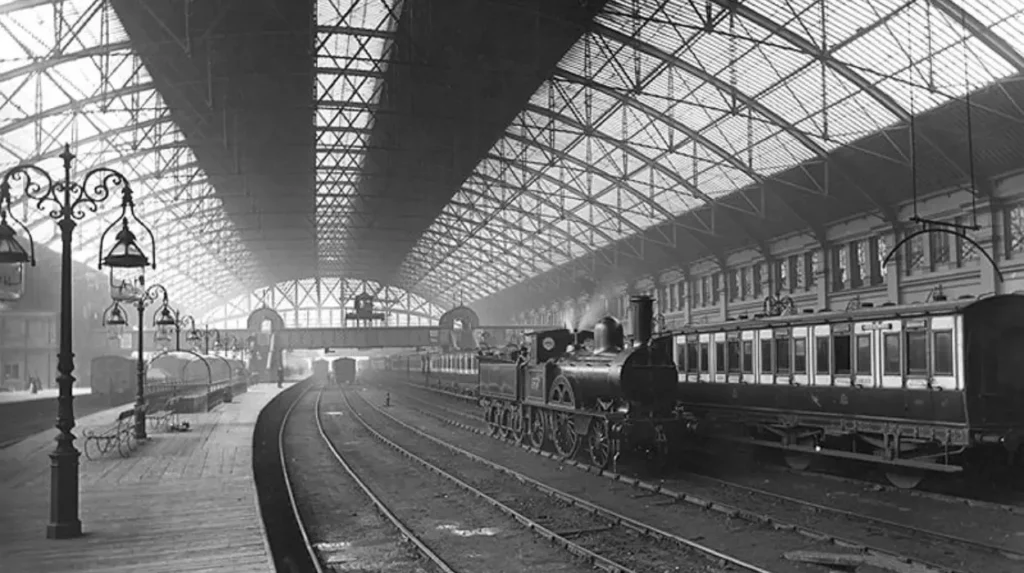
Large-span train sheds protected passengers while allowing locomotives to enter enclosed stations safely.
William Henry Barlow designed St Pancras’ remarkable single-span train shed without internal support columns, representing one of the era’s greatest engineering achievements.
Iron bridges replaced earlier timber structures because iron provided greater strength, durability, and fire resistance.
Signalling technology evolved rapidly. Mechanical semaphore signals, interlocking systems, and signal boxes improved operational safety while allowing increasingly frequent train services.
The introduction of hydraulic cranes, goods yards, and locomotive maintenance depots improved freight handling and operational efficiency.
How did London’s railway network change everyday life?
Railways fundamentally changed daily life by reducing travel times, encouraging suburban commuting, expanding employment opportunities, improving food distribution, supporting leisure travel, and making affordable long-distance passenger journeys accessible to millions of people across Britain.
Before railways, most London workers lived close to their workplaces because lengthy daily travel proved impractical.
Railways enabled suburban expansion. Families increasingly relocated to healthier districts beyond the crowded city centre while commuting into London for employment.
New residential suburbs developed along railway corridors throughout Middlesex, Surrey, Essex, Kent, and Hertfordshire.
Food distribution improved substantially.
Fresh milk arrived daily from rural counties.
Fish reached London rapidly from coastal ports.
Agricultural produce travelled efficiently from farming regions into urban markets.
Railways also transformed leisure.
Excursion trains enabled affordable holidays.
Seaside resorts such as Brighton, Margate, Southend, and Bournemouth welcomed unprecedented visitor numbers.
Educational travel expanded as schools organised railway excursions to museums, historic sites, and exhibitions.
Postal services accelerated through dedicated mail trains carrying correspondence across Britain overnight.
How did railway expansion strengthen Britain’s national economy?
London’s railway network strengthened Britain’s economy by integrating regional industries, reducing transport costs, increasing trade efficiency, accelerating financial markets, improving labour mobility, supporting exports, and encouraging industrial investment throughout the United Kingdom.
Railways dramatically lowered transportation costs compared with horse-drawn freight.
Coal reached London more efficiently from northern mining districts.
Manufactured goods moved rapidly between factories and consumers.
Ports including London, Southampton, Bristol, Hull, and Liverpool benefited from improved inland connections.
Financial markets also became increasingly integrated.
Railway companies represented some of Britain’s largest corporate enterprises.
Stock exchanges handled substantial railway investment.
Banks financed expansion projects involving thousands of workers and extensive engineering contracts.
Employment expanded across multiple industries.
Examples include locomotive manufacturing, examples including carriage building, signalling production, bridge construction, station management, engineering consultancy, and railway administration.
Standardised railway timetables encouraged Britain to adopt Greenwich Mean Time nationally during the nineteenth century, improving scheduling and commercial coordination.
What role did the Underground play in London’s railway history?
The London Underground extended railway innovation beneath the capital by reducing street congestion, improving urban mobility, pioneering metropolitan rapid transit, and influencing underground railway construction worldwide following the opening of the Metropolitan Railway in 1863.
Street congestion intensified as London’s population expanded.
Horse-drawn traffic overwhelmed central streets during the mid-nineteenth century.
Engineers proposed underground railways connecting major termini while reducing surface congestion.
The Metropolitan Railway opened in January 1863 between Paddington and Farringdon.
It became the world’s first underground passenger railway.
Initially operated by steam locomotives, the railway relied upon ventilation shafts to disperse smoke.
Subsequent underground expansion introduced deeper tunnels, electric traction, improved signalling, and integrated ticketing.
The Underground eventually connected suburban railways with central London, complementing surface railway operations rather than replacing them.
Many international cities later adopted similar rapid transit systems inspired by London’s pioneering achievements.
Which historical events influenced London’s railway expansion?
Major historical events including railway investment booms, parliamentary reforms, two World Wars, nationalisation, post-war reconstruction, and late twentieth-century modernisation reshaped London’s railway development while preserving its strategic importance within Britain’s transport system.
The Railway Mania of the 1840s generated enormous speculative investment.
Thousands of investors financed ambitious railway proposals across Britain.
Although some projects failed financially, many surviving lines became permanent components of the national network.
During the First World War, railways transported soldiers, military equipment, food supplies, and medical services efficiently across Britain.
The Second World War further demonstrated railway resilience despite bombing damage to stations, bridges, and tracks.
Following the war, Britain’s railways became publicly owned under nationalisation in 1948.
British Rail inherited extensive Victorian infrastructure requiring continual maintenance and modernisation.
Late twentieth-century investment introduced electrification, improved signalling, high-speed services, and station redevelopment while preserving historically significant architecture.
What evidence of Victorian railway heritage survives across London today?
Victorian railway heritage survives through preserved stations, listed bridges, historic viaducts, original train sheds, restored signalling equipment, railway museums, surviving warehouses, and protected architectural features demonstrating nineteenth-century engineering excellence across modern London.
Numerous railway structures receive statutory protection because of their historical significance.
Many major stations remain listed buildings.
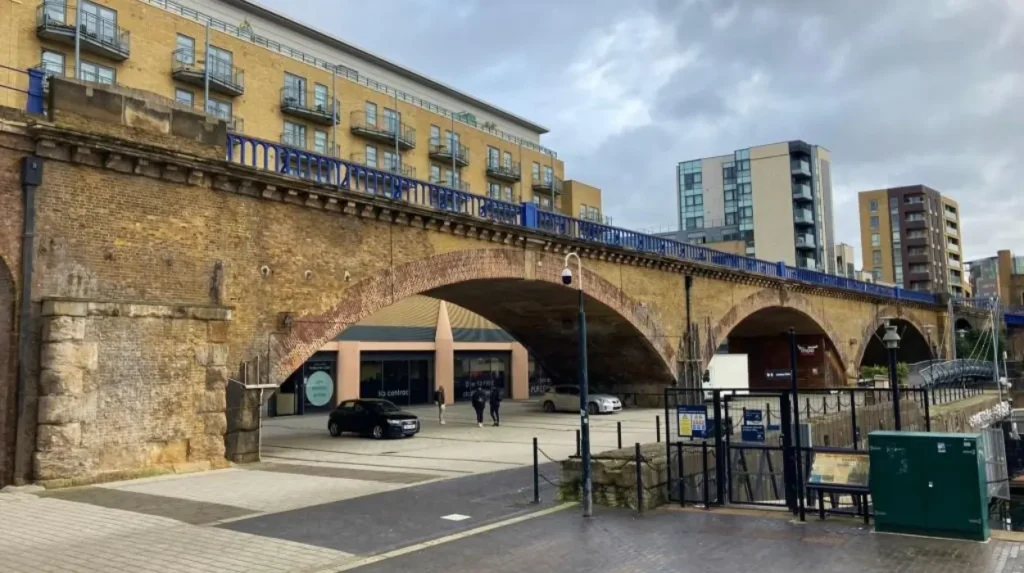
Victorian brick viaducts continue carrying passenger services across the capital.
Historic station facades preserve decorative stonework, ironwork, clock towers, and glass roofs.
Railway arches beneath elevated tracks have found new commercial uses including restaurants, workshops, galleries, retail premises, and cultural venues.
Museums preserve locomotives, signalling equipment, engineering drawings, passenger records, and archival photographs documenting railway development.
Historic railway documents also assist genealogical researchers tracing employment histories, migration patterns, military service, and family movements throughout Britain.
Preservation organisations collaborate with engineers, historians, architects, and local authorities to maintain historically significant railway infrastructure for future generations.
Why does London’s railway expansion remain important today?
London’s railway expansion remains important because it established Britain’s national transport framework, influenced global railway engineering, shaped urban development, supported economic growth, and created infrastructure that continues serving millions of passengers while preserving nationally significant industrial heritage.
Modern rail services continue operating along many nineteenth-century routes.
Although technology has advanced significantly, the original strategic planning remains remarkably durable.
Historic termini still function as Britain’s principal gateways connecting regional cities with the national capital.
Engineering principles developed during Victorian railway construction influenced projects throughout Europe, North America, Asia, Australia, and Africa.
Urban planning also reflects railway expansion.
Many London suburbs originated around railway stations established during the nineteenth century.
Residential growth, commercial investment, and public transport integration continue following these historic transport corridors.
Railways remain essential for environmental sustainability through efficient mass transit.
Contemporary investment builds upon Victorian foundations rather than replacing them entirely.
This continuity demonstrates the exceptional quality of nineteenth-century engineering and strategic planning.
London’s railway history therefore extends beyond transport alone. It represents industrial innovation, architectural achievement, national economic development, scientific progress, and social transformation. The railway network united regional communities, accelerated commerce, standardised national timekeeping, encouraged suburban living, and connected Britain more closely than ever before.
More than 180 years after the first major railway lines entered the capital, London’s railway expansion continues shaping mobility, commerce, heritage conservation, tourism, and national infrastructure. Its stations, bridges, tunnels, and viaducts remain enduring symbols of Britain’s Industrial Revolution and its lasting contribution to global transportation history.
Frequently Asked Question
When did London’s railway expansion begin?
London’s railway expansion began in the 1830s during the Industrial Revolution. The first major passenger railway serving the capital, the London and Birmingham Railway, opened in 1838, marking the start of rapid rail development.