
London is internationally recognised for its royal palaces, iconic bridges, grand squares, and famous museums. Yet behind busy streets, historic gateways, medieval alleys, and Georgian façades lies another side of the capital. Hidden courtyards preserve centuries of architectural history, commercial development, religious life, legal traditions, and artistic culture. Many originated as monastery precincts, coaching inns, merchants’ yards, guild properties, or institutional gardens that survived London’s continuous urban transformation.
- Why are London’s hidden courtyards historically important?
- Which hidden courtyards best represent London’s historic character?
- How did medieval London shape today’s hidden courtyards?
- How did coaching inns create many of London’s surviving courtyards?
- Which legal courtyards reveal London’s judicial history?
- What architectural styles appear across London’s hidden courtyards?
- How have London’s hidden courtyards survived urban redevelopment?
- What role do hidden courtyards play in London’s cultural heritage today?
- What should visitors know before exploring London’s hidden courtyards?
- Why do hidden courtyards remain essential to understanding London’s history?
- Frequently Asked Questions
These enclosed spaces illustrate how London expanded from a medieval city into one of the world’s largest capitals while retaining remarkable pockets of historic character. Today, many remain accessible to visitors, offering quieter environments where architecture, archaeology, and local history can be appreciated away from major tourist routes.
Why are London’s hidden courtyards historically important?
London’s hidden courtyards preserve medieval, Tudor, Georgian, Victorian, and Edwardian urban development within enclosed spaces that escaped extensive redevelopment. They reveal commercial, legal, religious, residential, and artistic history while demonstrating how London’s historic street network evolved across nearly one thousand years of continuous occupation.
Unlike formal public squares, courtyards developed for practical purposes. Many began as service yards attached to monasteries, coaching inns, warehouses, guild halls, or merchant residences. Others formed around institutional buildings such as churches, legal chambers, hospitals, or educational establishments.
Following the Norman Conquest in 1066, London’s population expanded steadily within defensive walls before spreading westward toward Westminster. Dense urban development created narrow lanes, enclosed yards, and interconnected passages that maximised available land.
The Great Fire of London in 1666 destroyed approximately 13,200 houses, 87 parish churches, numerous civic buildings, and much of the medieval City. However, several enclosed courtyards survived because they stood beyond the fire’s main path or were rebuilt while retaining their original layouts.
Many of today’s hidden courtyards remain protected through conservation areas, statutory listed building status, and planning controls administered by the City of London Corporation and London borough councils.
Which hidden courtyards best represent London’s historic character?
Several hidden courtyards collectively represent London’s medieval commerce, legal traditions, Georgian elegance, Victorian creativity, and religious heritage. Each location preserves distinct architectural styles and historical functions that illustrate different stages of London’s development from the Middle Ages through the twentieth century.
The city’s finest hidden courtyards include historic inns, legal precincts, market yards, church gardens, museum courts, artisan workshops, and restored commercial spaces.
St Dunstan in the East Garden
Originally founded around the 12th century, St Dunstan in the East served as a parish church within the City of London.
The church suffered repeated damage, including during the Great Fire of London, before Sir Christopher Wren supervised major rebuilding work. German bombing during the Blitz in 1941 destroyed much of the structure.
Rather than reconstructing the church after the Second World War, authorities transformed the surviving ruins into a public garden during the 1970s. Gothic windows, ivy-covered stone walls, and mature planting create one of London’s most distinctive enclosed green spaces.
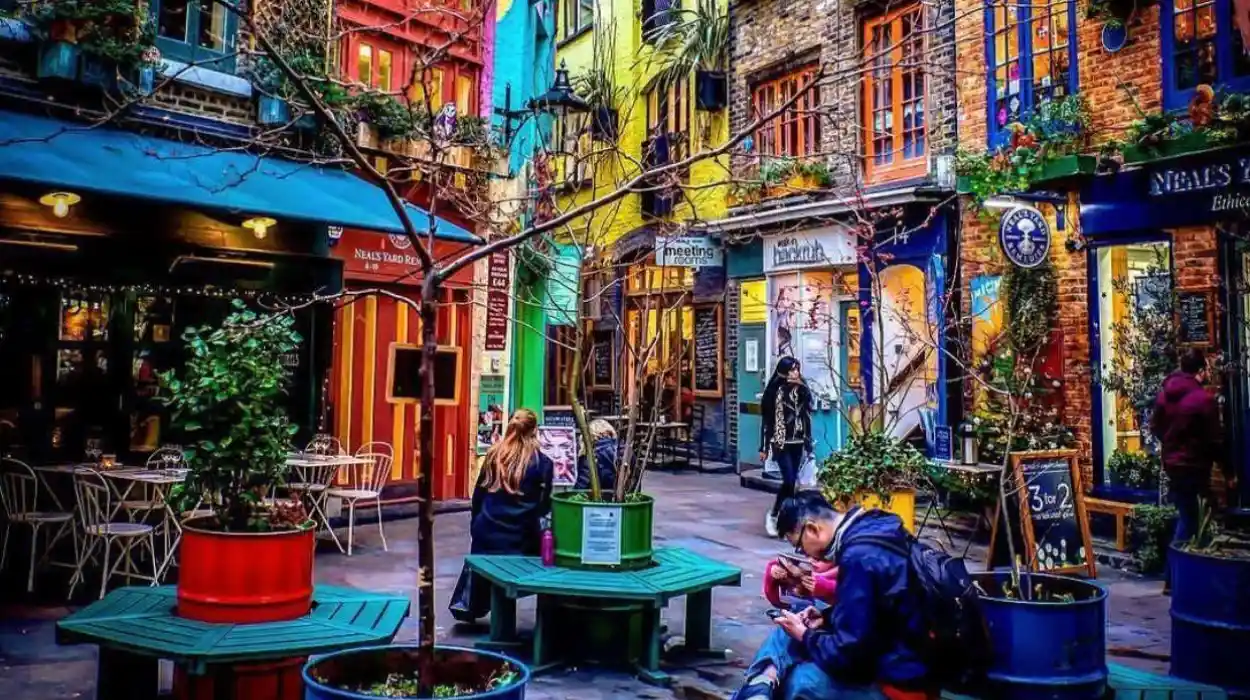
Neal’s Yard
Neal’s Yard originated during the seventeenth century behind Covent Garden’s expanding street network.
Originally occupied by warehouses and small workshops, the courtyard underwent significant regeneration during the late twentieth century. Colourful buildings now house independent businesses while preserving the original enclosed urban form.
Its narrow entrance from Shorts Gardens continues the tradition of hidden London spaces revealed only after passing through surrounding streets.
Middle Temple Courtyard
Middle Temple forms part of the historic Inns of Court, professional legal institutions dating back several centuries.
The central courtyards contain remarkable examples of Tudor and Georgian architecture surrounding Temple Church and Middle Temple Hall.
The area escaped the Great Fire largely because its position beside the River Thames lay outside the principal fire zone.
Barristers continue using these courtyards today, maintaining one of London’s longest continuously occupied legal communities.
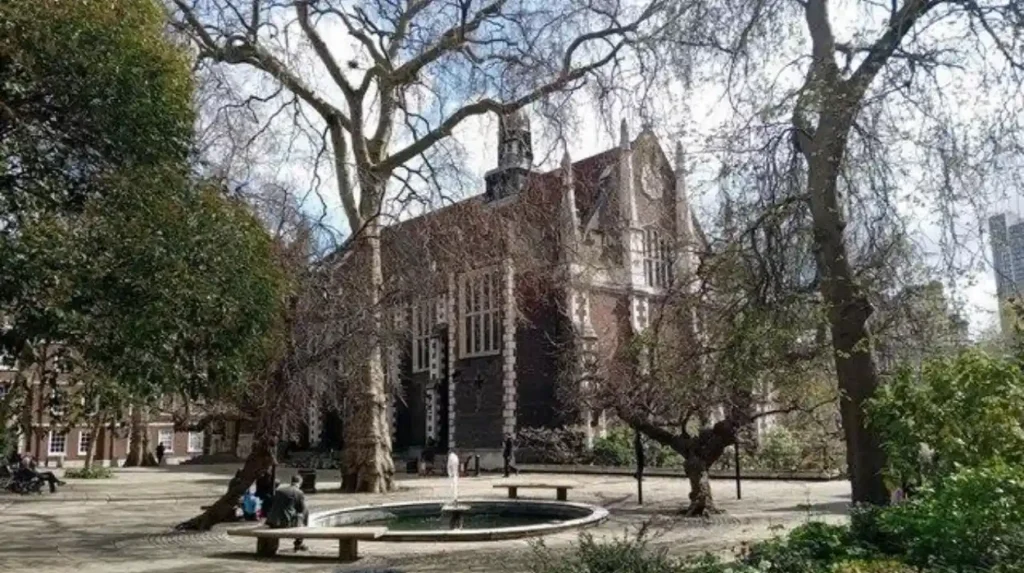
Staple Inn Courtyard
Staple Inn stands along High Holborn and preserves one of London’s finest surviving Tudor timber-framed façades.
Behind the famous frontage lies a peaceful courtyard dating largely from the sixteenth century.
Originally associated with the wool staple trade before later becoming an Inn of Chancery, the complex illustrates London’s legal and commercial history.
The Great Fire did not reach this western location, allowing significant medieval structures to survive.
Charterhouse Square
The Charterhouse began as a Carthusian monastery established during the fourteenth century.
Following the Dissolution of the Monasteries under Henry VIII, the site became a Tudor mansion before evolving into a charitable institution and school.
Its enclosed square and surrounding historic buildings preserve over 650 years of continuous institutional history.
How did medieval London shape today’s hidden courtyards?
Medieval London’s defensive walls, monasteries, guilds, markets, and merchant properties created enclosed courtyards for security, commerce, storage, and communal life. Many later developments respected original property boundaries, allowing these historic spaces to survive beneath modern urban growth.
Medieval London occupied roughly one square mile inside Roman walls.
Limited building space encouraged dense development. Buildings surrounded internal yards used for workshops, storage, kitchens, wells, gardens, livestock, and trade.
Monastic institutions established cloisters that organised religious life around enclosed gardens.
Guilds constructed halls with internal courts for meetings, training, and commercial regulation.
Merchants created secure compounds protecting valuable imported goods arriving from European ports.
As London expanded beyond the city walls during the Tudor and Stuart periods, many original courtyard layouts remained embedded within larger developments.
Modern archaeological investigations repeatedly confirm that present-day property lines frequently follow medieval land divisions established over 700 years ago.
How did coaching inns create many of London’s surviving courtyards?
Coaching inns developed enclosed courtyards where horses, passengers, goods, and mail coaches operated efficiently. Although railway expansion reduced their importance during the nineteenth century, several historic inn courtyards remain preserved as valuable examples of London’s transport history.
Before railways transformed travel, stagecoaches connected London with every major English town.
Large inns required spacious internal yards where coaches could enter through archways directly from busy streets.
These courtyards contained:
Stables and carriage facilities
Hundreds of horses required accommodation, feeding areas, blacksmith services, and veterinary care.
Many major coaching inns maintained extensive stable blocks surrounding central yards.
Accommodation and commerce
Travellers stayed overnight while merchants exchanged goods and information.
Public houses, kitchens, lodging rooms, warehouses, and administrative offices overlooked enclosed courtyards.
Several surviving examples retain their original proportions despite later commercial adaptation.
Which legal courtyards reveal London’s judicial history?
London’s legal courtyards preserve centuries of English judicial education, professional training, and legal administration. The Inns of Court continue functioning as professional institutions while maintaining remarkable historic buildings, gardens, libraries, and ceremonial spaces dating from medieval and Tudor England.
The four Inns of Court—Inner Temple, Middle Temple, Lincoln’s Inn, and Gray’s Inn—developed independently between the fourteenth and sixteenth centuries.
Their enclosed courts organised residential chambers, libraries, dining halls, chapels, and gardens around communal spaces.
Lincoln’s Inn
Founded during the medieval period, Lincoln’s Inn contains elegant brick courtyards reflecting Tudor, Georgian, and Victorian architecture.
Its Great Hall, library, and surrounding lawns remain integral parts of barrister education.
Gray’s Inn
Gray’s Inn preserves several historic courtyards connected by gardens and walkways.
Many buildings date from reconstruction following fires and later eighteenth-century improvements.
Together, these legal precincts demonstrate remarkable continuity within London’s professional landscape.
What architectural styles appear across London’s hidden courtyards?
Hidden courtyards collectively display Norman, Gothic, Tudor, Stuart, Georgian, Victorian, Edwardian, and modern restoration architecture. Their diverse styles reflect London’s continuous rebuilding following fires, political change, economic expansion, industrialisation, and wartime destruction over nearly one millennium.
Architectural evolution remains visible because many courtyards contain buildings constructed during different historical periods.
Medieval and Gothic architecture
Stone churches, pointed arches, cloisters, and vaulted passages survive in religious courtyards including Temple Church and St Bartholomew’s precincts.
Tudor architecture
Timber framing, jettied upper floors, decorative beams, and brick gatehouses remain visible at Staple Inn and several Inns of Court.
Georgian architecture
Symmetrical façades, sash windows, elegant brickwork, and restrained classical proportions define many eighteenth-century courtyards.
Victorian architecture
Industrial prosperity introduced elaborate brick detailing, cast iron, decorative stonework, and improved sanitation systems.
Modern conservation balances restoration with preservation, ensuring historical authenticity remains protected.
How have London’s hidden courtyards survived urban redevelopment?
Historic preservation policies, listed building protection, conservation areas, charitable ownership, institutional stewardship, and public heritage funding enabled numerous hidden courtyards to survive despite extensive redevelopment during the nineteenth and twentieth centuries.
London experienced extraordinary expansion during the Industrial Revolution.
Road widening, railway construction, office development, and commercial rebuilding eliminated thousands of historic buildings.
However, several factors preserved important courtyards.
Historic institutions retained ownership of long-established properties.
Religious organisations maintained church precincts.
Legal societies continued occupying Inns of Court.
Charitable trusts protected educational and residential complexes.
Since the twentieth century, statutory listing has protected buildings possessing architectural or historical significance.
Conservation areas further safeguard the wider historic setting surrounding important courtyards.
These legal protections ensure redevelopment respects historic character while accommodating modern use.
What role do hidden courtyards play in London’s cultural heritage today?
Hidden courtyards continue serving educational, cultural, commercial, religious, and recreational purposes while preserving authentic historic environments. They connect modern London with earlier centuries through architecture, archaeology, conservation, and continued public accessibility.
Many courtyards now host galleries, cafés, artisan workshops, educational institutions, gardens, legal chambers, and heritage attractions.
Museums regularly interpret archaeological discoveries recovered during nearby excavations.
Universities incorporate these spaces into architectural, archaeological, and historical teaching.
Heritage organisations conduct guided walks explaining London’s urban evolution.
Visitors experience historic environments that remain active rather than functioning solely as museum exhibits.
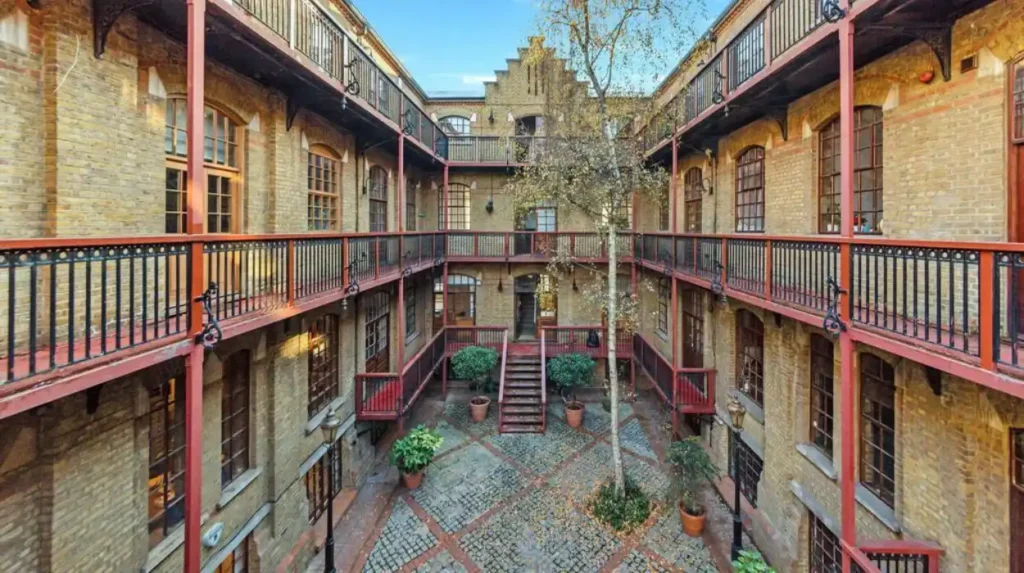
To experience these historic spaces in person today, consult our comprehensive [History of London’s Railway Expansion and Its Lasting Impact on National Transportation] for itineraries and visiting parameters.
What should visitors know before exploring London’s hidden courtyards?
Visitors benefit from understanding property ownership, public access arrangements, historical significance, and conservation responsibilities before exploring London’s hidden courtyards. Respectful behaviour ensures these important heritage sites remain protected while continuing to serve modern institutional and community functions.
Many courtyards remain open during normal daytime hours.
Some belong to active legal institutions, churches, residential communities, or private businesses.
Photography policies differ between locations.
Visitors should remain on designated paths where gardens or archaeological features require protection.
Historic paving, stonework, timber structures, and listed buildings require careful conservation.
Seasonal planting and restoration work occasionally restrict access.
Early mornings and weekdays often provide quieter opportunities for appreciating architectural details and historic atmosphere.
Walking between nearby courtyards also reveals London’s surviving medieval street pattern, narrow passages, and historic alleyways that remain largely unchanged despite centuries of urban growth.
Why do hidden courtyards remain essential to understanding London’s history?
Hidden courtyards preserve authentic evidence of London’s architectural evolution, institutional continuity, commercial development, and everyday urban life. Their survival provides historians, archaeologists, educators, visitors, and conservation professionals with irreplaceable records spanning nearly one thousand years of continuous city history.
Major landmarks explain London’s national significance, but hidden courtyards reveal how ordinary people lived, worked, worshipped, traded, studied, and travelled across successive generations.
Their enclosed layouts preserve original property boundaries established during medieval urban expansion.
Their buildings demonstrate changing construction methods from timber framing to Georgian brickwork and Victorian engineering.
Their gardens illustrate changing attitudes toward landscape design and public space.
Their continued use by legal societies, churches, charities, educational institutions, and local businesses demonstrates remarkable institutional continuity.
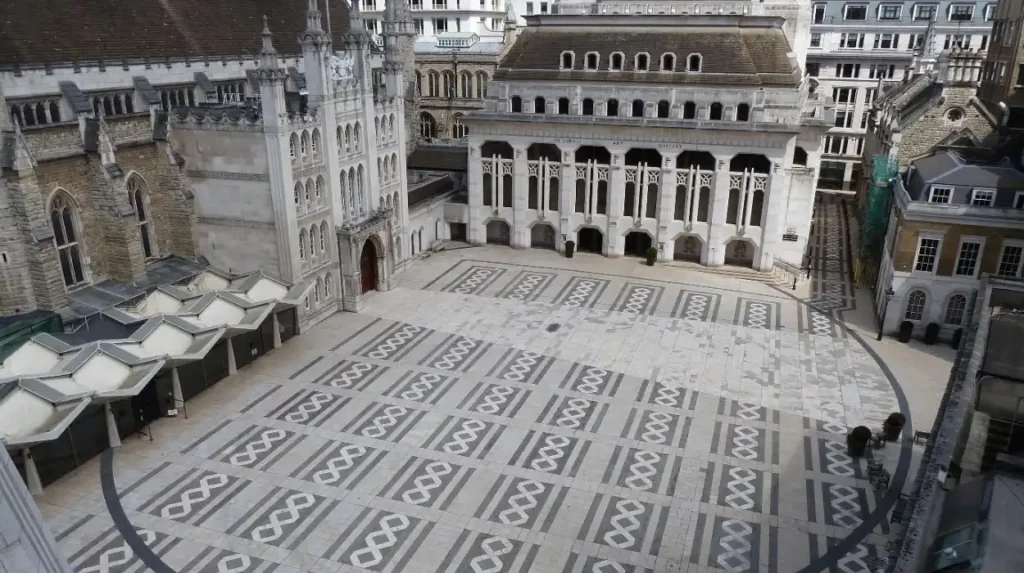
As archaeological research, conservation science, and digital heritage documentation continue advancing, London’s hidden courtyards remain invaluable resources for understanding one of the world’s oldest continuously occupied capital cities. Their preservation ensures future generations can study authentic environments that connect modern London directly with its medieval origins, Tudor transformation, Georgian refinement, Victorian expansion, and twentieth-century recovery.
Frequently Asked Questions
What are London’s hidden courtyards?
London’s hidden courtyards are enclosed historic spaces located behind streets, alleys, churches, inns, and public buildings. Many date from the medieval, Tudor, Georgian, and Victorian periods and preserve important architectural and cultural heritage.