London is widely associated with the British Museum, the Victoria and Albert Museum, and the Natural History Museum. Its historical identity also survives through a network of smaller and lesser-known museums. These institutions preserve specialised collections linked to architecture, medicine, transport, postal communication, maritime trade, social history, design, science, and everyday life.
- Why are London’s lesser-known museums important to the history of the capital?
- How did private collections become museums in London?
- What does Sir John Soane’s Museum reveal about London’s collecting culture?
- How did medicine create some of London’s most specialised museums?
- Why are London’s engineering museums important to the Industrial Revolution?
- How did London’s transport systems become museum collections?
- What does the Postal Museum reveal about communication in London?
- How did London’s docks and global trade shape museum collections?
- Why do London’s small museums preserve everyday history?
- How have London’s museums preserved historical buildings as collections?
- How have museums changed their collections to represent modern London?
- What role do archives and archaeological collections play in London’s museum history?
- How are London’s lesser-known museum collections preserved for the future?
- Why will London’s lesser-known museums remain historically important?
The history behind London’s lesser-known museums reveals how the capital developed through institutions created by architects, doctors, engineers, collectors, professional organisations, local communities, and public authorities. Their collections often began with a single purpose. Over time, they became important records of wider historical change.
These museums also show how London’s past was preserved. Some collections were assembled by individuals. Others emerged from professional training, municipal administration, industrial development, scientific research, or the preservation of buildings that retained their original interiors.
Understanding these museums requires more than listing unusual objects. Their collections provide evidence of how London worked. They document the growth of the city, the expansion of the British Empire, the development of modern science, the transformation of transport, the rise of mass communication, and changes in everyday social life.
Why are London’s lesser-known museums important to the history of the capital?
London’s lesser-known museums preserve specialised evidence of the capital’s social, scientific, architectural, industrial, medical, and cultural development through collections formed by individuals, institutions, professional bodies, and communities over several centuries.
London’s museum history developed through different collecting traditions. The earliest collections were often private. Wealthy individuals gathered antiquities, artworks, books, scientific specimens, and architectural fragments. Some collections later became public institutions.
The eighteenth and nineteenth centuries created new conditions for museum development. The growth of scientific societies, hospitals, universities, professional organisations, industrial companies, and municipal authorities produced large quantities of historical material. Objects once regarded as tools or records became evidence of social change.
The Victorian period was especially important. London expanded rapidly after 1800. The population increased, industrial production grew, railway networks spread, and the capital became a centre of global commerce. These changes created specialised institutions devoted to medicine, engineering, transport, postal communication, and urban administration.
The twentieth century added another layer. Museums began collecting ordinary social history. Photographs, clothing, domestic objects, advertisements, workplace equipment, and personal records became historical evidence.
London Museum provides a useful example of this broader development. Its collections originated partly in the Guildhall Museum, established in 1826, and the London Museum, established in 1911. The two collections were combined through the Museum of London Act 1965. The institution now holds around seven million objects covering approximately 450,000 years of London’s history.
This institutional history explains why smaller museums matter. They often preserve evidence that a large general museum cannot display in detail. Their specialist collections provide deeper records of particular professions, technologies, buildings, communities, and historical processes.
How did private collections become museums in London?
Private collections became museums when collectors, architects, scientists, professional organisations, and public institutions preserved their possessions for education, research, or public access, transforming personal material into permanent historical resources.
The private collector played a major role in London’s museum history. Collecting was connected to education, scholarship, social status, scientific research, and architectural study.
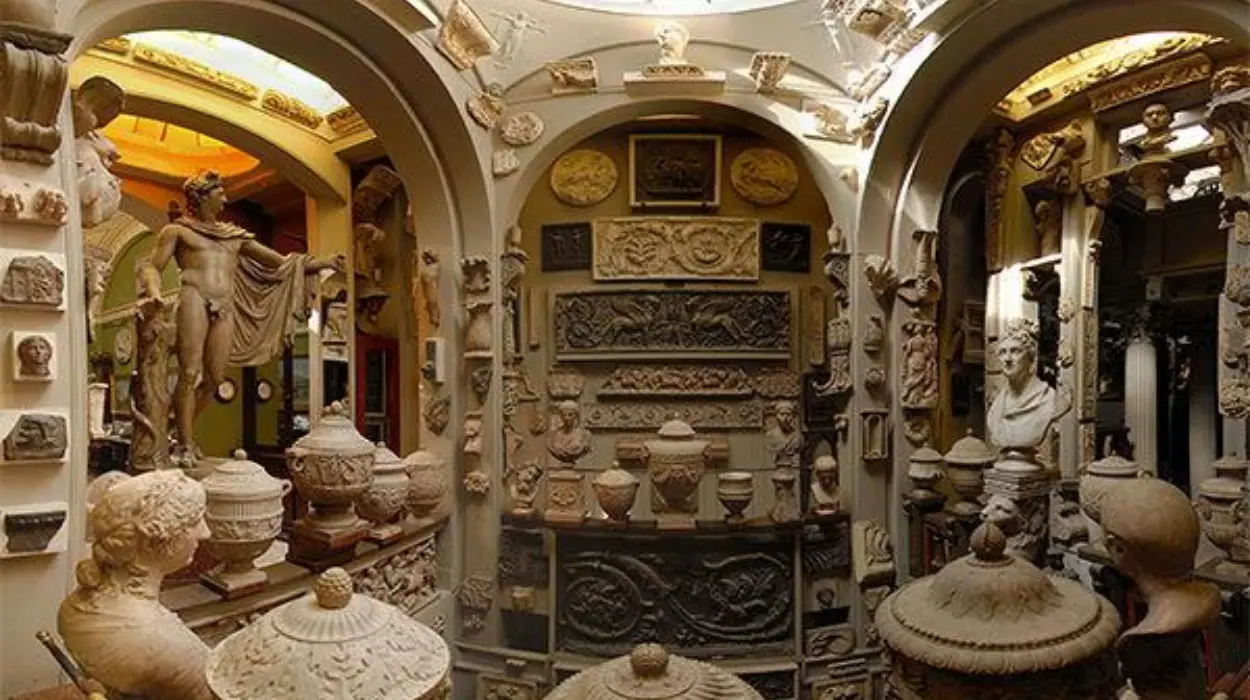
Sir John Soane’s Museum provides one of the clearest examples. Sir John Soane, born in 1753 and died in 1837, was a leading British Neo-Classical architect. His London house became a museum containing antiquities, furniture, sculpture, architectural models, paintings, books, and drawings.
The museum preserves the house and collection in the condition associated with Soane’s death. Its holdings include more than 30,000 architectural drawings and a major research library. The collection demonstrates how an architect’s personal interests reflected the wider intellectual culture of the eighteenth and early nineteenth centuries.
Soane collected objects from different periods and regions. He placed them within an architectural environment designed to create relationships between space, art, history, and design. The result is not simply a collection of objects. It is a preserved historical environment.
This model influenced the development of the house museum. A house museum preserves both objects and context. The building becomes part of the collection.
The process also demonstrates an important principle in heritage preservation. Historical evidence is not limited to individual artefacts. Rooms, furniture arrangements, architectural details, and the relationship between objects can provide evidence about how people lived, worked, collected, and understood history.
What does Sir John Soane’s Museum reveal about London’s collecting culture?
Sir John Soane’s Museum reveals how eighteenth- and nineteenth-century London connected architecture, antiquities, art collecting, scholarship, and public education through the preservation of an architect’s house and extensive personal collection.
Soane’s collection developed during a period of intense interest in classical civilisation. British architects and scholars studied Greek and Roman architecture as sources of design knowledge.
The collection also reflects the development of architectural education. Drawings, models, fragments, and books created a research environment for understanding buildings. Architectural drawings preserved design processes that completed structures could not show.
The museum’s preservation strategy is historically significant. The building itself remains a primary source. The interiors provide evidence of Soane’s approach to display and architectural composition.
This makes the museum valuable to several audiences. Historians study collecting culture. Architects study design history. Students examine the relationship between architecture and objects. Conservation specialists study the preservation of a historic interior.
The museum also demonstrates how a small institution can contain a collection of international importance. Its physical size does not determine its historical significance.
How did medicine create some of London’s most specialised museums?
Medicine created specialised London museums because hospitals, surgeons, medical schools, and scientific institutions preserved anatomical specimens, instruments, records, and teaching materials that documented the development of surgery and medical knowledge.
London became an important centre of medical education during the eighteenth and nineteenth centuries. Hospitals and medical schools expanded as professional standards developed.
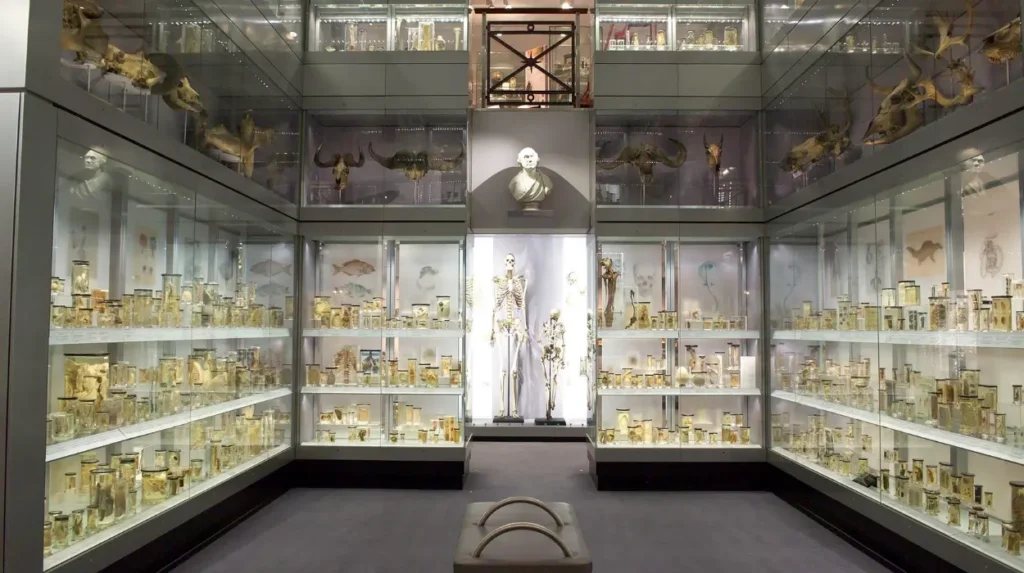
The Hunterian Museum represents this tradition. It is associated with the Royal College of Surgeons of England and the collections of John Hunter, an eighteenth-century surgeon and anatomist.
John Hunter lived from 1728 to 1793. He collected anatomical specimens, animals, pathological material, and objects connected with medical investigation. His approach linked observation, comparative anatomy, experimentation, and surgery.
The collection reflects the historical development of medicine before modern diagnostic technologies. Surgeons relied on direct observation and anatomical knowledge. Specimens provided physical evidence for teaching and research.
The museum’s historical importance extends beyond famous medical figures. Its collections document the development of surgical instruments, anatomical study, pathology, and professional education.
Medical museums also present complex preservation challenges. Biological specimens require controlled environments. Historical instruments require conservation. Human remains require ethical treatment and appropriate interpretation.
These issues show how museums change over time. A collection originally assembled for scientific education requires different methods of display in a modern public museum.
Why are London’s engineering museums important to the Industrial Revolution?
London’s engineering museums preserve physical evidence of industrialisation by documenting the machines, structures, technologies, and engineering systems that transformed water supply, transport, manufacturing, communication, and urban infrastructure.
The Industrial Revolution changed London’s physical environment. Steam power, railways, hydraulic systems, sewage infrastructure, and mechanical production altered how the city operated.
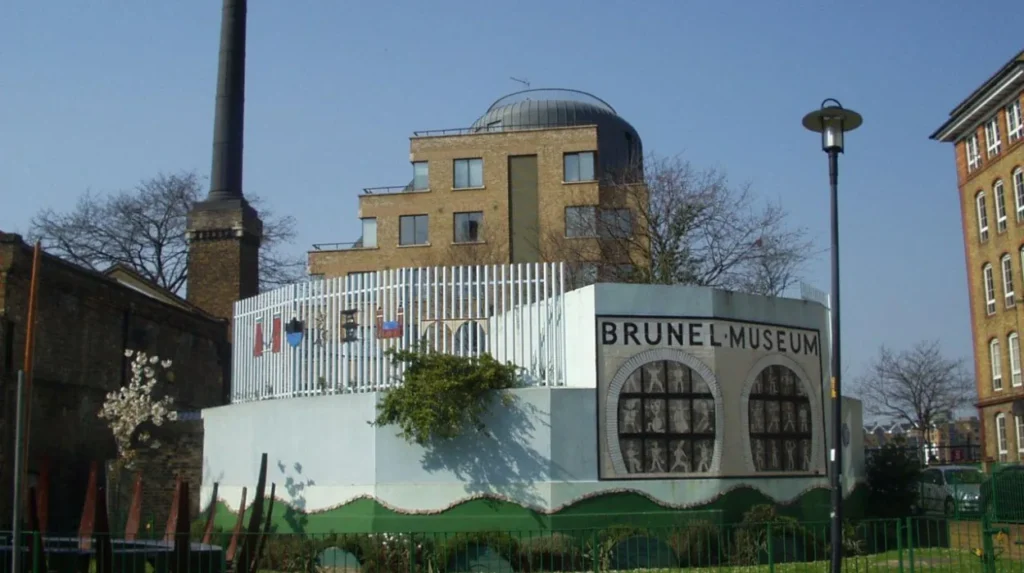
The Brunel Museum in Rotherhithe illustrates this transformation through the history of the Thames Tunnel. Marc Isambard Brunel and his son Isambard Kingdom Brunel were central figures in British engineering.
The Thames Tunnel was constructed beneath the River Thames and opened in 1843. It was the first tunnel beneath a navigable river constructed using Marc Brunel’s tunnelling shield technology.
The tunnel demonstrates the relationship between engineering innovation and urban expansion. The Thames was both a major transport route and a physical barrier. A tunnel created a new connection between communities on opposite sides of the river.
The museum preserves the historical memory of this engineering process. Its importance lies in the connection between a specific structure, technological innovation, and the development of London’s transport network.
Engineering museums also preserve processes that are difficult to understand from written records alone. Machines, tools, construction equipment, models, and surviving structures reveal how technical systems functioned.
How did London’s transport systems become museum collections?
London’s transport museums developed because railways, underground systems, buses, and engineering organisations preserved vehicles, equipment, documents, maps, and design materials that record the capital’s transformation into a modern metropolitan transport system.
London’s transport history is closely connected to population growth. The expansion of the capital created a need for faster movement between residential districts, commercial areas, industrial sites, and railway termini.
The London Transport Museum preserves this history through vehicles, posters, maps, photographs, uniforms, engineering objects, and other material connected with public transport.
Transport collections provide evidence of more than technological change. They also document urban planning, employment, design, advertising, public policy, and social behaviour.
The development of underground transport changed the geography of London. Stations influenced residential expansion. New railway connections linked outer districts to central employment areas.
Transport posters provide evidence of visual culture. Their designs promoted destinations, public services, safety, and the identity of London’s transport system.
Vehicles provide physical evidence of engineering history. Their construction shows changes in materials, power systems, passenger capacity, and accessibility.
The historical value of transport museums therefore extends beyond old trains and buses. They preserve evidence of how the city became physically connected.
What does the Postal Museum reveal about communication in London?
The Postal Museum reveals how Britain’s communication system developed through postal networks, sorting technology, transport infrastructure, wartime services, stamps, mail vehicles, and the underground Mail Rail system that operated in London from 1927 to 2003.
The history of postal communication is central to the development of modern Britain. Letters connected households, businesses, government departments, military personnel, and communities.
The Postal Museum preserves objects linked to the development of postal services. Its collections include postal equipment, vehicles, stamps, uniforms, records, and communication technologies.
The museum’s Mail Rail history is especially significant. The underground railway was developed to transport mail beneath London. It began operating in 1927 and continued until 2003.
The system connected sorting offices and helped move mail through a congested city. Its tunnels demonstrate how infrastructure developed below the streets as London expanded above ground.
The history of Mail Rail also reflects the changing relationship between technology and communication. The system was created during an era when physical letters dominated communication. Its eventual closure reflected major changes in postal operations and communication technology.
The Postal Museum therefore connects Victorian communication systems with modern digital transformation. Its collection preserves the material infrastructure of a communication network that shaped British society.
How did London’s docks and global trade shape museum collections?
London’s docks created museum collections documenting maritime trade, slavery, migration, commerce, labour, imperial expansion, and the physical infrastructure that connected the capital to international economic networks.
The River Thames was central to London’s development. Docks, warehouses, wharves, ships, and trading companies formed a complex economic system.
The Museum of London Docklands preserves this history. Its collections examine the development of the docks and the relationship between London and global trade.
The Docklands story includes commercial expansion and industrial employment. It also includes the history of slavery and the economic systems connected with Atlantic trade.
Museum collections provide material evidence of these processes. Documents, maps, cargo-related objects, commercial records, tools, photographs, and personal accounts show how the docklands functioned.
The physical environment also remains important. Former warehouses and dock structures provide architectural evidence of the port economy.
The transformation of Docklands during the late twentieth century created another historical layer. Industrial port functions declined, and large areas underwent redevelopment.
The result is a landscape containing multiple periods of history. Historic docks and warehouses exist alongside modern commercial buildings. Museums preserve the connection between these different phases.
Why do London’s small museums preserve everyday history?
London’s small museums preserve everyday history by collecting ordinary objects, personal records, workplace equipment, domestic items, photographs, and community memories that reveal how residents experienced major political, economic, and social changes.
Large museums often focus on nationally significant objects. Smaller museums frequently preserve local and ordinary material.
This distinction is important for social history. Everyday objects provide evidence of how people lived.
A household object can document manufacturing, consumption, design, and economic conditions. A uniform can reveal employment and institutional identity. A photograph can record changes in streets, workplaces, families, and communities.
Local museums also preserve geographical detail. London contains many districts with distinct histories. Docklands, Rotherhithe, Bethnal Green, Lambeth, Greenwich, Clerkenwell, and other areas developed through different combinations of industry, housing, trade, religion, migration, and transport.
Community collecting became increasingly important during the twentieth century. Museums began to document the experiences of groups that had received limited representation in earlier collections.
This approach expanded the definition of historical evidence. Personal memories, oral histories, photographs, domestic objects, and community archives became important sources.
The process also has value for genealogical research. Local records and personal collections can provide information about occupations, neighbourhoods, family networks, migration, and social change.
How have London’s museums preserved historical buildings as collections?
London museums preserve historical buildings by treating architecture, interiors, rooms, infrastructure, and original spatial relationships as evidence alongside movable objects and written records.
A historic building can function as a museum collection. Its materials preserve evidence of construction, use, alteration, ownership, and changing social conditions.
Sir John Soane’s Museum is a strong example. Its historic interiors are central to the institution’s identity.
Other museums use former industrial or institutional buildings. The building itself explains the original purpose of the collection.
This approach creates conservation challenges. Historic structures require maintenance. Environmental conditions must protect objects without damaging the building. Public access must be balanced with preservation.
The result is a form of layered historical interpretation. Visitors encounter the object, the building, and the historical process that connects them.
Architectural preservation also helps explain London’s physical development. A museum located within a former warehouse, tunnel, hospital, house, or industrial structure provides evidence of how the city was built.
These buildings therefore function as historical documents.
How have museums changed their collections to represent modern London?
London museums expanded their collecting policies to represent modern communities, migration, social movements, changing workplaces, popular culture, and contemporary urban life alongside older archaeological and historical material.
Earlier museums often prioritised ancient objects, famous individuals, major events, and elite culture. Modern collecting expanded the historical record.
London Museum provides a significant example. Its collections now include archaeology, fashion, social history, archives, decorative arts, photographs, and material connected with the experiences of London’s diverse population.
The institution’s collecting history changed after the creation of the Museum of London in 1965. Its collections were identified as strong in some historical periods but less complete for the late nineteenth and twentieth centuries. The museum therefore developed collecting priorities to strengthen modern social history.
Projects such as “The Peopling of London” in the 1990s contributed to the documentation of migration and the city’s diverse population.
This development reflects a wider change in historical research. Modern urban history increasingly examines ordinary residents, migration, work, gender, race, community identity, and social movements.
Museum collections now preserve evidence from contemporary life. Digital records, recorded interviews, photographs, campaign materials, and everyday objects provide sources for future historians.
Explore More History Of London
London Art Scene Evolution: Museums, Galleries & Creativity London
London’s Architectural Evolution Through Historic Buildings | London
What role do archives and archaeological collections play in London’s museum history?
Archives and archaeological collections provide direct evidence of London’s development by preserving material from excavations, institutions, businesses, communities, buildings, and individuals across thousands of years of urban history.
Archaeology is particularly important in London because the modern city occupies a landscape with extensive buried remains.
London Museum describes its archaeological collections as covering more than 450,000 years of history. Its archaeological archive is recognised as the world’s largest archaeological archive. The wider collection contains approximately seven million objects across many historical categories.
Archaeological material includes bones, tools, pottery, building materials, coins, personal objects, and evidence of industrial activity.
These objects reveal changes that written sources do not always record. Archaeology provides evidence of diet, technology, settlement, trade, construction, and environmental change.
Archives provide another form of evidence. Business records, institutional documents, photographs, maps, and personal papers preserve information about organisations and communities.
The combination of archaeology and archives creates a stronger historical record. Physical objects show what existed. Documents show how institutions and people described, regulated, or experienced those objects.
How are London’s lesser-known museum collections preserved for the future?
London’s lesser-known museum collections are preserved through conservation, documentation, controlled environments, research, digitisation, building maintenance, public funding, charitable support, and specialist expertise that protect historical evidence for future generations.
Preservation begins with documentation. Museums record an object’s material, condition, origin, ownership history, and relationship to other objects.
Conservation protects physical materials. Paper, metal, textiles, wood, ceramics, photographs, and biological specimens require different methods.
Buildings also require continuous maintenance. Historic structures can suffer from moisture, pollution, structural movement, and heavy visitor use.
Digitisation expands access. Museums create digital records, online catalogues, high-resolution images, and research databases.
Digital access does not replace physical preservation. A digital image cannot fully reproduce the material properties of an object. The original remains essential for scientific analysis, conservation research, and future technologies.
Museums also face financial and operational pressures. Small institutions often depend on specialist staff, volunteers, charitable support, grants, and partnerships.
The long-term survival of these collections depends on sustained preservation policies. Historical significance alone does not protect an object. Conservation requires resources and expertise.
Why will London’s lesser-known museums remain historically important?
London’s lesser-known museums will remain historically important because their specialised collections preserve evidence of technological change, professional knowledge, community life, urban development, and cultural diversity that broad national museums cannot document in equal depth.
The historical importance of these museums will continue to grow as London changes.
Urban redevelopment can remove buildings, industries, workplaces, and neighbourhood features. Museum collections preserve evidence of these environments after physical transformation.
Technological change also creates new preservation challenges. Digital communication, electronic devices, online communities, and rapidly changing technologies require new collecting methods.
Future historians will study the present through objects that seem ordinary today. Transport cards, mobile devices, workplace equipment, packaging, digital records, and community archives will become historical evidence.
The specialist museum therefore has a long-term role. It identifies, preserves, interprets, and contextualises material that would otherwise disappear.
The history behind London’s lesser-known museums is ultimately the history of how the capital chose to remember itself. Its collections preserve famous achievements and ordinary experiences. They record architecture, engineering, medicine, communication, trade, transport, work, migration, and domestic life.
London’s museum landscape is therefore larger than its most famous institutions. Its smaller museums provide detailed historical evidence of the systems that built the city.
To experience this historic cultural landscape in person today, consult our comprehensive [Best Picnic Spots in London for Relaxing Weekends With Scenic Green Surroundings] for itineraries and visiting parameters.
The continuing value of these museums lies in their specificity. A specialist collection can preserve the exact tools of a profession, the machinery of an infrastructure system, the records of a community, or the interior of a historic house.
Together, these collections create a detailed historical record of London through time. They demonstrate that the city’s history survives not only in royal palaces, monumental buildings, and major national museums, but also in small institutions dedicated to particular places, professions, technologies, and communities.
For history enthusiasts, cultural tourists, educators, students, preservationists, and genealogical researchers, these museums provide essential evidence. They show how London developed, how its residents lived, and how historical change left physical traces across the capital.
What are London’s lesser-known museums?
London’s lesser-known museums are specialist institutions that preserve focused collections connected with subjects such as architecture, medicine, engineering, transport, postal communication, maritime trade, archaeology, and local social history.