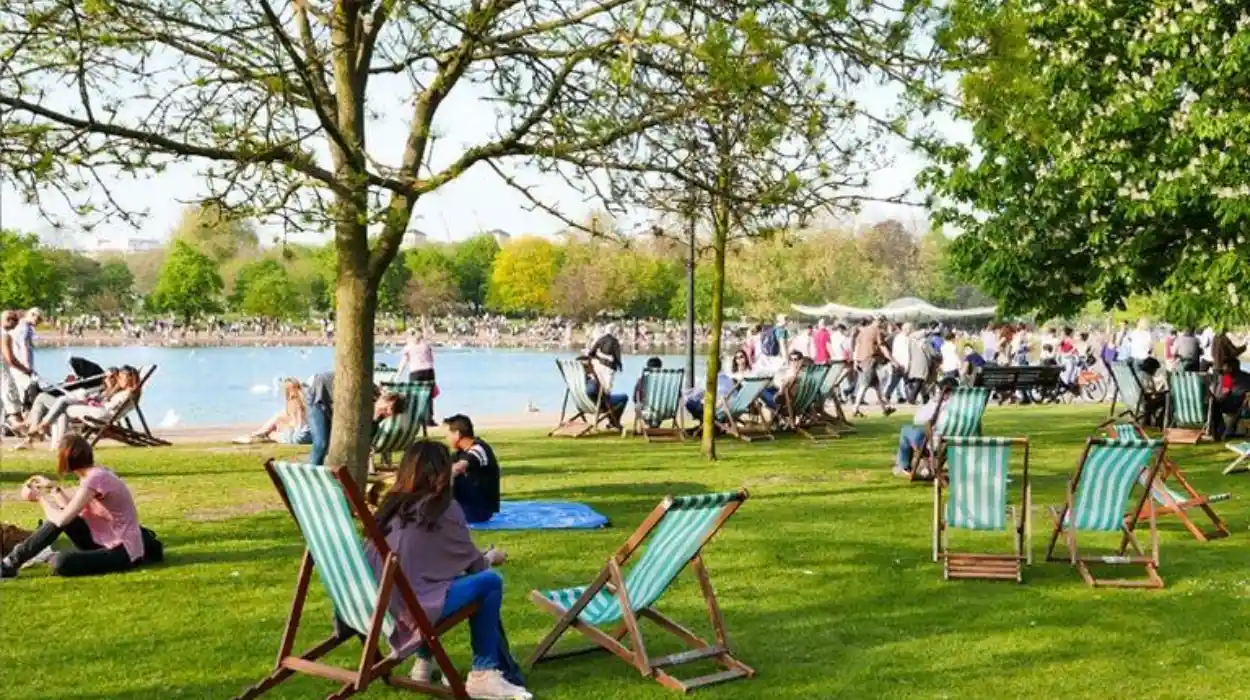
London is one of the world’s great historic cities, but its identity is not defined only by palaces, museums, streets, and monuments. Its parks, commons, heaths, gardens, and ancient woodlands form an equally important part of the capital’s history. Many of the best picnic spots in London developed from royal hunting grounds, medieval common land, Victorian public-health reforms, private estates, or landscapes shaped by centuries of conservation.
- Why does London have so many historic picnic spots?
- Which London picnic spot has the strongest royal history?
- Where can visitors enjoy a picnic beside historic water and public debate?
- Which London picnic spot combines archaeology with panoramic views?
- Which London picnic location offers the best skyline view?
- Which picnic spot is best for ancient woodland and historic countryside?
- Which picnic destination has the strongest Victorian public-park history?
- Which London picnic spot combines royal history with ancient trees and deer?
- Which picnic destination is best for ancient woodland and conservation history?
- Which London picnic spot is best for formal gardens and botanical history?
- How did London’s picnic landscapes change from royal estates to public spaces?
- How should visitors protect London’s historic picnic landscapes?
- What makes London’s best picnic spots historically important for the future?
A London picnic therefore offers more than outdoor dining. It provides direct access to historical landscapes that preserve evidence of royal power, urban expansion, social reform, architectural planning, wartime history, ecological change, and public access. The best locations combine comfortable open space with scenic surroundings and a clear historical identity.
From Richmond Park’s Tudor deer landscape and Greenwich Park’s Roman and Anglo-Saxon archaeology to Victoria Park’s Victorian origins and Epping Forest’s nineteenth-century preservation campaign, London’s picnic destinations represent different stages in the development of the modern capital. The following guide explains the history, landscape, significance, and character of the best picnic spots for relaxing weekends in London.
Why does London have so many historic picnic spots?
London has many historic picnic spots because royal estates, medieval commons, Victorian public parks, ancient woodlands, and private gardens gradually became accessible public green spaces. Their present landscapes preserve centuries of political decisions, urban growth, landscape design, conservation campaigns, and changing ideas about public recreation.
London’s green spaces developed through several historical processes. Royal parks began as hunting grounds connected to palaces and royal residences. Commons preserved shared rights to grazing, fuel collection, and recreation. Victorian parks addressed the pressures created by industrialisation and population growth. Private estates later became public gardens through municipal ownership, charitable foundations, or national conservation bodies.
The Royal Parks provide the clearest example of this long transition. Several London parks originated under the Tudor monarchy, particularly during the reign of Henry VIII. Greenwich Park and Richmond Park served royal hunting interests, while Hyde Park was acquired from Westminster Abbey in 1536 and became part of the royal hunting landscape. Over subsequent centuries, controlled access gradually expanded into public recreation.
The Victorian period accelerated the creation of public parks. Industrial London experienced rapid population growth, dense housing, pollution, and limited access to open land. Victoria Park in east London was proposed in 1840 as a public memorial and opened in 1845. Its creation formed part of a wider government response to the need for green space in expanding suburban districts.
The modern picnic tradition reflects this historical development. A picnic requires public access, maintained grassland, shade, paths, and social acceptance of informal outdoor recreation. These conditions became increasingly common as London’s parks shifted from exclusive royal landscapes or private estates into public cultural and recreational assets.
Which London picnic spot has the strongest royal history?
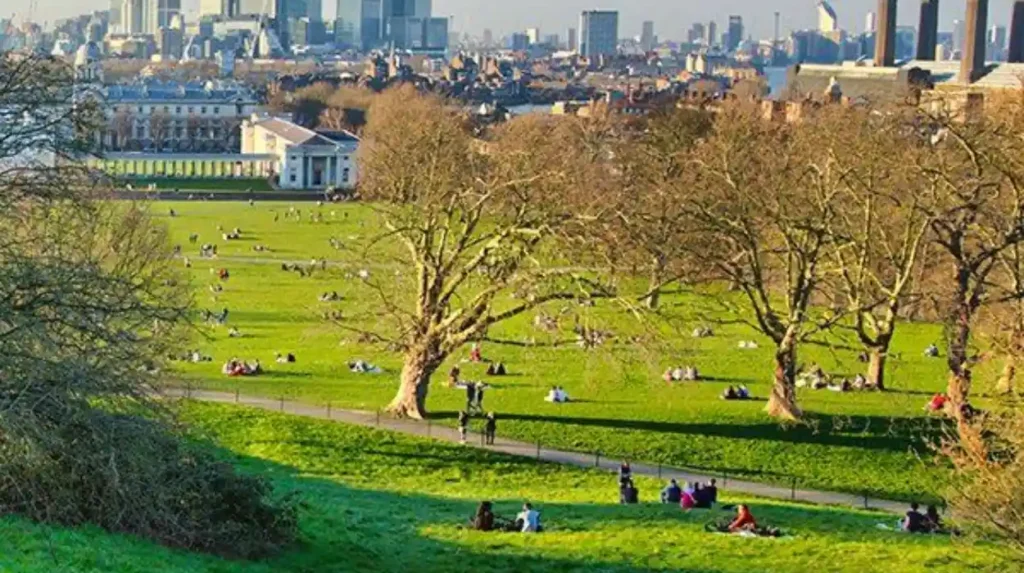
Richmond Park has the strongest combination of royal history, extensive open landscapes, ancient trees, wildlife, and scenic picnic settings. Created as a royal hunting park under Charles I in 1625, it remains London’s largest Royal Park and preserves a landscape shaped by centuries of deer management.
Richmond Park covers approximately 1,000 hectares, equivalent to 2,500 acres, and is the largest of London’s Royal Parks. Its historical identity is closely linked to King Charles I, who moved his court to Richmond in 1625 during an outbreak of plague in London. The surrounding rural landscape provided both refuge and access to royal hunting grounds.
Charles I stocked the newly enclosed park with approximately 2,000 red and fallow deer. In 1637, he constructed a brick wall approximately eight miles long to contain the deer and restrict public access. That boundary remains an important physical reminder of the conflict between royal land ownership and local access.
The park’s present landscape combines grassland, woodland, wetlands, ancient trees, ponds, and elevated viewpoints. Picnic visitors can use open areas while remaining within a landscape that retains strong connections to its seventeenth-century royal origins.
Richmond Park also has major ecological significance. It is a National Nature Reserve and contains approximately 1,000 veteran trees. Its habitats include ancient woodland, wetlands, meadowland, and acid grassland. The park holds designations including Site of Special Scientific Interest, Special Area of Conservation, and Site of Importance for Nature Conservation.
The presence of deer requires responsible picnic behaviour. Visitors should keep food secure, avoid feeding wildlife, and maintain distance from deer, especially during periods of heightened animal activity. The historical landscape depends on active management rather than simple preservation.
Richmond Park is therefore especially suitable for visitors seeking a large-scale picnic landscape with royal history, long-distance views, mature trees, and substantial wildlife value.
Where can visitors enjoy a picnic beside historic water and public debate?
Hyde Park is one of London’s strongest picnic destinations for visitors who want water, open lawns, historic monuments, and direct connections to royal history, political protest, public speech, and national events. Its 142 hectares combine central accessibility with centuries of cultural significance.
Henry VIII acquired Hyde Park from the monks of Westminster Abbey in 1536 and used it as a royal hunting ground. James I later permitted limited access, while Charles I opened the park to the public in 1637. This transition established Hyde Park as an important example of royal land becoming a public urban space.
The Serpentine is one of the park’s defining landscape features. Queen Caroline created the lake in the 1730s by damming the Westbourne Stream. Its naturalistic design represented a major shift from the formal geometric water features common in earlier landscape traditions. The Serpentine influenced later approaches to park and garden design across Britain.
The park’s historical importance extends beyond landscape architecture. In 1851, Hyde Park hosted the Great Exhibition, a major international event celebrating industry, technology, and culture. More than six million people visited the exhibition, which became one of the defining public events of Victorian Britain.
Speaker’s Corner adds a political dimension. The area became associated with public speaking and protest during the nineteenth century. Speakers and campaigners connected with socialist movements, suffrage campaigns, civil-rights causes, and other political movements used the space to address public audiences.
For picnickers, the Serpentine provides a scenic setting with water, walking routes, wildlife, and nearby food facilities. The park permits informal picnics, but barbecues and fire lighting are prohibited. Large gatherings require additional arrangements, with groups exceeding 100 people treated as large picnics under the park’s guidance.
To experience this historic landmark in person today, consult our comprehensive [History Behind London’s Lesser-Known Museums and Their Remarkable Collections Through Time] for itineraries and visiting parameters.
Hyde Park remains one of the best picnic spots in London because it combines royal history, national exhibitions, public protest, water, gardens, and central accessibility within a single historic landscape.
Which London picnic spot combines archaeology with panoramic views?
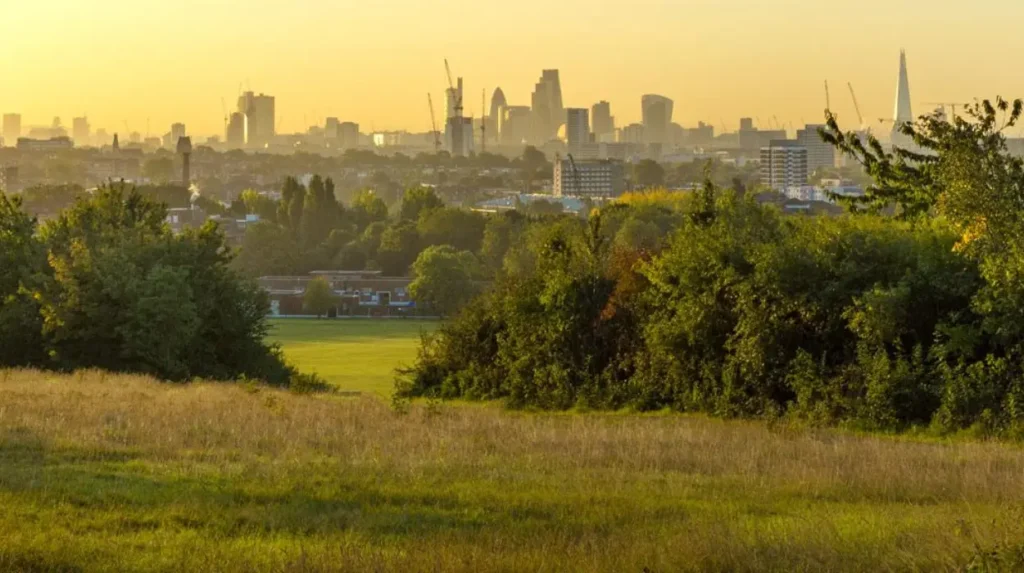
Greenwich Park combines Roman archaeology, Anglo-Saxon burial evidence, Tudor royal history, seventeenth-century landscape design, the Royal Observatory, and panoramic views across London. Its hilltop setting creates one of the capital’s strongest combinations of historical depth and scenic picnic surroundings.
Greenwich Park has a history extending back to Roman settlement. Archaeological excavations in 1999 identified traces of a Roman temple in the southern part of the park. The landscape also contains more than 30 Anglo-Saxon burial mounds, providing evidence of early medieval activity.
The park entered a new historical phase in 1427 when Humphrey, Duke of Gloucester, inherited the land. He enclosed the park in 1433 and built a tower on the site associated with the present Royal Observatory. The estate later became connected to the Tudor monarchy and the royal palace at Greenwich.
Henry VIII was born at Greenwich in 1491 and introduced deer to the park. His children Mary I and Elizabeth I were also born at Greenwich, giving the landscape an unusually strong connection to Tudor royal history.
The seventeenth century brought further transformation. James I replaced the earlier park fence with a substantial brick wall, much of which survives. Later landscape development created the formal and open spaces that define the park today.
The hill provides extensive views toward the River Thames, Canary Wharf, and central London. The Royal Observatory stands at the summit, while the Prime Meridian passes through the wider historic Greenwich landscape. Greenwich Park forms part of the Maritime Greenwich World Heritage Site.
Picnickers can therefore combine outdoor eating with archaeological interpretation, royal history, landscape study, and urban geography. The location is particularly valuable for educators and students because visible features connect Roman archaeology, Anglo-Saxon burial practices, Tudor monarchy, scientific history, and modern global timekeeping.
Greenwich Park is one of the best choices for visitors who want a picnic with a clear historical narrative and a major city panorama.
Which London picnic location offers the best skyline view?
Primrose Hill offers one of London’s most recognisable elevated picnic settings, with a protected viewpoint overlooking the capital. Its relationship with Regent’s Park connects the scenic landscape to John Nash’s Regency planning and the transformation of former royal hunting land.
Primrose Hill lies immediately north of Regent’s Park and forms one of London’s protected viewpoints. The summit provides a broad panorama across the capital, making it a popular location for outdoor recreation and picnics.
The wider Regent’s Park landscape has strong nineteenth-century origins. Architect John Nash designed the park during the Regency period as part of a major urban-planning scheme. The park covers approximately 197 hectares, or 487 acres, and combines formal gardens, open lawns, sports facilities, a boating lake, and historic architecture.
The development of Regent’s Park illustrates the changing relationship between royal land and urban expansion. The area had previously formed part of a royal hunting landscape. Regency planning transformed the land into a carefully designed park connected to residential development and major roads.
Primrose Hill has a different physical character from the formal gardens of Regent’s Park. Its open grassy slope creates a direct viewpoint over London. The contrast between elevated grassland and the surrounding urban skyline makes it particularly suitable for a relaxed weekend picnic.
The site also contains cultural markers. An oak known as “Shakespeare’s Tree” was planted in 1864 to commemorate the 300th anniversary of William Shakespeare’s birth. The tree reflects the nineteenth-century practice of using public landscapes to commemorate national cultural figures.
Primrose Hill is therefore best suited to visitors who prioritise views, open grassland, and a strong connection to Regency urban planning.
Which picnic spot is best for ancient woodland and historic countryside?
Hampstead Heath is one of London’s most distinctive picnic landscapes because it combines ancient woodland, open heath, elevated viewpoints, ponds, historic estates, and rural character within the metropolitan area. Parliament Hill provides a major skyline view across central London.
Hampstead Heath represents a different historical tradition from the Royal Parks. It is not primarily a former royal hunting landscape. Its character developed through common land, historic rural use, woodland, heathland, and the long preservation of open space against urban development.
The heath is located approximately four miles, or 6.5 kilometres, north of central London. Its landscape includes open grassland, woodland, ponds, sports areas, and high ground at Parliament Hill. The summit provides extensive views across the capital.
Hampstead’s historical environment also includes important cultural properties. Kenwood House, Keats House, and other historic buildings connect the heath to the literary, architectural, and social history of north London.
The landscape has particular value for environmental history. Ancient woodland and heathland preserve habitats that differ significantly from intensively managed urban lawns. The combination of trees, open grassland, ponds, and elevated terrain supports a varied ecological environment.
For a picnic, the heath offers a less formal setting than many central parks. Visitors can combine outdoor eating with walking routes, historic house visits, landscape observation, and skyline viewing.
Hampstead Heath is especially suitable for visitors who want a countryside atmosphere without leaving London. Its historical importance lies in the survival of a large open landscape within a rapidly urbanised capital.
Which picnic destination has the strongest Victorian public-park history?
Victoria Park is one of London’s most important Victorian public parks because it was created specifically to provide green space for the expanding population of east London. Opened in 1845, it demonstrates how nineteenth-century social reform shaped modern public recreation.
Victoria Park was first proposed in 1840 as a public memorial and as a green space for the population of east London. The park formed part of a central government initiative to create new parks for expanding suburban populations.
James Pennethorne designed the park, with planting associated with Samuel Curtis and later horticultural management involving John Gibson. Construction began after several revisions to Pennethorne’s 1841 plan, and the park opened to the public in 1845.
The original park covered approximately 77 hectares. Its area increased to approximately 87 hectares in 1872 when former brick fields, market gardens, and farmland were incorporated. This expansion reflects the changing land-use patterns of nineteenth-century London.
Victoria Park also experienced the effects of twentieth-century conflict. Bomb damage during the Second World War affected the park, while parts of the grassland were used for allotments connected to wartime food production. Post-war financial pressures contributed to deterioration before later rehabilitation programmes restored the landscape.
Today, the park provides extensive lawns, mature trees, water features, paths, and public recreational facilities. Its historical importance lies in the relationship between public health, urban planning, social reform, and municipal park management.
Victoria Park is therefore one of the best picnic spots in London for understanding how public parks became central to everyday urban life during the Victorian period.
Explore More Things To Do
London Historic Churches: British Religious Heritage Through History | London
The Historical Evolution of Hampstead Heath: London 1871 to 2026
Which London picnic spot combines royal history with ancient trees and deer?
Bushy Park combines Tudor royal hunting history, Bronze Age archaeology, seventeenth-century water engineering, formal avenues, ancient trees, deer, and large open spaces. Its scale and ecological variety make it one of London’s strongest historic picnic destinations.
Bushy Park has evidence of human activity extending back at least 4,000 years. A Bronze Age barrow was excavated in the north-east of the park, and archaeological finds included a Bronze Age dagger now held by the British Museum.
The Tudor period transformed the landscape. Cardinal Thomas Wolsey enclosed large areas of farmland around Hampton Court, and Henry VIII later acquired the estate after Wolsey’s political fall. The park became associated with royal hunting and remains home to red and fallow deer.
Charles I created the Longford River in 1638 to supply water to Hampton Court Palace. The artificial watercourse was approximately 12 miles long and constructed by hand. This project demonstrates the scale of royal landscape engineering during the seventeenth century.
Sir Christopher Wren designed the mile-long Chestnut Avenue as a formal approach to Hampton Court during the reign of William III and Mary II. The avenue remains one of the park’s defining landscape features.
Bushy Park also has a documented picnic tradition. Chestnut Sunday developed during the nineteenth century, when large crowds gathered in May to see the horse chestnut trees in blossom, picnic, and socialise.
The park covers more than 1,000 acres and contains woodland, wetland, ancient trees, acid grassland, and other habitats. It is a Site of Special Scientific Interest.
Bushy Park offers a particularly strong combination of historical depth and natural space. Visitors can picnic beneath mature trees while observing a landscape that contains evidence from the Bronze Age to the modern conservation era.
Which picnic destination is best for ancient woodland and conservation history?
Epping Forest is one of the best London-area picnic destinations for visitors seeking ancient woodland, open heath, ecological diversity, and a major conservation story. Its nineteenth-century preservation campaign established a lasting model for protecting public access to historic landscapes.
Epping Forest stretches from east London toward Epping in Essex and covers nearly 6,000 acres of ancient woodland and open heath. It is managed by the City of London Corporation, which has overseen the forest since the nineteenth century.
The forest’s preservation history is particularly important. During the nineteenth century, enclosure threatened public access and traditional use. The City of London Corporation led a campaign in the 1870s to protect the forest from further enclosure. This campaign created a long-term model of public stewardship.
Epping Forest is more than a recreational landscape. It is an important ecological resource. Recent monitoring surveyed more than 1,000 hectares of open habitat across more than 40 locations. The 2025 programme recorded 6,022 rare plant patches, 4,838 butterflies, 671 moth species, and 243 reptiles.
The scale of this ecological data demonstrates the importance of protecting urban-edge landscapes. A picnic in Epping Forest therefore takes place within a living historical environment shaped by medieval land use, nineteenth-century conservation, modern ecological monitoring, and continuing public access.
The forest is best suited to visitors who prefer woodland shade, open heath, nature observation, and a less formal landscape than central London’s ornamental parks.
Which London picnic spot is best for formal gardens and botanical history?
Kew Gardens offers a distinctive picnic experience within a major botanical institution, combining historic landscapes, scientific plant collections, formal gardens, woodland, and international botanical research. Its picnic areas connect outdoor recreation with the history of plant science and landscape design.
The Royal Botanic Gardens, Kew, is one of the world’s leading botanical institutions. Its landscape includes formal gardens, historic structures, woodland, scientific collections, and extensive plant displays.
Kew’s picnic settings vary from ornamental areas to the Arboretum. The Arboretum contains approximately 11,000 trees, providing a large-scale landscape for visitors seeking shade and woodland surroundings. The Rose Garden offers views toward the Palm House and contains approximately 170 rose species and cultivars.
The importance of Kew extends beyond leisure. Botanical gardens historically served as centres for plant classification, horticultural experimentation, imperial plant exchange, conservation, and scientific research. Kew’s modern role continues this scientific tradition through research and conservation programmes.
The combination of botanical collections and historic landscape makes Kew particularly suitable for educators, students, gardeners, and visitors interested in the relationship between science and public green space.
Kew is a strong choice for a picnic weekend when the purpose extends beyond sitting on grass. Its landscape provides access to plant history, scientific institutions, architectural heritage, and curated horticultural environments.
How did London’s picnic landscapes change from royal estates to public spaces?
London’s picnic landscapes changed through a long transition from exclusive royal ownership and private landholding to public access, municipal management, conservation protection, and everyday recreation. This transformation occurred through royal reforms, Victorian park creation, conservation campaigns, and modern heritage management.
The earliest stage involved royal ownership. Greenwich Park, Richmond Park, Hyde Park, Bushy Park, and other landscapes were connected to monarchs, palaces, hunting, and royal administration. Access was restricted or controlled because land served royal and aristocratic purposes.
The second stage involved controlled public access. Hyde Park opened more fully to the public under Charles I in 1637. This development reflected a gradual change in the relationship between royal landscapes and urban society.
The third stage involved Victorian public-health and planning reforms. Victoria Park was created specifically to serve a growing east London population. Its development showed that open space became a recognised part of urban infrastructure rather than a luxury reserved for the elite.
The fourth stage involved conservation. Epping Forest’s preservation campaign in the 1870s demonstrated the importance of protecting public access and historic landscapes against enclosure.
The modern stage combines recreation with ecological management. Richmond Park, Bushy Park, Epping Forest, and other sites now require active conservation of habitats, veteran trees, grassland, water, wildlife, and archaeological features.
The picnic is therefore part of a much larger historical process. It represents the modern public use of landscapes once controlled by monarchs, landowners, institutions, or local authorities.
How should visitors protect London’s historic picnic landscapes?
Visitors protect London’s historic picnic landscapes by following park regulations, avoiding fires and barbecues where prohibited, taking litter away, protecting wildlife, respecting archaeological features, and using public spaces without damaging grassland, trees, habitats, or historic structures.
Historic parks are living environments. Their value depends on the survival of physical features and ecological systems. A picnic blanket creates little impact when visitors use established lawns and remove all waste. Repeated damage occurs when visitors trample sensitive grassland, disturb wildlife, climb historic structures, or leave food waste behind.
The Royal Parks specifically prohibits barbecues and fire lighting in Hyde Park. Visitors are encouraged to manage litter responsibly because waste can harm wildlife.
Wildlife protection is particularly important in Richmond Park and Bushy Park. Deer, veteran trees, acid grassland, wetlands, and ancient habitats require careful management. Visitors should avoid feeding wildlife and maintain appropriate distance from animals.
Archaeological landscapes also require protection. Greenwich Park contains evidence of Roman and Anglo-Saxon activity, while Bushy Park preserves evidence of Bronze Age settlement. Archaeological features represent non-renewable historical evidence. Damage removes information that cannot be recreated.
Responsible picnicking therefore supports long-term preservation. The future of London’s historic green spaces depends on maintaining a balance between public enjoyment, ecological protection, archaeological conservation, and historic landscape management.
What makes London’s best picnic spots historically important for the future?
London’s best picnic spots are historically important because they preserve evidence of changing relationships between power, land, society, recreation, science, conservation, and urban growth. Their future value depends on protecting both physical heritage and the public access that gives these landscapes continuing relevance.
The historical importance of London’s picnic spaces extends beyond individual parks. Together, they form a record of the capital’s development.
Richmond Park preserves the history of royal hunting and seventeenth-century enclosure. Hyde Park records the transformation of royal land into a major public forum. Greenwich Park contains archaeological evidence from Roman and Anglo-Saxon periods alongside Tudor and scientific history. Regent’s Park demonstrates Regency town planning. Victoria Park records Victorian public-health reform. Bushy Park preserves Bronze Age archaeology, Tudor royal history, landscape engineering, and twentieth-century military history. Epping Forest demonstrates the significance of nineteenth-century conservation campaigns.
These landscapes also provide important educational resources. Students can study archaeology, environmental history, architecture, political history, urban planning, social reform, horticulture, and conservation without leaving the capital.
The future historical relevance of London’s parks depends on continued stewardship. Climate pressure, visitor numbers, habitat loss, ageing trees, infrastructure demands, and urban development create long-term management challenges. Scientific monitoring and heritage conservation therefore remain essential.
A weekend picnic in London can take place beneath ancient trees, beside a lake created by royal engineering, on land once used for hunting, within a Victorian public park, or beside archaeological evidence of communities that lived thousands of years ago. That continuity is the central historical value of London’s green spaces.
The best picnic spots in London are not simply places to eat outdoors. They are preserved historical landscapes where the capital’s past remains visible through trees, walls, lakes, hills, gardens, archaeological remains, public paths, and open lawns. Their continued survival ensures that future generations can experience London’s history as a physical environment rather than only as a written record.
What are the best picnic spots in London?
The best picnic spots in London include Richmond Park, Hyde Park, Greenwich Park, Hampstead Heath, Primrose Hill, Victoria Park, Bushy Park, Epping Forest, and Kew Gardens. These locations offer scenic green surroundings, historic landscapes, open lawns, woodland, water features, and panoramic city views.