Key points
- Counter‑terror police in London are investigating a series of arson attacks across the capital, with three separate fires examined as part of the same inquiry.
- The attacks include an attempted arson on a Persian‑language media organisation in Park Royal, a synagogue in Finchley and four ambulances run by a Jewish charity in north‑west London.
- Three people have been arrested in connection with the attempted arson on the Persian‑language outlet; none of the incidents have so far been formally declared terrorist attacks, but investigators are keeping “an open mind” about motivation.
- Scotland Yard has warned it is facing an “unprecedented level of national‑security investigations with suspected links to foreign states”, referencing Iran‑linked threats among them.
- An Islamist group affiliated with Iran has claimed responsibility for the three attacks via social‑media videos, though this assertion remains unverified.
- The UK government has previously charged Iranian nationals under the National Security Act 2023, citing conduct aimed at assisting a foreign intelligence service and planning serious violence.
London (The Londoner News) April 17, 2026 – Counter‑terror police have launched a major investigation into a string of arson attacks in north and north‑west London, probing whether they were ordered or influenced by agents linked to the Iranian state. As reported by the Associated Press via WBAL‑TV, Counter Terrorism Policing London confirmed on 15 April 2026 that it is the lead investigator into three separate arson fires over the past month, while also noting that, at present, none have been formally designated terrorist incidents.
- Key points
- What exactly happened in the three arson cases?
- Why is Iran being scrutinised in this probe?
- How is Scotland Yard responding to the ‘unprecedented’ threat level?
- What is known about the arrested suspects and the line of inquiry?
- How are communities and officials reacting locally?
- Background of the particular development
- Prediction: How this development can affect the particular audience
The probe follows the arrest of two men and a teenager in connection with an attempted arson attack on a Persian‑language media organisation in Park Royal, an industrial area in west London. According to WBAL‑TV’s coverage of the story, counter‑terror officers are treating the three blazes as part of a coordinated pattern, given their similar nature and the timing, even though all legal charges so far fall under national‑security and public‑order offences rather than terrorism per se.
What exactly happened in the three arson cases?
In the first incident, firefighters were called to a Persian‑language media outlet in Park Royal after an arson attempt on the premises. The BBC reported that the attempted blaze caused concern among staff and local communities, with police describing the building as “a place of media and public interest” and noting that the attack was not carried out openly but appeared pre‑planned. Three people were arrested under the National Security Act on suspicion of assisting a foreign intelligence service, though the specific country initially named in parallel investigations was China, prompting counter‑terrorism units to cross‑check links to other states.
The second incident involved a synagogue in Finchley, north London, where an arson attack damaged part of the building. As reported by the BBC, the fire was treated as a hate‑motivated criminal offence, with officers saying that the targeted nature of the attack and the choice of a religious site raised national‑security concerns. Security footage and witness statements were handed over to the counter‑terror unit, which began assessing whether the attack was part of a wider pattern or a standalone hate crime.
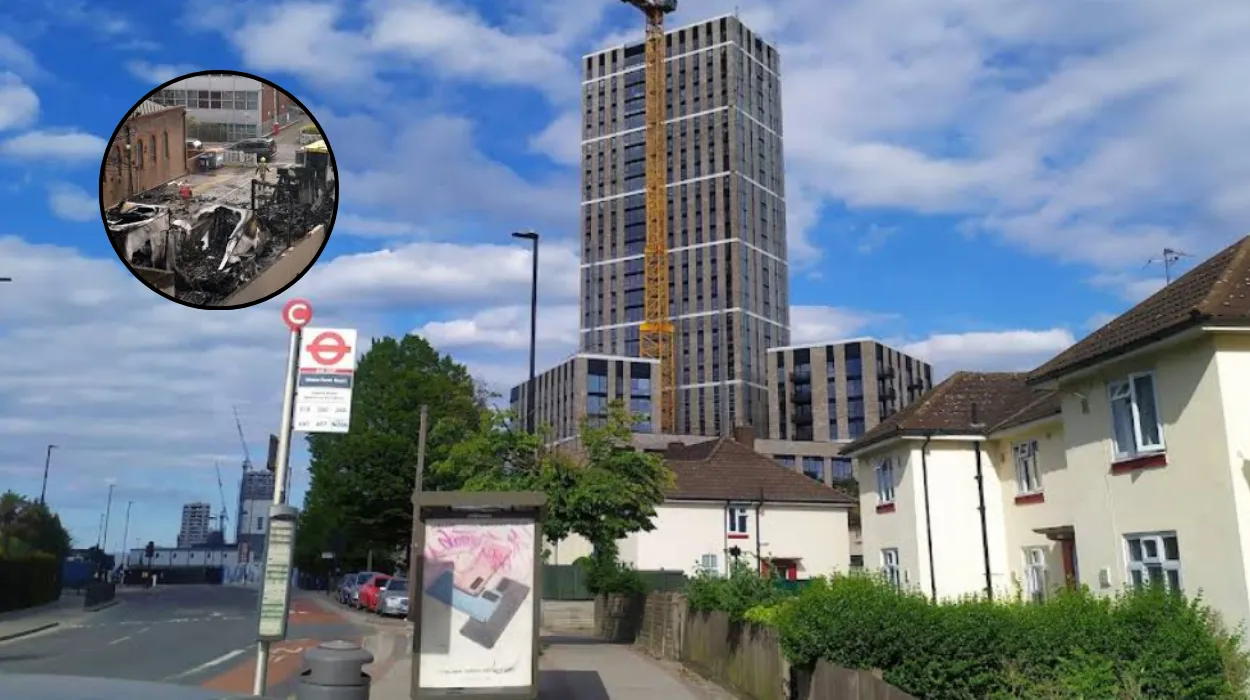
The third incident targeted four ambulances operated by a Jewish charity in the north‑west of the capital. Coverage in the BBC and related commentaries highlighted that the vehicles were set alight outside the charity’s base, with one commentary describing the move as “a calculated blow at community‑based emergency services”. No injuries were reported, but three of the ambulances were heavily damaged, forcing the charity to temporarily scale back its operations.
Why is Iran being scrutinised in this probe?
An Islamist group believed to have links to Iran has claimed responsibility for the three attacks through social‑media videos. As reported by the BBC, the group, known as Harakat Ash‑Shabab al‑Islamiyyah or Islamic Movement of the People of the Right, circulated footage purporting to show preparations and aftermaths of the arsons, accompanied by statements that the attacks were retaliation for perceived offences against Iran and its allies. Authorities have described the claim as “unverified” and have declined to attribute the attacks directly to the group, emphasising that the investigation remains open and that all potential links are being tested forensically.
The UK government has issued prior warnings about Iranian‑linked threats on British soil. As reported in a Home Office national‑security update, three Iranian nationals were charged in May 2025 under the National Security Act 2023 with engaging in conduct likely to assist a foreign intelligence service, including surveillance and research aimed at committing serious violence within the UK. The Foreign Secretary at the time stated that the Iranian state was “using coercive and clandestine tactics to pursue political objectives abroad”, a framing that Scotland Yard has since echoed in relation to the current arson wave.
How is Scotland Yard responding to the ‘unprecedented’ threat level?
In a public statement, senior officers at Scotland Yard have warned that counter‑terror policing is now dealing with an “unprecedented level of national‑security investigations with suspected links to foreign states”. This phrasing, quoted by commentators and summarised on social media by the Metropolitan Police “Sandbagger” account, means that the number and diversity of probes connected to overseas actors has risen sharply in recent months. The same statement notes that many of these investigations involve individuals or networks with “dangerous and often reckless intentions”, though it stops short of directly naming Iran in every case.
The three individuals arrested in the Park Royal arson attempt are being held under the National Security Act; the Metropolitan Police’s own press release describes them as suspected of “assisting a foreign intelligence service” under section 3 of the Act. Police have not confirmed whether the same statute will be used in the other cases, but investigators have indicated that any evidence pointing to ordering, financing or directing attacks from abroad would trigger a step‑up to counter‑intelligence and counter‑terrorism protocols.
What is known about the arrested suspects and the line of inquiry?
According to WBAL‑TV and UK‑based follow‑up reports, the two adult men and the teenager arrested in the Park Royal case are being questioned at a central London police station under the National Security Act framework. The ages and identities of the suspects have not been disclosed, and all three have been granted legal representation; police have stressed that no charges have yet been filed in connection with the three fires, pending forensic analysis and digital‑evidence reviews.
The investigation is examining communication patterns, travel histories and possible links to diaspora communities and extremist networks with ties to Iran‑aligned groups. As noted by the BBC, officers are also reviewing whether the suspects had prior contact with the Islamist group that claimed responsibility, or whether the group’s claim is a propaganda ploy not matched by operational involvement. The Metropolitan Police has said it will “follow the evidence wherever it leads, including to foreign‑state actors”, but has reiterated that naming any state sponsor before evidence is complete would be legally and diplomatically premature.
How are communities and officials reacting locally?
Jewish community leaders and faith‑group representatives have publicly welcomed the counter‑terror focus while urging neighbours to remain vigilant without stigmatising any ethnic or religious group. As reported by the BBC, a spokesperson for the Jewish charity whose ambulances were set alight said the staff were “united in solidarity against hatred” and working with police to improve security around their vehicles and bases. Local councillors in Finchley and Park Royal have called for more visible patrols and community‑liaison officers, arguing that the attacks have heightened anxiety among minorities and small businesses.
At the national level, the Home Secretary has reiterated that the government regards Iran‑linked threats as “a grave and growing concern” for domestic security. In a parliamentary statement referenced in the national‑security update, the minister warned that covert operations designed to influence media, religious institutions and community‑based services represented a new frontier for intelligence services and law‑enforcement agencies. The same statement stressed that the UK would continue to “pursue all actors, wherever they are based, who seek to undermine the safety of our citizens through violence or intimidation”.
Background of the particular development
The current counter‑terror probe in London sits within a broader context of rising state‑linked threats against the UK. Since the introduction of the National Security Act 2023, the Metropolitan Police and MI5 have increasingly framed hostile‑state activity as a central pillar of domestic security, alongside terrorism and organised crime. Earlier cases involving Iranian nationals charged with assisting a foreign intelligence service created a legal and operational template for how London’s counter‑terror units now treat suspected foreign‑state‑sponsored attacks, including those that may not meet the strict definition of terrorism.
The pattern of arson against media offices, places of worship and community‑based emergency services also echoes tactics seen in other countries, where state‑backed or state‑aligned actors have targeted institutions that challenge official narratives or support rival communities. In the UK, this has prompted police and security services to broaden their concept of “critical infrastructure” to include minority‑owned media, faith buildings and voluntary charities, which they now treat as potential targets for intimidation and sabotage. The current London investigation is therefore not only about three specific fires but also a test of how effectively the UK can detect, attribute and deter state‑linked campaigns waged through local proxies.
Prediction: How this development can affect the particular audience
For residents of London, especially in Jewish, Persian and wider minority communities, the investigation may heighten both concern and caution in the short term. If counter‑terror units establish a clear link to Iranian‑aligned actors, affected communities could experience increased security measures around places of worship, schools and community centres, as well as more frequent police engagement and calls for community‑led reporting of suspicious activity.
For journalists and media organisations, particularly those working in Persian or other minority‑language outlets, the probe may lead to tighter security protocols and more formal cooperation with counter‑terror units over online threats and harassment campaigns. If the UK government concludes that Iranian‑linked groups are systematically targeting diaspora media, diplomats and security officials may lean more heavily on international partners and social‑media platforms to disrupt financing and propaganda channels.
For commuters and users of community‑based services, such as the Jewish‑linked ambulance charity, any further disruption to operations would place additional strain on already stretched emergency and voluntary‑sector resources. Conversely, if the investigation deters further attacks, it could strengthen public confidence in how London’s security apparatus handles hybrid threats that blend foreign‑state influence with domestic extremism.