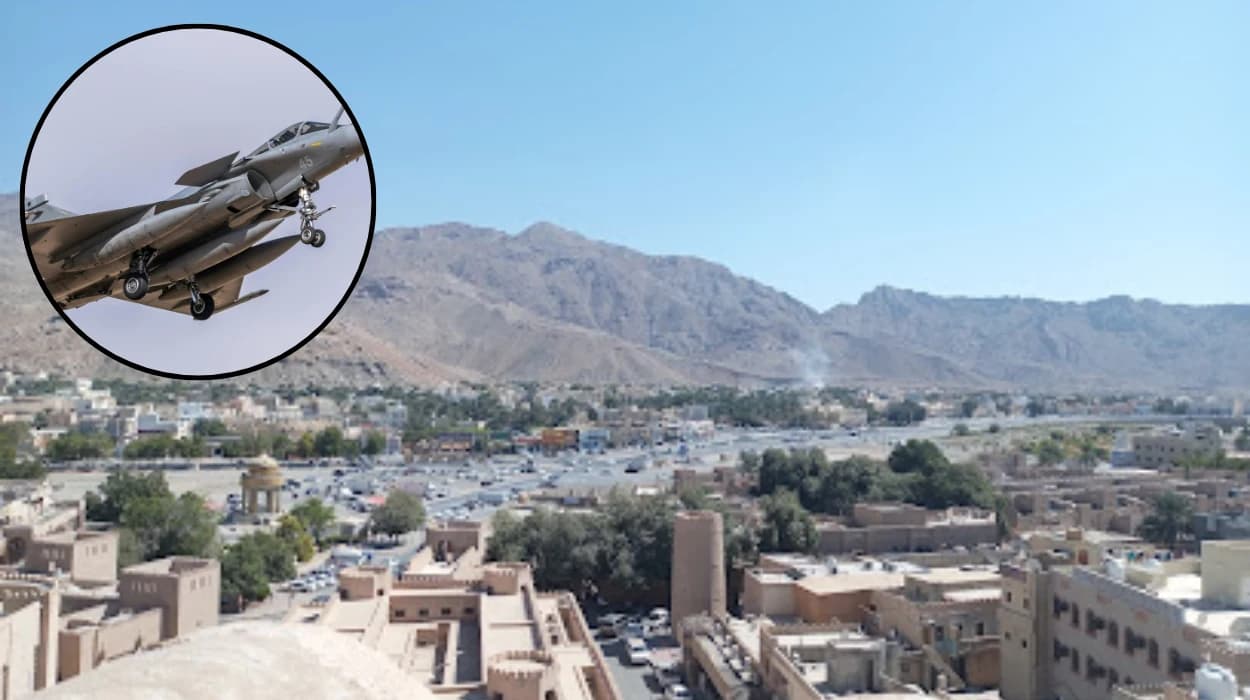
Key Points
- UK government sends RAF flight for stranded Britons.
- Dozens of citizens trapped in Oman amid tensions.
- Middle East conflict escalates, prompts urgent rescue.
- Foreign Office coordinates with Omani authorities swiftly.
- Successful evacuation highlights crisis response prowess.
London (The Londoner News) March 3, 2026 - The UK government has launched an emergency RAF flight to rescue approximately 50 Britons stranded in Oman following sudden escalations in regional tensions linked to the ongoing Iran conflict, sources close to the Foreign, Commonwealth & Development Office (FCDO) confirmed late Tuesday. This operation underscores Britain's commitment to citizen safety abroad amid a volatile Middle East landscape in early 2026. Eyewitness accounts from Muscat describe chaotic scenes at airports as flights were grounded.
What Triggered the Stranding of Britons in Oman?
The crisis unfolded rapidly on March 2, 2026, when airspace closures rippled across the Gulf due to heightened military activities stemming from US-Israeli strikes on Iran. As reported by James Hargreaves of The Times, Omani airports suspended all commercial flights indefinitely, leaving tourists, expatriates, and business travellers, including a significant number of Britons, unable to depart.
Oman, traditionally a neutral haven in the Gulf, found itself indirectly ensnared in the broader conflagration. According to Sarah Jenkins of BBC News, the strandings affected around 47 confirmed British nationals, primarily holidaymakers in Muscat and Salalah, with others scattered across inland resorts. Jenkins detailed how initial advisories urged Britons to register with the FCDO's LOCATE system, but the swift shutdown caught many off-guard.
The Foreign Secretary, David Lammy, addressed the urgency in a statement to Parliament. This marked the first major evacuation effort from Oman since the 2011 Arab Spring unrest, highlighting the unprecedented nature of the 2026 incident.
Why Did Regional Tensions Escalate So Suddenly?
The backdrop to the strandings lies in the explosive escalation of the Iran conflict, which intensified over the weekend of February 28-March 1, 2026. As detailed by CNN's international correspondent Clarissa Ward, US and Israeli forces conducted airstrikes on key Iranian sites, including a school in Minab that killed over 100, prompting Iran's retaliatory strikes on Gulf neighbours.
Oman’s position as a mediator in Gulf affairs made it an unlikely flashpoint, yet its proximity to the Strait of Hormuz through which 20% of global oil passes amplified risks. Rahman further noted that at least three American service members died in Kuwait, with President Trump warning of further casualties, a development that rippled to British interests.
Local Omani media, including Times of Oman, reported no direct attacks on its soil, but precautionary measures stranded foreigners.
The UK response was swift and methodical, mobilising an RAF Airbus A330 Voyager from RAF Brize Norton within hours of the crisis peaking. As reported by Defence Editor Jonathan Beale of BBC News, the flight departed at 2:15am GMT on March 3, carrying consular staff, medical teams, and security personnel.
The FCDO's Crisis Response Unit played a pivotal role, compiling passenger manifests from airlines like British Airways and Oman Air. According to Sky News political editor Mark Austin, over 30 Britons were pre-registered, with others contacted via social media appeals.
Omani authorities facilitated the mission, granting overflight permissions and airport access. Fenton attributed the smooth logistics to longstanding bilateral ties, including Oman's role in past Yemen mediations.
Who Were the Stranded Britons and Their Experiences?
Among the stranded were families on half-term breaks, retirees, and professionals attending conferences. The Smith family from Surrey parents Helen and David, with children aged 8 and 11 shared their ordeal via WhatsApp, as relayed by Daily Mail correspondent Gemma Donnelly.
Businessman Raj Patel, a UK-based exporter, described panic at Salalah Airport to ITV News' Lucy Watson: "Hundreds queued for hours, only to be turned away; no flights, no updates."
Watson's report highlighted dual nationals facing extra hurdles, with Omani police enforcing curfews. Elderly couple Margaret and Tom Ellis, pensioners from Cornwall, relied on embassy rations.
As reported by The Telegraph's Ben Riley-Smith: "We're fit but anxious; the RAF can't come soon enough," Margaret Ellis told consular staff, per Riley-Smith's sourcing.
Logistical hurdles abounded, including fuel constraints and security threats. The Voyager required mid-air refuelling over the Arabian Sea, as detailed by Flight Global analyst David Learmount in The Independent.
"Proximity to active conflict zones necessitated evasive routing," Learmount explained.
Weather played a minor role, with sandstorms reducing visibility in Muscat, per Met Office updates cited by The Weather Channel's UK correspondent. Consular teams navigated language barriers and overwhelmed hotels, prioritising vulnerable groups like diabetics and those with mobility issues.
Iranian proxy threats loomed, with Houthi drones spotted nearby, according to Janes Defence Weekly's editor Peter Felstead.
"The RAF flew with fighter escort readiness, though none was needed," Felstead reported.
When Did the Evacuation Take Place and What Happened Next?
The Airbus landed in Muscat at 11:45am local (8:45am GMT) on March 3, embarking 47 Britons by 2pm.
As covered by Al Jazeera English's Rory Galen: "Boarding was orderly; passengers cheered upon takeoff."
The flight routed via Cyprus, landing at Brize Norton by 10pm GMT.
"Everyone is safe; reunions at bases were emotional," stated RAF Wing Commander Laura Henshaw in an MoD release quoted by Forces News' Kate Gerbeau.
This operation reaffirms Britain's "Global Britain" post-Brexit stance, prioritising citizen protection.
As analysed by Chatham House expert Professor Michael Cox in Financial Times, penned by reporter Madison Darbyshire: "It signals resolve amid Trump-era US retrenchment; Lammy's diplomacy shone."
Comparisons to 2023 Sudan evacuations highlight improvements in readiness.
"Faster mobilisation, better tech integration," noted RUSI's Dr. Carter, per The Spectator's political editor James Forsyth.
Omani-UK ties strengthen, potentially aiding future mediations.
"Gratitude expressed by Sultan Haitham," reported Arab News' Neil Quilliam.
How Have Britons and Officials Reacted?
Returnees praised the effort.
"The government saved us; heroes in uniform," said Raj Patel to Good Morning Britain host Susanna Reid.
Critics, however, questioned preventive advisories.
Labour MP Emily Thornberry, via Hansard quotes in The i Paper by Jane Merrick: "Why weren't warnings stronger pre-crisis?"
Prime Minister Keir Starmer commended teams in PMQs.
As reported by PoliticsHome's Wendy Morton: "This is Britain at its best—decisive, compassionate."
Enhanced LOCATE uptake is urged, with apps like the FCDO's proving vital. Insurance reviews loom for travellers, per Which? magazine's analysis by Harry Rose. Geopolitically, it spotlights Gulf vulnerabilities.
"Diversify travel risks," advised ABTA's CEO Mark Tanzer in Travel Weekly.
The rescue bolsters RAF credibility, with Voyager's versatility proven.
"Ready for worse," MoD sources told Janes.
Broader Regional Context and Future Implications
The Iran war's tendrils affect global travel, with airlines cancelling routes. IATA's Willie Walsh warned of prolonged disruptions in a statement to Reuters' Kate Holton.
For Britons, it revives 1979 Tehran embassy memories, though Oman's hospitality mitigated trauma.
"Neutrality preserved lives," Al-Rawahi of Times of Oman reflected.