
Key Points
- Final PMQs Session: Prime Minister Sir Keir Starmer completed his final Prime Minister’s Questions (PMQs) session in the House of Commons before stepping down.
- Formal Resignation Date: Starmer will formally tender his resignation to King Charles III at Buckingham Palace next Monday, 20 July 2026.
- Pledge of Support: The outgoing Prime Minister promised “wholehearted support” to his expected successor, premier-in-waiting Andy Burnham.
- Underlying Party Crisis: The resignation follows a protracted 2026 Labour leadership crisis triggered by poor local election results, cabinet resignations, and sliding public approval.
- Tonal Shift in Parliament: The usually adversarial atmosphere of the Commons was replaced by personal tributes, lighthearted jokes, and collective support for England’s World Cup semi-final.
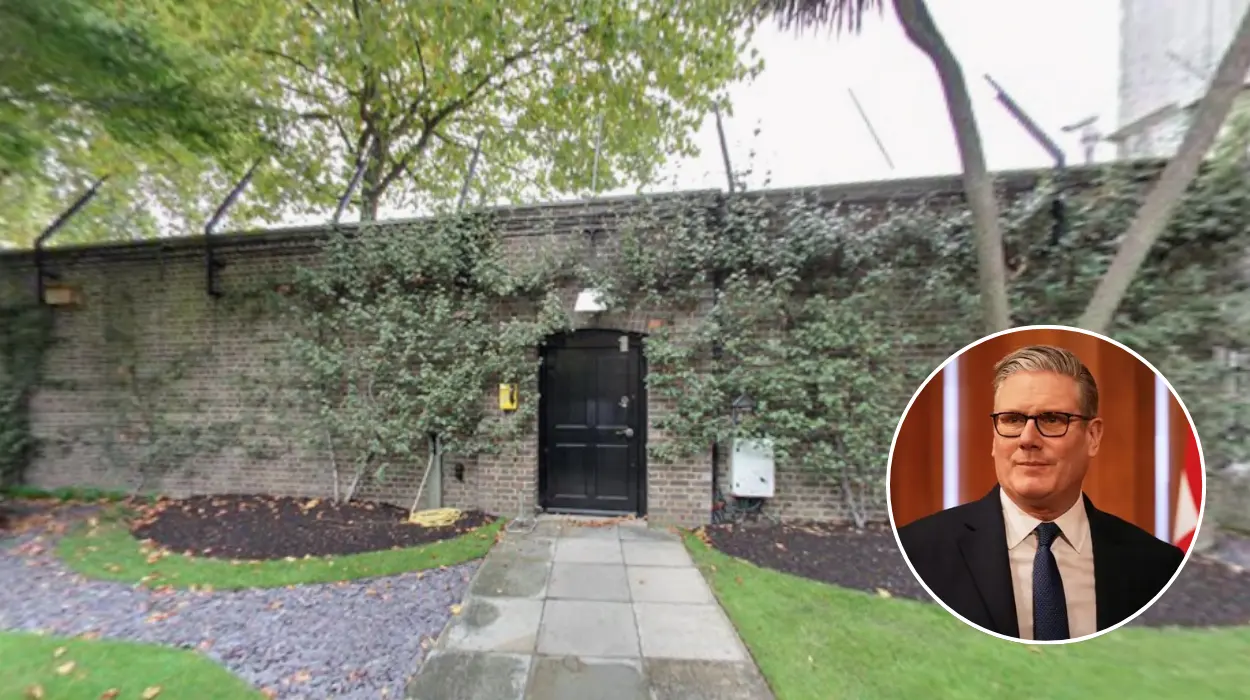
London (The Londoner News) July 15, 2026 – British Prime Minister Sir Keir Starmer emerged from the black door of 10 Downing Street today to face his final weekly grilling in the House of Commons, marking the beginning of the end of his tumultuous two-year premiership. Starmer, who led the Labour Party to a landslide victory in late 2024, is preparing to formally resign next week, handing over the reins of government to former Greater Manchester Mayor Andy Burnham. His final Prime Minister’s Questions (PMQs) was characterised by a rare moment of warm political consensus, emotional farewells, and a standing ovation from the government benches. This transition follows months of severe internal party dissent, historically low personal approval ratings, and strategic ministerial departures that ultimately made Starmer’s position untenable.
- Key Points
- Why did Sir Keir Starmer decide to resign as Prime Minister?
- What happened during Keir Starmer’s final PMQs session?
- How did opposition leaders react to Starmer’s departure?
- What did Keir Starmer say about his legacy and his successor?
- Who is Andy Burnham, and how will he transition into power?
- How did the public view Starmer’s premiership?
- What lies ahead for the new UK government under Andy Burnham?
Why did Sir Keir Starmer decide to resign as Prime Minister?
As reported by political analysts for the global law firm Mayer Brown, Sir Keir Starmer’s sudden announcement on 22 June 2026 that he would step down triggered one of the most consequential shifts in the United Kingdom’s political direction since the Brexit referendum. The resignation was not an isolated event but the culmination of a deep leadership crisis that built up over several months.
The crisis intensified rapidly following the local elections in May 2026, where Labour suffered devastating losses, particularly losing significant ground to Reform UK. The electoral defeat exposed a deep rift between the party leadership and its traditional working-class base. In a detailed report by the political desk of Wikipedia on the 2026 Labour Party leadership crisis, it was noted that internal dissatisfaction peaked when prominent Cabinet members began pulling their support.
On 14 May 2026, Health Secretary Wes Streeting resigned from the government, publicising his concerns over the direction of the administration. On the same day, backbench MP Josh Simons resigned his parliamentary seat in Makerfield, strategically allowing Andy Burnham—then the Mayor of Greater Manchester—to return to Westminster via a highly publicised by-election. Burnham’s commanding victory in the Makerfield by-election on 18 June 2026 served as the final catalyst, signaling to Starmer’s remaining allies that a viable successor was ready.
By mid-June, defense policies further fractured the cabinet. According to the same Wikipedia research, Defence Secretary John Healey and Armed Forces Minister Al Carns resigned on 11 June 2026 over disputes regarding proposed defense spending plans. Facing an imminent leadership challenge and escalating backbench rebellions, Starmer announced his departure on 22 June, choosing to act as a caretaker prime minister until his successor was formally chosen.
What happened during Keir Starmer’s final PMQs session?
Writing for the Associated Press, veteran political correspondent Jill Lawless observed that Starmer’s final appearance at the dispatch box was a mixture of “somber seriousness and political criticism with personal tributes and jokes”. The typical, high-decibel hostility that defines PMQs was noticeably dialled down.
Starmer began the session on a solemn note, addressing the shocking murder of former lawmaker Ann Widdecombe, which occurred last week. As reported by Lawless, Starmer stated that he was “horrified” by the tragedy, which is currently being investigated by counterterror police as a murder. Reflecting on his eleven years in Parliament, during which three serving or former MPs have been killed, Starmer called the trend “chilling” and urged modern politicians to “do more to defend our democracy”.
However, the mood shifted toward lightheartedness when Starmer deviated from his standard opening statement. Instead of listing a schedule of meetings with ministers, Starmer joked that he had “an important appointment with the television” later that evening. This was a reference to England’s World Cup semi-final match against Argentina.
As noted in a dispatch by Agence France-Presse (AFP), MPs from all political spectrums joined in wishing Starmer well, thanking him for his public service and playfully demanding that he use whatever influence he had left to ensure England won their semi-final and progressed to face Spain in the final.
How did opposition leaders react to Starmer’s departure?
Despite the prevailing goodwill, the session did not entirely escape partisan politics. Conservative Party leader Kemi Badenoch took the opportunity to deliver a balanced assessment of Starmer’s tenure.
According to the AFP report, Badenoch softened her usual combative tone but pointedly reminded the Commons of Starmer’s internal party struggles. Badenoch stated to the House:
“He spent a long time laughing that I’d lost control of my party. I think he should have been paying attention to his backbenchers instead of mine.”
Badenoch went on to warn that Starmer’s departure would not instantly resolve the government’s deeper policy challenges. As recorded in the AFP report, she added:
“Changing prime minister is not a silver bullet. Indeed, it may be that the Labour Party’s troubles are only just beginning. Solving the fundamental problems in this country will require difficult decisions.”
What did Keir Starmer say about his legacy and his successor?
In his final remarks to Parliament, Starmer defended his record and expressed optimism about the future of the nation under a Burnham administration. According to a report by The Hindu, Starmer insisted that he was leaving the United Kingdom “in better shape” than he found it.
When asked by lawmakers what advice he would offer to his successor, Starmer pledged his complete allegiance to the incoming administration. The AFP report quoted Starmer’s response:
“I will give my wholehearted support to my successor. I want this Labour government to be a success. I want our country to be a success. I shall give my support privately if asked for, not publicly when not asked for.”
Starmer’s emotional exit culminated in a standing ovation from the Labour benches, with many opposition MPs also joining in the applause to mark his departure after a highly stressful two years in office.
Who is Andy Burnham, and how will he transition into power?
The transition of power in British parliamentary democracy allows a governing party to change its leader, and subsequently the prime minister, without triggering an automatic general election. With the next national election not legally required until 2029, the Labour Party acted quickly to secure stability.
According to the legal and political analysts at Mayer Brown, Starmer’s resignation automatically triggered a fast-tracked leadership contest. Nominations officially opened on 9 July and were scheduled to close on 16 July 2026. However, after all other potential candidates declined to stand, Andy Burnham emerged as the sole contender, securing a massive majority of nominations on the very first day.
The timeline for the formal handover has now been established. As reported by The Hindu, Starmer is expected to visit Buckingham Palace on Monday, 20 July 2026, to formally tender his resignation to King Charles III. Immediately following this audience, the King will invite Burnham to form a new government.
Explore more Politics News:
Will Sadiq Khan Win a Fourth Term as Mayor of London in 2028?
Keir Starmer Hosts Jewish Community Security Reception: London 2026
How did the public view Starmer’s premiership?
Despite the optimistic tone of his final Commons appearance, public data painted a far harsher picture of Starmer’s time at Downing Street. By the end of 2025, public dissatisfaction with the Labour government had reached critical levels.
A series of polls conducted by YouGov and analysed in public records revealed that Starmer’s popularity had fallen to levels comparable to those of former Conservative Prime Minister Liz Truss. In late 2025, only 14% of surveyed citizens approved of the government’s overall record, while 69% actively disapproved.
Political analyst Luke Tryl, writing for the polling organisation More in Common, remarked that Starmer had unfortunately “become a vessel for people’s frustration with the system”. Tryl’s analysis showed that approximately two-thirds of the electorate viewed the Labour administration as out of touch, weak, and untrustworthy.
Public trust was further eroded by several major policy U-turns. The controversial decision to scale back winter fuel payments for pensioners, an increase in National Insurance contributions, and early prisoner release schemes to ease jail overcrowding all drew fierce public and media condemnation. Furthermore, industrial friction worsened when Unite the Union, one of Labour’s biggest financial backers, cut its affiliation funding by 40%, citing “incompetent behaviour” by the government during municipal disputes.
What lies ahead for the new UK government under Andy Burnham?
With Andy Burnham poised to take office, political commentators are already speculating on the policy shifts the UK can expect. Burnham, widely known as the “King of the North” during his successful tenure as Mayor of Greater Manchester, is expected to bring a more decentralised, regional focus to Downing Street.
According to the briefing published by Mayer Brown, a Burnham-led government is expected to continue and potentially accelerate Starmer’s “reset” of relations with the European Union. Burnham, a prominent “Remain” supporter during the 2016 referendum, has previously stated his long-term hope that the UK might one day rejoin the bloc.
However, in the short term, Burnham is expected to operate strictly within Labour’s established “red lines,” which exclude re-entering the EU single market or customs union. Instead, analysts predict his administration will move rapidly toward establishing a more structured UK-EU security and defense relationship, hoping to foster economic stability without reopening old Brexit wounds.
As Sir Keir Starmer prepares his final briefing papers at Downing Street, the political focus of the nation shifts from the legacy of a caretaker prime minister to the formidable challenges awaiting his successor.