

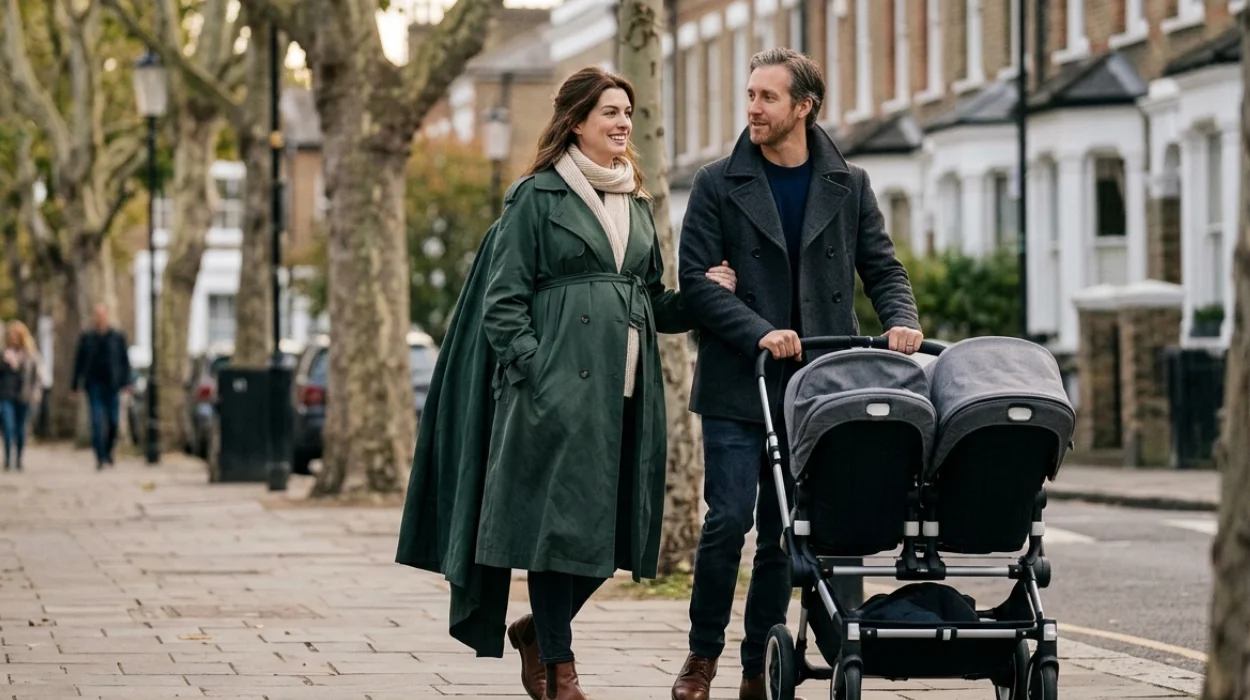
The intersection of global celebrity status and private family life remains a significant focal point for modern cultural analysis. Academy Award-winning actor Anne Hathaway and her husband, film producer and jewelry designer Adam Shulman, have established a definitive framework for navigating this balance. This study by The Londoner News provides an exhaustive, factual, and deeply researched examination of the family structure, fertility histories, and privacy protocols governing the Hathaway-Shulman household.
- How many children does Anne Hathaway have?
- What challenges did Anne Hathaway face with fertility and conception?
- How do Anne Hathaway and Adam Shulman navigate parental privacy?
- What is Anne Hathaway’s philosophy on modern motherhood and career balance?
- What are the societal implications of Hathaway’s public stance on family?
How many children does Anne Hathaway have?
Anne Hathaway has two children and is currently expecting her third child with husband Adam Shulman. The couple shares two sons, Jonathan Rosebank Shulman and Jack Shulman, and publicly announced their third pregnancy in June 2026 via social media.
Macro Context of the Shulman-Hathaway Family
The family unit began following the marriage of Anne Hathaway to Adam Shulman on September 29, 2012, in Big Sur, California. The union followed a four-year courtship that initiated after their initial meeting at the Palm Springs Film Festival in 2008. Over their fourteen years of marriage, the couple has consistently structured their personal lives around metropolitan hubs like New York and London, balancing high-profile international entertainment careers with a highly controlled domestic environment.
Chronological Breakdown of the Children
The expansion of the Shulman-Hathaway household spans a decade of documented milestones:
- Jonathan Rosebank Shulman: Born on March 24, 2016, in Los Angeles, California. He represents the first child for both parents. The middle name “Rosebank” honors traditional family naming conventions from Hathaway’s maternal lineage.
- Jack Shulman: Born in November 2019. His birth was kept highly private, with his name and arrival verified by public interest media several months after the delivery.
- Third Child: Announced on June 19, 2026. Hathaway posted a video demonstrating her advanced pregnancy on her verified Instagram account, captioned with the phrase “x Baby, I’m yours x.”
What challenges did Anne Hathaway face with fertility and conception?
Anne Hathaway faced severe difficulties with fertility, experiencing a miscarriage in 2015 and enduring complex pathways to conception for her subsequent pregnancies. She has utilized her public platform to openly discuss the non-linear, emotionally challenging realities of reproductive health.
The 2015 Miscarriage and Career Intersections
In a 2024 retrospective analysis with Vanity Fair magazine, Hathaway disclosed that she suffered a miscarriage in 2015. At the time of the pregnancy loss, she was performing in the demanding off-Broadway play Grounded, directed by Julie Taymor at New York’s Public Theater. In an ironic logistical parallel, her character in the production was a pregnant military drone pilot. Hathaway maintained her performance schedule throughout the run, portraying a pregnant woman on stage each night while privately processing the physical and emotional aftermath of the miscarriage. She eventually disclosed the reality of the situation to her fellow cast members backstage—and during subsequent promotional trips to London—to manage the collective emotional strain.
Public Advocacy and the Reality of “Conception Hell”
When announcing her second pregnancy in July 2019, Hathaway consciously designed her messaging to circumvent the idealized, effortless narrative often presented by public figures. Accompanying a photograph of her pregnancy silhouette, she explicitly stated: “For everyone going through infertility and conception hell, please know it was not a straight line to either of my pregnancies.”
Medical data from the World Health Organization (WHO), alongside research from leading fertility clinics in London, indicates that roughly one in six people globally experience infertility at some point in their lives, establishing Hathaway’s experience within a broad macro-demographic context. By framing her personal medical realities within this statistical norm, Hathaway transformed her individual announcement into a broader critique of the societal stigma surrounding reproductive challenges.
How do Anne Hathaway and Adam Shulman navigate parental privacy?
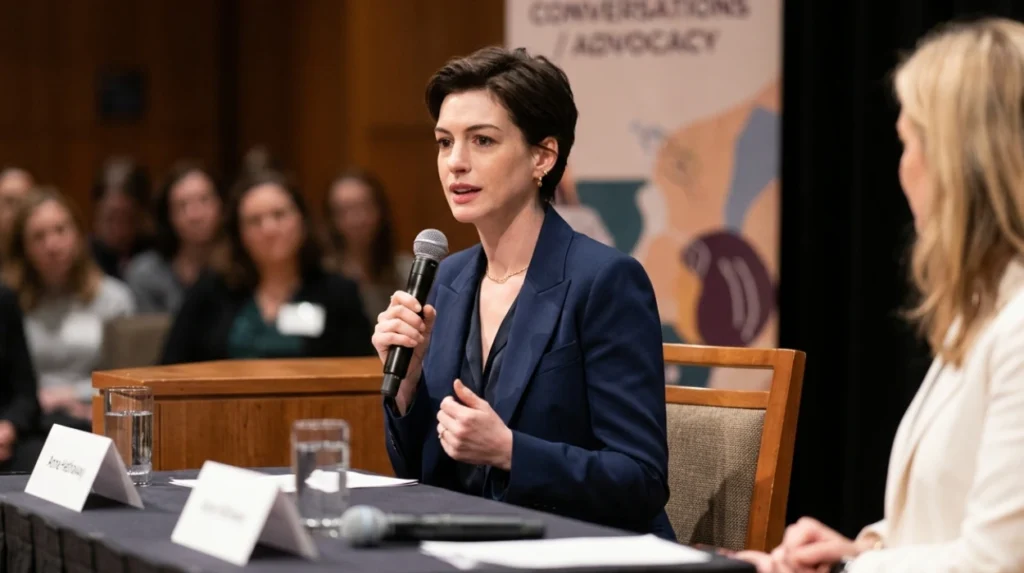
Anne Hathaway and Adam Shulman navigate parental privacy through a strict policy of digital omission, legal boundaries, and media non-cooperation. They refuse to share photographs of their children’s faces online and actively restrict their exposure to paparazzi.
The Rationale Behind Digital Omission
The protective strategy employed by the household is rooted in the philosophy that children possess an inherent right to autonomy and self-determination. In an interview with Porter magazine, Hathaway detailed the operational logic behind shielding Jonathan and Jack from the public domain. She noted that protecting her family’s privacy is essential for collective psychological health.
Hathaway views her family as an interdependent team where the choices of the parent should not infringe upon the child’s future ability to define their own public or private identity. Consequently, neither she nor Shulman post images of their children on social media networks, and they do not bring them to red-carpet events, film premieres, or promotional campaigns in major media capitals from Los Angeles to London.
Practical Application of Privacy Boundaries
The implementation of these boundaries involves specific behavioral strategies designed to minimize media exposure in urban environments. These practices include:
- Selecting Non-Disclosed Residences: Utilizing high-security residential buildings that feature internal, private parking garages to prevent street-level photography during arrivals and departures.
- Paparazzi Avoidance Protocols: Altering daily transit routes and scheduling routine pediatric or educational transits during low-surveillance windows.
- Intentional Media Shielding: Declining commercial profiles or reality-based media requests that require filming inside the domestic residence or interviewing family members.
What is Anne Hathaway’s philosophy on modern motherhood and career balance?
Anne Hathaway’s philosophy on motherhood dictates that parenting provides a stabilizing psychological foundation that enhances, rather than limits, her artistic career. She views the responsibilities of raising children as a mechanism that clarifies her professional boundaries and project selections.
The Psychological Shift of Matrescence
Matrescence—the developmental transition of a woman into motherhood, involving distinct hormonal, bodily, and psychological shifts—profoundly altered Hathaway’s approach to the entertainment industry. Prior to the birth of Jonathan in 2016, Hathaway frequently spoke about her struggles with chronic performance anxiety and the destabilizing pressures of intense public scrutiny following her 2013 Academy Award win for Les Misérables.
Following the integration of children into her life, she reported a pronounced shift in her internal locus of control. The actress noted that she did not feel “fully here” or entirely grounded in her own existence until she assumed maternal responsibilities. The daily demands of childcare shifted her focus away from external validation, acting as a buffer against the volatile nature of global celebrity culture.
Career Calibration and Selection Metrics
The presence of children has directly influenced the logistical and artistic choices governing Hathaway’s filmography. Professional commitments are now viewed through the lens of time allocation and geographical feasibility. Examples of how this philosophy impacts her career architecture include:
- Production Location Restrictions: Prioritizing film projects that offer compressed production schedules or filming environments with family-friendly infrastructure to minimize prolonged separation from her children.
- Strategic Genre Diversification: Balancing intense dramatic roles with family-accessible intellectual properties, such as her work on the upcoming The Princess Diaries 3 or the commercial comedy The Idea of You.
- The “Fun Zone” Paradigm: Designing a household dynamic where the family can comfortably integrate into her professional travels when long-distance work is unavoidable. Speaking to the press during a European promotional stop in London, Hathaway characterized their current family era as a “fun zone” where the shared enjoyment of urban life and mutual companionship takes precedence over individual career ambitions.
What are the societal implications of Hathaway’s public stance on family?
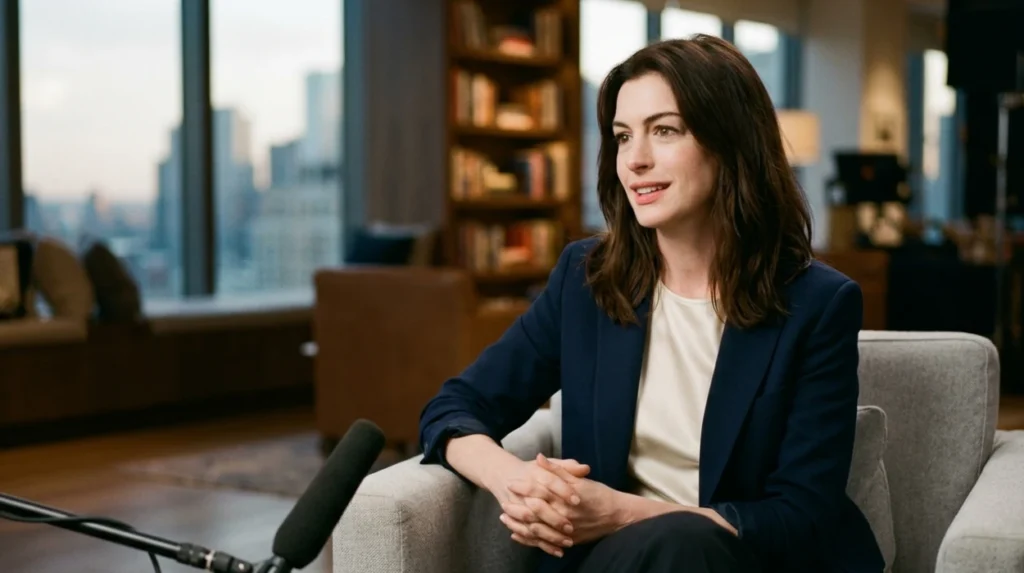
The societal implications of Hathaway’s public stance include the normalization of late-career pregnancies, the destigmatization of male-partnered domestic equity, and the promotion of stricter media ethics regarding celebrity minors.
Normalizing Advanced Maternal Age
By entering her third pregnancy at age 43 in 2026, Hathaway acts as a visible representative of an accelerating demographic trend. According to data from the Centers for Disease Control and Prevention (CDC) and the Office for National Statistics (ONS) in London, birth rates for women aged 40 and older have steadily increased over the past two decades, driven by advancements in reproductive technology, shifting economic structures, and prolonged career trajectories for women. Hathaway’s transparent documentation of this demographic reality provides cultural validation for millions of women navigating reproductive choices later in life.
Redefining the Domestic Partnership
The public positioning of the Hathaway-Shulman marriage highlights a shift toward equitable domestic distribution of labor. Shulman, despite maintaining his own successful businesses including James Banks Design, frequently assumes primary caregiving roles during Hathaway’s intensive filming cycles. This model challenges traditional patriarchal expectations of the Hollywood spouse, offering a blueprint for modern dual-income couples seeking symmetrical domestic partnerships.
Advancing the Dialogue on Digital Consent
Ultimately, the strict boundaries enforced by the family contribute to an ongoing legal and ethical reassessment of child privacy in the digital age. As algorithmic tracking and artificial intelligence surveillance become more pervasive, the choice to keep children entirely out of the digital ecosystem is no longer merely a celebrity preference; it is a sophisticated data-protection strategy. Through her steadfast refusal to commodify her children for public consumption, Hathaway sets an authoritative standard for parental responsibility, digital consent, and ethical boundary-setting for public figures globally.
How many children does Anne Hathaway have?
Anne Hathaway has two sons with her husband, Adam Shulman. According to recent public announcements referenced in this article, the couple is also expecting their third child.