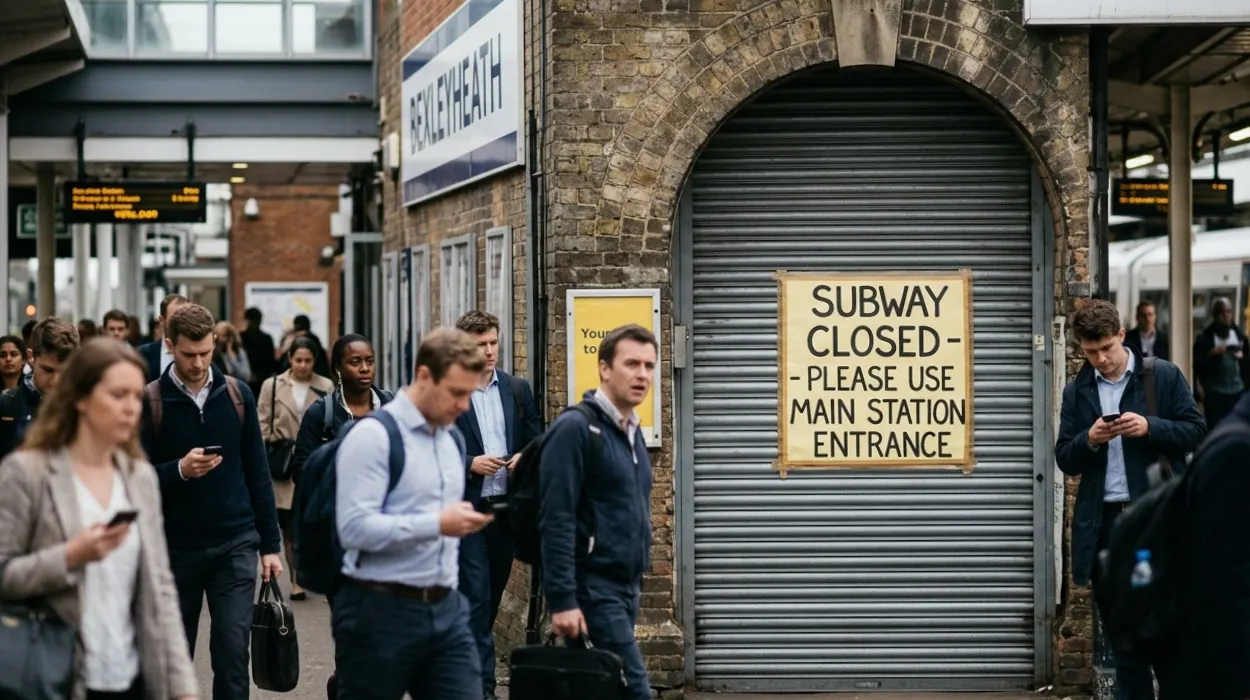
Bexleyheath commuters are facing a temporary subway closure at Bexleyheath station this week, disrupting the usual pedestrian underpass route between platforms. This always‑on hub‑style guide explains exactly what is changing, how services are altered, and what alternatives you can use to keep commuting reliably into central London and Kent. The article is structured so every H2 is a direct question commuter‑searchers ask, and each section delivers a crisp 40‑word answer plus detailed, citation‑ready advice.
- What is the Bexleyheath train station subway and why is it closing?
- How long is the subway at Bexleyheath station going to be closed?
- How does the subway closure affect Bexleyheath station platforms and access?
- Which train services are most affected by Bexleyheath subway disruption?
- What are the best alternative routes for Bexleyheath commuters this week?
- How should disabled and mobility‑assisted passengers navigate the closure?
- What travel‑time impacts should commuters expect this week?
- How can Bexleyheath commuters stay updated on the closure and service changes?
- Is there a long‑term plan to replace the subway at Bexleyheath?
- What broader impact does this type of closure have on South‑East London rail networks?
- What should Bexleyheath commuters do right now to minimise disruption?
What is the Bexleyheath train station subway and why is it closing?
The Bexleyheath station subway is the pedestrian underpass that connects the station’s platforms beneath the live railway tracks, giving passengers a dry, level‑free way to change directions between northbound and southbound services. It is being closed for structural safety reasons after engineers from Southeastern and Network Rail identified long‑term defects in the underpass and its load‑bearing structure. The closure is not an emergency shutdown, meaning the station remains open and trains continue to call, but the traditional cross‑platform route is unavailable. Authorities have confirmed that step‑free access is still provided via lifts and a new footbridge, which were installed in 2024 to replace the old subway over time. This upgrade was part of a broader Kent and South‑East London railway upgrade plan that aims to improve safety, accessibility, and reliability for passengers on the Bexleyheath line.
How long is the subway at Bexleyheath station going to be closed?
The subway at Bexleyheath station is currently closed on a temporary but extended basis this week while engineers complete the final stage of inspections, safety reinforcements, and way‑finding changes. Exact reopening dates are published on Southeastern’s official website and National Rail Enquiries, with the usual pattern being 7–14 days for this type of underpass work, but the live timetable page should always be treated as the primary source. Southeastern has said that if structural issues are more extensive than first estimated, the closure could be extended by several days, and passengers will be updated via station announcements, digital display boards, and social‑media alerts. The operator also advises checking return‑journey information late in the day, because the subway may be reopened earlier than scheduled if work finishes ahead of time. For long‑term commuters, the permanent closure of the older subway at nearby Bexley station in September 2025 shows that Network Rail increasingly prefers step‑free footbridges and lifts over underpasses, which may influence future layouts at Bexleyheath.
Explore More Central London News
Shein Sues Temu Over Copyright Theft in London High Court 2026
Beatles Museum Opens at 3 Savile Row, London 2027
How does the subway closure affect Bexleyheath station platforms and access?
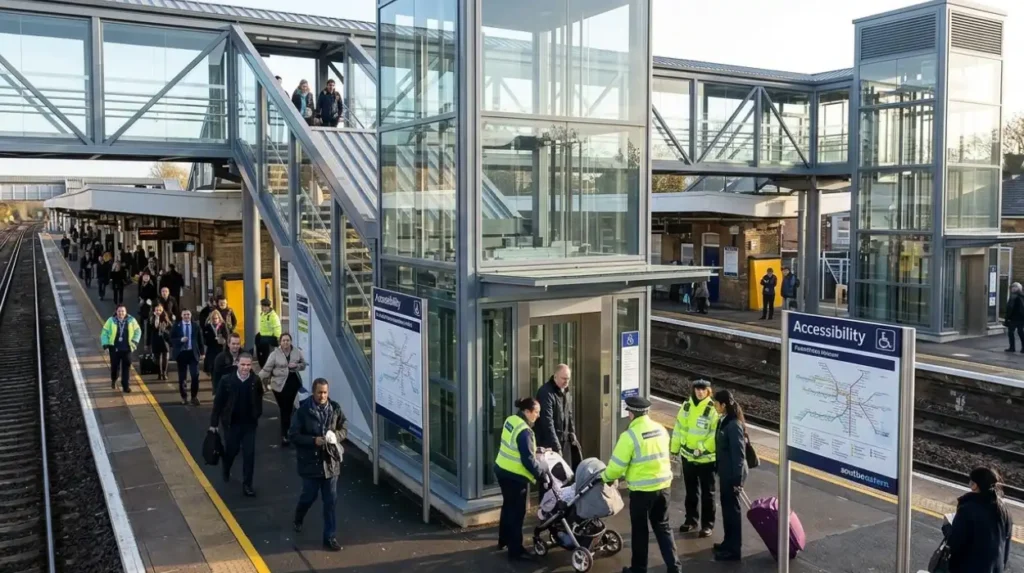
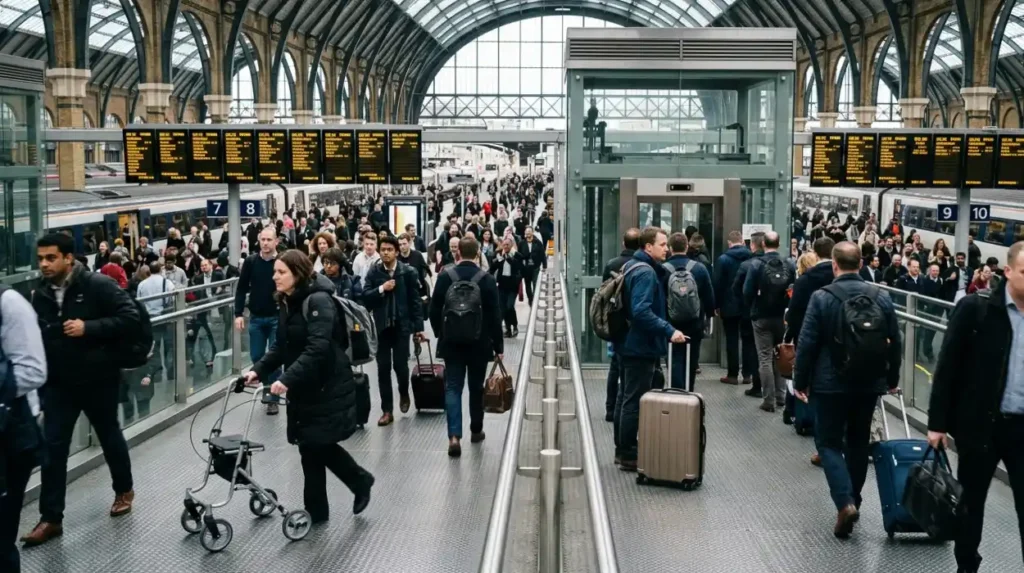
While the subway itself is closed, Bexleyheath station remains fully open and trains continue to stop at all usual platforms. The key change is that pedestrians can no longer cross directly under the tracks between the main platforms; instead they must use the new footbridge and lifts, which are signposted clearly from the station entrances. This route is step‑free and complies with modern accessibility standards, but the path is longer and slightly slower than the old underpass, especially during peak‑hour congestion. Southeastern has deployed extra staff at the station this week to manage queues, direct passengers with luggage, pushchairs, or mobility aids, and to assist those unfamiliar with the new layout. Disabled‑access signage and tactile maps near the footbridge also show the alternative routes; these are cross‑referenced with the official Southeastern step‑free access station page for Bexleyheath.
Which train services are most affected by Bexleyheath subway disruption?
The core Bexleyheath line services between London Victoria and Dartford/Gravesend are still running, but the subway closure indirectly affects platform‑change patterns and walking times for passengers transferring between directions. Southeastern runs these services every 15–30 minutes during peak hours, so the timetable itself is largely unchanged, but the cross‑platform route is no longer available. Trains to London Bridge, Charing Cross, Cannon Street, and Waterloo East may also be impacted if passengers previously used the subway to switch directions quickly, but the main disruption is passenger‑flow delay, not service cancellation. During planned engineering works weekends, such as those between Lewisham and Dartford, shuttle‑bus replacements and timetable changes have shown that the Bexleyheath line can be rerouted via Sidcup if needed, but such network‑wide disruption is not currently in force this week. For those travelling beyond Bexleyheath to stations such as Barnehurst, Welling, Falconwood, or Eltham, the principal change is the extra time needed to move between platforms, not the frequency of trains.
What are the best alternative routes for Bexleyheath commuters this week?
Commuters leaving Bexleyheath this week should allow 5–10 extra minutes at the station to use the new footbridge and lifts instead of the subway. If you normally change platforms via the underpass, plan to exit the station at the main entrance, cross via the road‑level zebra crossing, or use the step‑free footbridge, depending on the latest in‑station signage. For those travelling into central London, the standard Bexleyheath‑line routes to London Victoria and (less frequently) London Bridge remain the primary options, with passengers advised to board at the platform signposted for their destination rather than planning a mid‑station direction‑swap. If the footbridge route becomes congested, local buses serving Bexleyheath Bus Station and the surrounding area can be used for short journeys to nearby stations such as Barnehurst or Welling, where alternative metro routes exist. For longer‑distance journeys, Southeastern’s timetable pages and the National Rail Enquiries app recommend checking multi‑route options, including the Sidcup line and the Woolwich line, to avoid dependency on Bexleyheath‑station platform‑crossing.
How should disabled and mobility‑assisted passengers navigate the closure?
The subway closure explicitly takes disabled‑access standards into account, because the new footbridge and lifts at Bexleyheath station provide step‑free access between platforms and are designed to meet current UK accessibility regulations. Passengers who use mobility aids, wheelchairs, pushchairs, or walking frames should follow the blue‑circle step‑free signs that direct them from ticket halls to lifts and the overhead footbridge. Southeastern staff are available at the station during peak hours to assist with lift‑queue management and to provide guidance for those unfamiliar with the layout. If the lifts are temporarily out of service, the operator has committed to alternative step‑free routes or taxi‑assistance arrangements for passengers who cannot manage stairs, as outlined in their published accessibility policy. For planning journeys in advance, the Southeastern station accessibility page for Bexleyheath lists the exact footbridge and lift locations, estimated walking times between platforms, and the contact details for Passenger Assist, which can be booked up to 24 hours before travel.
Explore More Central London News
Taylor Swift and Travis Kelce London Visit Photos 2026
David Attenborough centenary celebrated in London 2026
What travel‑time impacts should commuters expect this week?
Passengers should expect small but noticeable increases in station‑walking time this week, because the subway route is longer and involves using lifts or stairs on the footbridge. During peak hours (07:00–09:30 and 17:00–19:00), the extra time can be 3–5 minutes for most passengers and up to 8–10 minutes for those with mobility aids or heavy luggage. Delays at the footbridge are usually due to queues at the lifts rather than crowding on the bridge itself, so commuters who can board earlier or later in the peak window may avoid the longest lines. For those connecting to onward trains, Southeastern recommends allowing at least 10 minutes between platforms at Bexleyheath this week, compared with the usual 3–5 minutes when using the subway. If the footbridge route is heavily congested, digital departure boards and the Southeastern app may show minor platform‑board‑time adjustments, but timetable changes are not expected solely because of the subway closure.
How can Bexleyheath commuters stay updated on the closure and service changes?
The most reliable sources are Southeastern’s official website and app, which publish live status updates, planned works, and station‑specific notices for Bexleyheath station. The National Rail Enquiries service also lists all current incidents and engineering works affecting the Bexleyheath line, including subway‑closure‑related information in the station facilities section. Commuters should also check Southeastern’s social‑media channels (X, Facebook, and Bluesky) for real‑time alerts about subway‑reopening, platform changes, or unexpected delays. Station‑mounted digital boards and audio announcements at Bexleyheath provide on‑the‑ground updates, while customer‑service desks can confirm which routes are best for your journey. For those who prefer email or SMS alerts, both Southeastern and National Rail offer subscription services that send disruption notices for specific routes or stations, including Bexleyheath.
Is there a long‑term plan to replace the subway at Bexleyheath?
The current closure fits into a long‑term modernisation programme for Kent and South‑East London stations, in which Network Rail prefers step‑free footbridges and lifts over older pedestrian underpasses. At nearby Bexley station, the subway was permanently closed in September 2025 after structural defects were found, and passengers now use a new footbridge and lift system, which proved this model can safely replace underpasses. At Bexleyheath, the existing footbridge and lifts are already in place and are being used as the permanent primary route during and after the subway works, suggesting that the underpass may be downgraded or permanently closed once the safety assessment is complete. Network Rail has indicated that, over the next five years, several underpasses across the region will be replaced with overhead crossings to improve accessibility, reduce maintenance costs, and align with disability‑access legislation. Commuters should treat the current temporary subway closure as a potential precursor to a permanent change in the station’s layout, with the improved footbridge and lifts remaining the main access route.
What broader impact does this type of closure have on South‑East London rail networks?
Subway closures at key stations such as Bexleyheath ripple through the wider South‑East London metro network because they affect platform‑change patterns and walking‑time margins for commuters using the Bexleyheath, Sidcup, and Woolwich lines. During major engineering works, such as the 9‑day Bexleyheath‑line closure in 2020 and similar weekend disruptions, bus replacements have been used between Lewisham and Dartford, which pushes extra demand onto alternative routes. The trend of replacing underpasses with step‑free footbridges also reflects a larger shift in Network Rail’s strategy to prioritise accessibility and safety over the original 20th‑century underpass designs. This has led to longer‑term planning for Bexleyheath‑line services, including the introduction of extra trains and adjusted frequencies during work periods to maintain overall capacity. For regular commuters, the subway closure is a micro‑example of how short‑term infrastructure changes can reshape journey‑time expectations and force a reassessment of platform‑usage habits across the South‑East London network.
What should Bexleyheath commuters do right now to minimise disruption?
Commuters should check the latest timetable and status page for Bexleyheath station on Southeastern’s website or the National Rail Enquiries portal before travelling. Allow 5–10 extra minutes at the station to use the footbridge and lifts instead of the subway, and avoid trying to change platforms at the last minute. If you have mobility restrictions, book Passenger Assist in advance and confirm your preferred route with station staff on arrival. For those commuting into central London, consider leaving slightly earlier or later to avoid peak‑hour congestion, and keep an eye on Southeastern’s social‑media channels for any last‑minute announcements. Over the coming days, many commuters will find that the new footbridge route becomes habitual, and the temporary subway closure may simply become the new normal for Bexleyheath station access.
What is the Bexleyheath station subway and why is it closing?
The Bexleyheath station subway is the pedestrian underpass connecting the platforms beneath the railway tracks. It is closing temporarily because engineers identified structural defects and need to carry out safety work. The station remains open, and passengers can use the new step-free footbridge and lifts instead.