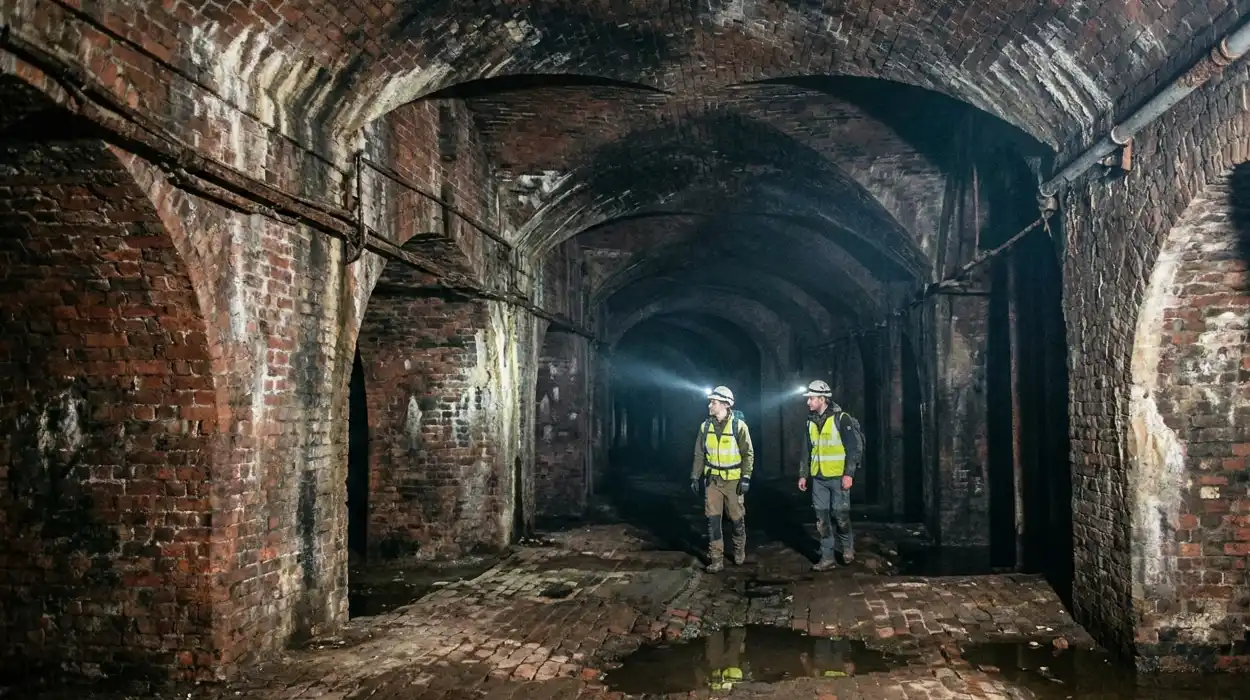
Hidden Victorian Infrastructure in North London consists of extensive subterranean brick networks, including retaining arches, storage vaults, and transit tunnels built between 1830 and 1900. These engineered spaces supported massive railway termini and subterranean passenger lines across the expanding metropolis.
- When Were These Underground Vaults Constructed?
- Who Engineered These Historical Subterranean Networks?
- Which North London Stations Possess Large Vault Networks?
- How Did Industrial Needs Shape Sub-Surface Engineering?
- Why Did These Architectural Spaces Fall Out Of Active Use?
- How Are These Historic Remnants Preserved And RepurPOSED Today?
- What Is The Long-Term Scientific Relevance Of These Vaults?
The industrialization of nineteenth-century Great Britain triggered an unprecedented migration into urban centers, causing the population of London to rise rapidly. To manage the immense influx of passengers and freight, private railway companies began constructing trunk systems linking regional hubs to the capital city. The Railway Boom of the 1830s transformed the landscape as engineers designed lines that cut through dense neighborhoods. Due to the high cost of land and strict municipal regulations, rail companies built vast networks of brick structures underneath their main stations.
The geological reality of North London dictated specific building choices. Beneath the topsoil lies a thick layer of dense, impermeable clay known as London Clay. While this material provides a stable medium for tunneling, it exerts immense lateral pressure on any vertical excavation. Victorian civil engineers solved this problem by designing subterranean networks of semi-circular or elliptical arches. These engineering features redistributed the immense weight of the overground tracks and station buildings outward and downward into the earth.
These structures served dual purposes. Beyond providing structural stabilization for heavy steam locomotives, these hollow chambers maximized space efficiency. Railway companies utilized the empty spaces beneath platforms and tracks as storage depots for industrial commodities. The subterranean vaults underneath stations such as King’s Cross, St Pancras, and Camden Goods Yard became crucial hubs for storing goods like British beer, Derbyshire coal, and grain arriving from northern counties.
When Were These Underground Vaults Constructed?
The construction of these underground vaults occurred primarily during the Victorian era, spanning from the opening of early mainline links in 1838 to the extensive deep-level electrification projects completed at the turn of the twentieth century.
The timeline of North London sub-surface infrastructure tracks the broader evolution of British civil engineering. The initial phase began with the construction of the London and Birmingham Railway, which opened its southern terminus at Euston in September 1838. To navigate the steep ascent from Euston up to Camden Town, engineers built early retaining walls and subterranean vaults to stabilize the rail beds. This marked the transition of the railway from a simple industrial tool to a major urban network.
The mid-nineteenth century brought a massive expansion of subterranean civil engineering works across London. Between 1856 and 1888, municipal authorities carried out vast excavation projects to construct the London sewerage system. This coincided with the development of the world’s first underground passenger railway, the Metropolitan Railway, which opened its first section between Bishop’s Road and Farringdon Street in January 1863. The project proved that passenger transit could operate successfully beneath congested urban streets.
The construction of the Midland Railway terminus at St Pancras, completed in 1868, represented the peak of Victorian brick vault engineering. Designers planned the entire station layout around the spatial dimensions of industrial cargo. By the late nineteenth century, the construction technique shifted from open excavations to deep-level boring. The opening of the City and South London Railway in 1890 introduced the Greathead tunneling shield, allowing engineers to dig deeper circular tubes through the London Clay without disturbing the historical structures above.
Who Engineered These Historical Subterranean Networks?
Prominent nineteenth-century civil engineers designed these subterranean networks, including Robert Stephenson, William Henry Barlow, John Fowler, and James Henry Greathead. These figures developed the structural principles, excavation methods, and tunneling tools that made deep urban infrastructure viable.
Robert Stephenson served as the engineer-in-chief for the London and Birmingham Railway, directing the complex earthworks through North London in the 1830s. He designed the stationary engine house and subterranean vaults at Camden that managed the steep incline leading away from the Euston terminal. Stephenson focused on calculating structural load limits for brick arches, ensuring they could withstand the vibration of early steam locomotives.
William Henry Barlow designed the subterranean layout of St Pancras Station in the 1860s. Barlow chose to raise the station passenger platforms on a grand iron superstructure, creating an entirely hollow lower level supported by 720 cast-iron columns and thick brick retaining arches. He matched the precise spacing of these supports to the dimensions of beer barrels, ensuring the Midland Railway company could maximize its storage revenue.
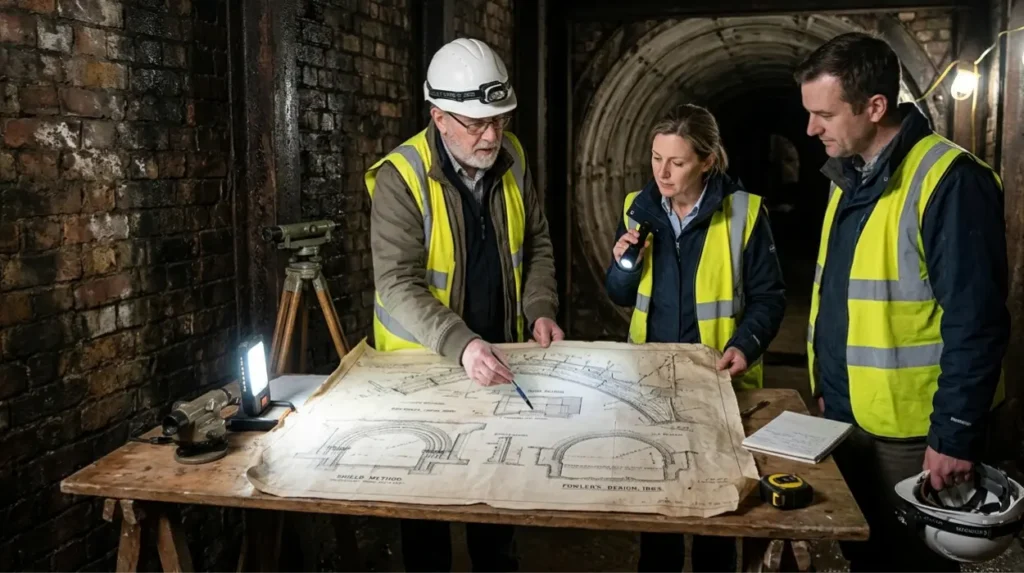
John Fowler engineered the first sections of the Metropolitan Railway using the cut-and-cover method. This construction technique involved digging a wide, open trench along existing public roads, lining the sides with thick brick walls, building a brick arch across the top, and then backfilling the street above. James Henry Greathead advanced the field further by patenting an improved cylindrical tunneling shield. His device allowed laborers to line deep-level tunnels with cast-iron segments, protecting the historical brick vaults resting near the surface.
Which North London Stations Possess Large Vault Networks?
King’s Cross, St Pancras International, Camden Road, and the historical Camden Goods Yard contain the largest networks of subterranean vaults in North London. These structures remain hidden beneath active transit tracks, modern shopping concourses, and commercial districts.
The belly of King’s Cross Station sits on top of a massive network of brick storage vaults built by the Great Northern Railway in the 1850s. These chambers connected directly to the Regent’s Canal, allowing coal arriving from Yorkshire to be transferred straight from rail cars into canal barges or horse-drawn carts. The architectural design utilized strong engineering bricks laid in mortar to insulate the rooms against moisture and vibrations.
Directly adjacent to King’s Cross, St Pancras International contains a multi-acre grid of subterranean vaults. The structural layout features a vast basement level where the roof is formed by a series of brick jack arches resting on cast-iron beams. Because the Midland Railway carried millions of gallons of pale ale from breweries in Burton-upon-Trent, Barlow designed the columns exactly 14 feet and 4 inches apart to accommodate the storage layouts of standard beer barrels.
Further north, the Camden Goods Yard and the arches around Camden Road Station feature extensive engineering works. The London and North Western Railway built a web of vaults, horse tunnels, and subterranean wagon turntables here. This hidden layout allowed workers to move heavy freight safely beneath the busy surface lines without interrupting the scheduling of passenger trains moving through the station.
Explore More History Of London
History Of High Cross Medieval Landmarks: Tottenham
Jimi Hendrix Exhibition Unveils Rare Memorabilia: Mayfair London 2026
How Did Industrial Needs Shape Sub-Surface Engineering?
Industrial needs shaped sub-surface engineering by forcing designers to standardize dimensions, manage natural resources, and develop mechanical transit systems. The physical traits of cargo like coal, beer, and livestock dictated the height, width, and ventilation of underground structures.
The spatial layout of Victorian underground infrastructure directly mirrored the logistics of nineteenth-century trade. In the 1860s, the booming liquor industry required stable, cool temperatures to prevent beer from spoiling before distribution. The thick brick walls of the St Pancras vaults provided natural insulation, maintaining a steady internal temperature between 10 and 12 degrees Celsius throughout the year. This climate control eliminated the need for artificial refrigeration, which did not exist on an industrial scale at the time.
Handling coal dust and steam locomotive exhaust required custom engineering solutions. In the vaults underneath King’s Cross, engineers built tall vertical ventilation shafts that extended up to the surface. These openings cleared dangerous gases and fine particulates from the dark workspaces, reducing the risk of respiratory illness among workers and preventing dust explosions.
To lift heavy commodities from the subterranean vaults to the street level, engineers installed centralized hydraulic power systems. They constructed deep accumulator towers that stored water under high pressure inside underground chambers. This pressurized water system powered mechanical lifts, capstans, and cargo cranes across the station yards. This hydraulic setup increased the speed of freight transfer while reducing the station’s reliance on manual labor.
Why Did These Architectural Spaces Fall Out Of Active Use?
These architectural spaces fell out of active use due to the transition from steam to electric transit, the decline of canal-based freight transport, and the growth of motorized road haulage during the mid-twentieth century.
The decline of the subterranean networks began with the modernization of railway technology. Early underground transit lines relied on steam locomotives, which required broad tunnels, wide arches, and open cutting zones to dissipate smoke. When railway companies electrified the network in the early 1900s, new trains did not emit combustion gases. Consequently, the deep-level tube lines could use much smaller, tightly bored circular tunnels, rendering the older, high-ceilinged brick vaults obsolete for modern transit expansion.
The changing economics of British freight logistics further undermined the utility of these underground depots. Throughout the nineteenth century, bulk goods moved via a combined network of rail lines and inland canals. As motor trucks and paved highways expanded across the United Kingdom after the First World War, companies abandoned canal transport. The underground storage vaults lost their direct logistical connection to the supply chain, and businesses moved their inventories to large warehouses located outside the urban center.
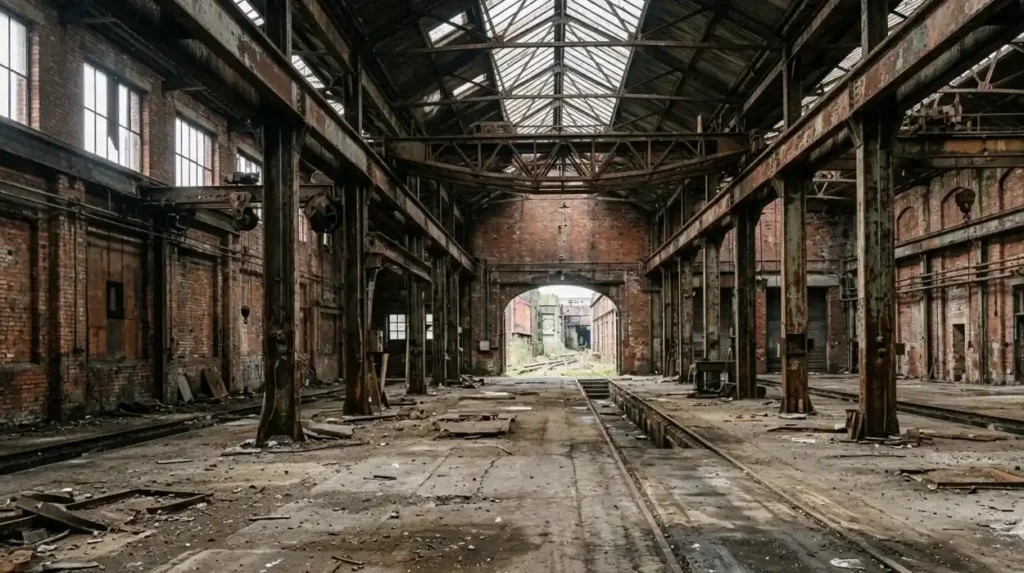
During the mid-twentieth century, the British railway system underwent massive state reorganization and consolidation. This restructuring process led to the closure of older goods yards and the automation of freight handling. The damp, dark brick chambers beneath North London stations became financial liabilities, as they required constant maintenance to prevent water ingress but generated no direct rental income. Railway operators sealed the entrances, leaving the networks dark and unused for decades.
How Are These Historic Remnants Preserved And RepurPOSED Today?
These historic remnants are preserved and repurposed today through heritage listing protections, structural restorations, and commercial redevelopments that convert the brick arches into modern retail venues, cultural spaces, and public walkways.
The preservation of Victorian infrastructure relies heavily on the statutory listing system managed by Historic England. Structures of exceptional architectural merit receive Grade I or Grade II listed status, which legally protects them from demolition or altering modifications. The entire St Pancras International terminus, including its vast lower vault network, is a Grade I listed structure. This legal protection forces developers to use traditional lime mortars and matching engineering bricks during any structural restoration work.
The multi-billion-pound redevelopment of the King’s Cross and St Pancras districts transformed these abandoned industrial assets into profitable commercial destinations. Engineers cleaned the soot-stained brickwork of the St Pancras beer vaults using low-pressure vapor blasting, avoiding harsh chemicals that could damage the nineteenth-century structures. Today, these former storage spaces house the station’s main shopping concourses, bars, and restaurants, blending historical architecture with modern retail needs.
To experience this historic landmark in person today, consult our comprehensive London transport history visitor guide for itineraries and visiting parameters. Similar adaptive reuse projects have taken place across the Camden Goods Yard, where old horse tunnels and vaulted vaults form part of the Camden Market complex. These projects preserve the structural craftsmanship of the Victorian era while integrating the spaces into the daily life of the city.
What Is The Long-Term Scientific Relevance Of These Vaults?
The long-term scientific relevance of these vaults lies in their value for civil engineering research, urban archaeology, and climate adaptation studies focusing on the structural properties of historic masonry networks.
For structural engineers, these nineteenth-century vaults serve as a massive, real-world laboratory for studying the long-term durability of brickwork. Many of these retaining arches have supported continuous, heavy mainline rail traffic for over 150 years. Researchers use modern acoustic monitoring tools and laser scanning to analyze how these structures distribute stress under changing loads. The data collected helps engineers maintain historic masonry bridges and tunnels across Europe, reducing the need for expensive modern replacements.
From an archaeological perspective, the sealed vaults preserve a clear record of nineteenth-century industrial life. Excavations within undisturbed vaults often reveal forgotten artifacts, including vintage tools, early track hardware, and animal bones from the era of horse-drawn freight. These items give researchers data on the daily routines, diet, and health of the Victorian working-class laborers who built and operated the early transit networks.
These subterranean spaces also offer modern environmental benefits for climate adaptation strategies. Because their thick masonry walls provide natural insulation, the vaults maintain stable internal temperatures even during extreme summer heatwaves. Engineers are studying these microclimates to see if historical building techniques can inform the design of low-energy, self-cooling underground structures for future cities, ensuring the engineering insights of the Victorian era continue to influence modern architecture.
What is Hidden Victorian Infrastructure in North London?
Hidden Victorian Infrastructure refers to the extensive network of underground brick vaults, storage chambers, retaining arches, and transit tunnels constructed between the 1830s and 1900s beneath major railway stations and transport corridors across North London.