Key Points
- No Further Action: A Metropolitan Police firearms officer is highly unlikely to face disciplinary or misconduct proceedings regarding the fatal shooting of Chris Kaba, following a pivotal shift in government regulations.
- Regulation Revisions: The Independent Office for Police Conduct (IOPC) confirmed it has dropped the planned gross misconduct process because new legislative guidelines raise the legal threshold for evaluating an officer’s use of force.
- Challenge Window Opened: The bereaved family of Mr Kaba has been formally allocated a three-week window to lodge a legal challenge against this regulatory determination.
- Historical Context: Sergeant Martyn Blake, visually known during his trial as officer NX121, fired the fatal shot through an Audi windscreen in Streatham, south London, in September 2022. He was fully acquitted of murder by an Old Bailey jury in October 2024.
- Watchdog Retraction: The IOPC had initially directed in April 2025 that Sergeant Blake must face a gross misconduct hearing under older civil standards, a posture it has now formally abandoned to ensure statutory consistency.
London (The Londoner News) July 8, 2026 – A Metropolitan Police firearms officer who was cleared of murder after shooting dead 24-year-old Chris Kaba in south London will no longer face internal misconduct proceedings, following the implementation of major government changes to police accountability laws. The Independent Office for Police Conduct (IOPC) announced on Wednesday that Sergeant Martyn Blake—previously identified under the court pseudonym NX121—is highly unlikely to face any further disciplinary actions. The watchdog had originally ordered a gross misconduct hearing, which could have seen the officer dismissed without notice, but it confirmed that new statutory rules governing how an officer’s use of force is assessed have effectively nullified the original disciplinary case. The Kaba family has been granted a strict three-week period to review and legally challenge the decision.
- Key Points
- What Led to the Decision to Drop Misconduct Charges Against Martyn Blake?
- How Did the Original Incident in Streatham Unfold?
- What Happened During the Criminal Trial of Sergeant Martyn Blake?
- How Has the Metropolitan Police Leadership Responded to the News?
- What Is the Stance of Chris Kaba’s Family and Campaign Groups?
- How Will This Affect Other Police Use-of-Force Cases Across the UK?
What Led to the Decision to Drop Misconduct Charges Against Martyn Blake?
As reported by an uncredited staff writer of Sky News, the sudden halt to internal disciplinary action stems directly from sweeping regulatory reforms designed to alter the civil thresholds applied to police use-of-force cases. Following the acquittal of Sergeant Blake at the Old Bailey, the Home Office instituted an intensive policy review aimed at adjusting how firearms officers are scrutinised after lethal incidents.
The primary catalyst for dropping the charges was the government’s overhaul of the legal test used by the IOPC. Under the historical system, disciplinary watchdogs evaluated an officer’s use of firearms using a lower civil law standard based on the balance of probabilities. However, following pressure from policing bodies and subsequent legislative updates carried through the Houses of Parliament, the threshold has been raised to align with the criminal standard.
As reported by Andrew Johnson, the Director of Strategy and Policy at the IOPC, the watchdog felt compelled to adjust its path to maintain legal sanity across outstanding disciplinary portfolios. Andrew Johnson stated that: “We carefully considered the law change and its stated intent to address the perceived unfairness and lack of proportionality of the civil law test. We believe this position provides consistency across impacted cases and is fair to officers who are facing potential dismissal for misconduct, which if it occurred now, would not amount to misconduct under the new law.” The watchdog expects that while this decision shapes the future of police oversight, the number of currently active cases altered by the law remains relatively small.
How Did the Original Incident in Streatham Unfold?
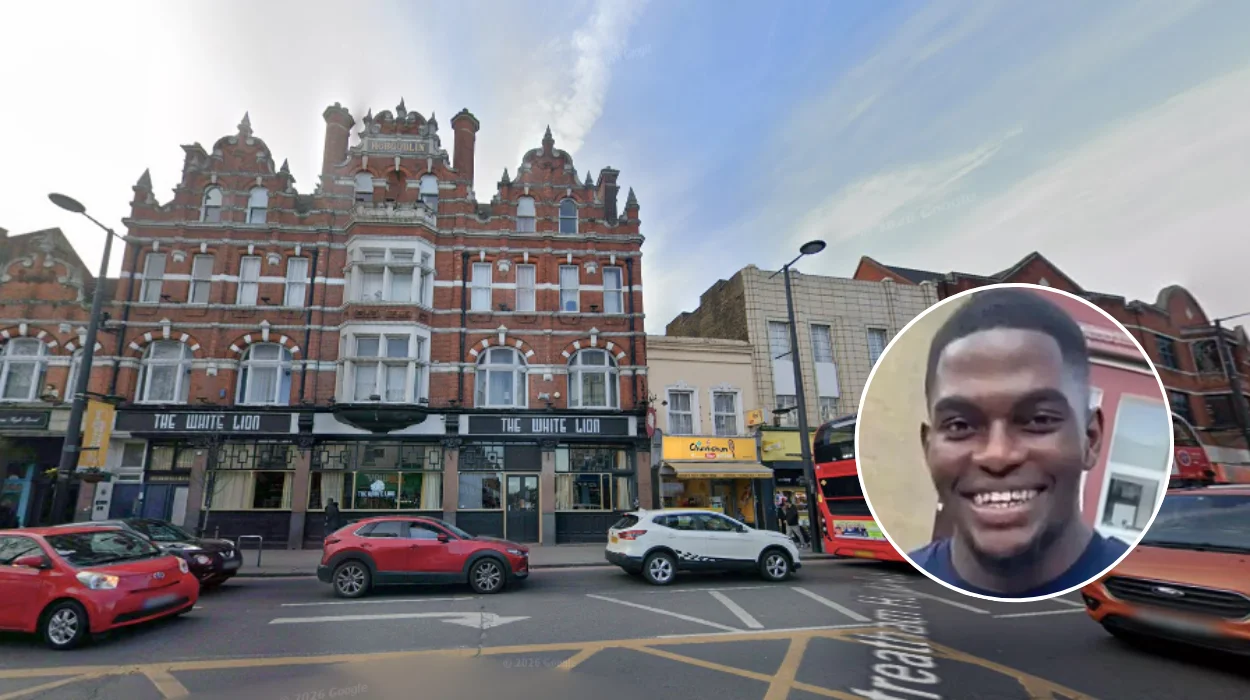
The roots of the legal battle trace back to September 5, 2022, in Streatham, south London. As documented in historical coverage compiled by various journalists across the UK press, including reports from ITV News London, the encounter began when police marksmen in marked and unmarked tactical vehicles began following an Audi Q8. The vehicle had been flagged by automated systems as a suspected getaway car linked directly to a firearms incident that had erupted in Brixton the previous evening.
When tactical units successfully boxed the vehicle in on a residential street, armed units moved forward on foot to apprehend the driver. It was at this juncture that Chris Kaba, who was later revealed to be an active member of an organized street gang, attempted to use the high-powered Audi to ram his way out of the police containment grid. Mr Kaba slammed the vehicle forward into an unmarked police car and then reversed violently into an armed response vehicle positioned directly behind him.
Believing that fellow tactical officers were at immediate risk of being crushed or run over by the escaping vehicle, Sergeant Martyn Blake stepped forward and discharged a single round through the front windscreen of the Audi. The bullet struck Mr Kaba in the head, causing fatal injuries. He died in hospital shortly thereafter. The subsequent investigation quickly became a national flashpoint regarding race, community relations, and the physical safety parameters under which armed British police operate.
What Happened During the Criminal Trial of Sergeant Martyn Blake?
The decision by the Crown Prosecution Service (CPS) to formally charge Sergeant Blake with murder sparked unprecedented operational chaos within the Metropolitan Police Service. Dozens of specialist firearms officers across London staged a mass walkout, turning in their permits and refusing to deploy on armed patrols in protest of the decision. The operational deficit became so severe that the Ministry of Defence was requested to put the British Army on standby to provide emergency counter-terrorism cover on the streets of the capital.
The criminal trial at the Central Criminal Court, the Old Bailey, concluded with a comprehensive acquittal. Over the course of the trial, jurors listened to extensive forensic tracking, viewed police body-worn video, and analyzed the split-second parameters of the confrontation. The defense argued that Sergeant Blake acted entirely in self-defense and in the defense of his colleagues, who were exposed to a moving vehicle being utilized as a weapon.
Following less than three hours of deliberation, the jury returned a verdict of not guilty. Following the verdict, the judicial system lifted a series of reporting restrictions, revealing to the public that Mr Kaba had a extensive history of violent criminal offenses, including multiple convictions involving knives and firearms offenses, and was allegedly linked to an active shooting just days prior to his death.
How Has the Metropolitan Police Leadership Responded to the News?
The Metropolitan Police leadership has consistently argued that the criminal acquittal should have marked the final chapter of legal proceedings for Sergeant Blake, who has since returned to operational duties within the force. Force executives have long maintained that dragging officers through secondary civil hearings after a full criminal clearance damages organizational morale and severely undermines frontline recruitment.
As reported by an ITV News London correspondent, Metropolitan Police Deputy Commissioner Matt Jukes welcomed the regulatory conclusion, emphasizing that a criminal court’s verdict must carry definitive weight. Matt Jukes stated that: “We recognise the impact on NX121, his family and the wider firearms community.” The Deputy Commissioner noted that the protracted nature of parallel investigations often creates severe psychological strain on the families of officers who act under immense operational duress.
Furthermore, representation from the Metropolitan Police Federation, which acts as the staff association for rank-and-file officers, had previously described any attempt to pursue Sergeant Blake through a civil misconduct board as “nonsensical.” The Federation argued that continuing the case under outdated civil tests would have set a dangerous precedent, leaving specialized marksmen legally exposed even when acting fully in line with national firearms training mandates.
Explore more Police News:
Met Police Use DNA to Trace South London Rape Suspect: Thamesmead 2026
Met Police Accused of Brutality at London Israeli Property Protest 2026
What Is the Stance of Chris Kaba’s Family and Campaign Groups?
The decision to drop the gross misconduct proceedings has been met with profound disappointment and anger from the family of Chris Kaba and civil rights advocacy organizations, who believe the regulatory shift shields the police from transparency. The family has consistently maintained that the criminal trial did not address the broader systemic failures, structural biases, and questions of professional standards inherent in the Met Police’s tactical deployment.
As reported by Greta Hansen of Saunders Law, the legal firm representing interests connected to the family’s pursuit of justice, the Kaba family had previously voiced extreme grief over the institutional handling of the officer’s status. Following an earlier IOPC directive in 2025 that sought to force a hearing, the Kaba family stated that: “We hope this leads to him being removed from the Met Police. What Martyn Blake did was deeply wrong. We are still so devastated to have lost Chris — this should never have happened.” The family also expressed that subsequent corporate decisions within the force, including internal career updates for the officer, only served to deepen their emotional pain.
Deborah Coles, the Director of the human rights charity Inquest, which supports families bereaved by state actions, has spoken out against what she views as a culture of exceptionalism for law enforcement personnel. As reported by Greta Hansen of Saunders Law, Deborah Coles commented that: “The IOPC’s decision to direct disciplinary action over the killing of Chris Kaba is welcome. But the fact that the Metropolitan police required direction and were not willing to take this step themselves is reprehensible… There cannot be one standard for the police and another for the public. That erodes trust and erases justice; it’s impunity.”
With the three-week window now active, legal representatives for the Kaba family are expected to review whether a Judicial Review can be mounted in the High Court to contest the IOPC’s decision to rescind the gross misconduct direction.
How Will This Affect Other Police Use-of-Force Cases Across the UK?
The regulatory shift that insulated Sergeant Blake from further internal prosecution is set to have a profound ripple effect across the entire landscape of police accountability in England and Wales. The Home Secretary, Yvette Cooper, had previously laid out the government’s intentions to reform the landscape of police accountability during statements to the House of Commons, seeking a system that balance public trust with the operational confidence of armed officers.
As recorded in official parliamentary transcripts from Hansard, the Home Office review sought to tackle complex dual-standard conflicts that left officers cleared by criminal courts vulnerable to dismissal via civil tribunals. By anchoring the use-of-force evaluations to a unified criminal standard, the government has intentionally made it substantially harder for the IOPC to press gross misconduct charges against officers who discharge weapons in the line of duty.
Legal analysts indicate that dozens of non-fatal and fatal use-of-force cases currently under investigation by watchdogs or awaiting internal panel reviews will now be measured against this heightened benchmark. If local constabularies and regional independent investigators follow the explicit precedent established by the IOPC in the Chris Kaba case, a significant percentage of pending disciplinary actions involving firearms deployments and tactical physical interventions will likely be dismissed or significantly downgraded. While this brings immense relief to police federations, it remains a point of deep systemic friction for community oversight groups demanding stricter independent checks on state-sanctioned force.