Key Points
- Emergency Response: Fourteen fire engines and approximately 90 firefighters were called to a large grass fire that broke out at Hornchurch Country Park on August 14, 2026.
- Incident Timeline: The London Fire Brigade (LFB) got the first call among 20 total calls for the fire at 15:16 BST, while the situation was brought under control by 17:31 BST.
- Operations Ongoing: Firefighters were still present at the location well into the evening in order to perform “damping down” and to find any additional hotspots in the area.
- Safety Status: No casualties have been identified as a result of the incident, and the cause is yet to be determined.
- Strained Resources: The current incident comes after several other cases of grass fires in the capital recently, which include significant grass fires in Hornchurch at the end of July 2026.
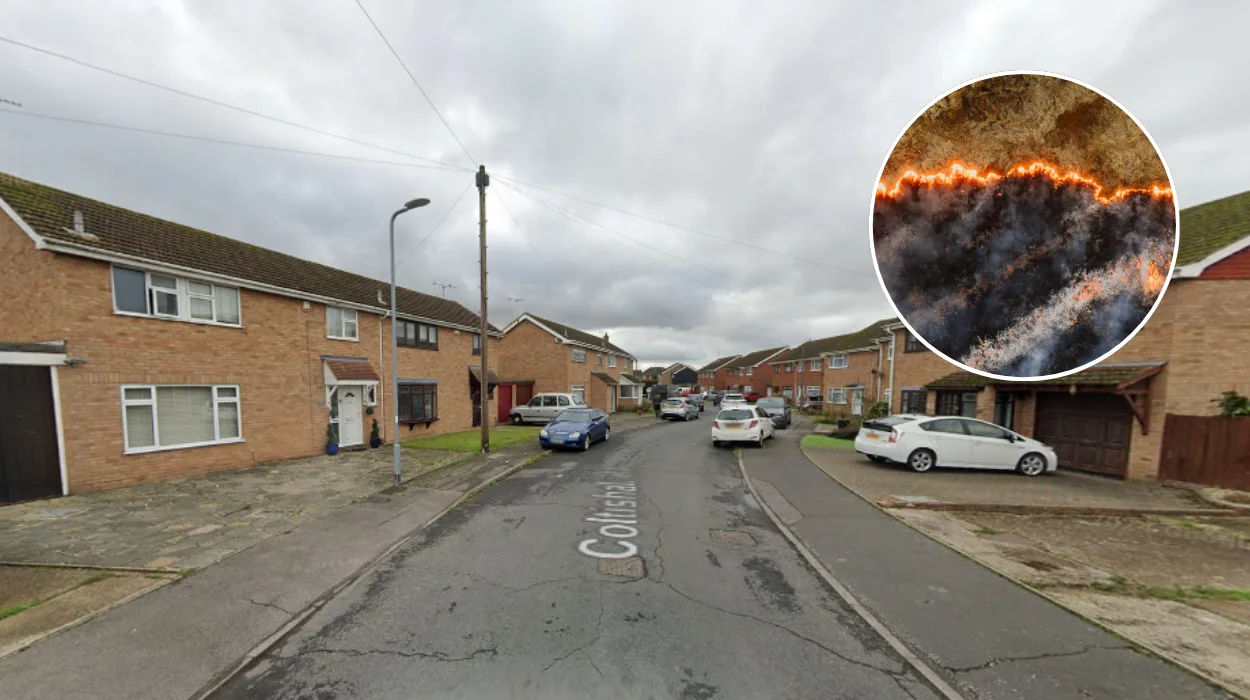
Havering (The Londoner News) August 15, 2026 — Fourteen fire engines and around 90 firefighters were dispatched to Hornchurch Country Park on Thursday afternoon as a major grass fire tore through the area, marking another significant challenge for the London Fire Brigade (LFB) during a period of high-intensity wildfire risk across the capital.
The emergency, which saw multiple seats of fire break out across the parkland, necessitated a massive deployment of personnel and equipment to prevent the flames from spreading further during the warm, dry conditions. The brigade confirmed that they took the first of 20 emergency calls regarding the incident at 15:16 BST.
How did the London Fire Brigade handle the Hornchurch fire?
As reported by the Romford Recorder, the LFB crews worked diligently to combat multiple seats of fire across the vast parkland. The intensity of the blaze required a coordinated effort from fire stations across the region, including crews from Romford, Ilford, and Hornchurch.
The LFB confirmed that the situation was successfully brought under control by 17:31 BST. Following the containment of the main fire, officials indicated that crews were expected to remain on the scene well into the evening. These teams were tasked with “damping down” operations—a process involving the soaking of burnt ground to prevent smouldering embers from reigniting—and conducting thorough sweeps to check for remaining hotspots.
What is the official position on the cause of the fire?
As of the latest reports from the London Fire Brigade incident log, the cause of the fire remains officially under investigation. While the incident occurred during a spell of notably hot and dry weather that has plagued the region, no definitive cause has been established. This lack of a confirmed cause is consistent with recent wildfire incidents in the borough of Havering, where authorities continue to probe the origins of multiple grass fires.
Why is Hornchurch experiencing so many fire incidents?
The recent blaze at Hornchurch Country Park is not an isolated event. Earlier in the summer, on July 30, 2026, a separate fire near South End Road in Hornchurch saw eight fire engines and around 60 firefighters deployed to combat a blaze that consumed approximately six hectares of land.
During that July incident, the London Fire Brigade emphasized the use of specialized tactics to handle such wildfires. According to a spokesperson for the LFB, as quoted by Deb Gayen of London Now, crews utilized “backpack blowers”—which function similarly to leaf blowers—to push flames back into already burnt areas. This maneuver is considered a faster, more efficient way to starve a wildfire of fuel. Additionally, firefighters employed “wildfire beaters,” which consist of long handles with flat rubber ends, used to suppress flames by depriving them of oxygen and physically cooling the affected vegetation.
Explore more East London News:
Water Supply Disruption Hits 10,000 Homes in Chigwell, London 2026
East London Water Crisis: Engineers Battle Burst Mains in London 2026
What warnings have the authorities issued to the public?
The increasing frequency of these incidents has prompted urgent reminders from the London Fire Brigade regarding public conduct in open spaces. During the height of the July wildfire activity, the LFB issued a stern appeal for residents to take precautions to prevent further fires.
As documented by The Standard, the LFB’s advice includes:
- Avoid Barbecues: Residents are urged to avoid using barbecues in parks, public spaces, or on balconies.
- Cigarette Disposal: Cigarettes must be fully extinguished and disposed of in appropriate bins, rather than discarded on the ground.
- Glass Hazard: Members of the public are cautioned against leaving glass bottles in green spaces, as the glass can concentrate sunlight and act as a magnifying lens, effectively starting fires in dry grass.
Furthermore, the brigade has emphasized that if a member of the public discovers a wildfire, they should not attempt to intervene personally. Instead, they are instructed to call 999 immediately and provide precise details regarding the location and scale of the fire.
Is this a wider trend for London’s emergency services?
The pressure on the London Fire Brigade has been palpable throughout the summer of 2026. As noted by The Standard, the brigade experienced its busiest 24-hour period of the year in late July, responding to 63 grass fires across London in a single day as temperatures soared past 30C.
Control officers have been managing an overwhelming volume of requests, with thousands of emergency calls logged regarding grass fires in recent weeks. The “very high” fire severity index, provided by Natural England, has served as a backdrop for these recurring emergencies, placing a severe strain on vital emergency resources.
The incident on August 14 in Hornchurch serves as a stark reminder of the volatility of London’s green spaces during the peak of summer. As climate conditions continue to shift, the reliance on specialized equipment—such as the LFB’s drone teams, which provide incident commanders with live aerial views, and terrain support vehicles capable of delivering off-road water supplies—has become the standard operating procedure for the brigade.
For now, the residents of Havering remain on high alert as the local authorities and the London Fire Brigade continue to monitor the landscape, hoping to mitigate the risk of further outbreaks as the dry, summer conditions persist. The resilience of the fire crews, who have navigated what Assistant Commissioner Andy Pennick previously described as “incredibly challenging” and “arduous” conditions, remains the primary line of defence in protecting homes, wildlife, and the environment from the persistent threat of wildfire.