Key Points
- Cutting-Edge Investigation: The Metropolitan Police are employing advanced familial DNA profiling to trace blood relatives of an unidentified suspect linked to two stranger rapes in south-east London.
- Dual Attacks: The alleged offences occurred four years apart in broad daylight—the first near the Thames Path in Thamesmead in May 2020, and the second in a derelict area on Sewell Road, Abbey Wood, in June 2024.
- National Crime Agency Involvement: Investigators are systematically vetting a targeted list of men compiled by the National Crime Agency (NCA) who share matching familial DNA markers with the perpetrator.
- Financial Incentive: The independent charity Crimestoppers has launched a £10,000 reward for any anonymous information delivered to them that leads directly to the arrest and subsequent conviction of the attacker.
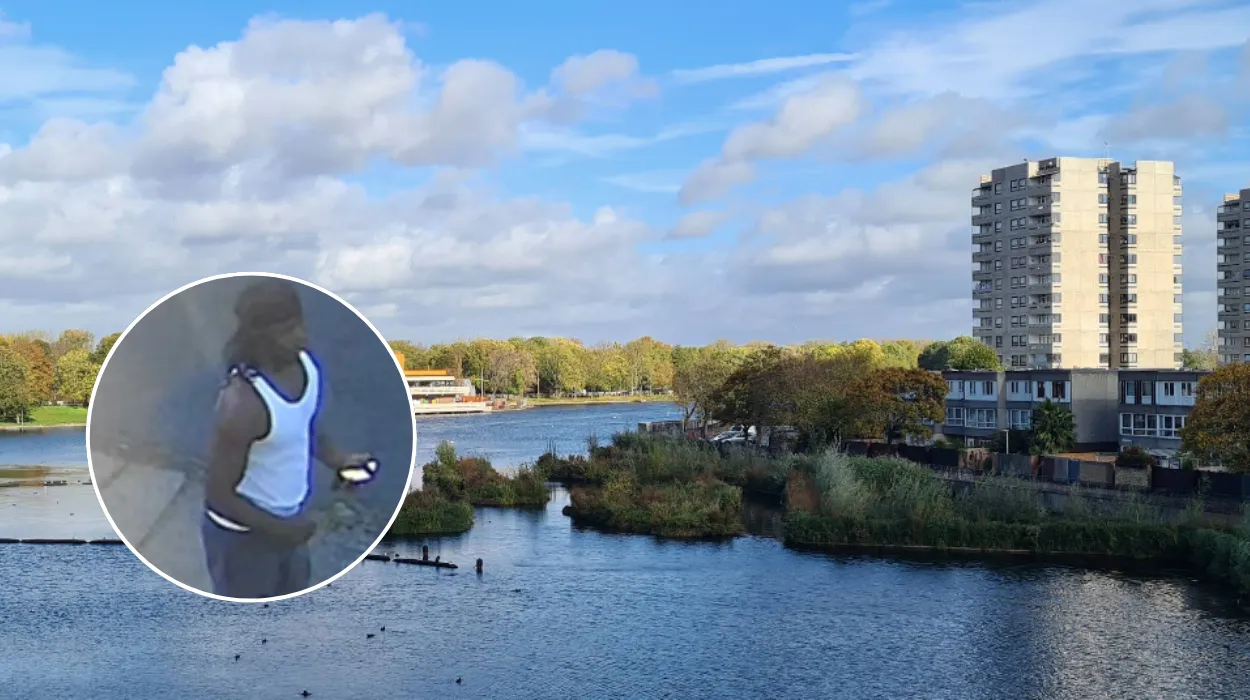
- CCTV Appeal Recirculated: Authorities have re-released closed-circuit television (CCTV) footage of a man in a white vest, blue jeans, and white trainers, urging the public to review the images as personal circumstances or allegiances may have shifted over time.
London (The Londoner News) July 2, 2026 – Bureau detectives attached to the Metropolitan Police Service have turned to highly specialized, cutting-edge familial DNA forensics in a high-stakes bid to identify a suspected serial rapist linked to two daylight stranger attacks against vulnerable women in south-east London. Working in close tandem with the National Crime Agency, investigators are currently cross-referencing a bespoke register of men whose genetic profiles suggest they are biological relatives of the unknown offender. The forensic breakthrough comes alongside a newly fortified public appeal, bolstered by a £10,000 financial reward from the independent charity Crimestoppers, as law enforcement figures acknowledge they have exhausted conventional lines of inquiry over a four-year investigative timeline.
- Key Points
- What Do We Know About the South London Stranger Rapes?
- How Is the Metropolitan Police Using Familial DNA Tracking?
- Who Is the Man Featured in the Recirculated Met Police CCTV Images?
- What Have Met Police Detectives Stated About the Double Rape Investigation?
- Why Is Crimestoppers Offering a £10,000 Reward for Anonymous Information?
- How Can Members of the Public Safely Report Information?
What Do We Know About the South London Stranger Rapes?
The criminal inquiry centres on two distinct, highly predatory incidents occurring within the same geographical pocket of south-east London. The first offense was recorded more than six years ago, in May 2020, when a woman was intercepted and raped in the vicinity of the Thames Path, a popular walking trail running through Thamesmead. For four years, the DNA profile recovered from the initial crime scene yielded no direct matches on the UK National DNA Database, leaving the file open but unresolved.
The trajectory of the investigation shifted sharply following an incident on 19 June 2024. In that instance, a second female victim was subjected to a daylight sexual assault within a derelict, isolated pocket of land situated on Sewell Road in nearby Abbey Wood. Forensic scientists operating under instruction from the Metropolitan Police successfully harvested DNA samples from the second scene. Subsequent comparative analysis yielded an undeniable genetic match, proving conclusively that both crimes were executed by the exact same unidentified individual.
How Is the Metropolitan Police Using Familial DNA Tracking?
With standard database searches failing to pinpoint a specific suspect, the Metropolitan Police invoked specialized assistance from the National Crime Agency (NCA) to initiate a familial DNA search. Unlike standard forensic database matching, which requires an exact one-to-one correspondence between a suspect’s DNA and a crime scene sample, familial DNA profiling searches the national database for partial matches. This process identifies individuals who are not the perpetrator themselves but are highly likely to be a father, son, or brother of the suspect based on shared genetic markers.
The NCA has successfully compiled a specialized, prioritized list of men across the United Kingdom who share these distinct familial DNA characteristics with the attacker. Met Police investigators are now systematically working their way through this list. Detectives are conducting localized background checks, elimination interviews, and requesting voluntary DNA swabs from these relatives to map out family trees, ultimately aiming to narrow the grid down to the specific family member who fits the geographic and physical profile of the rapist.
Who Is the Man Featured in the Recirculated Met Police CCTV Images?
In tandem with the forensic lineage tracking, the Met Police have re-released localized closed-circuit television footage in an attempt to trigger recognition from the public. The footage captures a medium-built man walking purposefully along a residential pavement in south-east London. During the recording, the individual is seen wearing a plain white sleeveless vest, casual denim jeans, and white sports trainers.
An initial public airing of these images failed to yield the suspect’s identity, prompting detectives to recirculate the media assets globally across news networks. Police believe the suspect may have local ties to the Thamesmead, Abbey Wood, or wider Greenwich and Bexley boroughs, or that an associate may recognize his distinctive gait, clothing, or physical frame from the period of the attacks.
What Have Met Police Detectives Stated About the Double Rape Investigation?
The operational response is being directed by senior specialist officers from the Met’s violent crime commands. As reported by crime correspondents covering the development for The Londoner News, Detective Chief Inspector Zoe Hendrick, who is leading the dedicated investigation, stated that: “This man has targeted two very vulnerable women, raping them in daylight hours in residential areas.”
Reflecting on the complex nature of the forensic methodologies currently being deployed by her team, Detective Chief Inspector Hendrick added:
“Investigations of this nature are extremely rare and our priority since the launch of the first investigation has been to support the victims and identify the man responsible.”
Acknowledging the limitations of prior public appeals and explaining the decision to re-engage with the media, Detective Chief Inspector Hendrick further observed:
“In addition to the DNA inquiries, we previously issued an image of a man who we would like to speak with in connection with these investigations. We are recirculating these images in the hope that someone may recognise him and assist with our inquiries.”
Journalistic logs confirm that while standard avenues were aggressively pursued following the initial offense, the trail had effectively cooled until the 2024 assault provided fresh impetus and material. Detective Chief Inspector Hendrick confirmed that detectives meticulously followed up all pieces of information delivered during the prior public windows but remained unable to secure a definitive identification.
Urging communities not to dismiss the appeal simply because they did not come forward previously, Detective Chief Inspector Hendrick stated:
“We’re back here again today, asking [for] further help from the public to come forward and give us any information. People with circumstances [that] might have changed, or they might feel now that they can divulge information, or they might see this appeal for the first time. I’d just like to encourage anyone to come forward.”
Explore more Police News:
Met Police Accused of Brutality at London Israeli Property Protest 2026
Two Massive Protests Trigger £4.5M Security Deployment in London 2026
Why Is Crimestoppers Offering a £10,000 Reward for Anonymous Information?
To break the wall of silence surrounding the suspect, the independent charity Crimestoppers has intervened, officially posting a £10,000 financial incentive for actionable intelligence. The reward is explicitly structured to bypass traditional policing channels, appealing directly to individuals who possess vital knowledge but harbor deep-seated reservations about interacting with law enforcement or appearing in a public courtroom.
As detailed by metropolitan court reporters, Alexa Loukas, the regional manager for Greater London at Crimestoppers, emphasized the severe nature of the threat posed by the at-large attacker, stating that: “This is a deeply concerning case, and someone may hold information that could make a vital difference.”
Addressing the persistent fears of community reprisal or institutional distrust that frequently stymie urban police investigations, Loukas clarified the strict legal walls separating the charity from the state, stating: “Contacting Crimestoppers is completely anonymous: no names, no statement and no court appearance. We don’t want to know who you are, just what you know. If you recognise the man or know anything about these incidents, please tell us.”
Loukas concluded her public appeal by framing the act of coming forward as a broader societal duty aimed at safeguarding vulnerable demographics in the capital, stating:
“It could help bring justice for the victims and prevent further harm against other women and girls.”
How Can Members of the Public Safely Report Information?
Members of the public who recognize the individual in the white vest or possess localized knowledge regarding the Thamesmead and Abbey Wood assaults have two primary pathways for transmission. Information can be passed directly to the Metropolitan Police Service incident room by quoting the designated operational case reference number, or by dialing the non-emergency police band on 101.
Alternatively, for those requiring absolute confidentiality, reports can be filed via Crimestoppers. This is achieved by calling their freephone UK hotline on 0800 555 111 or by completing a secure, encrypted online form via the official Crimestoppers website. Both channels operate 24 hours a day, and under UK law, metadata and telephony logs routed through the charity are completely scrubbed to guarantee the informant’s identity remains untraceable.