London’s streets are living records of nearly 2,000 years of urban development. From medieval lanes and Georgian terraces to grand ceremonial avenues and Victorian commercial districts, each street reflects a distinct period in the city’s architectural, political, and cultural history. While landmarks such as palaces, museums, and bridges often dominate travel itineraries, London’s historic streets provide equally valuable insight into the evolution of Britain’s capital.
- Why are London’s historic streets considered among the world’s most beautiful?
- Which London streets should every first-time tourist prioritise?
- How did London’s architecture shape the character of its most beautiful streets?
- What historical events influenced London’s most famous streets?
- Why do different London neighbourhoods have distinctive streetscapes?
- How have London’s beautiful streets been preserved for modern visitors?
- What cultural traditions continue along London’s historic streets?
- What practical route allows first-time visitors to experience London’s most beautiful streets?
- Why do London’s beautiful streets remain historically important in the twenty-first century?
The city’s historic street network developed through successive periods of Roman occupation, medieval expansion, Tudor rebuilding, Georgian planning, Victorian industrialisation, and modern conservation. Today, many of these streets are protected through conservation areas, listed buildings, and planning regulations administered by local authorities and Historic England. Their continued preservation allows visitors to experience authentic streetscapes that combine architectural heritage with contemporary London life.
For first-time visitors, exploring these streets offers more than photographic opportunities. It provides a chronological journey through London’s development, revealing how commerce, monarchy, religion, literature, fashion, and urban planning shaped one of the world’s most influential cities.
Why are London’s historic streets considered among the world’s most beautiful?
London’s most beautiful streets combine centuries of architectural preservation, cultural significance, urban planning, and continuous public use. Their historic buildings, distinctive layouts, conservation status, and connection to nationally important events create streetscapes that represent Britain’s evolving social, political, and architectural heritage.
Beauty in London’s streets extends beyond visual appearance. Urban historians evaluate streets according to architectural integrity, historical continuity, cultural significance, pedestrian experience, and contribution to the wider cityscape.
Many of London’s most celebrated streets retain original building lines established hundreds of years ago. Unlike cities extensively rebuilt after war or natural disasters, large sections of central London preserve medieval routes alongside Georgian and Victorian architecture.
The Great Fire of 1666 transformed much of the medieval City of London. Reconstruction introduced wider streets, improved building regulations, and extensive use of brick and stone instead of timber. Later Georgian planning added elegant terraces characterised by symmetry, classical proportions, and carefully designed public spaces.
Victorian expansion introduced commercial grandeur through wider avenues, ornate façades, and improved transport infrastructure. Modern conservation policies now protect thousands of historic buildings across Westminster, Kensington, Chelsea, the City of London, and surrounding boroughs.
These layers of history remain visible within a single walk through central London.
Which London streets should every first-time tourist prioritise?
Every first-time visitor should explore Regent Street, The Mall, Abbey Road, Carnaby Street, Portobello Road, Neal’s Yard, Fleet Street, and Cecil Court because each represents a different period of London’s architectural, commercial, artistic, or political development while remaining accessible today.
Rather than focusing on a single neighbourhood, visitors benefit from experiencing streets representing different historical eras and urban functions.
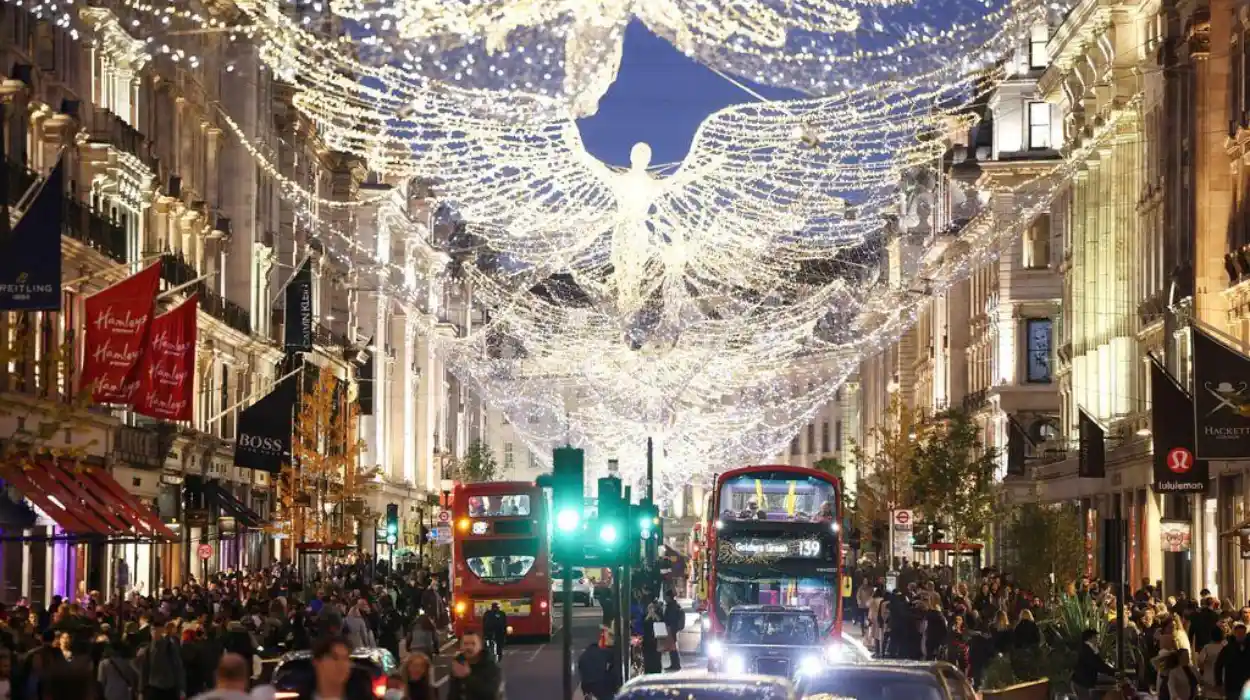
Regent Street
Designed by architect John Nash between 1811 and 1825, Regent Street became one of Britain’s earliest examples of comprehensive urban planning.
Commissioned during the Regency era, the street linked Carlton House with Regent’s Park. Nash introduced sweeping curves, uniform façades, and neoclassical architecture that contrasted sharply with London’s older medieval street pattern.
Today, Regent Street remains one of Europe’s leading shopping destinations while preserving much of its original architectural character.
The Mall
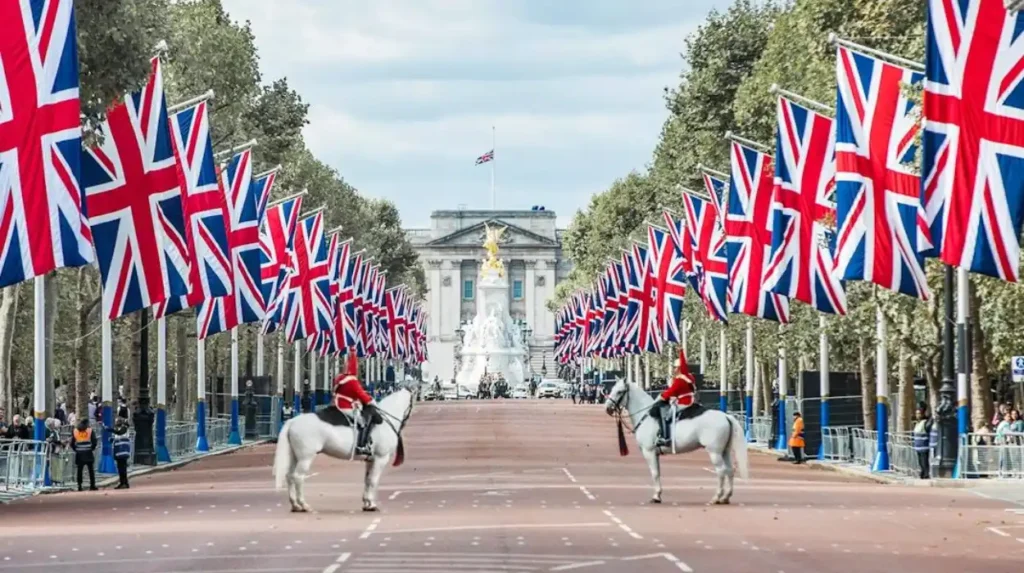
The Mall serves as London’s principal ceremonial avenue connecting Buckingham Palace with Trafalgar Square.
Originally developed during the seventeenth century and redesigned in the early twentieth century, its distinctive reddish road surface symbolises a ceremonial red carpet leading towards the monarchy.
State processions, royal celebrations, and national commemorations continue to use this historic route.
Abbey Road
Abbey Road gained worldwide recognition after The Beatles photographed their famous album cover at its zebra crossing in 1969.
Beyond popular culture, the street reflects London’s suburban development during the nineteenth century and remains closely associated with Abbey Road Studios, one of the world’s most influential recording facilities.
Carnaby Street
Carnaby Street became synonymous with London’s cultural revolution during the 1960s.
Independent fashion designers, music culture, and youth movements transformed this previously modest commercial street into an international symbol of Swinging London.
Portobello Road
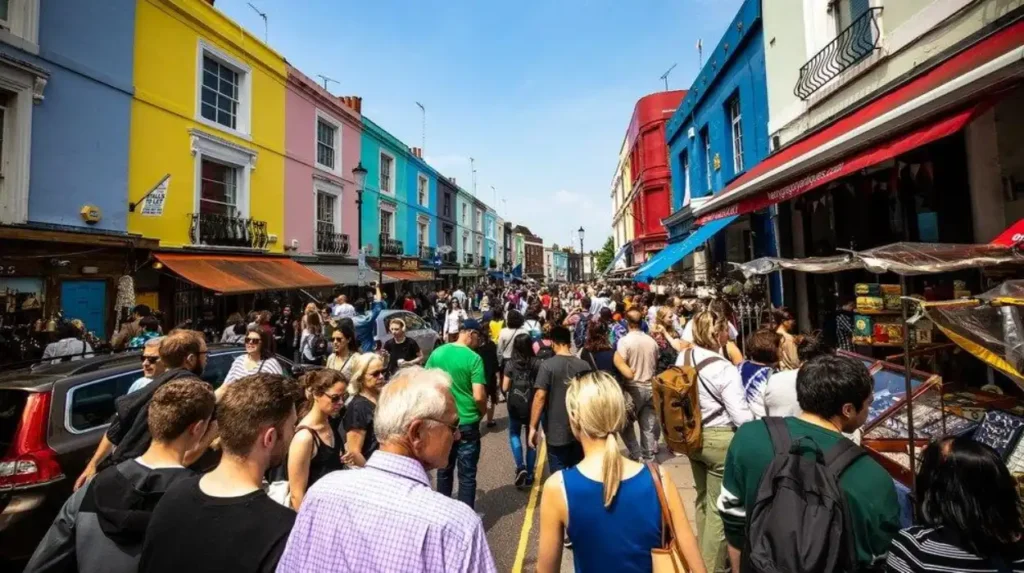
Portobello Road developed from a rural lane into one of Europe’s largest antiques markets.
Victorian terraces, colourful shopfronts, and market traditions continue to attract millions of visitors annually.
Neal’s Yard
Hidden within Covent Garden, Neal’s Yard demonstrates successful urban regeneration.
Originally an eighteenth-century courtyard, it evolved into a vibrant community of independent cafés, wellness businesses, and colourful restored buildings.
Fleet Street
Fleet Street served as Britain’s newspaper industry headquarters for nearly 300 years.
Historic churches, legal institutions, and former newspaper offices illustrate London’s publishing heritage.
Cecil Court
Often called London’s “Booksellers’ Row,” Cecil Court preserves Edwardian shopfronts specialising in antiquarian books, prints, maps, and collectibles.
Its remarkably intact streetscape offers visitors a rare glimpse into early twentieth-century commercial London.
To experience these historic streets in person today, consult our comprehensive [History of London’s Historic Gardens and Their Importance to British Landscape Design] for itineraries and visiting parameters.
How did London’s architecture shape the character of its most beautiful streets?
London’s architectural history created distinctive streets through successive Roman, medieval, Georgian, Regency, Victorian, Edwardian, and modern conservation phases. Each period introduced new construction techniques, planning principles, decorative styles, and public spaces that remain visible throughout the capital today.
London’s architectural diversity results from nearly two millennia of continuous occupation.
Roman foundations
Roman Londinium established the city’s first organised street grid around AD 47. Although much of this layout disappeared during later centuries, archaeological excavations continue to reveal Roman roads beneath the modern city.
Medieval streets
Medieval London developed organically around churches, markets, guild halls, and defensive walls.
Narrow lanes reflected pedestrian movement rather than planned urban design.
Examples include areas surrounding Cheapside, the Temple, and parts of the City of London.
Georgian planning
The eighteenth century introduced elegant squares, terraces, crescents, and planned residential districts.
Architects employed classical proportions inspired by Ancient Greece and Rome.
Brick construction became standard, while sash windows and decorative ironwork defined residential streets.
Regency innovation
John Nash modernised London’s appearance through carefully planned avenues.
Curved terraces, stucco façades, and grand vistas established a more formal urban character.
Victorian expansion
Industrial prosperity encouraged larger commercial buildings, department stores, railway stations, and civic architecture.
Decorative stonework, cast iron, and elaborate ornamentation characterised Victorian streets.
Conservation movement
Following twentieth-century redevelopment pressures, conservation areas protected thousands of historic streets from inappropriate alteration.
Today, heritage legislation ensures London’s architectural identity remains preserved for future generations.
What historical events influenced London’s most famous streets?
Major historical events including the Roman occupation, Norman Conquest, Great Fire of 1666, Industrial Revolution, Victorian expansion, Second World War, and post-war conservation policies shaped London’s street layout, architecture, and cultural identity over nearly two thousand years.
The city’s appearance reflects repeated adaptation rather than complete reconstruction.
The Norman Conquest strengthened London’s political importance through expanded royal administration.
The Great Fire destroyed approximately 13,200 houses and 87 parish churches across the medieval city. Reconstruction introduced stricter building regulations and wider streets that reduced future fire risks.
The Industrial Revolution transformed London into the world’s largest city during the nineteenth century.
Improved sanitation, railways, underground transport, and commercial expansion reshaped entire districts.
During the Second World War, aerial bombing damaged many historic streets.
However, unlike several European capitals, significant portions of London’s historic urban fabric survived.
Post-war planning balanced redevelopment with heritage preservation, allowing visitors today to experience authentic historic streets alongside modern infrastructure.
Why do different London neighbourhoods have distinctive streetscapes?
London’s neighbourhoods developed independently under different landowners, planning regulations, economic activities, and architectural movements. This produced unique streets characterised by varying building materials, layouts, commercial functions, and cultural identities across the capital.
London expanded through numerous villages, estates, and boroughs rather than a single master plan.
Westminster developed around royal government and ceremonial institutions.
The City of London remained Britain’s financial and commercial centre.
Kensington evolved through aristocratic residential development.
Covent Garden became associated with theatres and markets.
Notting Hill experienced nineteenth-century residential expansion before becoming known for multicultural communities and antiques markets.
Soho transformed from aristocratic housing into London’s entertainment district.
Each neighbourhood reflects different stages of London’s social and economic evolution.
Visitors therefore experience multiple urban identities within relatively short walking distances.
How have London’s beautiful streets been preserved for modern visitors?
Historic preservation combines national heritage legislation, conservation area designation, listed building protection, planning controls, restoration projects, and local authority management. These measures protect architectural integrity while allowing streets to remain active parts of contemporary London.
The United Kingdom operates one of the world’s most comprehensive heritage protection systems.
Listed building status protects structures of architectural or historic importance.
Conservation areas safeguard the overall appearance of historically significant districts.
Planning authorities regulate alterations affecting historic façades, rooflines, windows, paving, and public spaces.
Historic England provides expert guidance on conservation standards and restoration practices.
Local councils oversee streetscape improvements that balance accessibility, sustainability, tourism, and heritage protection.
Many streets also benefit from private investment supporting restoration of historic shopfronts, public lighting, landscaping, and building maintenance.
This collaborative approach ensures London’s historic streets remain economically viable while preserving their historical authenticity.
What cultural traditions continue along London’s historic streets?
London’s historic streets remain active centres of royal ceremonies, public markets, literature, music, fashion, festivals, and community life. Continuous cultural use strengthens their historical significance while connecting centuries-old traditions with contemporary urban society.
Unlike preserved museum districts, London’s historic streets remain functioning public spaces.
The Mall continues hosting royal processions and national celebrations.
Portobello Road Market preserves long-established trading traditions.
Carnaby Street remains associated with independent fashion and creative industries.
Fleet Street retains legal institutions despite the newspaper industry’s relocation.
Covent Garden continues supporting street performers, theatre audiences, and cultural events.
Christmas illuminations along Regent Street attract millions of visitors annually while respecting the historic architectural setting.
This continuity distinguishes London from cities where historic districts function primarily as tourist attractions.
What practical route allows first-time visitors to experience London’s most beautiful streets?
An efficient walking route connects Westminster, St James’s, Soho, Covent Garden, the City of London, and Notting Hill. This journey introduces visitors to London’s political, commercial, literary, artistic, and architectural history within several interconnected districts.
Begin near Buckingham Palace and walk along The Mall towards Trafalgar Square.
Continue through Regent Street before exploring nearby Carnaby Street.
Proceed east into Covent Garden to visit Neal’s Yard and Cecil Court.
Walk towards Fleet Street to understand London’s publishing heritage.
Complete another day by travelling to Portobello Road Market and Abbey Road.
This itinerary demonstrates London’s remarkable historical diversity while minimising travel time.
Walking also reveals smaller architectural details including plaques, historic shopfronts, churches, decorative stonework, and preserved street layouts often overlooked by vehicle-based sightseeing.
Why do London’s beautiful streets remain historically important in the twenty-first century?
London’s historic streets preserve evidence of nearly two millennia of political authority, commercial innovation, architectural development, and cultural creativity. Their continued protection supports education, tourism, urban identity, and heritage conservation while demonstrating sustainable management of historic environments.
Historic streets provide primary evidence for researchers studying urban planning, architecture, archaeology, genealogy, economics, and social history.
Educational institutions regularly use these streets as outdoor classrooms illustrating historical development across successive centuries.
Tourism generated by London’s heritage economy contributes billions of pounds annually to the United Kingdom while supporting employment in hospitality, conservation, retail, museums, and cultural industries.
Climate-conscious urban planning increasingly recognises that conserving historic buildings often produces lower environmental impacts than complete redevelopment.
London’s streets therefore demonstrate how heritage conservation and modern urban life can coexist successfully.
For first-time visitors, they offer a chronological narrative extending from Roman foundations through medieval commerce, Georgian elegance, Victorian expansion, twentieth-century cultural movements, and contemporary conservation.
Their enduring appeal lies not only in architectural beauty but also in their ability to communicate London’s continuous historical evolution through authentic public spaces that remain central to everyday life.
What makes The Mall historically significant?
The Mall is London’s ceremonial avenue linking Buckingham Palace with Trafalgar Square. It hosts royal processions, state visits, coronation celebrations, and national ceremonies, making it one of Britain’s most important ceremonial streets.