

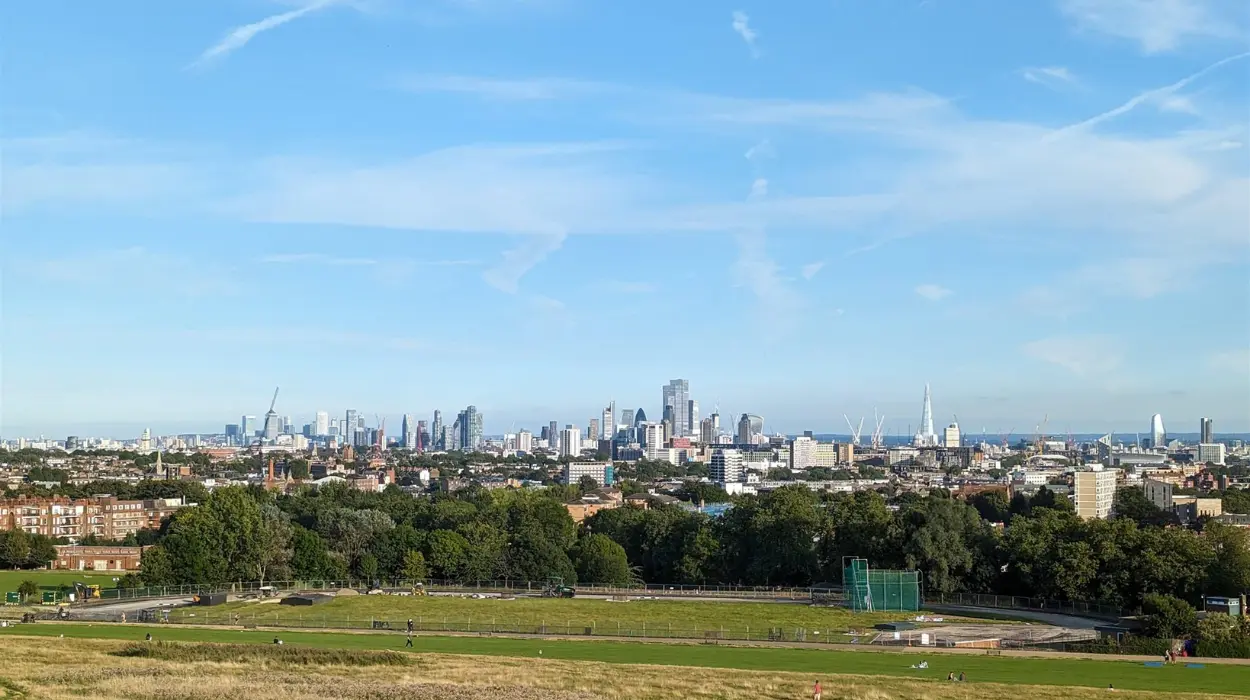
Hampstead is one of London’s most important cultural landscapes. Its literary and artistic history developed through a distinctive combination of geography, architecture, social change and intellectual life. Located on London’s Northern Heights, the area combined elevated views, clean air, springs, open heathland and relative proximity to the capital. These conditions attracted writers, poets, painters, sculptors, architects and scholars across several centuries.
- Why did Hampstead become a centre for writers and artists?
- How did Hampstead develop from a rural settlement into a cultural community?
- Why was John Keats so important to Hampstead’s literary history?
- How did John Constable transform Hampstead into an important artistic landscape?
- Which other artists contributed to Hampstead’s visual culture?
- How did Hampstead Heath influence literature, poetry and artistic imagination?
- How did Hampstead’s architecture support its creative community?
- How did twentieth-century Hampstead continue its literary and intellectual tradition?
- How did Hampstead’s creative residents influence later generations?
- Why is Hampstead’s literary and artistic heritage still important today?
- What is the lasting legacy of Hampstead’s creative history?
- Frequently Asked Question
The history of Hampstead as a creative centre extends beyond individual famous residents. It reflects a long process in which a rural settlement became a fashionable health resort, then a Victorian suburb, and later an internationally recognised centre of artistic and literary activity. Hampstead Heath remained central to this development because its protected landscape preserved the physical environment that generations of creative figures observed and interpreted.
The area’s cultural legacy includes John Keats, John Constable, John Linnell, D. H. Lawrence, George Orwell, Daphne du Maurier, Sigmund Freud and many other significant figures connected with literature, visual art and intellectual history. Its streets, houses, gardens, institutions and open spaces preserve evidence of these connections.
Camden Council records identify the high land around Hampstead as an ancient landscape, with evidence of early human activity and a history shaped by its topography, natural resources and access to clean water.
Why did Hampstead become a centre for writers and artists?
Hampstead became a creative centre because its elevated landscape, clean air, open Heath, distinctive architecture and proximity to central London attracted writers and artists seeking both intellectual connections and physical separation from the increasingly industrialised metropolis throughout the eighteenth, nineteenth and twentieth centuries.
Hampstead’s geographical position explains much of its cultural development. The settlement stands on high ground north-west of historic London. Its hills formed part of London’s Northern Heights, a landscape shaped by geological processes and later settlement patterns.
For centuries, Hampstead remained physically distinct from the dense urban districts below. This separation gave residents access to countryside while maintaining practical connections with London. Writers and artists could participate in the capital’s publishing, exhibition and intellectual networks without living permanently in its most crowded districts.
The area’s natural resources also influenced its development. Hampstead became associated with springs and clean water. Its reputation as a place of healthier air increased during periods when London’s industrial expansion created severe problems of smoke, congestion and pollution.
The Heath provided an additional advantage. Hampstead Heath preserved extensive open land overlooking London. Painters studied its skies and changing weather. Writers used its landscape as a setting for reflection and observation. Residents could walk through woodland, fields and ponds while remaining within the metropolitan area.
This combination created a distinctive cultural environment. Hampstead was neither entirely rural nor entirely urban. Its identity depended on the relationship between these two conditions.
The importance of the Heath became increasingly clear during the nineteenth century. Campaigns to protect it responded to London’s rapid growth and to proposals for development. The struggle resulted in major preservation measures, including the 1871 legislation that protected significant areas as open space.
That preservation had a lasting cultural consequence. The landscape that inspired painters and writers was not entirely absorbed by suburban construction. The continued existence of the Heath allows modern visitors and researchers to understand the physical environment that shaped Hampstead’s creative history.
How did Hampstead develop from a rural settlement into a cultural community?
Hampstead developed from an ancient settlement into a cultural community through medieval landownership, eighteenth-century social expansion, nineteenth-century suburban growth and improved transport, creating a population of residents whose houses, institutions and landscapes supported sustained literary and artistic activity.
The name Hampstead derives from the Anglo-Saxon term “Hamestede,” meaning homestead. Historical records show that the settlement developed over many centuries before it became associated with London’s cultural elite.
The Domesday Book recorded Hampstead as a small agricultural settlement. Medieval ownership passed through major religious and institutional interests, including Westminster connections and later organisations associated with the Knights Templar and Knights Hospitaller.
Its transformation accelerated in later centuries. The area’s springs encouraged the development of Hampstead as a spa destination. Visitors travelled to drink and bathe in mineral water. This brought commercial activity, accommodation and new social networks.
During the eighteenth century, Hampstead increasingly attracted prosperous residents seeking houses outside central London. The construction of villas and substantial homes changed the built environment. Streets such as Well Walk and other historic routes developed a character that remains visible in parts of modern Hampstead.
The nineteenth century brought greater change. London’s population expanded rapidly during industrialisation. Hampstead gradually became more integrated into the metropolis, yet its height and surviving open spaces preserved an important degree of separation.
Transport improved access. Rail connections made the district and the Heath easier to reach for a broader section of London’s population. The cultural landscape therefore became part of a larger public geography rather than an isolated private retreat. The protection movement for the Heath also established Hampstead as an important location in the history of urban conservation.
This historical development created the conditions for a creative community. Houses provided space for writers and artists. Studios developed within residential streets. The Heath supplied a permanent subject for visual art. London supplied publishers, galleries, audiences and institutions.
Why was John Keats so important to Hampstead’s literary history?
John Keats established Hampstead as one of the defining landscapes of English Romantic literature because his residence at Wentworth Place between 1818 and 1820 coincided with major poetic production, personal relationships and experiences that permanently connected his literary reputation with the district.
John Keats, born in 1795, became one of the major poets of the English Romantic movement. Romanticism was a literary and artistic movement that emphasised imagination, nature, emotion and individual experience.
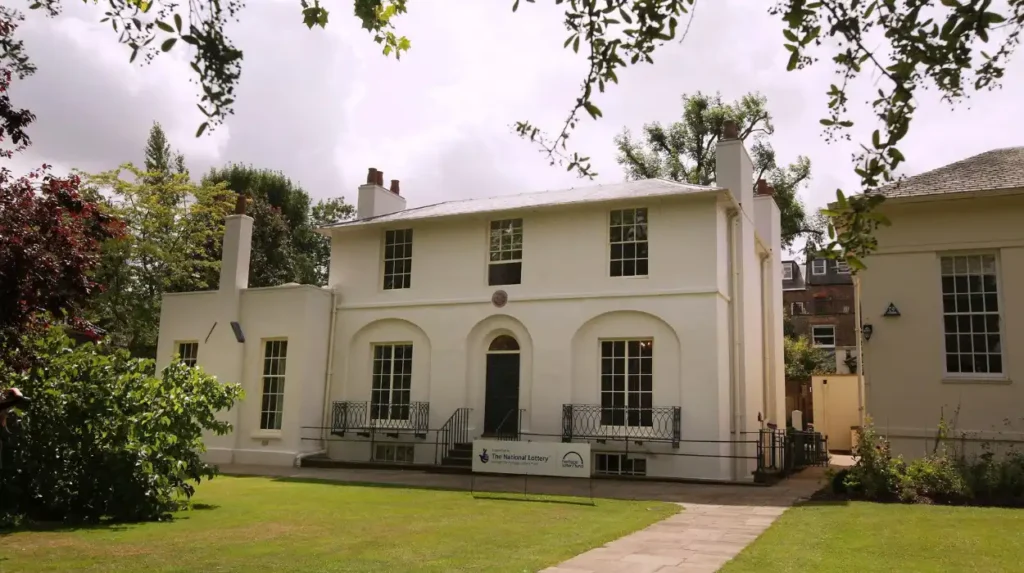
Keats moved to Hampstead during a crucial period of his short life. He lived at Wentworth Place, now known as Keats House, in what is today Keats Grove. English Heritage records the house as a major site associated with the poet and notes the blue plaque commemorating his residence.
The house was built between 1814 and 1816 as part of early development on land enclosed from Hampstead Heath. Historical planning documentation records that Keats lived there with his friend Charles Armitage Brown for approximately 17 months between 1818 and 1820.
This period was central to Keats’s literary development. Hampstead provided access to friends and fellow writers while also placing him close to open countryside.
The district also became connected with his relationship with Fanny Brawne. The Brawne family lived nearby, and Keats’s relationship with Fanny became one of the most important personal experiences of his final years.
Hampstead therefore preserves literary history through a specific physical location. Keats House is not simply a memorial to a famous writer. It represents the domestic and geographical environment in which major parts of his mature career developed.
The significance of Keats also demonstrates how literary geography works. Places become historically important because they preserve connections between people, texts and physical environments. Hampstead provides all three elements.
Keats died in Rome in 1821 at the age of 25. His early death contributed to the intensity of his historical reputation, but his Hampstead residence remains a concrete record of his most productive period.
How did John Constable transform Hampstead into an important artistic landscape?
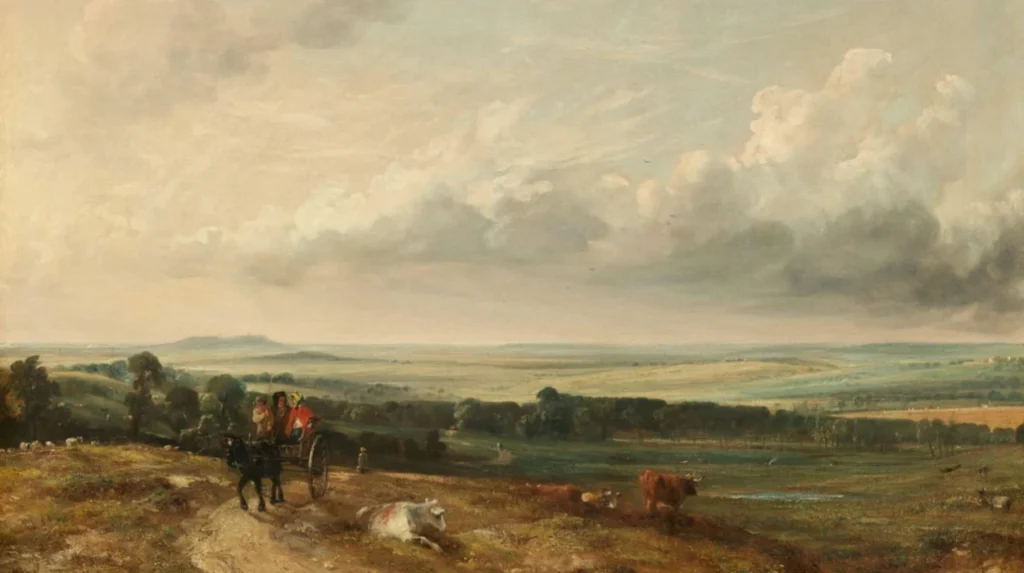
John Constable transformed Hampstead into a major artistic landscape by producing extensive studies of its skies, weather and open spaces, using direct observation to develop influential approaches to landscape painting during the final decade of his life.
John Constable, born in 1776, is one of Britain’s most significant landscape painters. His connection with Hampstead became particularly important during the 1820s.
Constable lived at 40 Well Walk, where English Heritage marks his residence with a blue plaque.
Hampstead gave Constable a different subject from the rural Suffolk landscapes associated with his earlier reputation. The Heath provided elevated ground, expansive skies and rapidly changing atmospheric conditions.
His work from Hampstead demonstrates a systematic interest in weather. He made numerous sketches and studies rather than treating landscape as a fixed decorative background.
The Metropolitan Museum of Art records one Hampstead work, Hampstead Heath with Bathers, as dating from approximately 1821–22 and explains that Constable produced around 100 sketches in the area during this period while studying specific atmospheric effects.
This concentration of work is historically significant. Constable’s Hampstead studies helped establish close observation of clouds, light and weather as central elements of landscape painting.
His influence extended through later artistic developments. The study of atmosphere became increasingly important to painters who rejected rigid studio conventions in favour of direct observation.
Constable also worked with the engraver David Lucas on published prints based on his paintings. The Metropolitan Museum records Hampstead Heath mezzotints produced in 1829 as part of a larger project designed to communicate the visual effects of nature through tonal variation.
Hampstead’s role in Constable’s career therefore extends beyond biography. The district became a working environment in which landscape painting was developed through repeated observation.
Which other artists contributed to Hampstead’s visual culture?
Hampstead attracted successive generations of artists, including John Linnell, Charles Ginner and numerous painters associated with British landscape and modern art, creating a long tradition in which residential studios, public landscapes and artistic networks reinforced the district’s cultural identity.
Hampstead’s artistic history did not begin or end with John Constable. The district supported a continuing community of painters and visual artists.
John Linnell, born in 1792, became one of the important artists associated with nineteenth-century British landscape and portrait painting. His connection with the Hampstead area formed part of a wider network of artists who lived and worked near the Heath.
The area’s attraction was practical. Artists needed light, space and subjects. Hampstead supplied all three.
The Heath provided constantly changing visual conditions. Its hills created long views. Woodland and ponds supplied foreground subjects. London’s skyline created a contrasting urban horizon.
Hampstead also developed a substantial tradition of residential artistic activity. Artists worked from houses and studios embedded within ordinary streets. This meant that creative production became part of the district’s social structure rather than being concentrated exclusively in formal institutions.
The Government Art Collection records multiple historical artistic representations of Hampstead Heath and its views, demonstrating the continued importance of the landscape as a visual subject across different periods.
Charles Ginner represents another stage in Hampstead’s artistic history. His career connected the district with twentieth-century British modern art.
The pattern is important. Hampstead repeatedly attracted creative professionals because its environment remained useful even as artistic styles changed. Romantic landscape painting, Victorian cultural life and twentieth-century modernism all found different forms of value in the same geographical area.
Kenwood also strengthened Hampstead’s artistic significance. Located on the edge of Hampstead Heath, Kenwood contains a major collection including works associated with Rembrandt, Vermeer, Gainsborough, Turner and Constable. English Heritage maintains the house and collection as an important public cultural resource.
This concentration of artistic heritage turned the wider Hampstead landscape into both a place of artistic production and a place for viewing art.
How did Hampstead Heath influence literature, poetry and artistic imagination?
Hampstead Heath influenced creative work by preserving an extensive natural environment within London, giving writers and artists access to woodland, ponds, hills, weather and panoramic views that supplied subjects for observation across changing literary and artistic movements.
The physical environment of Hampstead Heath is essential to understanding the area’s cultural history.
Creative communities depend partly on institutions and social networks, but they also depend on environments. The Heath supplied a stable geographical reference point for generations of residents.
For painters, the most important features included the sky, changing light and topography. Constable’s work demonstrates the importance of atmospheric observation.
For writers, the Heath offered a contrast with the dense built environment of London. Walking became part of intellectual and cultural life. Open land provided space for observation and movement.
The preservation of the Heath therefore had consequences beyond recreation. Conservation protected a landscape that had already entered Britain’s cultural history.
Campaigns began as development pressure increased. The nineteenth-century movement to preserve Hampstead Heath became an important example of organised urban conservation. The 1871 Act of Parliament protected 200 acres as public open space, with an intention to preserve its natural character.
The continued survival of the landscape makes historical interpretation possible. Researchers can compare paintings with surviving views. Visitors can understand the scale of the terrain that shaped artistic observation.
To experience this historic cultural landscape in person today, consult our comprehensive [Best Outdoor Activities in Hyde Park Throughout Every Season for Curious Visitors] for itineraries and visiting parameters.
How did Hampstead’s architecture support its creative community?
Hampstead’s architecture supported creative life through its historic houses, villas, terraces, gardens and studio spaces, providing residential environments where writers and artists could work while remaining connected to London’s publishing, exhibition and intellectual institutions.
Architecture shaped Hampstead’s cultural development by creating a particular form of urban settlement.
Unlike central commercial districts, Hampstead developed around residential streets. Houses often included gardens, larger rooms and access to open landscapes. These conditions suited writers and artists whose work required sustained periods of private activity.
Historic buildings also preserved social networks. Neighbours frequently included other writers, painters, publishers and intellectual figures. Proximity encouraged conversation and professional relationships.
Wentworth Place provides a clear example. Its architecture formed part of the early nineteenth-century expansion of Hampstead. The semi-detached building and shared garden created the domestic setting in which John Keats lived and worked.
Well Walk provides another example through John Constable’s residence at number 40.
The built environment therefore functions as historical evidence. Streets and houses connect biographies to physical locations.
Hampstead’s conservation areas also protect this relationship between architecture and cultural history. Camden’s historical documentation identifies the importance of the area’s topography, historic development and built character in understanding the settlement’s identity.
Preservation matters because creative history is often spatial. Removing historic buildings can separate famous names from the environments in which they lived and worked.
How did twentieth-century Hampstead continue its literary and intellectual tradition?
Twentieth-century Hampstead continued its cultural tradition by attracting writers, artists, architects, scholars and intellectual refugees whose work connected the district with modern literature, psychoanalysis, architecture and political debate during periods of major European change.
Hampstead remained culturally important after the Victorian era because its established reputation continued to attract creative and intellectual residents.
The twentieth century introduced new forms of cultural activity. Modernism transformed literature and art. Psychoanalysis developed as an influential intellectual discipline. Political upheaval in Europe displaced artists and scholars.
Hampstead became connected with these changes through its resident communities.
Sigmund Freud, the founder of psychoanalysis, spent the final period of his life in Hampstead after leaving Vienna in 1938. His London home became an important site in the history of psychoanalysis and intellectual migration.
The presence of refugee intellectuals illustrates Hampstead’s changing international role. The district became part of the wider movement of European knowledge and culture into Britain during the years surrounding the Second World War.
The area also retained its importance for writers. Its established literary reputation created continuity between Romantic-era figures and twentieth-century authors.
This continuity should not be understood as a single artistic school. Hampstead did not produce one unified movement. Its importance came from concentration and diversity.
Different disciplines occupied the same geographical environment. Literature, painting, architecture, psychology and political thought developed through separate institutions and networks while sharing the district’s streets and public spaces.
That pattern made Hampstead historically significant as a cultural ecosystem.
How did Hampstead’s creative residents influence later generations?
Hampstead’s creative residents influenced later generations by establishing enduring models of literary residence, landscape observation, artistic experimentation and intellectual exchange, while preserved houses, museums, plaques and public landscapes continue to connect modern audiences with documented cultural history.
The long-term influence of Hampstead depends on preservation and interpretation.
John Keats became central to English literary education. His Hampstead residence provides a location where students and visitors can connect biography with historical context.
John Constable influenced the history of landscape painting. His studies of Hampstead demonstrate the importance of direct observation and atmospheric analysis.
The preservation of blue plaques helps identify these historical connections in the modern streetscape. English Heritage records both Keats and Constable through official commemorative markers.
Museums and heritage institutions perform a similar function. They preserve objects, buildings and documentary evidence.
Kenwood demonstrates another mechanism of cultural continuity. A historic house within the Hampstead landscape provides public access to internationally important works of art.
The Heath itself remains the largest surviving connection between different creative generations. A visitor can still encounter the landscape that painters studied and writers experienced.
This survival gives Hampstead unusual historical value. Many urban creative districts retain famous names but have lost much of their original physical character. Hampstead preserves substantial connections between biography, architecture and landscape.
Why is Hampstead’s literary and artistic heritage still important today?
Hampstead’s literary and artistic heritage remains important because it demonstrates how geography, preservation, architecture and social networks shape cultural production, while its surviving houses, institutions and protected landscapes provide direct evidence for education, tourism, research and heritage conservation.
Hampstead offers an important case study in the history of culture.
Its creative reputation was not produced by fame alone. Specific historical conditions created the environment.
High ground separated the settlement from central London. Springs and clean air encouraged residential development. The Heath preserved open space. Architecture supplied homes and workplaces. London’s institutions remained accessible.
These factors operated together.
The resulting cultural history now supports several forms of modern research. Literary scholars examine Keats’s Hampstead period. Art historians study Constable’s atmospheric observations. Local historians investigate settlement development and conservation campaigns.
Genealogical researchers also benefit from the survival of historic streets, churches and institutional records. Physical continuity helps connect family histories with changing urban geography.
For educators, Hampstead provides a practical example of how place influences historical development. Students can examine literature, art, urbanisation and conservation through a single London district.
For cultural tourists, the area demonstrates the relationship between heritage sites and wider landscapes. Keats House, historic streets, Kenwood and Hampstead Heath belong to one connected historical geography rather than isolated attractions.
The future relevance of Hampstead depends on continued preservation. Development pressure remains a permanent feature of London. The nineteenth-century campaigns to protect the Heath established a principle that remains significant: cultural landscapes require active protection.
Hampstead’s history therefore extends beyond its famous residents. It records the development of a place where natural geography and metropolitan culture remained closely connected.
What is the lasting legacy of Hampstead’s creative history?
Hampstead’s lasting legacy is its preserved record of creative life across centuries, linking John Keats, John Constable and later intellectual communities to surviving buildings and landscapes that demonstrate how a London neighbourhood became a permanent centre of literary and artistic heritage.
Hampstead occupies a distinctive position in London’s cultural history.
Its literary and artistic importance developed across successive historical periods rather than through a single event. Early settlement created the foundations. Eighteenth-century expansion increased its social importance. Nineteenth-century residents established major literary and artistic associations. Twentieth-century intellectual communities expanded its international significance.
The Heath remained a central element throughout this process.
John Keats connected Hampstead with English Romantic poetry. John Constable connected it with the development of British landscape painting. Later residents extended the area’s influence into modern literature, art and intellectual history.
The preservation of Hampstead Heath ensured that a major part of this cultural environment survived.
Today, Hampstead demonstrates a fundamental historical principle: creative achievement develops within places as well as within individual lives. Writers and artists work within landscapes, buildings, communities and institutions.
The surviving evidence makes Hampstead valuable for historians, educators, students and visitors. A blue plaque identifies a former home. A museum preserves objects. A historic house retains its architectural setting. The Heath preserves the wider landscape.
Together, these elements explain why Hampstead continues to inspire interest generations after its most famous creative residents lived there.
Its legacy is therefore both historical and physical. The words of poets, the paintings of artists and the ideas of intellectuals remain connected to streets and landscapes that still form part of modern London.
For The Londoner News, Hampstead remains one of the clearest examples of how London’s local history became part of Britain’s wider literary and artistic heritage. Its creative past continues to provide evidence of the relationship between place, preservation and cultural achievement.
Frequently Asked Question
What is Hampstead famous for in literary and artistic history?
Hampstead is famous for its connections with major writers, poets and artists, including John Keats and John Constable. Its historic houses, Hampstead Heath and creative communities made the area an important centre of British cultural history.