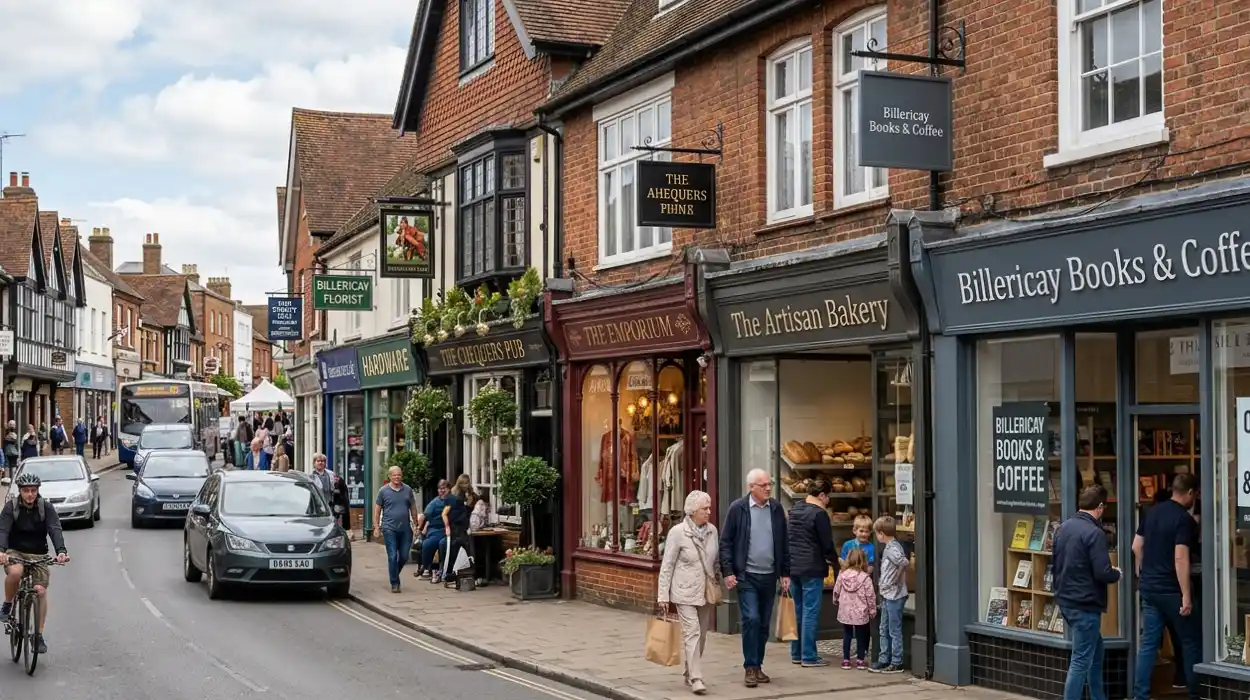
The retail economy of Billericay, an affluent market town in Essex, England, centers entirely around its historic High Street. Operating as a critical regional commercial hub, this district sustains a diverse ecosystem of independent boutique shops, hospitality venues, and professional service firms. Managing the balance between long-term independent retailers and new corporate or artisanal openings remains vital for maintaining consumer footfall and regional economic stability. This comprehensive guide by The Londoner News analyzes the structural dynamics, economic components, historical context, and current retail shifts occurring within Billericay High Street.
- What Is the Economic Significance of Billericay High Street?
- How Has Billericay High Street Evolved Historically?
- What Are the Key Components of the Billericay Retail Mix?
- What New Business Openings Are Occurring This Month?
- How Do Independent Retailers Compete with E-Commerce?
- What Challenges Face Billericay High Street Businesses?
- How Does Local Governance Support High Street Sustainability?
- What Is the Future Outlook for Billericay High Street?
What Is the Economic Significance of Billericay High Street?
Billericay High Street serves as the primary economic engine for the local district, generating substantial employment, driving regional tourism, and retaining localized consumer expenditure within the Essex economy by providing a distinct alternative to nationalized, corporate shopping developments.
Definitions and Regional Infrastructure
Billericay High Street is defined geographically as the continuous commercial stretch of the B1007 road, located within the Basildon district of Essex. The high street comprises approximately 150 commercial units, ranging from Grade II listed historical properties to modern retail infills. As a designated conservation area, the streetscape is legally protected to preserve its architectural integrity while accommodating commercial trade. The economic catchment area extends beyond the town boundaries, drawing consumers from surrounding rural enclaves and neighboring commuter towns such as Stock, Ingatestone, and Brentwood (Council, 2011).
The Mechanics of the Independent Retail Multiplier
The primary economic benefit of Billericay High Street relies on the independent retail multiplier effect. When a consumer spends capital at a locally owned independent boutique or café, a significantly higher percentage of that revenue remains within the local economy compared to transactions completed at national chain stores. Local business owners routinely reinvest profits by procuring regional services, including:
- Local accounting and legal practices.
- Regional trade services for property maintenance.
- Inventory sourced from independent Essex artisans and wholesalers.
This localized recycling of currency enhances the financial resilience of the municipality, making it less vulnerable to national retail recessions or corporate restructuring strategies.
How Has Billericay High Street Evolved Historically?
Billericay High Street evolved from a medieval agricultural trading post and coaching station into a premium modern retail district, sustained by its strategic position on the route to London and its subsequent integration into the metropolitan commuter rail network.
Medieval Origins and the Coaching Era
The structural layout of Billericay High Street reflects its origins as a 13th-century market town. King Henry III granted a market charter to the manor of Billericay, which established regular commercial trading on the site. The physical width of the modern High Street directly stems from the historical requirement to accommodate livestock pens and market stalls.
By the 17th and 18th centuries, the street developed into a critical staging post for horse-drawn coaches traveling between London and the East Coast ports. This era established the town’s hospitality sector, leading to the construction of coaching inns that continue to operate as public houses and retail spaces today. The architectural continuity of these timber-framed and Georgian-fronted buildings forms the backdrop of the modern shopping district.
Post-Railway Industrial Shifts and Commuter Expansion
The opening of Billericay railway station on the Great Eastern Main Line altered the economic demographics of the High Street. The railway shifted the local economy from agricultural dependence toward a suburban commuter model. The population expansion during the mid-20th century transformed the retail mix from basic provisions and trade workshops into high-end retail, specialty dining, and professional services. The transition ensured the High Street survived the post-industrial economic shifts that negatively impacted purely industrial or agricultural towns in the region (Caprettini & Voth, 2020).
Explore More Things To Do
Hillingdon Council Boosts Neighborhood Safety Initiatives London Borough of Hillingdon
Bexleyheath train station subway closure travel advice Bexleyheath
What Are the Key Components of the Billericay Retail Mix?
The retail structure of Billericay High Street consists of a balanced mix of specialized independent fashion boutiques, artisanal food markets, professional services, and upscale hospitality establishments that collectively draw a diverse demographic of affluent consumers.
Independent Fashion and Lifestyle Boutiques
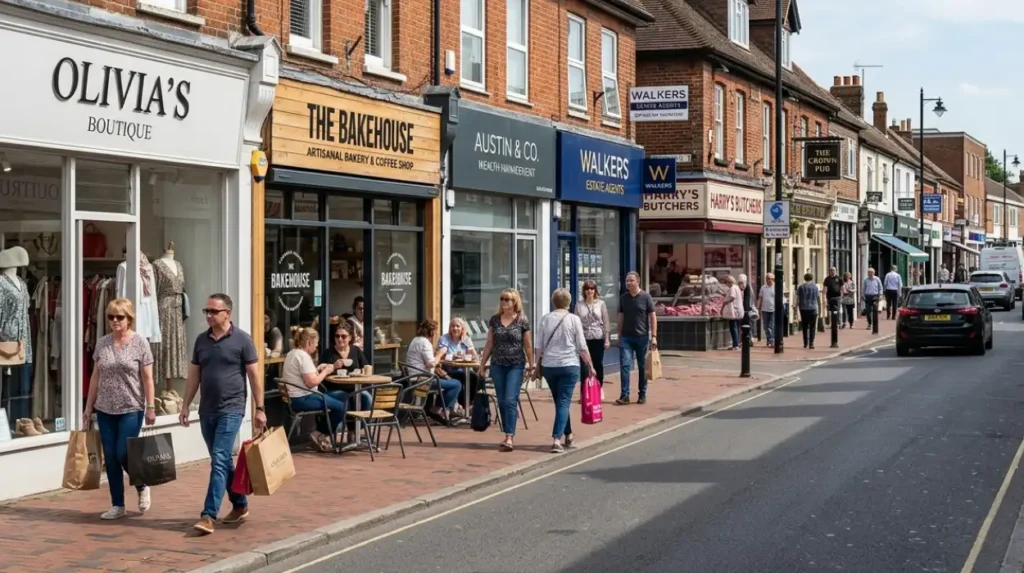
Independent fashion and lifestyle boutiques represent a vital commercial pillar on Billericay High Street. These establishments differentiate themselves from online e-commerce platforms by offering highly curated inventories, exclusive European labels, and personalized customer services. The boutique sector relies on high-income households within the RM11 and CM11 postal districts, insulating these shops from standard retail downturns.
Artisanal Food, Beverage, and Hospitality Establishments
The hospitality and food sector acts as the primary driver of afternoon and evening footfall on the High Street. This component includes:
- Independent micro-roastery coffee shops and specialty bakeries.
- Traditional butchers and greengrocers supplying locally sourced Essex produce.
- Premium casual dining venues and historic public houses.
By providing experiential consumption that cannot be replicated online, these establishments ensure steady pedestrian traffic throughout the week.
Professional Services and Financial Institutions
Unlike many modern shopping centers that exclude non-retail services, Billericay High Street integrates professional services directly into its main thoroughfare. Estate agencies, legal firms, wealth management offices, and dental practices occupy prominent ground-floor and first-floor units. This integration creates a consistent daytime population of office workers and clients who directly support the neighboring retail and lunch-trade economies.
What New Business Openings Are Occurring This Month?
New business openings this month on Billericay High Street focus heavily on experiential dining, wellness services, and sustainable retail, reflecting a broader structural shift toward consumer services that cannot be digitized.
Commercial Property Transitions
The commercial real estate market along Billericay High Street experiences continuous optimization as vacant units undergo rapid refurbishment. Local planning data confirms that commercial spaces do not remain empty for extended periods due to high demand from regional entrepreneurs. The current month introduces several distinct independent enterprises to the local directory.
Launch Profiles of New Enterprises
The new additions to the high street include a specialized wellness clinic, an independent specialty deli, and an artisanal homeware showroom.
- The Wellness Clinic: This facility provides advanced dermatological treatments and holistic healthcare options, addressing the rising consumer demand for preventative health services.
- The Specialty Deli: This retail outlet focuses on imported continental cheeses, organic charcuterie, and locally produced Essex wines, directly supporting the high street’s reputation for premium food procurement.
- The Homeware Showroom: This store features sustainably sourced, handcrafted furniture and custom interior design consultations, catering to homeowners looking for personalized residential upgrades.
The emergence of these specific business types demonstrates a strategic alignment with modern consumer spending patterns, which favor personal well-being, premium gastronomy, and bespoke home environments.
How Do Independent Retailers Compete with E-Commerce?
Independent retailers on Billericay High Street compete against digital e-commerce platforms by implementing omnichannel operating models, offering immediate experiential satisfaction, and hosting localized community events that build long-term brand loyalty.
Implementation of Omnichannel Retail Systems
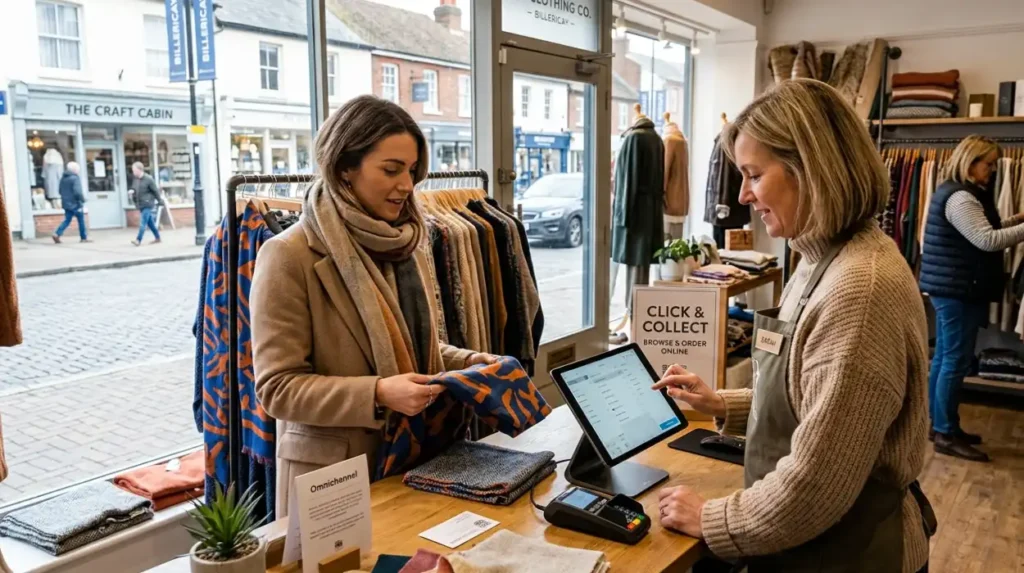
Successful independent businesses in Billericay do not rely solely on walk-in trade; instead, they deploy sophisticated omnichannel systems. Retailers utilize point-of-sale software that links physical shop inventory with digital storefronts and social commerce channels. This setup allows local consumers to browse inventory online and execute click-and-collect transactions on the High Street, combining digital convenience with physical immediacy.
The Experiential Retail Strategy
Physical retail units leverage human sensory experiences that digital algorithms cannot replicate. Apparel boutiques offer custom alterations, personal styling consultations, and physical fabric evaluation. Food retailers provide tasting sessions, workshops, and live demonstrations. This strategy shifts the transaction from a basic commodity purchase to an experiential activity, allowing independent shops to justify premium pricing models over online discount retailers.
What Challenges Face Billericay High Street Businesses?
Billericay High Street businesses face significant operational challenges from rising commercial rents, volatile business rates, strict parking enforcement, and escalating utility costs that squeeze profit margins for independent operators.
Commercial Rent and Business Rates Pressures
The desirability of Billericay commercial real estate maintains high baseline rental costs per square foot. Independent tenants must negotiate lease agreements against regional landlords who often benchmark values against national retail standards. Additionally, the UK business rates system assesses property taxes based on historical valuation metrics, creating fixed overhead pressures that do not adjust for sudden fluctuations in monthly consumer spending.
Parking infrastructure and Accessibility Constraints
As an older, historic market town, Billericay’s infrastructure was not designed for modern automotive volumes. The High Street features limited on-street parking spaces, forcing consumers to rely on designated municipal car parks managed by the local authority. Strict parking time limits and enforcement policies can discourage extended shopping visits, driving some consumers toward out-of-town retail parks that offer unrestricted, free parking facilities.
Explore More Things To Do
The Real Greek: Authentic Taverna in Soho London
Ascend Airways: UK ACMI Leader from Gatwick, Stansted, London Area
How Does Local Governance Support High Street Sustainability?
Local governance sustains Billericay High Street through strict Conservation Area planning protections, pedestrian safety improvements, and targeted promotional campaigns orchestrated by the Billericay Town Council and regional business groups.
Planning Protections and Conservation Policies
The Billericay Town Council enforces rigorous planning guidelines within the High Street Conservation Area (COUNCIL, 2024). These regulations restrict corporate entities from installing garish, non-traditional corporate signage or altering the historic structural facades of listed buildings. By maintaining these strict aesthetic standards, local planning authorities preserve the visual character and heritage appeal that attracts visitors to the town.
Infrastructure Investment and Pedestrian Access
Public sector investments focus regularly on upgrading pedestrian walkways, improving street lighting, and introducing traffic-calming measures to enhance shopper safety. These infrastructure projects reduce vehicular transit speeds through the central commercial core, creating a safer environment for families and elderly shoppers. This improved accessibility directly increases consumer dwell time across the various retail quadrants.
What Is the Future Outlook for Billericay High Street?
The future outlook for Billericay High Street remains positive, supported by strong local demographics and an ongoing transition toward a service-oriented, experiential retail model that adapts well to changing consumer habits.
Demographic Drivers and Local Wealth Retention
The long-term viability of Billericay’s independent shops is structurally protected by the area’s underlying demographic profile. The town retains a high density of management professionals, financial sector workers, and affluent retirees. As hybrid remote working patterns persist across the region, a significant portion of commuting professionals spend more days per week working from home, directly increasing daytime footfall and expenditure at local cafes, restaurants, and retail shops.
The Shift Toward Service-Oriented Commercial Spaces
Economic forecasting models indicate that the composition of the typical British high street must continue evolving away from pure product sales toward service delivery. Billericay High Street sits at the forefront of this trend. Over the coming years, traditional retail units will likely continue transitioning into experiential spaces, such as artisan cooking schools, wellness centers, co-working lounges, and interactive design studios. This proactive evolution ensures that Billericay High Street will remain a vibrant, economically productive focal point for the Essex community for years to come.
What is Billericay High Street known for?
Billericay High Street is known for its blend of independent boutiques, cafés, restaurants, professional services, and historic architecture. It serves as the main commercial and social hub of Billericay.